Solar Pump Inverter Commissioning Checklist for First Start-Up

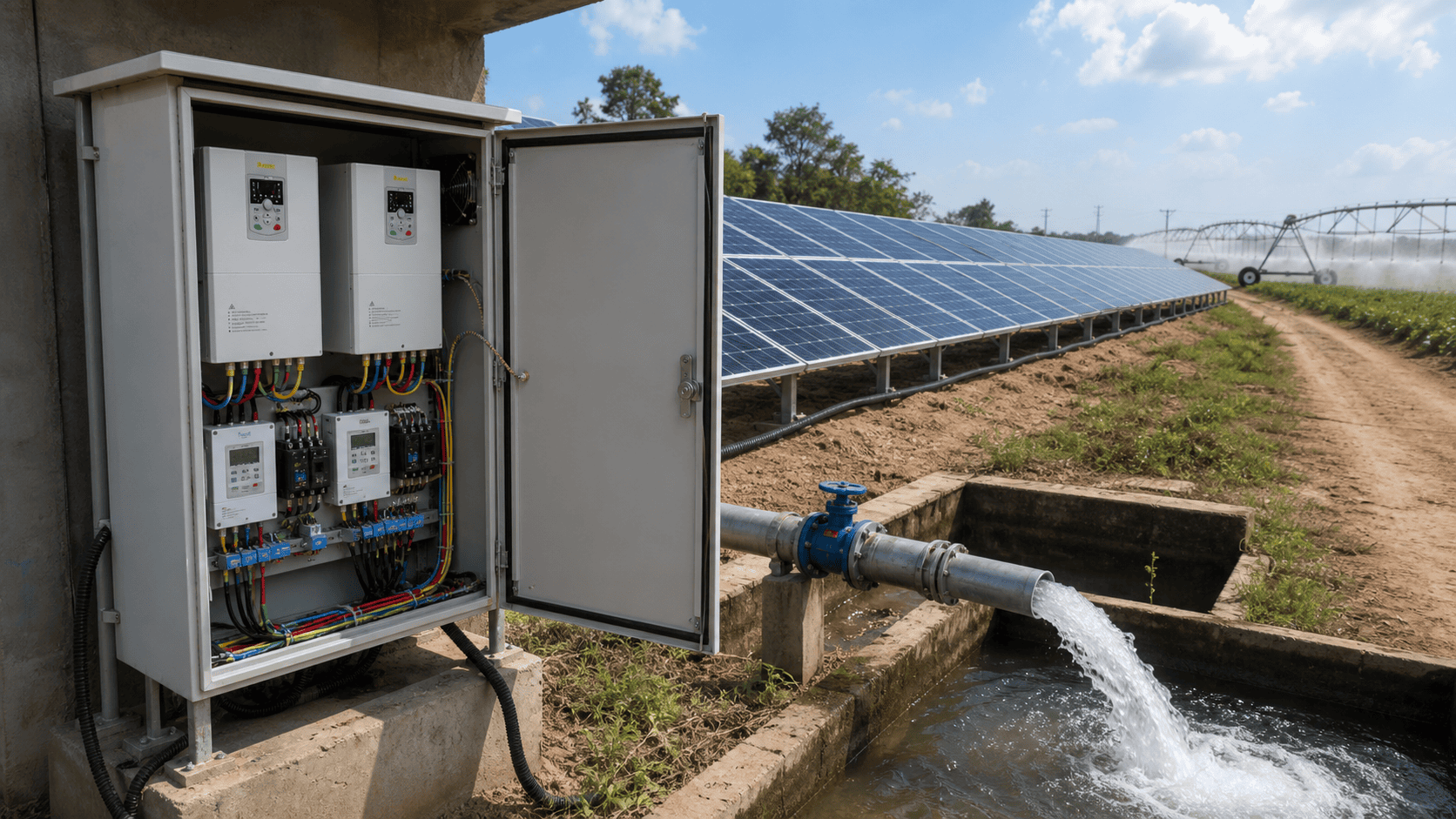
The first start-up is where small installation mistakes become visible. Use this checklist before blaming the inverter, the pump, or the PV array. A solar pump inverter commissioning checklist should confirm PV input, pump nameplate data, motor voltage and phase, wiring status, motor direction, pump parameters, dry-run protection, valve position, water source condition, fault codes, … Read more

Solar Pump Inverter Grounding and Cable Selection Guide

Grounding and cable choice decide whether a solar pump inverter installation stays stable after the cabinet door is closed. Solar pump inverter grounding should follow local electrical codes, connect the inverter, motor, cabinet, PV frame, and protection devices to a proper protective earth system, and use cables sized for current, distance, voltage drop, heat, and … Read more

Pump Curve vs Inverter Selection: Why Head and Flow Are Not Enough

Pump curve and inverter selection for solar water pump systems

A field guide for EPC teams checking duty point, pump curve, pipe loss, and inverter fit before quoting a solar pumping system. Head and flow are not enough for inverter selection because they only describe the target duty point. The pump curve shows whether the pump can reach that point efficiently. The inverter must then … Read more

Submersible Water Pumps for Wells: Solar Inverter Selection Guide

Submersible water pumps for wells with solar inverter selection

A practical guide for buyers matching well depth, pump nameplate, total head, flow, and PV array data before choosing a solar pump inverter. A submersible well pump can run on solar power when the inverter matches the pump motor and the PV array supports the required voltage and power. Do not choose by well depth … Read more

Solar Water Pump Battery Storage Guide for EPC: When to Add Batteries

Solar water pump battery storage guide for EPC projects

A practical guide for EPC teams comparing solar-only pumping, water storage, battery backup, and hybrid AC backup before quoting an irrigation project. Battery storage is not the default choice for most solar water pump projects. Start with daytime pumping and water storage first. Add batteries only when the site must pump outside solar hours, has … Read more

Solar Water Pump Inverter Selection Guide for Different Crop Irrigation Systems

Solar water pump inverter selection guide for crop irrigation systems

A practical selection guide for EPC teams, distributors, and irrigation buyers matching crop water demand to pump type, voltage, PV array, and inverter path. If you choose a solar pump inverter only by crop type, the model can still be wrong. Crop type tells you the irrigation method. The irrigation method tells you flow, pressure, … Read more

Mexico Solar Water Pumps Market: Irrigation Demand and Inverter Selection

Mexico solar water pumps market and inverter selection for irrigation

A field-focused guide for Mexico distributors, EPC teams, and irrigation buyers checking solar water pump demand and the safer inverter path. On a Mexican farm, the pump question often starts before the inverter quote. The buyer may have an orchard, a deep well, a diesel generator, or an existing AC pump that already works but … Read more

Solar Pump Inverter Market: What Is Driving Irrigation Demand?

Solar pump inverter market demand for irrigation water projects

A practical market guide for distributors and EPC teams reading solar irrigation demand through pump type, water pressure, service risk, and stocking choices. On an irrigation quotation, demand does not start with a product category. It starts with a farmer asking whether water can move today without diesel costs, voltage instability, or grid access. The … Read more

380V Solar Well Pump Systems: When SP4 Is the Safer Product Path

380V solar well pump system with SP4 inverter selection

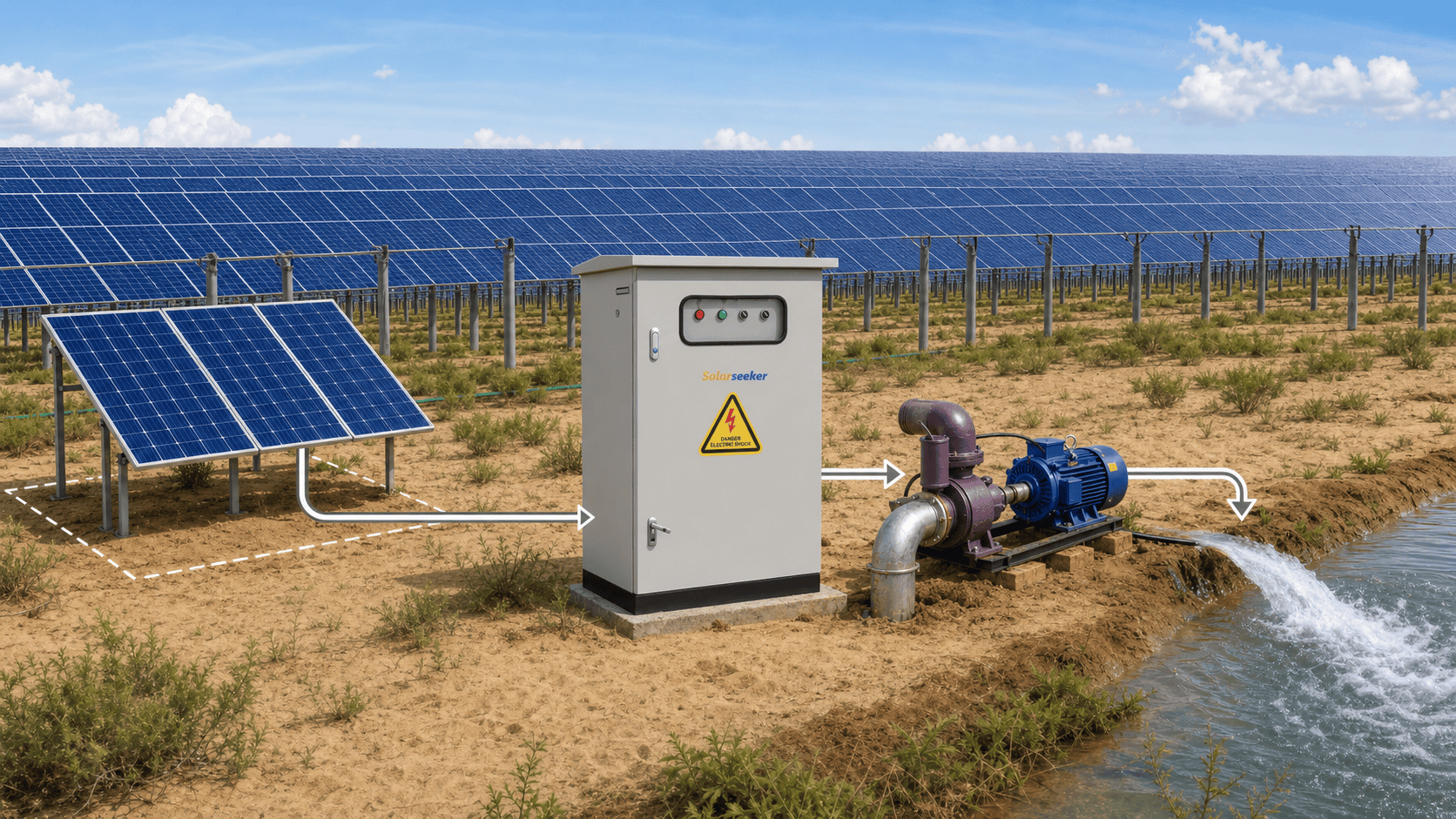
A field-focused guide for buyers checking whether a 380V three-phase well pump should use Solarseeker’s SP4 path. A 380V solar well pump system usually fits deeper wells, larger irrigation demand, and three-phase AC pump motors. SP4 is the safer product path when the project needs 380V three-phase output, wider power coverage, PV input control, MPPT … Read more

1