
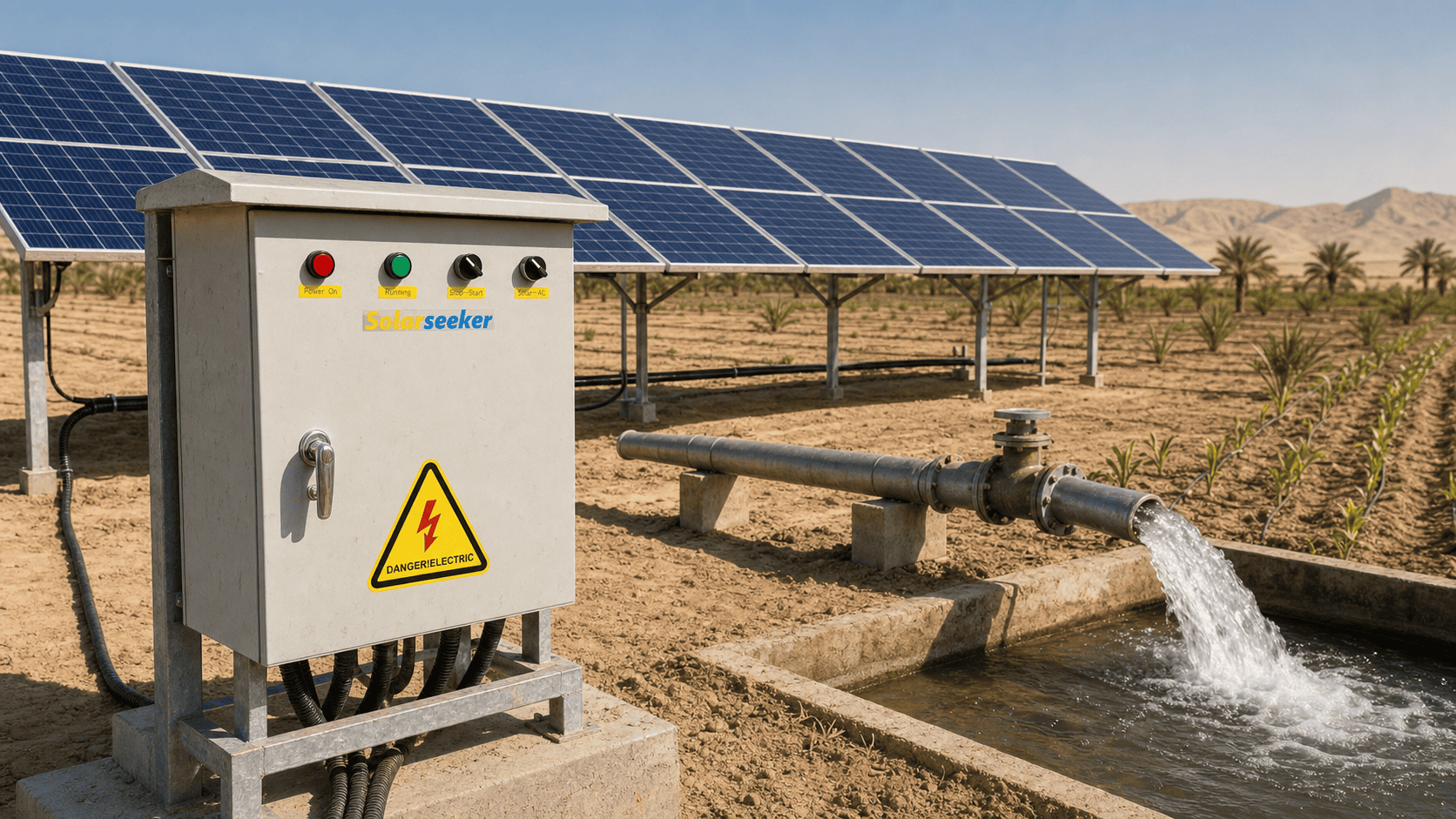
A practical market guide for distributors and EPC teams reading solar irrigation demand through pump type, water pressure, service risk, and stocking choices.
On an irrigation quotation, demand does not start with a product category. It starts with a farmer asking whether water can move today without diesel costs, voltage instability, or grid access.
The solar pump inverter market is growing because irrigation buyers need water without depending on diesel, weak grids, or long power extensions. Demand is strongest where farms use existing AC pumps, deep wells, and daytime irrigation schedules. For distributors, the real opportunity is not selling products. It is building model paths, panel matching, and field support.
Why Irrigation Demand Is Moving Toward Solar Pump Inverters
Irrigation buyers do not wake up thinking about inverter topology. They think about dry fields, late planting, fuel cost, pump failures, and whether a remote site can run without waiting for grid work.
That is why solar pump inverter demand is practical before it is technical.
Two market signals matter. The World Bank tracks agricultural freshwater withdrawals using FAO AQUASTAT data, which shows why irrigation stays central to water planning. On the energy side, the IEA’s Renewables 2025 executive summary says solar PV is expected to account for almost 80% of global renewable power capacity growth to 2030.
For irrigation distributors, that points to a simple question: when solar panels are easier to quote, which pumping systems can be converted into reliable water output?
The answer usually depends on pump voltage, pump phase, head, flow, cable distance, and the service model behind the sale.
Demand Driver vs Buyer Implication Table
| Demand driver | What buyers feel on site | What distributors and EPC teams should prepare |
|---|---|---|
| Dry-season irrigation pressure | Water is needed when grid power is weak or diesel cost is painful | Model paths by pump power, voltage, phase, head, and flow |
| Existing AC pump base | Buyers want to reuse installed pumps instead of replacing everything | Nameplate-based inverter matching and current checks |
| Lower solar hardware cost | More farms ask for daytime solar pumping quotations | PV panel matching sheets, not only inverter price lists |
| Deep wells and larger fields | Small pump systems may not cover lift or daily water target | 380V three-phase options and SP4 project checks |
| Off-grid farms and ranches | Long power extensions are slow, costly, or impossible | Standalone solar pump inverter packages with protection logic |
| Long service distance | A wrong model creates expensive callbacks | Installer training, fault-code process, and spare model planning |
| Distributor competition | Low-price offers look similar at first glance | Application shortlists and clearer after-sales support |
This table is not a market forecast. It is a sales filter.
If several drivers appear in one region, demand is probably deeper than a one-time inverter inquiry. It may be a repeatable project channel.
AC Pump Compatibility Is a Big Demand Trigger
Many irrigation markets already have AC pumps in the field. Submersible pumps, centrifugal pumps, and surface pumps may be working from diesel generators, unstable grids, or temporary power lines.
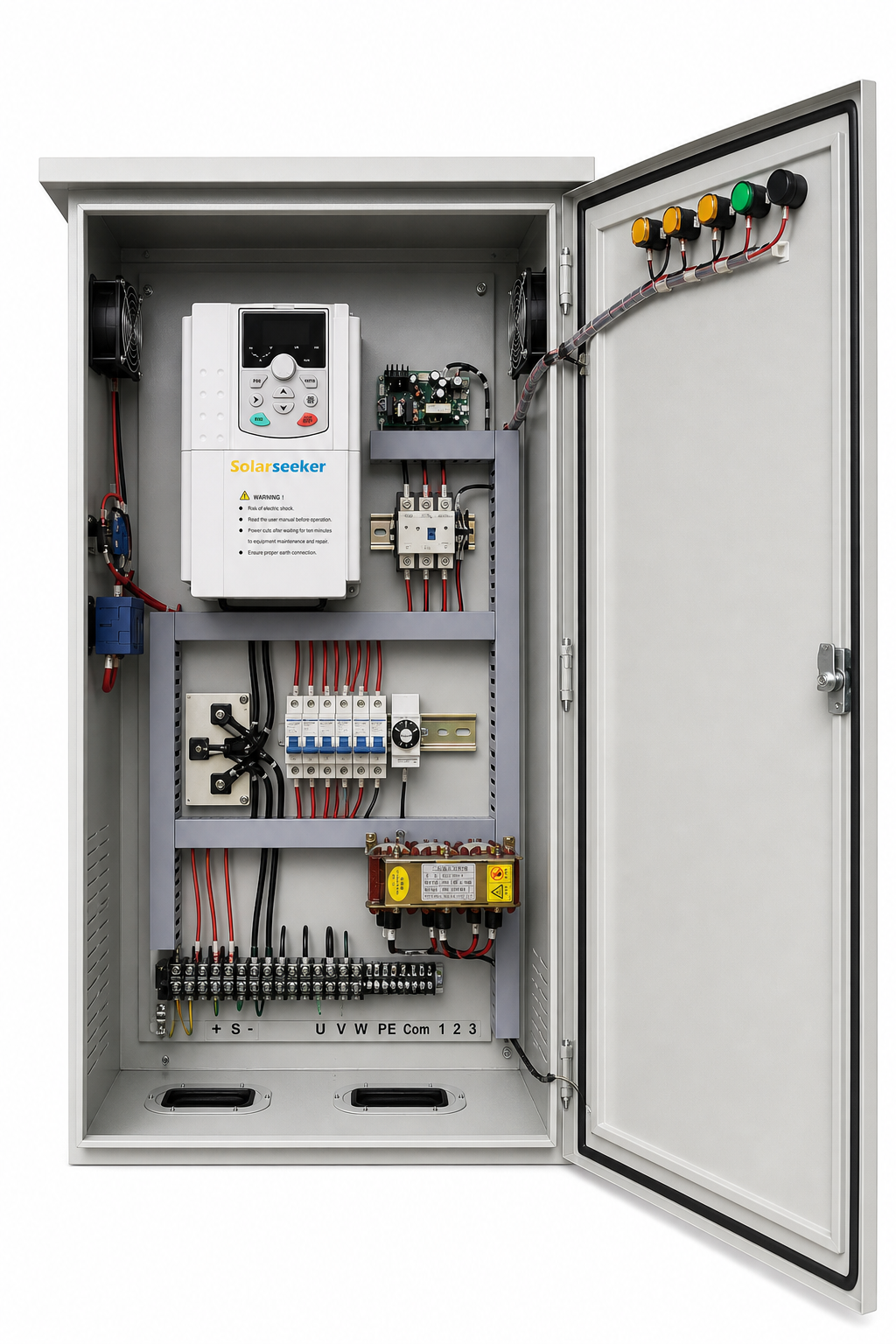
A solar pump inverter helps bridge that gap. It takes DC power from the PV array and controls the AC pump motor with variable frequency output. The buyer can often keep the pump if the voltage, phase, rated current, and operating condition are suitable.
That is one reason the market is not limited to brand-new solar pump systems.
For the core product logic, Solarseeker’s solar water pump inverter page is the main path to review. It explains the role of the inverter inside a solar pumping system, especially when an AC pump needs PV-driven control.
Still, compatibility is not automatic. A pump that runs from the grid may not run well from a poorly matched solar setup. The supplier needs the nameplate, pump curve if available, expected head, daily water target, and PV string plan.
The market grows faster when distributors make that checking process easy.
Where Irrigation Demand Is Strongest
Demand is usually strongest where water need and power limits meet.
Deep-well irrigation is one example. The pump may already be a 380V three-phase motor. The site may need steady daytime water, not only light tank filling. In that case, a small inverter path can cause late starts, weak output, or nuisance trips.
For these larger three-phase irrigation projects, the SP4 solar pump inverter path is the product family to check first.
Off-grid farms are another strong segment. If the field is far from the grid, the buyer compares solar pumping against diesel fuel, generator maintenance, and cable extension work. The quote is no longer only about the inverter. It also includes panels, mounting rails, clamps, cable, protection devices, cabinet location, and labor.
Surface water pumping can also create steady demand. Rivers, ponds, canals, and reservoirs may use pumps with lower head but longer operating hours. Here, the selection risk is different. Flow, pipe friction, pump efficiency, and water schedule matter more than well depth.
For project-style reference, Solarseeker keeps a general page of solar water pump projects that buyers can review without treating any single case as a universal rule.
Field Example: A Distributor Reads Demand Before Stocking
Picture a distributor serving a dry-season farming region.
Inquiries arrive from three directions. Some farms have small 220V pumps for tank filling. Others use 380V three-phase submersible pumps in wells. A third group wants to replace diesel generator pumping for daytime irrigation.
If the distributor stocks only one small inverter range, many real projects are missed. If the distributor stocks every model without structure, cash sits on the shelf.
A better approach is to build a project shortlist.
The first shortlist covers common 220V single-phase pump applications. The second covers 380V three-phase deep-well and larger irrigation projects. The sales team asks every buyer for pump power, voltage, phase, rated current, head, flow, and panel plan before promising a model.
That process does two useful things.
It protects the buyer from a wrong inverter. It also helps the distributor see which applications repeat often enough to support local stock, installer training, and spare unit planning.
This is where the solar pump inverter market becomes a service channel, not just a product category.
What Distributors Should Prepare
The strongest distributors do not only ask for a price list. They prepare the small tools that make quotations faster and safer.
Start with a pump nameplate intake form. This form should collect pump power, voltage, phase, rated current, frequency, pump type, and application.
Add a simple head and flow sheet. Buyers often send well depth but forget pipe length, elevation difference, pressure requirement, or irrigation schedule.
Prepare a PV matching worksheet. Panel power alone is not enough. The engineer needs Voc, Vmp, string layout, temperature conditions, and inverter input range.
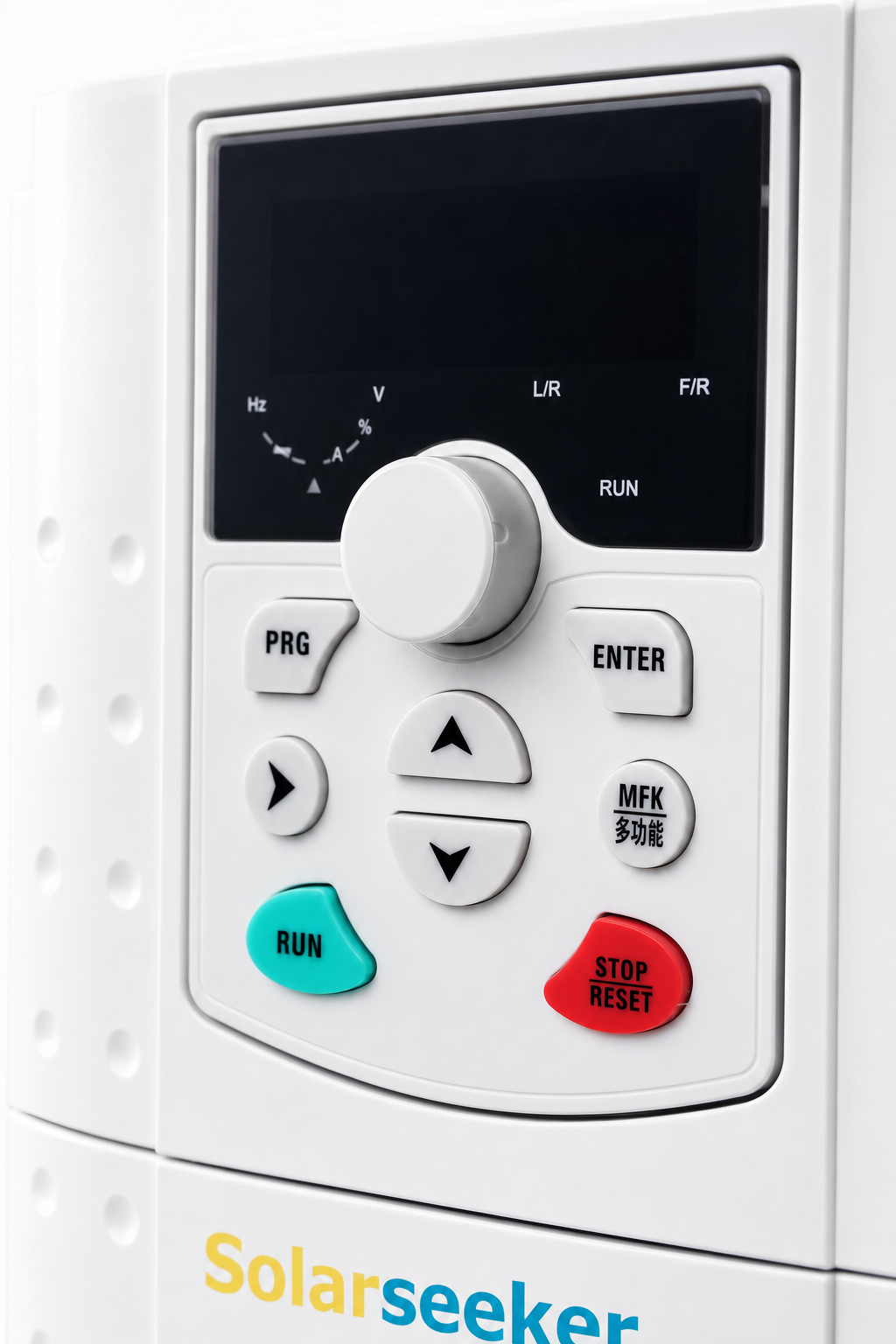
Keep a fault feedback process. Ask installers to send fault code, measured PV voltage, output current, pump nameplate photo, and wiring photos before replacing parts.
Also prepare a basic training path. Dealers should know why a 380V pump should not be quoted like a small 220V tank-filling pump. They should also know when a nameplate photo is more valuable than a long message.
Common Quotation Mistakes in This Market
The first mistake is treating every inquiry as a low-price inverter sale.
Price matters, but irrigation buyers also pay for missed water, callbacks, freight, and installation time. A cheaper panel plan can become expensive once rails, clamps, wiring points, and labor are counted.
The second mistake is ignoring the existing AC pump. Many buyers do not want to replace a working pump. They want to know whether solar can drive it safely. That question cannot be answered by kW alone.
The third mistake is stocking only the easiest models. Small pumps may move faster, but larger wells and three-phase irrigation can be more important for EPC and distributor relationships.
The fourth mistake is weak service preparation. In remote areas, one callback can erase the margin from several small orders. A clear model path, panel matching sheet, and fault-code routine reduce that risk.
FAQ
Is the solar pump inverter market growing?
Yes. Demand is supported by irrigation water pressure, off-grid farming, diesel replacement, lower solar PV costs, and the large base of existing AC pumps. Growth is strongest where buyers need reliable daytime pumping without depending on weak grids.
What is driving irrigation demand for solar pump inverters?
The main drivers are dry-season water needs, high fuel cost, unstable grid power, existing AC pump reuse, deep wells, larger irrigation areas, and the need for local service support. Buyers want water output, not only a lower equipment price.
Which applications create the strongest demand?
Deep wells, 380V three-phase irrigation pumps, off-grid farms, ranch water supply, surface water pumping, and diesel-generator replacement projects often create strong demand. The best application depends on pump data, head, flow, and local service capacity.
What should distributors stock first?
Distributors should not stock by inverter power alone. They should map common local pump voltage, phase, power range, head, and flow. A starter shortlist often separates small 220V pump applications from 380V three-phase irrigation and deep-well projects.
Why do buyers prefer solar pump inverters for existing AC pumps?
Many farms already own AC pumps. A solar pump inverter can let a suitable AC pump run from PV power, if voltage, phase, rated current, pump condition, and PV input are correctly matched. This can reduce replacement work.
Ask for a Distributor Project Shortlist
If you are evaluating a local irrigation market, do not start with a full catalog.
Send Solarseeker your common pump power range, voltage and phase standards, typical head and flow, water sources, PV panel options, and installer capacity. Use the contact page to ask for a distributor project shortlist. The goal is to match the market before you commit stock, training, or EPC quotations.