
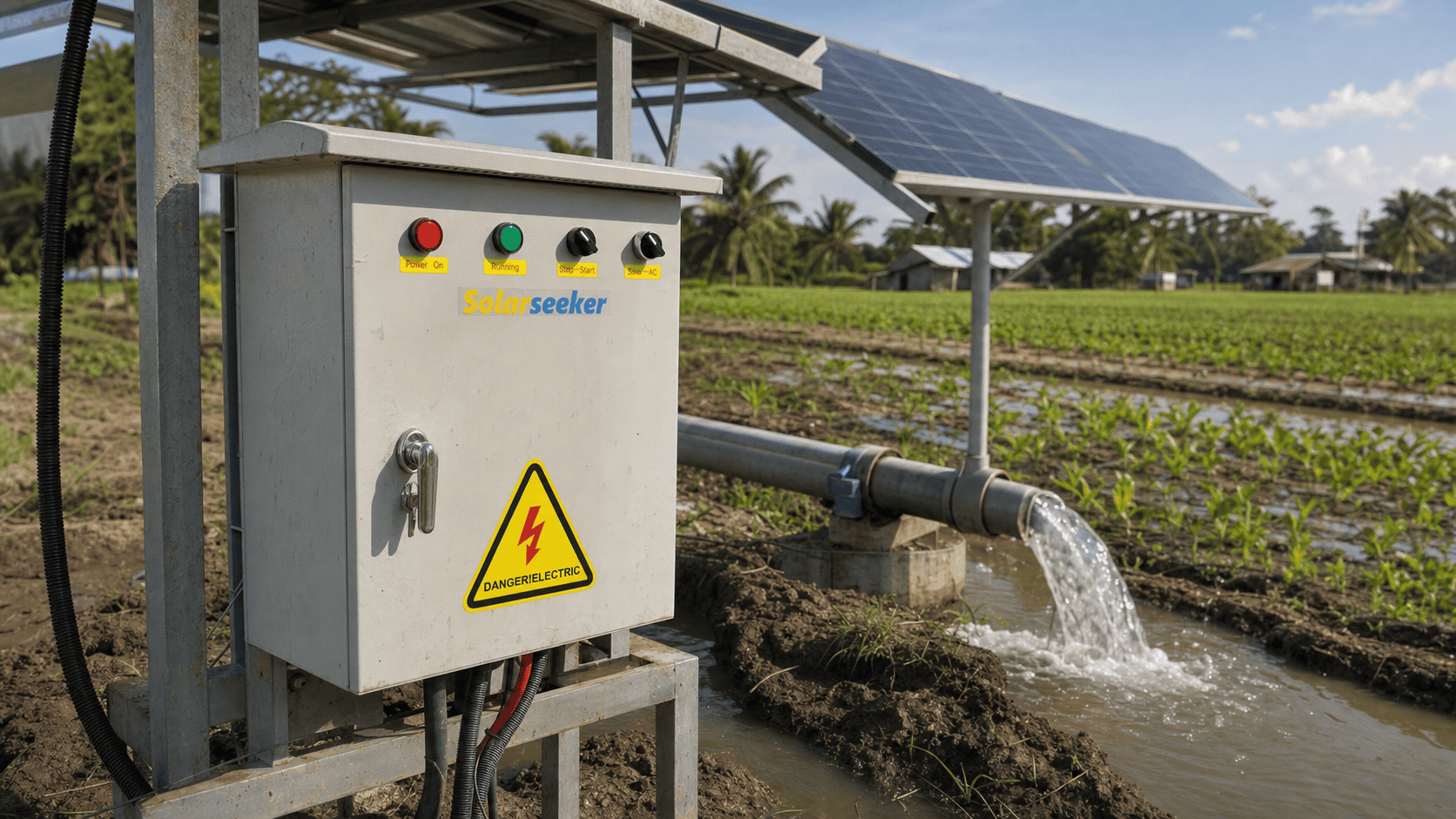
A field-focused guide for buyers checking whether a 380V three-phase well pump should use Solarseeker’s SP4 path.
A 380V solar well pump system usually fits deeper wells, larger irrigation demand, and three-phase AC pump motors. SP4 is the safer product path when the project needs 380V three-phase output, wider power coverage, PV input control, MPPT tracking, and pump protection. Buyers should confirm head, flow, voltage, phase, and pump nameplate first.
Engineering Priority: Technical Verification Before Quoting
On a deep-well irrigation site, the first question is not only inverter power.
The real question is whether the pump can deliver the required water from that well, through that pipe route, within the available solar window. If the well is deep and the pump is three-phase, the product path changes. A small 220V path may not be the right direction for high daily water demand.
This is where 380V solar well pump systems become relevant.
They are not chosen because 380V sounds bigger. They are chosen when the pump motor, lift requirement, cable distance, and irrigation load need a stronger three-phase path.
For buyers comparing this setup, the 380V solar well pump systems page is the cluster path to review first.
When a 380V Well Pump System Makes Sense
A 380V three-phase system is worth checking when the pump is already a 380V AC motor. It is also worth checking when the project moves into higher lift or higher power ranges.
The practical signs are easy to spot:
- The well is deep or the lift is high.
- The pump nameplate shows 380V three-phase.
- The project needs steady irrigation water, not only light tank filling.
- Cable distance is long enough to matter.
- The buyer needs a wider inverter power range.
- The pump runs far from a weak grid or without grid power.
- The site needs better protection against dry run, overload, and voltage issues.
Not every well needs 380V. A smaller 220V pump can be enough for light-duty water supply. But when the pump and site conditions point to larger three-phase pumping, the inverter path should follow that reality.
380V Well Pump Fit Table
| Site condition | Why 380V may fit better | What to confirm before choosing SP4 |
|---|---|---|
| Deep well or high lift | The pump may need three-phase power and stronger motor output | Total head, pump curve, motor voltage, phase |
| Larger irrigation demand | Higher daily water volume often needs a wider power range | Required flow, working hours, pipe route |
| Existing 380V AC pump | Reusing the pump may reduce replacement work | Nameplate, rated current, frequency, pump health |
| Long cable distance | Voltage drop and motor load need closer checking | Cable size, distance, current, installation condition |
| Remote solar site | PV input and pump protection become central | PV string plan, Vmp, Voc, grounding, cabinet location |
| EPC or distributor project | Repeatable model path matters for service and stocking | Common pump range, voltage standard, spare parts plan |
This table does not replace model selection.
It gives buyers a practical filter. If several rows match the site, SP4 deserves a serious check before quoting another product path.
Why SP4 Is Often the Safer Path
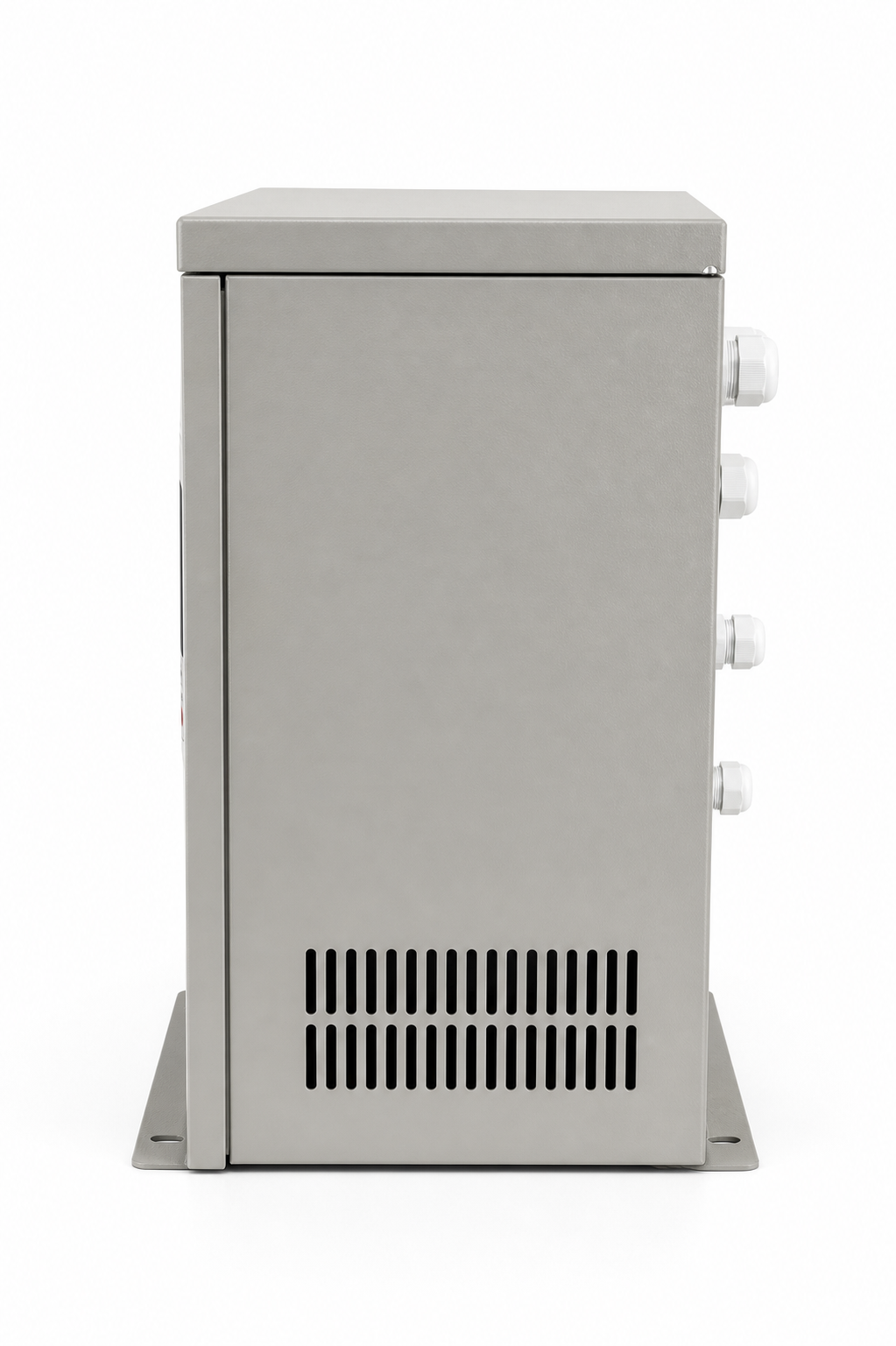
SP4 is relevant when the system needs a 380V three-phase solar pump inverter path.
That matters because a deep-well pump is not a small load. It may need stable motor output, protection settings, and a PV array that can keep the inverter inside a useful voltage window. If the inverter path is too small, the pump may start late. If the voltage match is wrong, it may run weakly or trip during load changes.
Solarseeker’s SP4 solar pump inverter is the product path to review for broad 380V three-phase pumping. It also fits many deep-well and larger agricultural water projects.
The safer part is not only the model name. It is the matching process behind it: pump nameplate, rated current, head, flow, PV array plan, cable distance, and protection settings.
PV Sizing Rule for 380V Three-Phase Pumps
For 380V solar well pump systems, the PV array must support both power and working voltage.
Use these starting rules when checking pump voltage, inverter sizing, or PV matching. They also help when diagnosing weak output or commissioning issues.
| Pump system | PV array power starting rule | Useful Vmp target |
|---|---|---|
| 220V single-phase pump | PV Array Power >= Pump Rated Power x 2.0 | Around 320V DC Vmp |
| 380V three-phase pump | PV Array Power >= Pump Rated Power x 1.3 to 1.5 | Around 540V DC Vmp |
For this article, the second row is the key rule.
The final panel count still depends on panel wattage, Voc, Vmp, local temperature, cable distance, inverter input range, and water demand. A PV array that is correct by total watts can still be wrong by voltage. That is why the string plan should be checked before installation.
Field Example: Deep-Well Irrigation Needs a Wider Path
Consider a farm with a deep well and an existing three-phase AC submersible pump.
The buyer wants daytime irrigation from solar power. The pump nameplate shows 380V three-phase. The water must be lifted from the well and moved through a pipe route before reaching the irrigation area.
In this case, the buyer should not start with a small generic inverter quote.
The supplier needs the pump nameplate, rated current, head, flow, cable distance, and site conditions. If the PV array is already planned, panel Voc, Vmp, and string layout should also be sent.
Once those details are clear, SP4 can be checked as the safer 380V product path. If the pump curve, PV string, and inverter range all align, the system has a better chance of stable daytime pumping.
For deeper sizing logic, use Solarseeker’s deep well head, flow, pump, and inverter sizing guide.
What EPC Teams Should Confirm
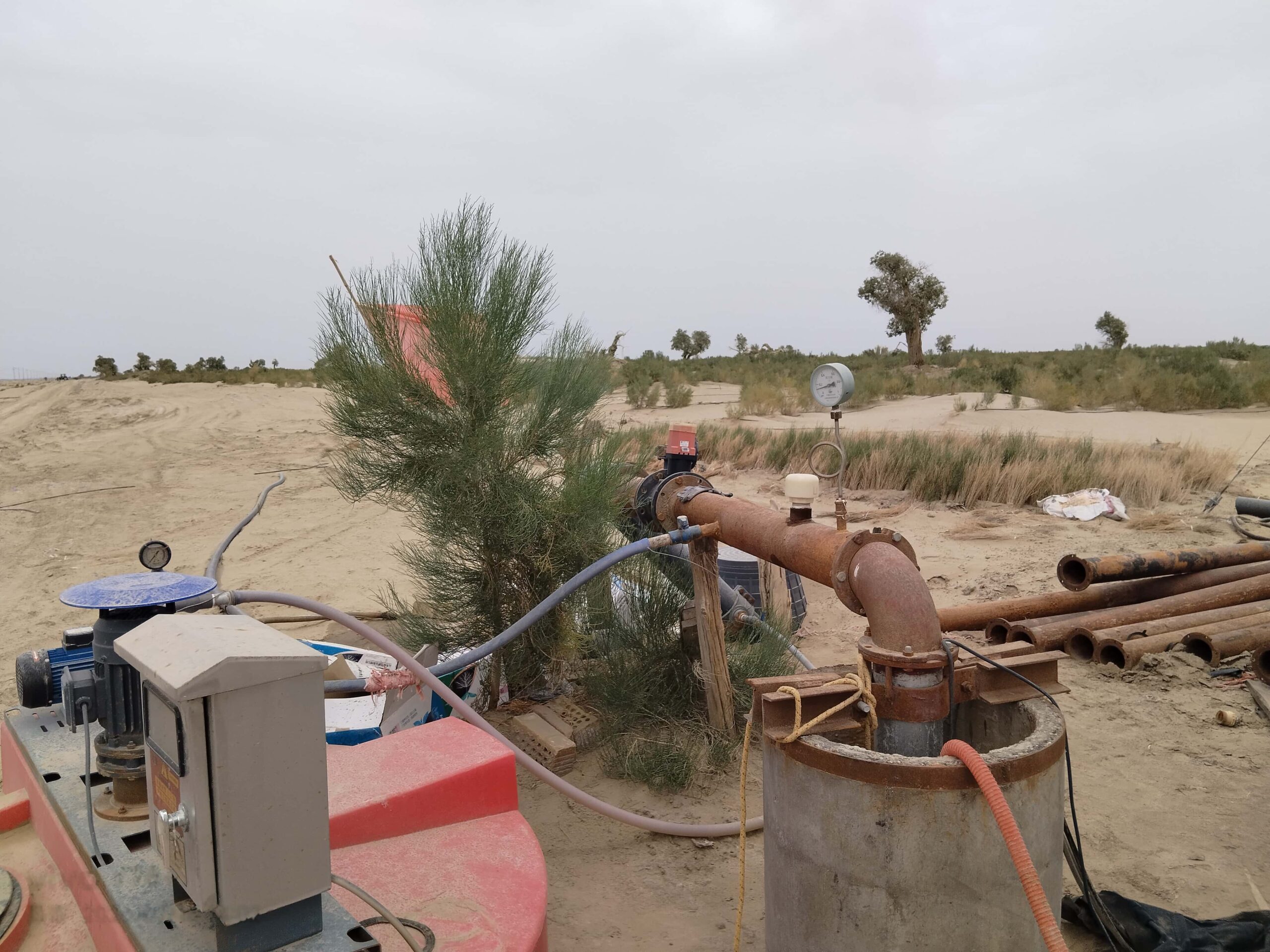
Before quoting a 380V solar well pump system, confirm the project data in one place.
Ask for:
- Pump nameplate photo.
- Pump power, voltage, phase, rated current, and frequency.
- Total head, not only well depth.
- Required flow and daily water target.
- Pipe route and cable distance.
- Water source and dry-run risk.
- PV module power, Voc, Vmp, and planned string layout.
- Cabinet location, temperature, dust, and service access.
This checklist prevents a common mistake: choosing an inverter by kW while ignoring head, flow, current, and PV voltage.
Safety Note for Installation
380V solar well pump systems involve PV DC input, three-phase AC motor output, grounding, protection devices, and field wiring.
Use qualified electricians or trained technicians. Follow local electrical codes, product manuals, grounding rules, and protection requirements. This article explains selection logic. It is not a wiring manual.
FAQ
When should I use a 380V solar well pump system?
Use a 380V solar well pump system when the pump is a 380V three-phase AC motor. It also fits sites where well depth, head, flow, cable distance, and irrigation demand require a larger three-phase path.
Is SP4 suitable for deep wells?
SP4 is a relevant product path for many 380V three-phase deep-well and irrigation projects. The final model still depends on the pump nameplate, rated current, head, flow, PV string plan, and site conditions.
How should PV panels be sized for a 380V three-phase pump?
As a starting rule, PV array power should be pump rated power x 1.3 to 1.5, with useful Vmp around 540V DC. The final design must also check Voc, Vmp, temperature, cable distance, and inverter input range.
What data is needed before choosing SP4?
Send the pump nameplate, pump power, voltage, phase, rated current, head, flow, cable distance, water source, and PV panel data. If the project is a deep well, include well depth and pipe route.
Can I use a smaller inverter path for a 380V well pump?
Only if the pump, voltage, phase, current, and load are correctly supported. For many 380V three-phase well pumps, using a smaller or mismatched path can cause weak output, startup problems, or protection trips.
What to Send for an Engineering Review
Before ordering, send the site and pump data together.
For a Solarseeker SP4 check, share head, flow, pump nameplate, voltage, phase, rated current, cable distance, water source, and PV string plan. Send the details through the contact page. That gives the engineer enough information to confirm whether SP4 is the safer path for the project.