
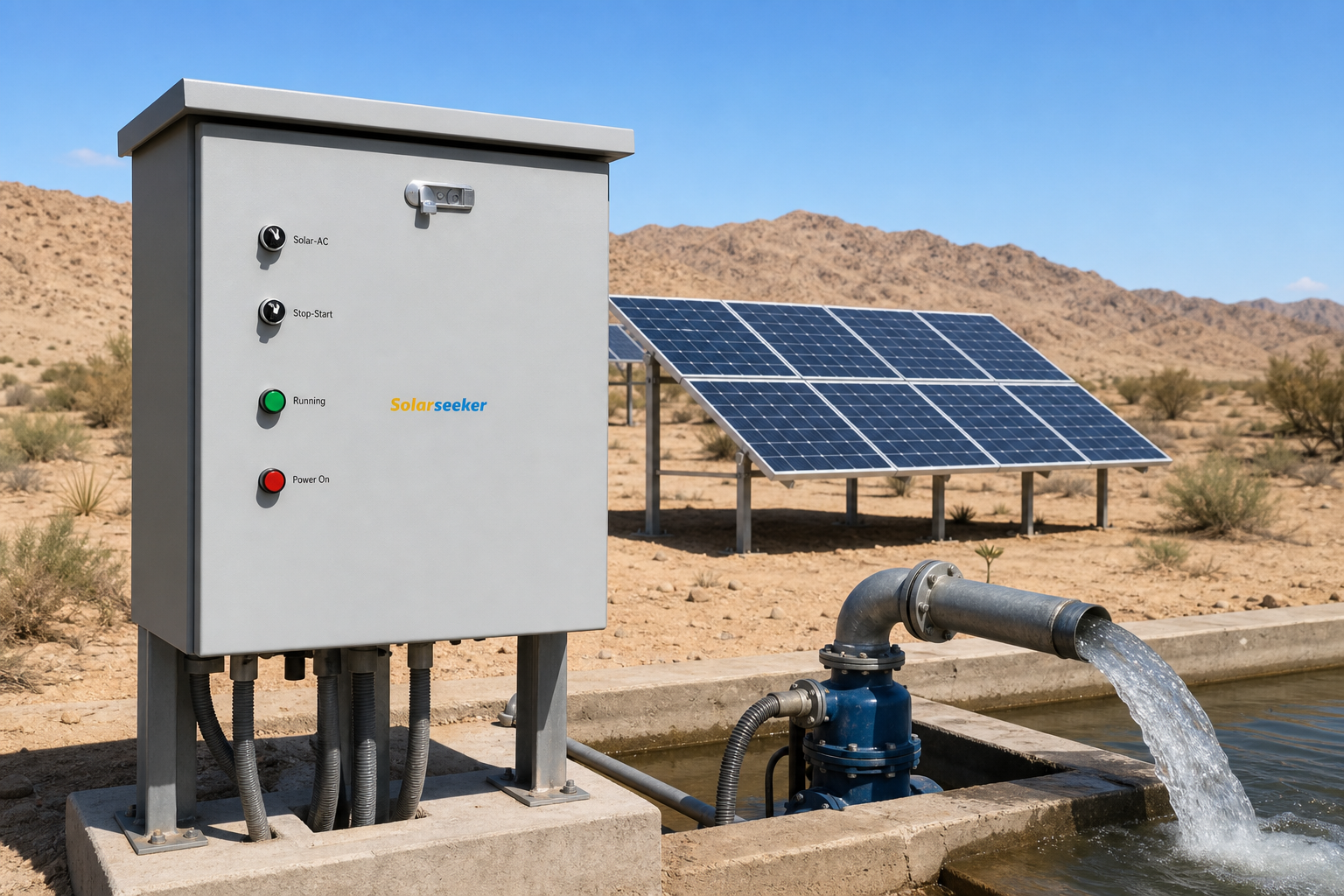
Field engineering and dealer enablement guide for regional pump distributors, equipment wholesalers, and EPC contractors specifying off-grid solar pump systems.
Direct Answer: What Technical Training Should Solar Pump Inverter Distributors Demand?
Solar pump inverter distributors should demand factory technical training focused on commercial dealer enablement and warranty risk mitigation rather than introductory wiring tutorials. A practical training program must equip regional technical teams with five operational competencies: pre-sale array sizing triage, bench-level fault root-cause verification, field commissioning support protocols, modular board replacement workflows, and customer objection handling against generic drives.
When wholesale teams master these five disciplines, warranty return rates drop by 60% to 75%, invalid “No Defect Found” claims disappear, and local installation contractors treat the distributor as an essential engineering partner rather than an interchangeable equipment supplier.
Why Distributor Enablement Differs from Basic Installer Wiring Courses
Most factory training provided by equipment manufacturers covers elementary electrician tasks: identifying terminal blocks, stripping solar cables, and entering motor nameplate speed into a keypad. For an independent pump distributor or regional equipment wholesaler, this level of training falls far short of commercial requirements.
Distributors manage inventory capital, finance contractor credit, and absorb direct commercial exposure when an irrigation system stalls during peak summer heat. If an installation contractor calls your technical desk at 2 PM because an agricultural solar pump drive tripped on an overvoltage fault, your counter engineers need immediate diagnostic triage workflows. Telling the installer to read the manual or shipping the drive back across international borders damages dealer loyalty and ties up operating capital.
Effective solar pump inverter distributor training bridges the gap between factory engineering design and rough field realities. It prepares your technical staff to act as Tier-1 application engineers who can audit solar array string voltages, verify submersible borehole cable impedance, and resolve customer issues on the spot.
Core Curriculum for Solar Pump Inverter Distributor Training
A structured technical syllabus must prioritize diagnostic rigor, bench testing, and electrical measurement. Distributors should require their manufacturing partner to deliver structured training built around the five most common field failure modes encountered in solar irrigation projects:
| Training Module | Core Technical Focus | Typical Field Problem Addressed | Measurable Distributor KPI |
|---|---|---|---|
| 1. Pre-Sale Sizing Triage | DC operating window calculation, temperature coefficients, borehole cable voltage drops | Inverter nuisance trips on cold mornings or stalls during 45°C ambient noon heat | Eliminates 80% of post-sale sizing callbacks |
| 2. Root-Cause Fault Analysis | DC bus impedance testing, oscilloscope gate checks, transient surge identification | Distinguishing actual IGBT component failure from borehole pump lockup or dry-run cavitation | Cuts invalid warranty claims by 60% |
| 3. Modular Bench Repair | Isolated DSP control board swaps, driver card replacement, fan tray maintenance | Waiting 6 to 8 weeks for factory replacement units while crops desiccate | Reduces customer repair turnaround to under 2 hours |
| 4. Enclosure & Environmental Protection | Housing IP20 drives in IP65 outdoor cabinets, heat sink thermal isolation, multi-stage SPD grounding | Internal dust contamination, lizard ingress, and lightning damage in open farm fields | Extends field equipment operating life beyond 7 years |
| 5. Technical Sales & Objection Handling | Real MPPT yield comparison, motor insulation protection, soft-start hydraulics | Competing against cheap commodity industrial VFDs lacking dedicated solar pump algorithms | Increases distributor gross profit margins on complete turnkey systems |
Module 1: Pre-Sale Sizing Triage and Solar Array Matching
Sizing mistakes represent the largest source of post-commissioning disputes. Your sales engineers must be trained to verify contractor array designs before equipment leaves your warehouse. Key technical training topics include:
- Operating Voltage Windows: Calculating optimal maximum power point tracking (Vmp) ranges for three-phase 380V motors (typically 530V to 620V DC) versus single-phase 220V motors.
- Temperature Coefficient Math: Determining open-circuit voltage (Voc) spikes during cold winter mornings to prevent instantaneous overvoltage hardware lockouts.
- Drop Cable Voltage Attenuation: Calculating wire gauge sizing for deep borehole installations (150m to 350m) to account for inductive reactance and motor terminal voltage drop.
Module 2: Root-Cause Fault Diagnostics and Warranty Claim Scrubbing
Manufacturers must teach distributor technicians how to perform bench-level electrical triage using standard digital multimeters and insulation megohmmeters. Key diagnostic protocols include:
- Performing static diode forward-bias and reverse-bias checks across DC+, DC-, and output phases (U, V, W) to confirm or rule out IGBT bridge short circuits.
- Auditing drive fault history logs to differentiate between external system issues (such as pump motor winding degradation or low well yield) and internal drive hardware failures.
- Verifying electrical insulation and creepage standards based on IEC 61800-5-1 Adjustable speed electrical power drive systems to maintain shop safety during live testing.
Module 3: Hands-On Bench Testing and Modular Board Replacement
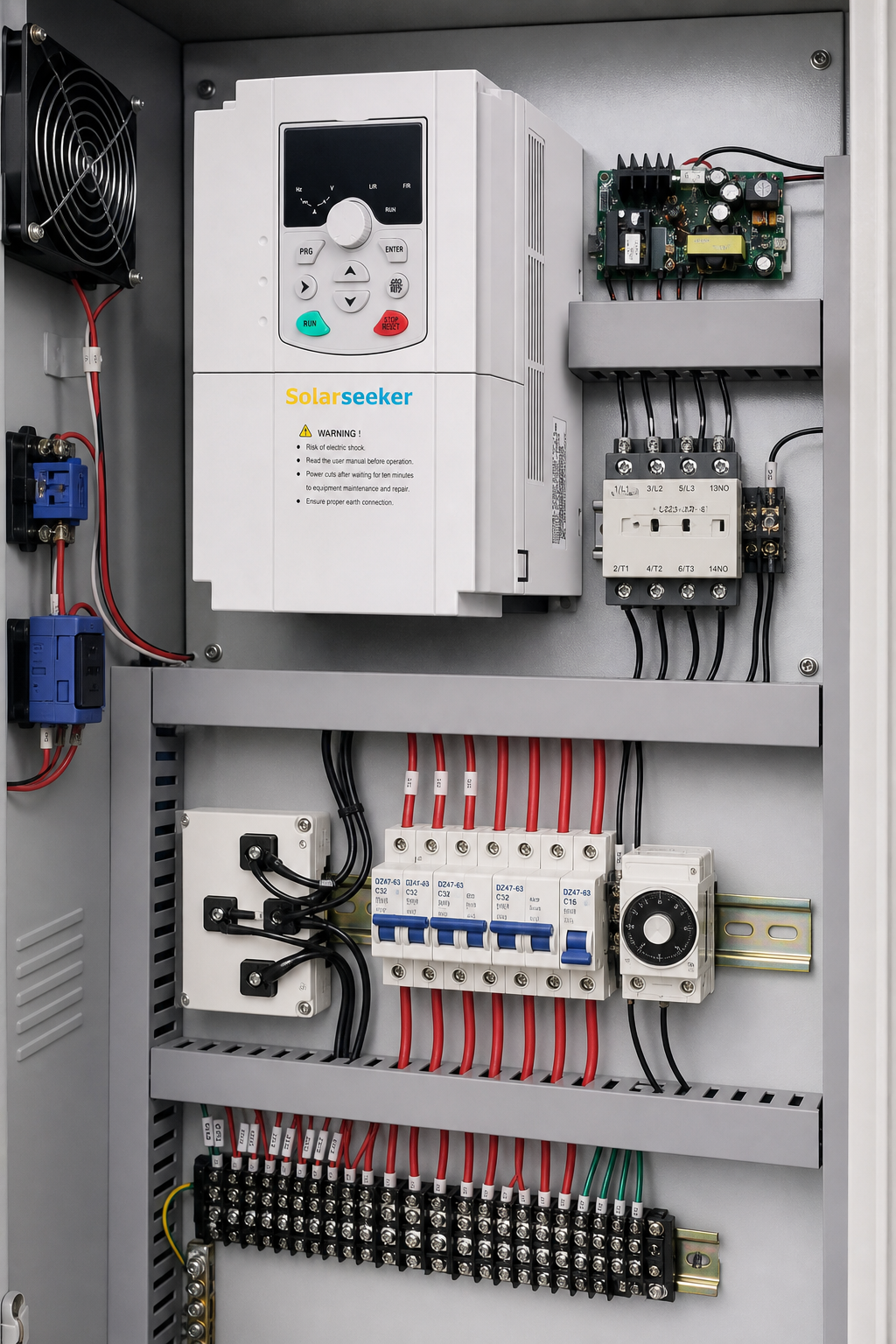
Leading solar pump drive architectures separate power stages from logic and control circuits. Factory training must teach your technicians how to safely service modular components:
- Swapping plug-and-play DSP control cards and user interface keypads without invalidating factory warranty terms.
- Replacing high-speed DC cooling fans and inspecting internal heatsink thermal paste distribution.
- Performing conformal coating inspections to ensure printed circuit boards withstand humid agricultural microclimates.
How Manufacturer Training Cuts Down Costly “No Defect Found” Returns
In the solar pumping distribution sector, “No Defect Found” (NDF) returns represent a substantial hidden cost. Global warranty data reveals that over 50% of pump inverters returned to manufacturing facilities as “defective” exhibit zero hardware faults when placed on factory dyno test benches.
These false returns occur because local field installers misattribute common external installation errors to drive defects:
- Unbalanced Motor Windings: Submersible pumps submerged in abrasive borehole sand develop partial phase grounding that trips the drive on ground-fault or instant overcurrent.
- Floated Array Neutrals: Installers who fail to connect PV frame grounds induce high-frequency common-mode voltages that disrupt drive microcontrollers.
- Severe Undersizing: Arrays that produce adequate open-circuit voltage but collapse under load due to microcracked solar cells or poor string orientation.
When a manufacturer provides structured solar pump inverter distributor training, your technical personnel learn to run a 15-minute diagnostic intake check. Technicians inspect motor winding balance and review stored operational logs before accepting a return. This simple protocol keeps operational units in service, prevents expensive international freight expenses, and maintains healthy cash flow.
Enclosure Integration and Environmental Protection Training
Equipment packaging and enclosure selection directly determine drive survival in rural agricultural areas. Distributors must ensure their technical staff understand environmental protection boundaries.
Standard high-performance solar pump inverters, such as the Solarseeker SP4 platform, feature an IP20 internal chassis design. This compact open architecture provides high thermal efficiency when mounted inside clean machine rooms or pre-engineered protective enclosures. However, installing bare IP20 units outdoors in rural environments exposes sensitive electronics to desert dust, torrential rain, and insects.
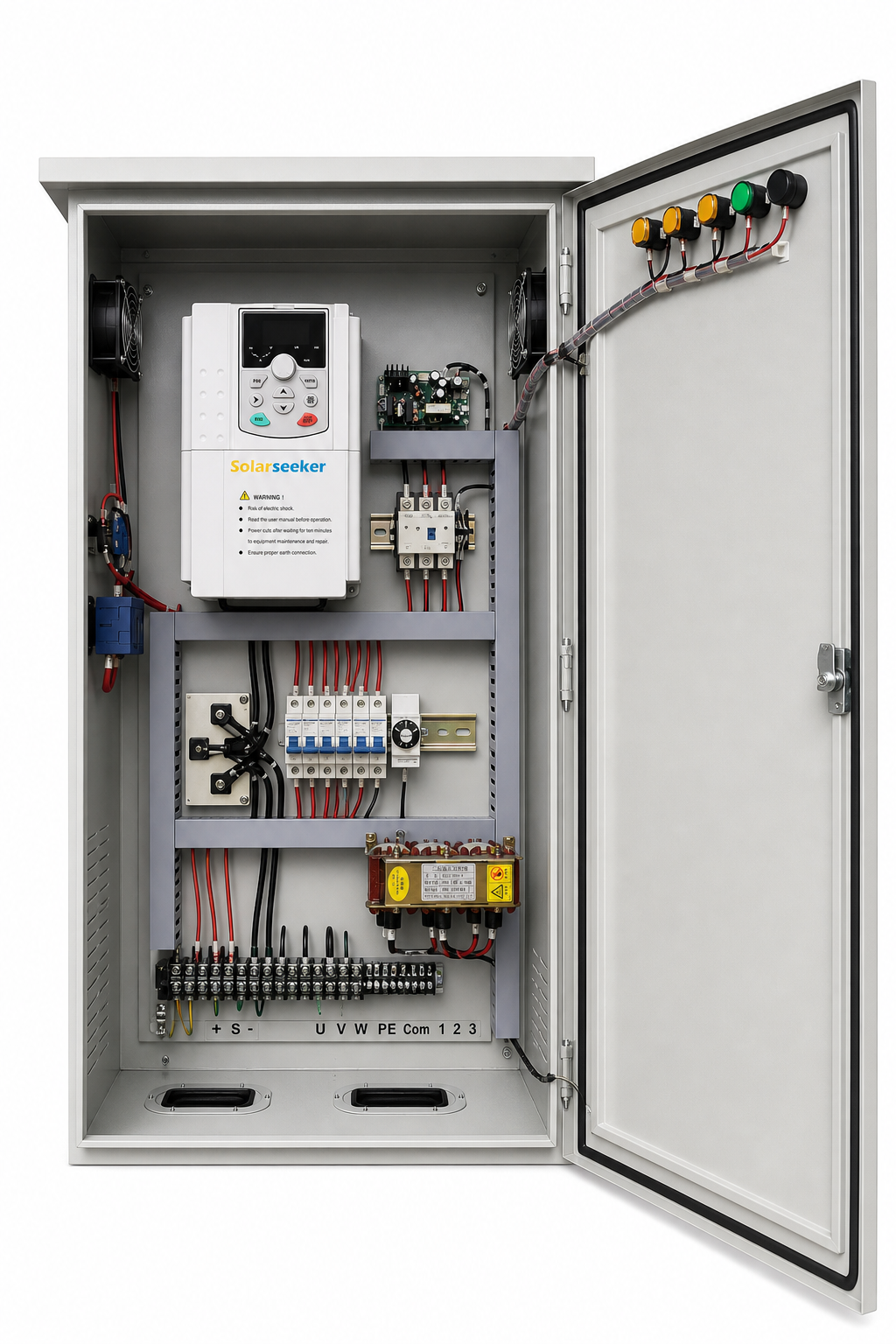
For outdoor solar irrigation, borehole pumping, and commercial farm installations, distributors must be trained to integrate drives inside pre-assembled, fully sealed enclosures such as the Solarseeker IP65 Solar Pump Control Cabinet. Key training areas include:
- Thermal Duct Separation: Ensuring heat sink exhaust airflow discharges directly out of the cabinet without heating internal DC bus capacitors.
- Multi-Stage Surge Protection: Proper grounding of Type II DC surge protective devices (SPDs) and AC output lightning arresters in compliance with IEEE 1547 distributed resource guidelines.
- Sealing and Gland Management: Verifying bottom entry cable gland compression to stop moisture wicking along power cables into the enclosure.
Equipping Sales Engineers to Counter Cheap Commodity Inverter Claims
Distributor training should not be restricted to bench technicians; technical sales representatives must also understand how specialized solar pumping software outperforms repurposed generic industrial drives.
Commodity variable frequency drives adapted with rudimentary solar firmware frequently struggle in real agricultural conditions. Training your sales staff to explain these engineering distinctions protects your profit margins against low-bid price competition:
- High-Speed Dynamic MPPT Tracking: Dedicated solar pump algorithms track irradiance shifts in fractions of a second during partial cloud cover. Generic VFDs often drop below minimum frequency and shut down completely, losing 15% to 25% of potential daily water discharge.
- Sensorless Dry-Run Protection: Advanced solar drives calculate active motor power factors to detect well cavitation without requiring fragile down-hole water probes that corrode over time.
- Smooth Soft-Start Ramp Profiles: Controlling acceleration ramps minimizes pipe water hammer and protects mechanical pump impellers from sudden mechanical shear.
- Automated AC/DC Hybrid Supply Switching: Demonstrating how the drive blends solar power with a backup diesel generator or rural AC grid during critical irrigation windows ensures continuous water delivery without manual operator intervention.
Factory Support SLA and Spare Parts Buffer Management
Technical capability must be supported by practical spare parts logistics. An experienced manufacturer will assist distributors in establishing an organized local inventory buffer based on fleet volume.
Wholesalers should maintain a spare parts inventory equal to 3% to 5% of their active regional drive population:
- Control and Driver Cards: 40% of the spare parts budget allocated to modular logic boards.
- Cooling Fan Trays: 25% allocated to dual-bearing DC cooling fan assemblies for hot desert zones.
- Surge Protection Modules: 20% allocated to plug-in DC and AC varistor cartridges.
- Digital Keypads: 15% allocated to replacement door-mounted LCD programming panels.
Review our structured support workflows in the Solar Pumping Service System Guide to see how advance factory warranty exchange agreements protect distributor liquidity.
5-Point Checklist to Vet Manufacturer Training Before Signing
Before signing an exclusive regional distribution agreement or placing volume container orders, evaluate prospective manufacturing partners using this verification checklist:
- Dedicated Application Engineers: Does the supplier provide direct access to bilingual power electronics engineers, or are technical questions routed through junior export sales agents?
- Clear Technical Documentation: Are user manuals, parameter lists, and fault diagnosis trees written in clear English with high-resolution schematic diagrams?
- Sample Unit and Pilot Evaluation Support: Does the manufacturer welcome single-unit pilot orders and provide live technical onboarding to test the drive under your regional grid and solar conditions?
- Virtual and On-Site Commissioning Assistance: Will factory engineers join video commissioning sessions for your first high-power (30kW to 110kW+) agricultural projects?
- Certified Technician Credentials: Does the manufacturer issue formal technical certification to distributor personnel upon completing the curriculum, helping your business stand out in regional tenders?
Partner With Solarseeker for Distributor Technical Enablement
Solarseeker designs reliable off-grid pumping systems engineered specifically for commercial distributors, EPC contractors, and agricultural equipment dealers worldwide. We provide complete technical enablement packages, including hands-on webinars, diagnostic guides, and full schematic documentation.
Our product platform pairs modular Solarseeker SP4 inverters with outdoor-ready Solarseeker IP65 Solar Pump Control Cabinets, ensuring your contractor network achieves rapid, error-free installations in any environment. We welcome prototype testing and single-unit pilot orders to help prospective partners validate our engineering quality before committing to wholesale volumes.
To schedule a dedicated technical training session for your engineering staff or request a distributor pilot package, Contact Solarseeker Channel Engineering today.
About the Author
Andy (known professionally as Solar Pumping System Specialist Andy) is the Founder and Chief Application Engineer at Solarseeker. With extensive field-commissioning experience across deep-well extraction, commercial irrigation, and municipal water schemes, he is dedicated to building simpler, reliable solar water pump solutions for real field conditions. His technical work focuses on off-grid MPPT drive dynamics, high-ambient thermal derating, and outdoor pre-assembled control enclosure engineering.
For technical inquiries, complete cabinet schematics, and engineering guides, visit: https://solarseeker.tech/solar-pump-cabinet/