
System Design Guide
Solar Pump System Design Guide for Complete Water Pumping Packages
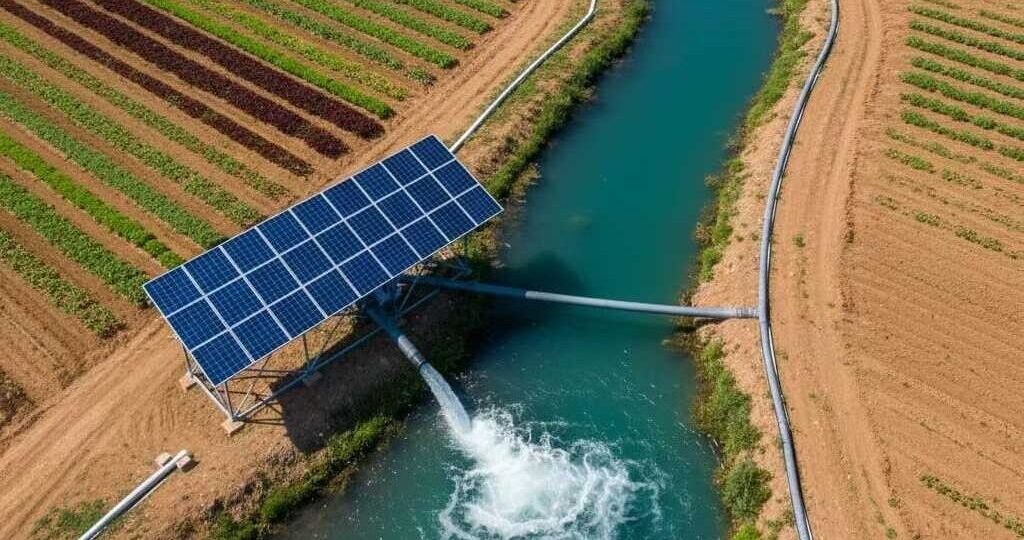
When we design a solar pump system, we do not size the inverter first. We size the water job first, then build the equipment around it.
A complete solar pumping system may include a pump, inverter or controller, PV array, cabinet, sensors, cables and accessories. SolarSeeker supplies inverter, controller and custom-cabinet products, and helps verify the pump, PV and field-accessory requirements before installation.
Water
head/flow
Drive
MPPT control
Field
cabinet/field
Design Flow
Design from the water side back to the PV array
This order keeps the system practical. It also helps the customer understand why a small well, a 380V deep well and a desert irrigation project need different design paths.
1
Water demand
Daily volume, flow rate, total head and operating hours.
2
Pump match
Submersible or surface pump, voltage, phase and current.
3
Drive choice
SP inverter, PV pump controller or protected controller path.
4
PV layout
Panel wattage, Voc, Vmp, series/parallel plan and MPPT range.
5
Site requirements
Cabinet, sensors, cables, connectors and field-accessory requirements.
Component Matching
What each part must match
A system works when each layer is matched to the layer before it.
| Part | Must match | Common mistake | Useful product path |
|---|---|---|---|
| Pump | Head, flow, water source, voltage and phase | Buying by diameter or HP only | Pump selection |
| Inverter or controller | Motor voltage, current, phase and power margin | Treating all controllers as charge controllers | Product catalog |
| PV array | MPPT voltage window and site sunlight | Checking wattage but ignoring string voltage | Panel matching |
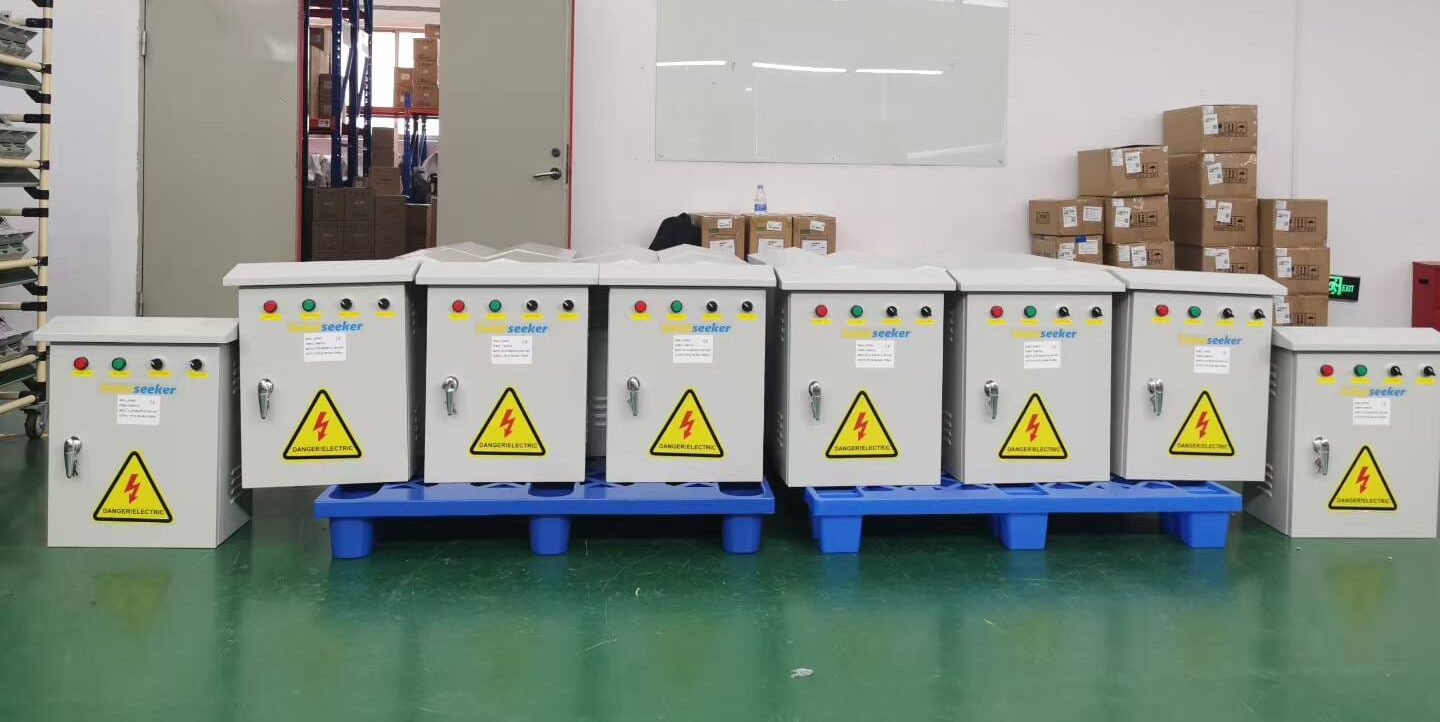
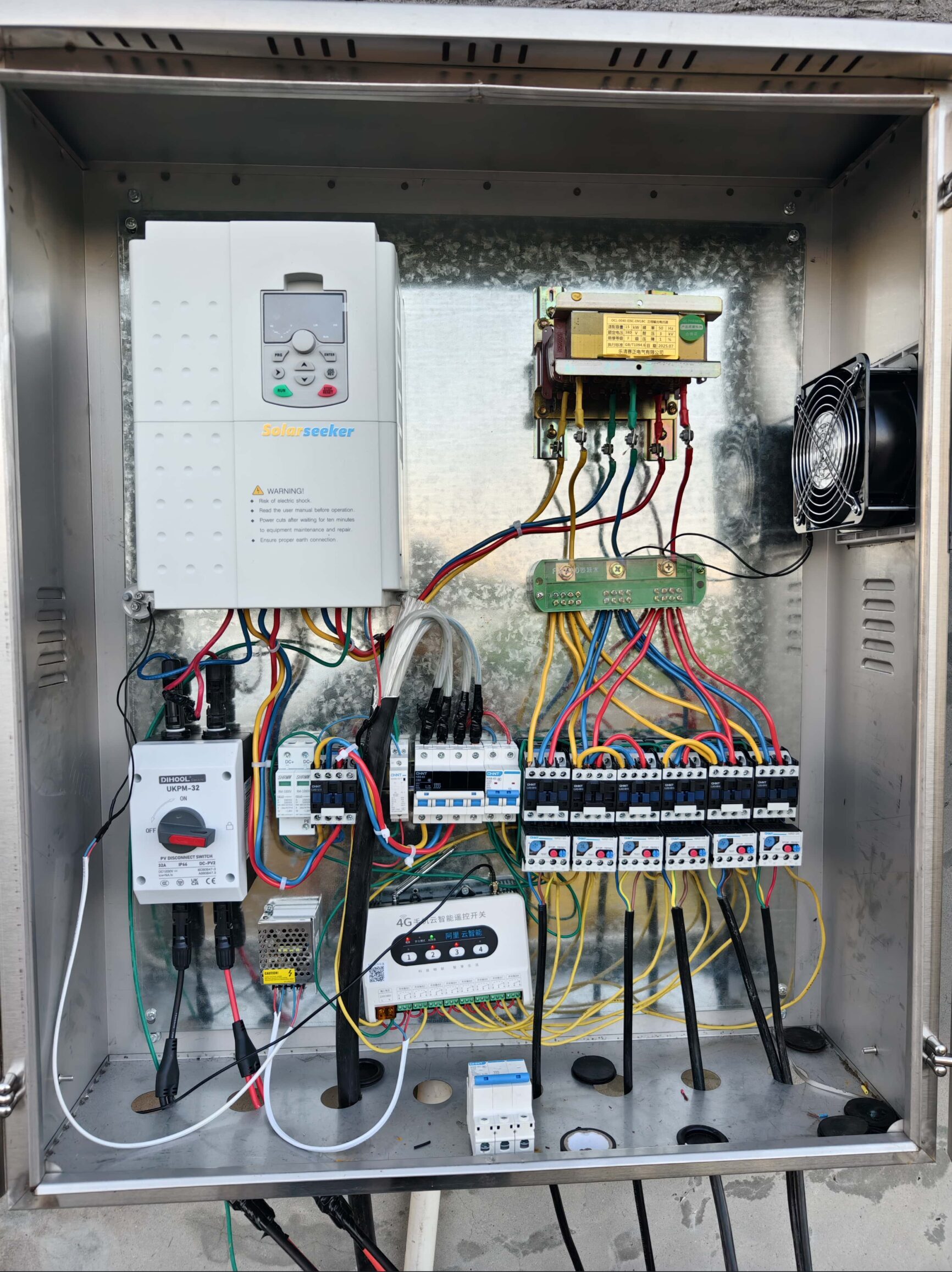
| Cabinet | Power level, environment, wiring and protection devices | Installing indoor wiring outdoors | Cabinet |
| Accessories | Sensors, connectors, terminals and field spares | Delaying the site because small parts are missing | Project review |
System Design Patterns
Three system design patterns
The system design changes with scale and environment. These patterns help distributors choose the inverter, controller or cabinet path and confirm the matching requirements around it.
Small well or farm system
SP1 or SP3, matched PV array, water level sensor and basic field accessories.
380V deep well system
SP4, 380V three-phase pump, larger PV array, cabinet and protection devices.
Desert or outdoor design
Cabinet, protected controller option, clean wiring, dust and heat planning.
Related Product Paths
Design guide links back to the product catalog
Use the guide to confirm system requirements, then use the product pages to confirm model details.
Main Catalog
Solar Pump Inverters
Use this page as the main product route for SP1-SP4 and related systems.
High Power
380V / SP4 Path
For deep wells, large irrigation and three-phase pump motors.
Controllers
SP5 / SP6
For PV pump controller and protected submersible controller work.
Project Review
System Matching & Field Data
Send pump, water-duty and site data so we can confirm the inverter path and pump/PV matching requirements.
FAQ
Solar pump system design FAQ
Answers for turning a pump request into a matched solar pumping system design.
What comes first in solar pump system design?
We start from water demand: head, flow, well depth and daily pumping hours. After that we match the pump, drive, PV array and field protection.
What can SolarSeeker supply and help match?
SolarSeeker supplies solar pump inverters, controllers and custom cabinets. We can also help match the pump, PV array, sensors, cables and field accessories based on the project data.
Do solar pump systems need batteries?
Most water pumping systems do not need batteries. Many projects pump water during sunlight hours and store water in a tank. Batteries are only considered when night operation or special backup is required.
When should we add a cabinet?
Add a cabinet for high-power projects, exposed outdoor sites, dusty or coastal environments, or when the project needs clean wiring and easier maintenance.
What data should we send for system design?
Send pump nameplate, head, flow, well depth, cable distance, panel model if available, installation environment and project country.
Design Review
Send the system data before buying separate parts
A pump, inverter, panel array and cabinet should be checked together. Send the project data and SolarSeeker will recommend the inverter, controller or cabinet path and the matching requirements for the rest of the system.
Request System Design