
SP4 380V Three Phase Solar Pump Inverter
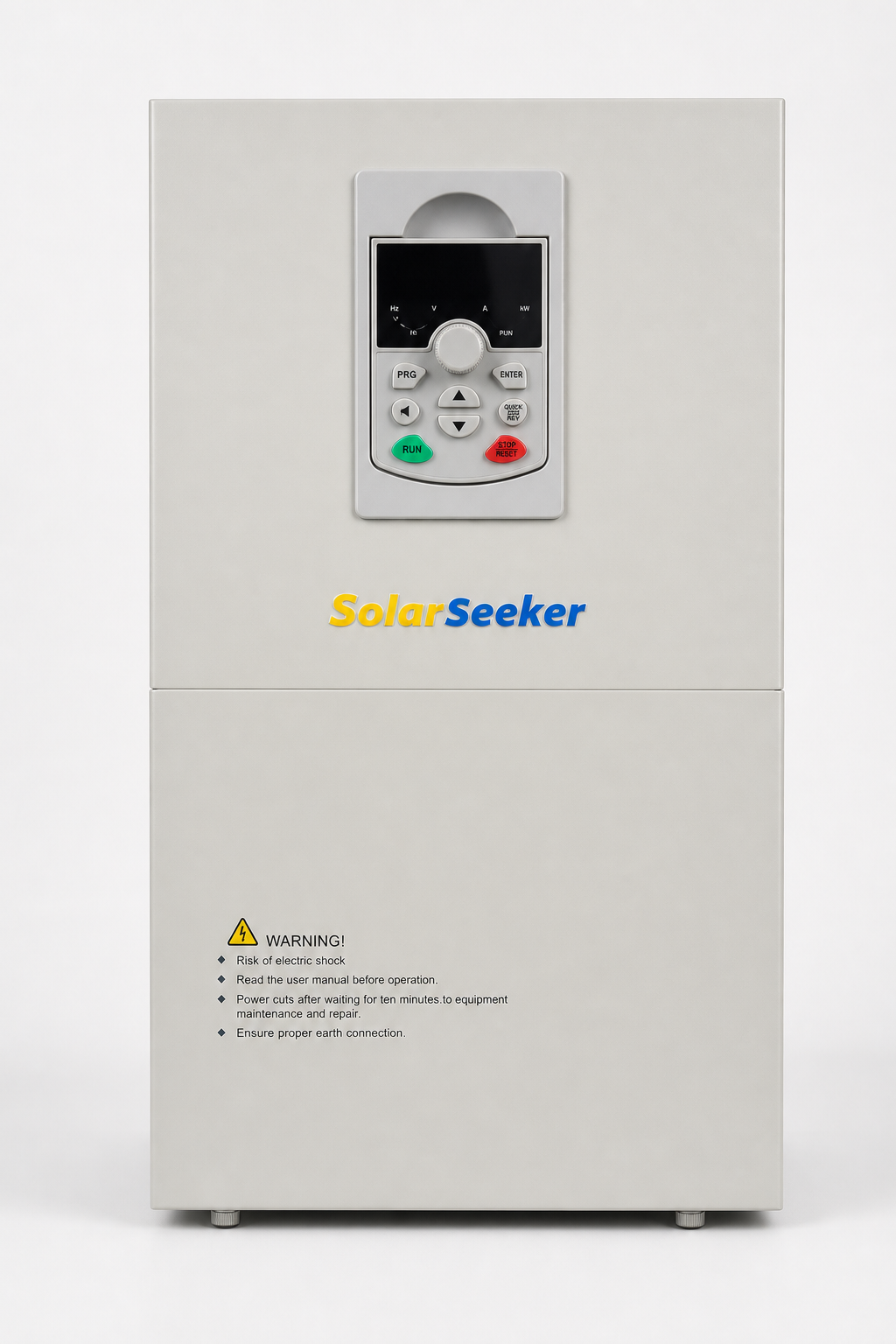
SP4 is the SolarSeeker inverter path for 380V three phase pump projects. It is built for farm irrigation, deep wells, long pipe runs, water treatment, flood control, and other sites where a small 220V drive is no longer the right fit.
Use SP4 when the pump nameplate shows 380V three phase output and the project needs wider DC input headroom, fewer complex settings for installers, and a practical fault display for field service.
Solarseeker SP4 Engineering Standards Featured in Kenya Engineer Magazine
Our field-proven design principles for deep-well solar pumping—addressing high dV/dt motor insulation protection, equatorial PV derating, and sensorless dry-well algorithms—have been published in East Africa’s premier engineering journal.
Quick Decision
SP4 is for 380V three phase pumps and higher-power solar pumping projects
If the pump is 380V three phase, SP4 is usually the first SolarSeeker model path to check. If the pump is 220V, start from SP1, SP2, or SP3 instead.
Choose SP4 for 380V pump motors
Use SP4 when the pump output requirement is 380V three phase and the project needs an inverter for direct solar pumping.
Use the verified 800V DC range
The wide DC input range gives engineers more room for PV string design on higher-power systems.
Built for hot field conditions
SP4 is specified for operation up to 50°C, useful for farm, desert, cabinet, and outdoor pump rooms.
Field Installation
A 380V pump project needs more than a model number
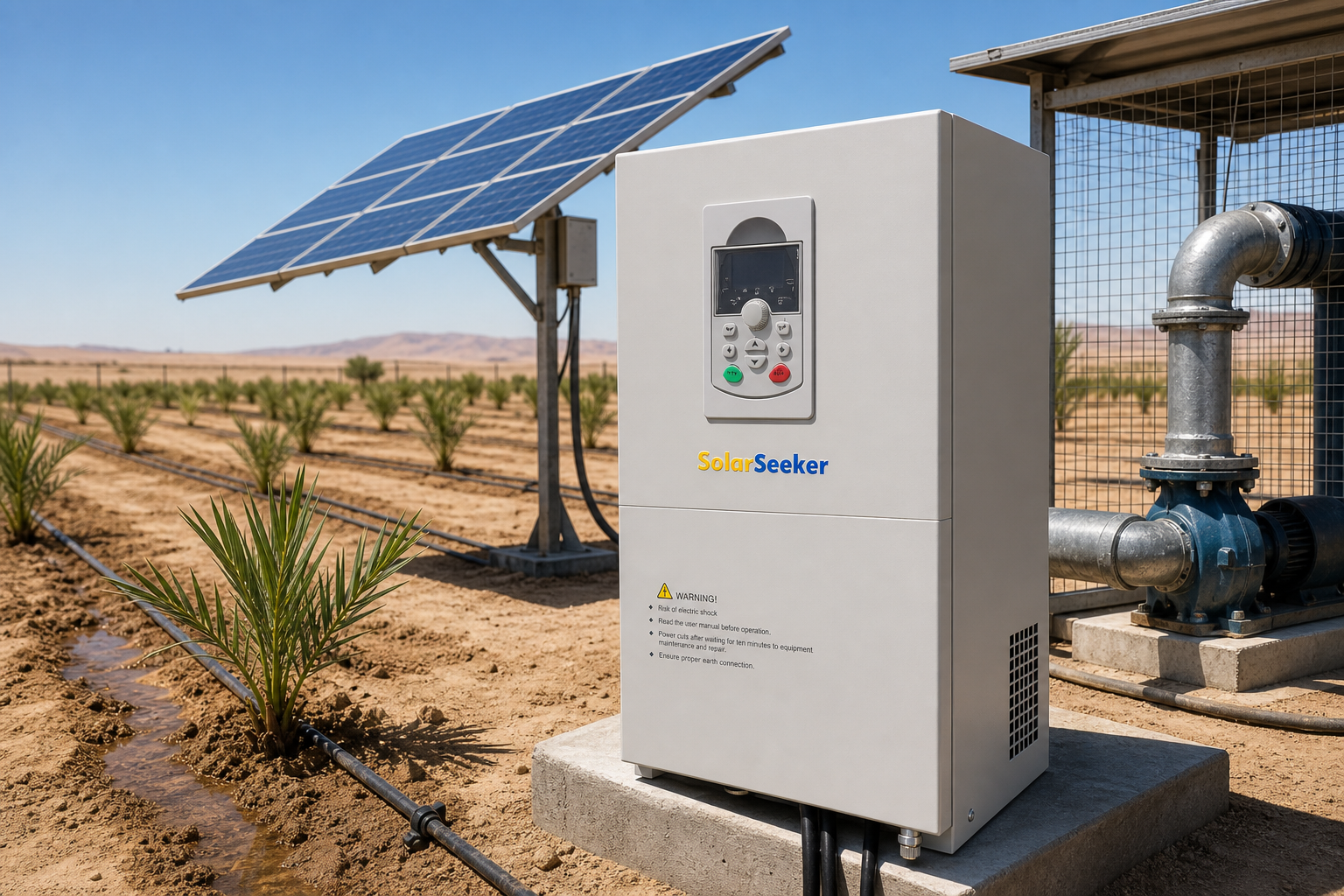
For SP4 projects, SolarSeeker checks the pump nameplate, PV array voltage, cable distance, cabinet environment, dry-run protection, and installer service access before shipment. This is especially important for deep wells, irrigation blocks, flood control, and long daily runtime.
Pump and pipe load
Confirm rated current, head, flow, pipe length, and whether the pump starts under heavy pressure.
PV and cabinet design
Check string voltage, surge protection, wiring access, ventilation, and whether an outdoor cabinet is needed.
Why SP4
What makes SP4 easier to sell and service than a generic solar pump inverter?
Most 380V solar pump inverters can start and run a pump. The difference is what happens during weak sun, hot cabinets, wrong sizing, and field troubleshooting.
Up to 800V DC input
Use the verified 270–800V DC/MPPT range and 530–800V recommended DC input range when designing higher-power PV strings.
Start waiting function
The inverter can wait until solar energy is strong enough before restarting, reducing repeated start-stop cycles in the morning or under moving clouds.
Simpler parameter setup
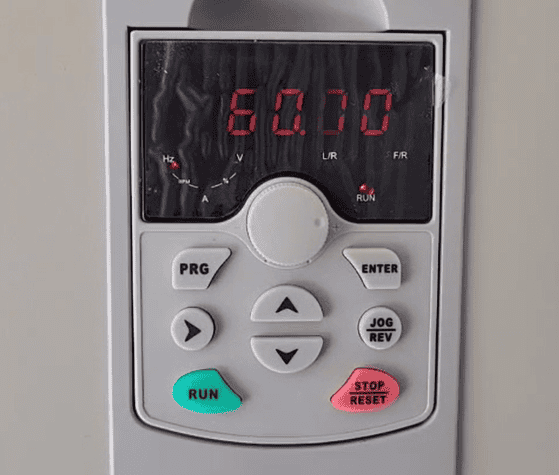
The operating interface keeps most complex parameters away from daily installation work, so dealers and technicians spend less time searching menus.
50°C operation
The verified 0–50°C operating range supports hot pump rooms, dry-season irrigation sites and properly ventilated cabinet installations.
Readable fault display
Field teams can identify common conditions such as undervoltage, overvoltage, dry run, well empty, and tank full from clear display codes.
Cabinet project support
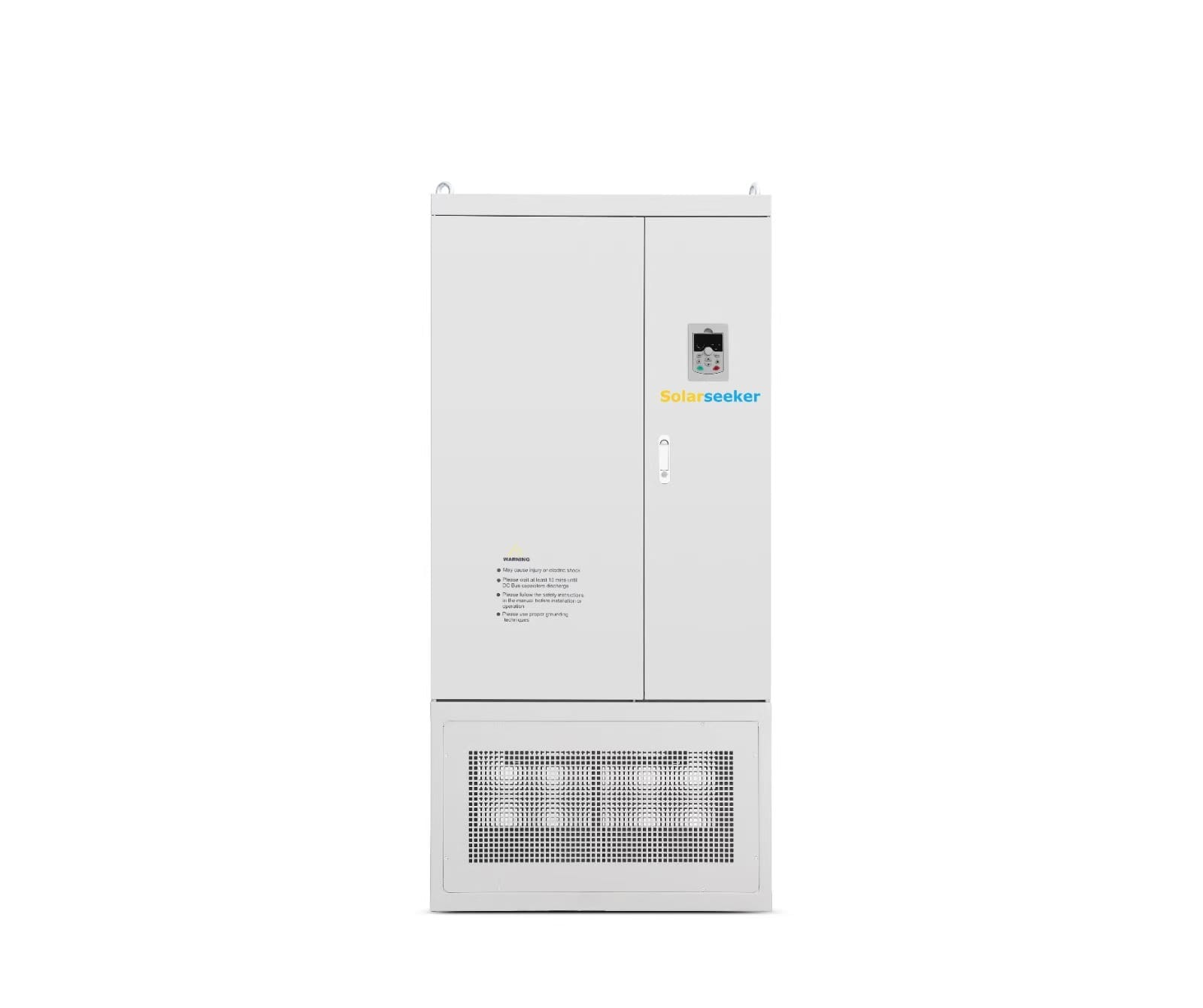
For higher-power installations, SolarSeeker can support inverter and cabinet matching instead of leaving the dealer to solve wiring and protection alone.
Verified Model Selection
SP4: 2.2–220 kW inverter platform for 1.5–200 kW pump matching
SP4 uses 380–440V three-phase input/output. Its current datasheet separates inverter rating from recommended pump power, so the two ranges should not be treated as the same specification.
| Representative model | Inverter power | Output current | Recommended pump | DC / recommended DC |
|---|---|---|---|---|
| SP4002 | 2.2 kW | 5 A | 1.5 kW | 270–800 V / 530–800 V |
| SP4005 | 5.5 kW | 13 A | 4.0 kW | 270–800 V / 530–800 V |
| SP4015 | 15 kW | 32 A | 11 kW | 270–800 V / 530–800 V |
| SP4037 | 37 kW | 75 A | 30 kW | 270–800 V / 530–800 V |
| SP4075 | 75 kW | 150 A | 55 kW | 270–800 V / 530–800 V |
| SP4110 | 110 kW | 210 A | 90 kW | 270–800 V / 530–800 V |
| SP4200 | 200 kW | 377 A | 185 kW | 270–800 V / 530–800 V |
| SP4220 | 220 kW | 426 A | 200 kW | 270–800 V / 530–800 V |
Selection note: keep array Vmp at about 530 V or higher and within the verified 530–800 V recommended range. Final model selection must still follow pump rated current, head, flow, cable distance and site conditions.
Verified Selection Checkpoints
What to verify before choosing SP4 for a 380V pump
SP4 is designed specifically for solar water pumping rather than as a generic VFD selection page. The practical advantage comes from matching the drive to the pump, PV string and site conditions with the current datasheet limits.
DC input
Verified DC/MPPT range is 270–800 V. Recommended DC input is 530–800 V.
Pump current
Use pump rated current as well as kW. SP4 output-current coverage is 5–426 A.
Temperature
Verified operating-temperature range is 0–50°C. Cabinet ventilation still matters in hot sites.
Outdoor protection
Do not assume standard SP4 is IP55. Use a verified outdoor controller or a suitable control cabinet when the installation requires higher ingress protection.
SolarSeeker products are CE certified and compliant with applicable standards.
Field Engineering Standards: Borehole Extraction & Transmission Line Reliability
Solar pump systems deployed across high-ambient equatorial regions encounter severe electrical and hydraulic stress. The following sizing curves and protective topologies are engineered into the SolarSeeker SP4 industrial platform to ensure 10+ year service life.
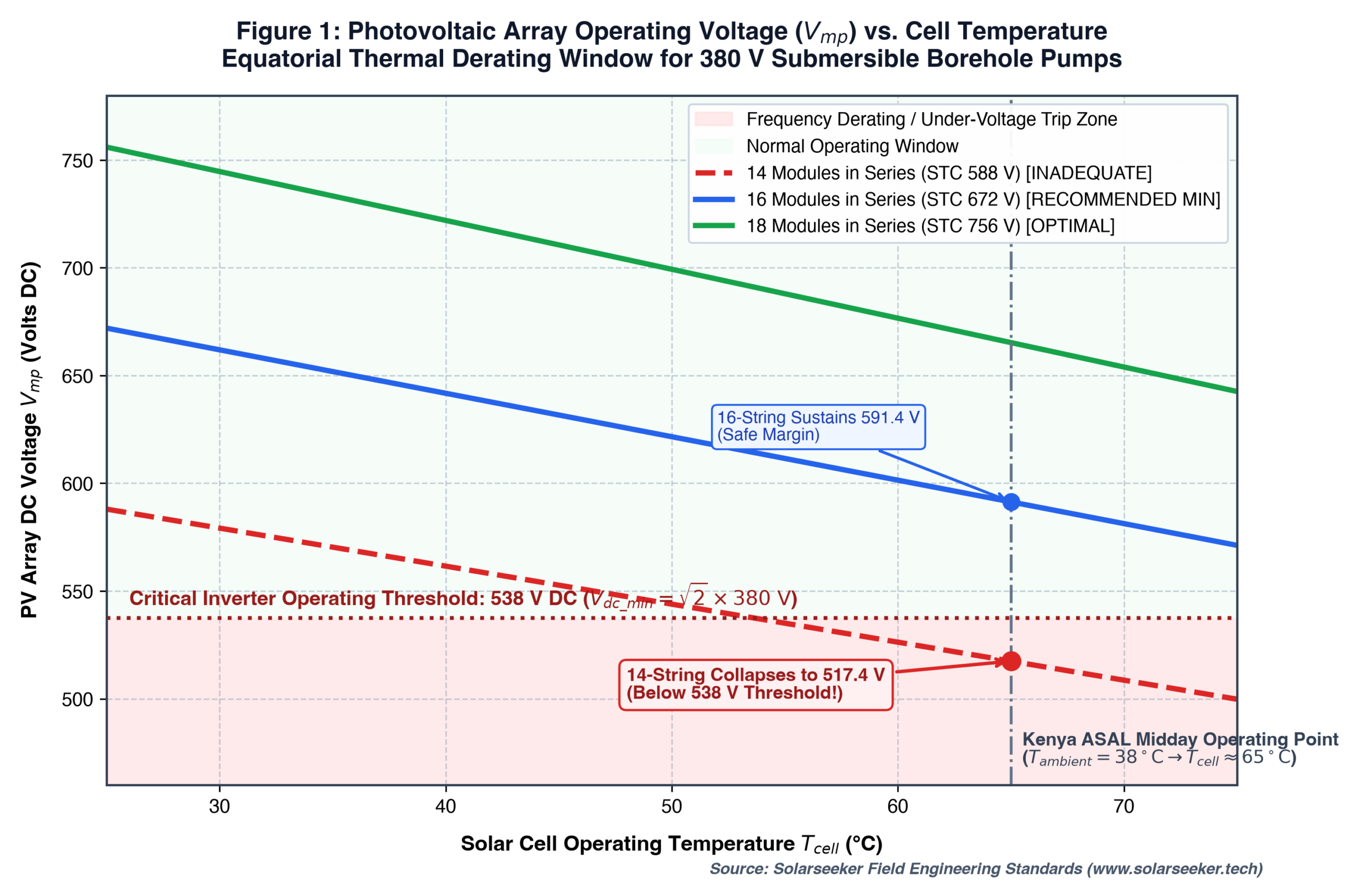
PV Array Operating Voltage (Vmp) vs. Cell Temperature
Under equatorial ambient heat, midday solar panel cell temperatures routinely reach 65°C. String voltage collapses due to negative temperature coefficients (−0.35%/°C). For 380V three-phase motors requiring minimum 530V DC bus voltage, strings must be configured with 16 to 18 modules (Vmp ≈ 590V–660V hot) to prevent midday stall trips.
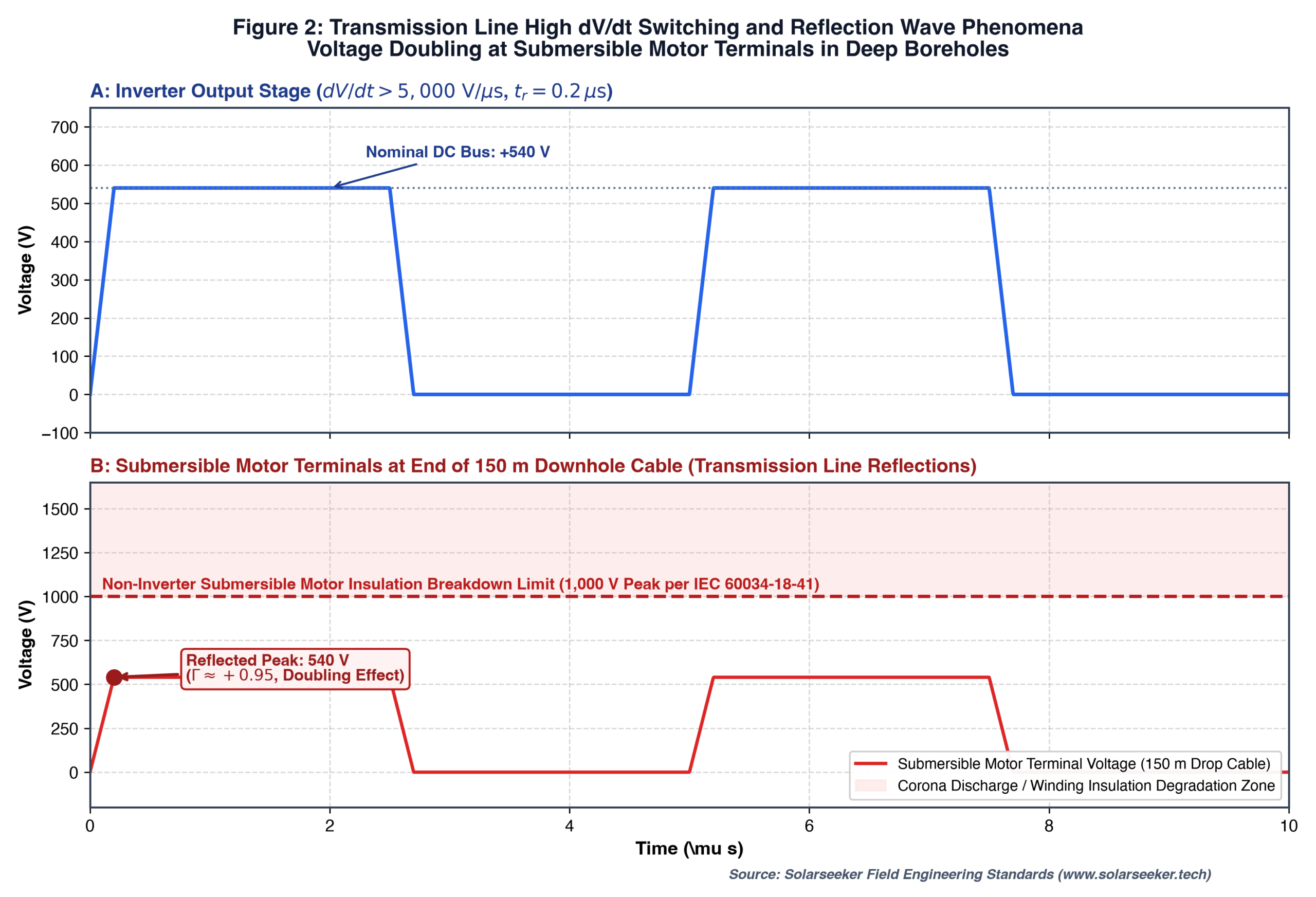
Transmission Line Reflection & Voltage Doubling
In deep borehole extraction (80m–280m), fast IGBT rise times (tr < 0.2μs) cause steep dV/dt (>5,000 V/μs). Impedance mismatch between the drop cable and submersible motor causes near-complete wave reflection (Γ ≈ +0.95), doubling terminal peak voltages to 1,080V–1,600V. This destroys standard motor winding insulation without proper filtering (IEC 60034-18-41).
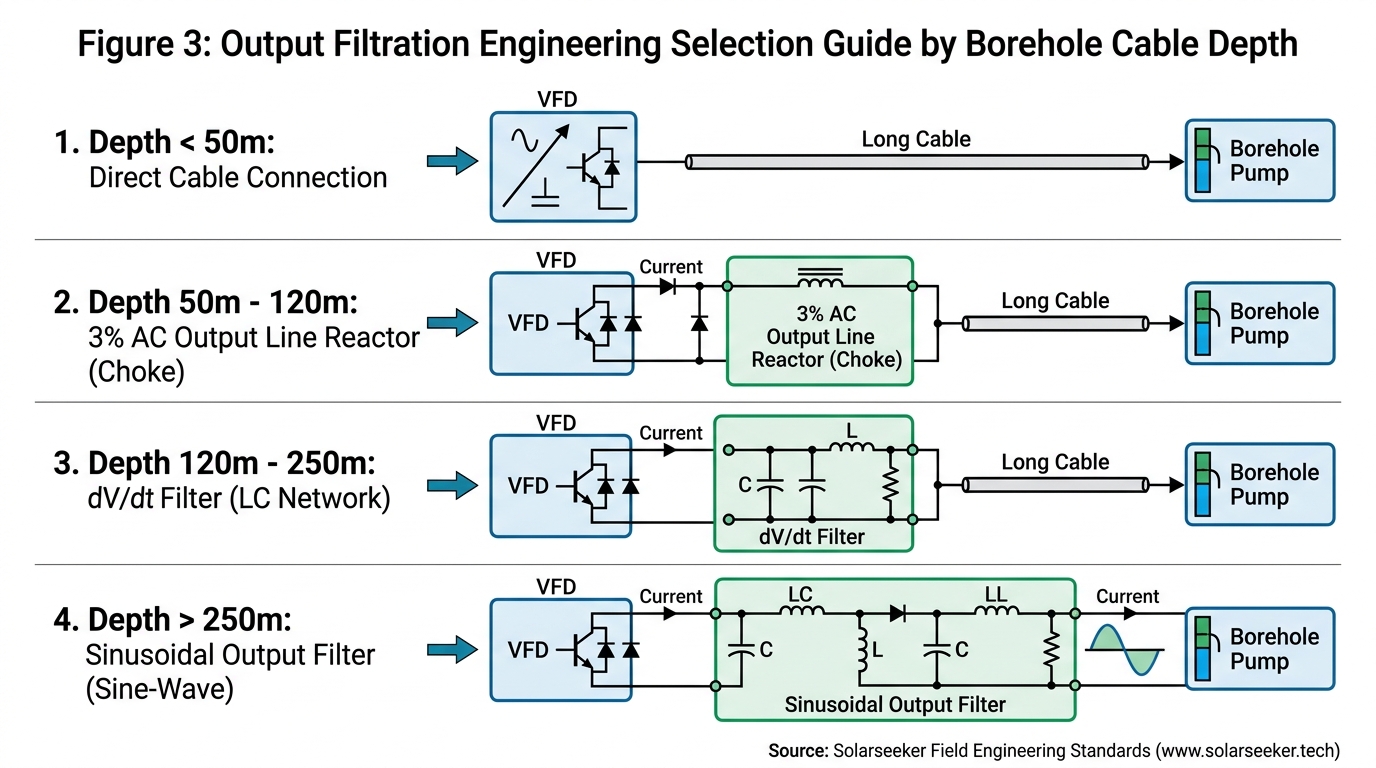
4-Tier Output Filter Selection by Borehole Cable Depth
Engineering guidelines for submersible borehole pumps: <50m cable (Direct connection acceptable); 50m–120m (3% AC Output Line Reactor slows dV/dt < 1,000 V/μs); 120m–250m (dV/dt LC Filter clamps peak < 1.3 × Vbus); >250m (Sinusoidal Output Filter converts PWM pulses into pure sine wave < 5% THD).
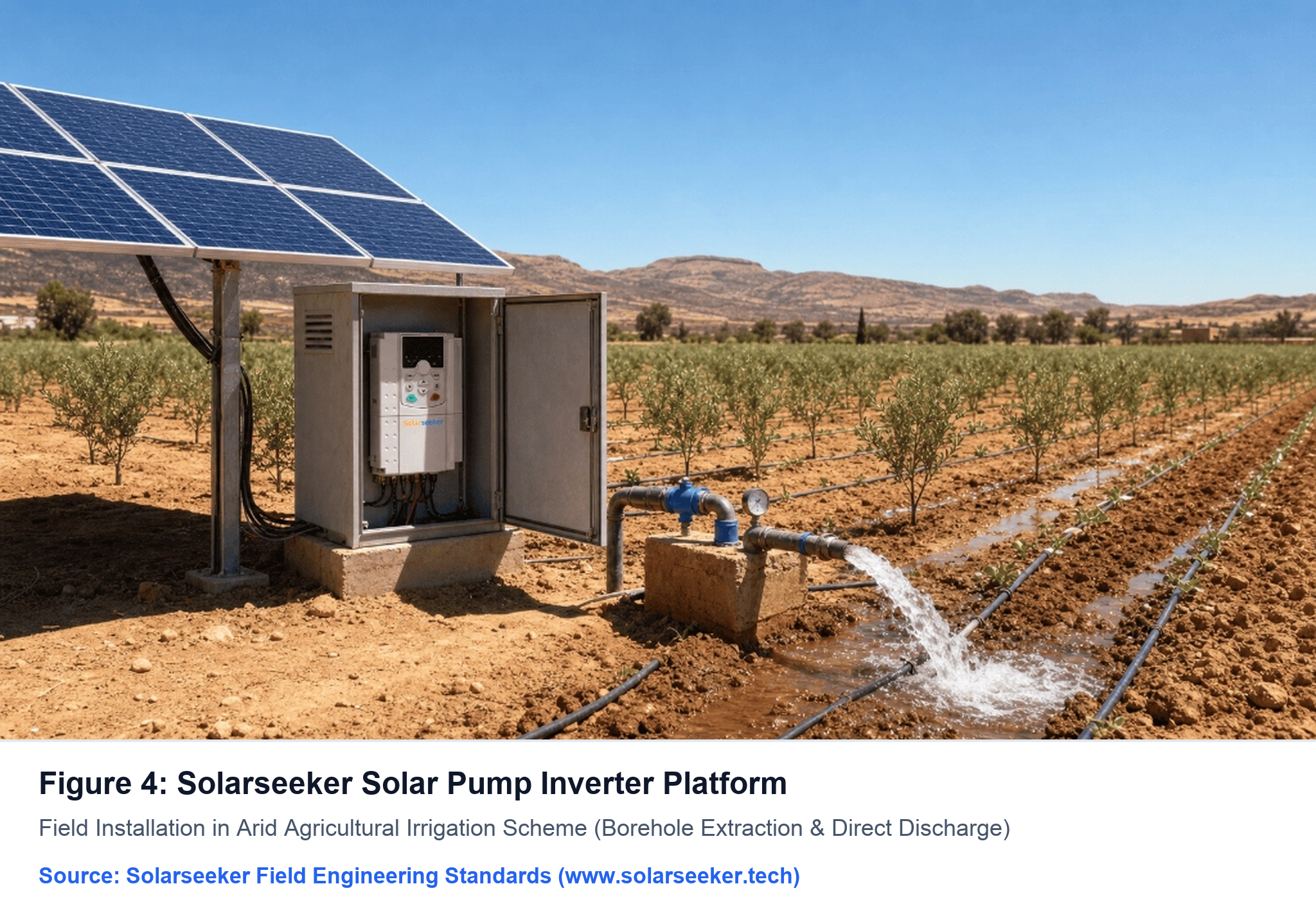
SolarSeeker SP4 Industrial Architecture & Field Integration
The SP4 2.2kW–220kW industrial platform incorporates dynamic MPPT (>99.2%), sensorless under-load dry-run protection via motor power factor tracking, controlled 2.5–4.0s deceleration ramp to prevent catastrophic water hammer on check valves, and dual AC/DC auto-changeover for hybrid diesel/grid blending.
Need Technical Sizing for Deep Borehole Cables or Hybrid AC/DC Projects?
SolarSeeker engineering teams provide string voltage verification, output filter sizing, and custom cabinet drawings.
Project Proof
SP4 cases across small farm pumps and high-power irrigation systems
The right SP4 model depends on the pump load and site risk. These project examples show how the same 380V inverter path can cover different power levels.
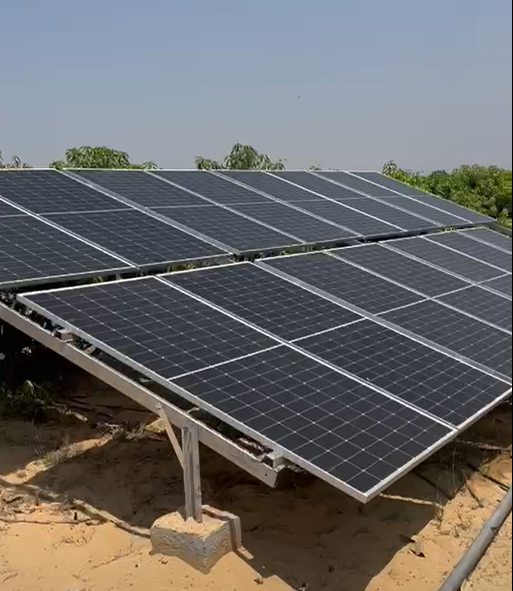
Egypt / SP4007
5.5kW olive garden irrigation
A 7.5kW inverter matched to a 5.5kW 380V pump with a 800V DC upper MPPT range.
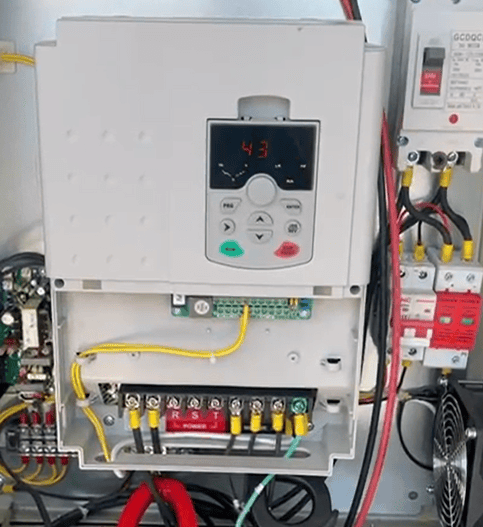
Philippines / SP4015
11kW flood-prevention pump
A 15kW inverter path for a public pumping project with installer and service requirements.
Mexico / SP4075
55kW lemon orchard pump
A 75kW inverter selected around pump current, pressure, pipework, and PV string plan.
Paraguay / SP4200
185HP center pivot irrigation
A 200kW cabinet project where layout, protection, and service access were part of the engineering decision.
Before You Order
What should you send for SP4 sizing?
A 380V pump project should be checked before the inverter ships. These details help SolarSeeker recommend the right SP4 model, PV array direction, cabinet protection, and basic settings.
Pump nameplate
Voltage, phase, kW/HP, rated current, frequency, and pump type.
Water demand
Head, flow, pipe distance, water source, and daily runtime target.
PV module data
Panel wattage, Voc, Vmp, planned series/parallel layout, and available space.
Site environment
Temperature, dust, humidity, cabinet location, cable length, and service access.
SP4 quotation path
-
1
Send pump and site data
A photo of the pump nameplate is usually the fastest starting point.
-
2
SolarSeeker checks the model path
We check SP4 model size, PV voltage, cabinet needs, and protection logic.
-
3
You receive a practical recommendation
The reply can include inverter model, PV array direction, and cabinet notes.
Related Product Paths
Check the correct SolarSeeker path before you quote
SP4 is the 380V inverter model page. Use the related pages below when the buyer needs a category view, cabinet build, 220V alternative, or system-design guidance.
380V Solar Pump Inverter
Category page for 380V three phase inverter selection.
Solar Pump Cabinet
Useful for outdoor, dusty, high-power, and protection-heavy SP4 projects.
SP3 220V Three Phase
Use this path when the pump is 220V three phase instead of 380V.
Solar Irrigation System
For project buyers who need pump, inverter, PV array and installation requirements coordinated before the other system components are sourced.
FAQ
SP4 380V three phase solar pump inverter FAQ
What is SP4 used for?
SP4 is used for 380V three phase solar pump systems. Typical projects include farm irrigation, deep wells, water treatment, flood control, industrial transfer, and high-flow water supply.
Can SP4 run a 220V pump?
SP4 is not the first choice for 220V pumps. For 220V single phase pumps use SP1, for single-to-three phase conversion use SP2, and for 220V three phase pumps use SP3.
How should the 800V DC limit be used in PV string design?
Keep the array inside the verified 270–800 V DC/MPPT range and use 530–800 V as the recommended DC input range. Final string design must also respect module Voc under the site’s lowest expected temperature.
Does SP4 need a solar pump cabinet?
Not every SP4 project needs a complete cabinet, but many outdoor or high-power sites benefit from cabinet-level protection, ventilation, surge protection, service access, and cleaner wiring.
What information is needed for an SP4 quotation?
Send the pump nameplate, head and flow requirement, water source, cable distance, site temperature, PV module data, and any cabinet or protection requirement. SolarSeeker can then check the model and PV array direction.
How does SP4 reduce repeated starting under weak sunlight?
SP4 includes a start waiting function. When solar energy is not strong enough, the inverter can wait before restarting, which helps reduce unnecessary start-stop cycles in changing sunlight.
Before Quotation
Send These Details Before Quotation
SP4 model selection should be checked against pump current, PV input and field protection. This is especially important for deep wells and larger irrigation systems.
Confirm SP4 size from rated current, not only kW
Check PV input and cabinet needs before shipment
Suitable for distributors and EPC teams quoting larger systems
SP4 pump nameplate
Send 380V three phase pump power, rated current, frequency and motor nameplate photo.
Head and flow target
Well depth, pipe distance, elevation, pressure and daily water target help confirm the system path.
PV array design
Panel power, Voc, Vmp, quantity and string layout must stay inside SP4 input limits.
Cabinet or inverter only
Tell us if you need the SP4 inverter only or a matched control cabinet, and share any sensor and protection requirements for system matching.
Site protection level
Dust, heat, rain, humidity, cable distance and maintenance access affect cabinet and installation choices.
Project role and schedule
Dealer stock, EPC delivery, farm project or OEM order affects documents, packing and support.
Simple message format: SP4 pump nameplate + rated current + head/flow + PV array + cabinet need + quantity. If some data is missing, send what you have first and SolarSeeker can help check the rest.
Planning a 380V pump project?
Send the pump nameplate and basic site details. SolarSeeker will help confirm the SP4 model, PV array direction, protection needs, and whether a cabinet should be quoted with the inverter.