
Mexico / Lemon Orchard Irrigation
SP4075 Solar Pump Inverter for a 55kW Lemon Orchard Pump in Mexico
A 55kW irrigation pump changes the risk level of a solar pumping job. The pipework, pressure, PV string design, cabinet wiring, and inverter protection all have to be treated as one system.
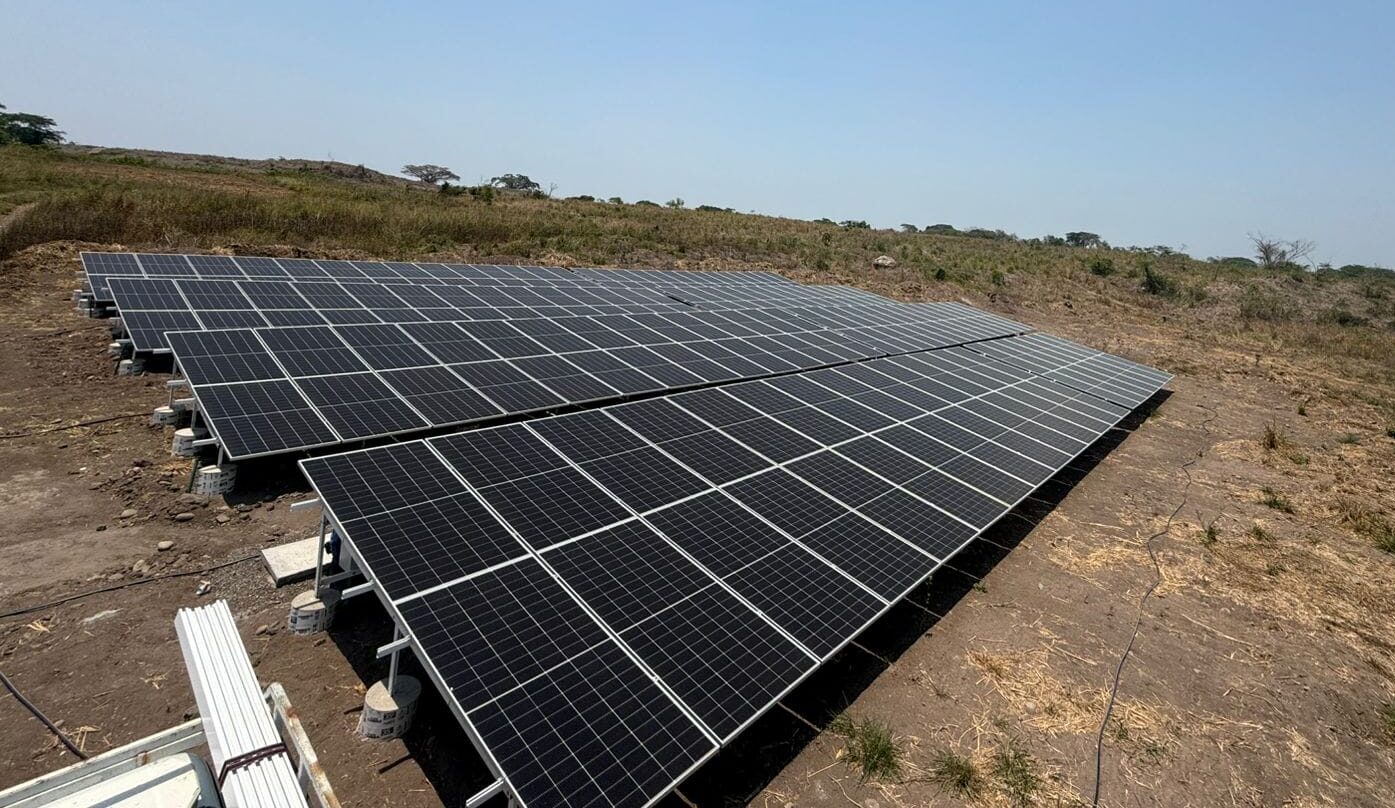
For this Mexico lemon orchard, SolarSeeker supplied an SP4075 75kW inverter for a 380V three-phase pump system. The PV field used 210 pieces of 620W Jinko panels, arranged as 15 panels in series and 14 strings in parallel.
Model
SP4075
Inverter
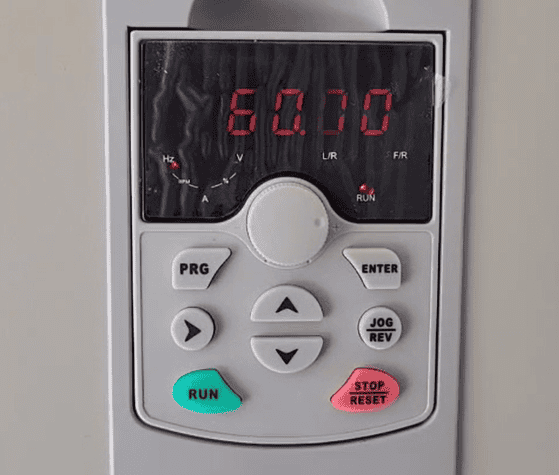
380V / 75kW / 150A
Pump
55kW
PV modules
210 x 620W
PV string
15S x 14P
Project Risk
The orchard needed water pressure, but the pipework also needed protection.
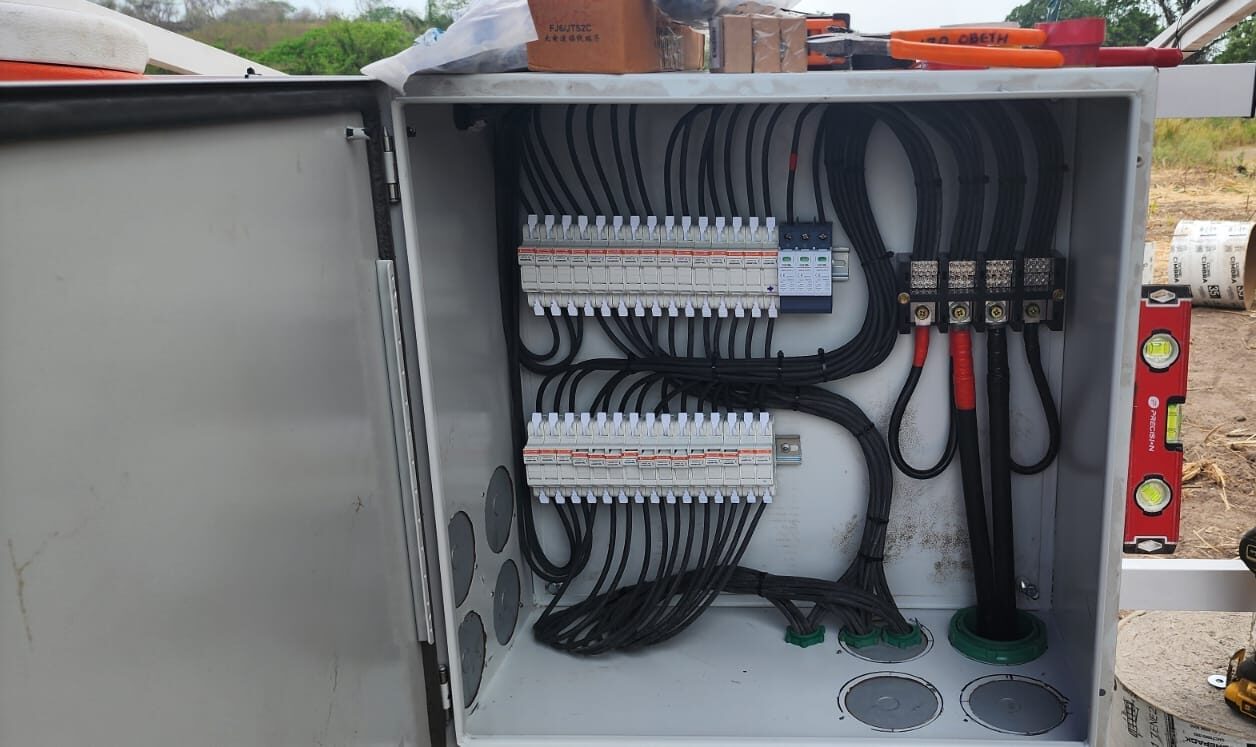
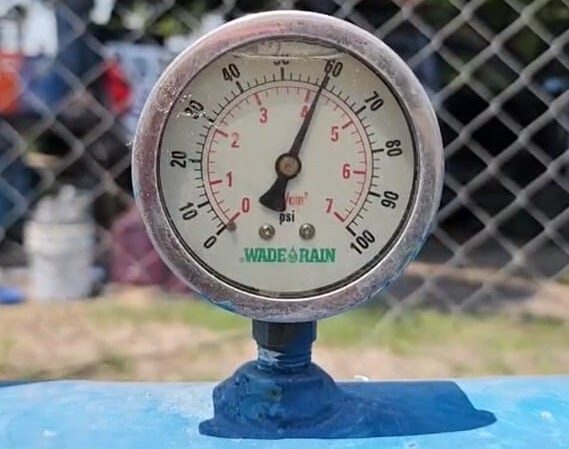
The site included pressure monitoring and a neatly arranged wiring box. That detail is important. At 55kW, irrigation performance is not only about starting the pump. The system also has to avoid dry-running and excessive pressure that can damage the pump or pipe network.
Pressure was watched
A pressure gauge was added on site so the installer could see how the water line behaved during running.
Pipe stress had to be controlled
SolarSeeker provided custom logic to help the inverter respond to dry-run and over-pressure conditions.
Installation time mattered
The electrical installation was completed far faster than the original seven-day expectation.
System Architecture
A 75kW inverter was selected around the 55kW pump load
The installed SP4075 is a 380V, 75kW, 150A model with three-phase input and three-phase output. It was paired with a 55kW pump for lemon orchard irrigation.
The PV side used 620W Jinko modules. With 15 modules in series and 14 parallel strings, the array was built to support a high-power pump while staying within the inverter design window.
Vmp per panel
46V
Voc per panel
56V
Installation Details
The wiring box and pressure gauge show why protection mattered
For high-power orchard irrigation, neat wiring is not only about appearance. It reduces troubleshooting time and makes later inspection easier for the local team.
For The Next High-Power Pump
Do not size a 55kW pump project from inverter power alone
Before repeating a project like this, SolarSeeker would ask for the pump nameplate, pipe diameter, water source, expected pressure, cable distance, panel model, and local ambient conditions.
Those details decide whether the system needs pressure logic, a cabinet design change, or a different PV string plan.
High-Power Checklist
What SolarSeeker would check before quoting another orchard pump
-
1
Read pump current and start behavior
A 55kW pump needs current data, not only a kW rating.
-
2
Set the pressure limit before commissioning
The pipe network decides whether pressure protection should be customized.
-
3
Confirm the PV string window
Vmp, Voc, string count, and hot-weather voltage need to be checked together.
-
4
Plan the cabinet for heat, dust, and inspection
Outdoor service access is part of the system design at this power level.
High-Power Buying Path
For another 55kW orchard pump, the next step is an engineering check, not a product browse
SP4075 fits this Mexico project because the pump, pressure line, cabinet wiring, and PV string plan were treated together. Use the links below in the same order when preparing a similar 380V request.
| What to check | Recommended page | Why it matters on this job |
|---|---|---|
| Pump voltage, phase, current | Solar Water Pump Inverter | The 55kW pump load decides the inverter range before any panel count is copied. |
| SP4075 / 380V model range | SP4 380V Solar Pump Controller | This case belongs to the SP4 high-power three-phase path. |
| Complete 380V system layout | 380V Solar Well Pump Systems | PV strings, cable distance, and pump protection need to be checked as one system. |
| Outdoor cabinet and protection | Solar Pump Cabinet | A 75kW inverter project needs wiring, service access, and protection planned early. |
| Quote-ready project data | Request Configuration Check | Send pump nameplate, pressure target, pipe distance, panel model, and site photos. |
FAQ
Questions for a high-power orchard pump project
What equipment was used in this Mexico lemon orchard project?
The installed system used a SolarSeeker SP4075 inverter, 380V / 75kW / 150A, matched with a 55kW pump and 210 pieces of 620W Jinko solar panels.
How was the PV array arranged?
The panels were arranged as 15 modules in series and 14 parallel strings. The panel data used for matching was 46V Vmp and 56V Voc.
Why did pressure protection matter?
Pipe pressure was a key concern. For a large irrigation pump, over-pressure and dry-running can create pump and pipe damage, so the control logic needs to match the site.
Can the same SP4075 layout be copied to another orchard?
Not directly. SolarSeeker would first check pump current, water source, pipe length, pressure target, PV module data, and local environment before confirming the model and string plan.
Planning a 380V orchard or farm pump above 30kW?
Send the pump nameplate, pressure target, pipe distance, water source, panel model, and site photos. SolarSeeker can check inverter range, PV strings, and protection logic before quoting.