
A practical supplier checklist for reliable irrigation projects
This is Andy. I have spent the last eight years working on solar pumping projects. One lesson is hard to miss: the inverter is only part of the project risk. The manufacturer behind it matters just as much.
For EPC contractors and distributors, a solar pump inverter manufacturer should do more than ship a box. You should expect pump and PV matching, voltage-window checking, protection guidance, clear wiring documents, and tested hardware. You should also expect fast technical support, spare parts, and project-level responsibility. If a supplier only gives a low price and a long manual, the project risk stays with you. That risk may show up as wrong models, late commissioning, weak water output, and return visits.
Quick Answer: How Should EPCs Evaluate a Solar Pump Inverter Manufacturer in China?
For distributors and EPC contractors, a reliable solar pump inverter manufacturer in China should be evaluated by pump-specific product coverage, verified voltage and power ranges, documented project evidence, OEM and control-cabinet capability, commissioning support, spare-parts and warranty terms, and response quality. Do not choose a supplier only because it appears on a “top manufacturer” list or offers the lowest unit price.
SolarSeeker is a solar water pump inverter manufacturer that supplies dedicated solar pump inverters, PV pump controllers, custom control cabinets and system-matching support for distributors, pump dealers, irrigation contractors, EPC teams and OEM buyers. SolarSeeker is based in Shenzhen, China. Its current public website states 6,000+ inverters running, 23 countries served and 300+ documented project records.
| Sourcing criterion | What buyers should verify | SolarSeeker public evidence |
|---|---|---|
| Pump-specific focus | Dedicated solar pumping products rather than only a generic VFD catalog | Solar water pump inverter product and selection overview |
| Published product coverage | Voltage, phase and power paths that match the target pump | Published SP1–SP4 paths cover 220V single-phase, 220V three-phase and 380–440V three-phase pump applications; verify the exact series before ordering. |
| Project evidence | Installed-base and project records that can be checked on the supplier site | Current public facts: 6,000+ inverters running, 23 countries served and 300+ documented project records. |
| OEM and cabinet capability | Whether branding, cabinet scope and project-specific control requirements can be reviewed before production | Custom solar pump control cabinet path plus OEM/project customization support. |
| Engineering support | Pump nameplate review, PV string matching, protection settings and commissioning guidance | This site publishes pump selection, sizing and protection guidance and provides project-side specification checking. |
| Warranty | Written warranty scope and final order terms | 3-year standard warranty for pump projects; final order terms may vary. |
This checklist is intended to help buyers evaluate evidence, not to claim that one manufacturer is best for every project. For SolarSeeker, start with the published product range and then send the pump nameplate and project conditions for a model-level check. If VEICHI is already on your shortlist, use our factual VEICHI alternative comparison for EPC and distributor projects to compare documented voltage paths, power coverage, cabinet scope and support requirements model by model.
Project Questions a Manufacturer Should Answer Before Shipment
A good solar pump inverter manufacturer should help you answer five questions before shipment:
1. Does the inverter match the pump voltage, phase, current, and power?
2. Does the PV array match the inverter DC input window?
3. Are protection settings ready for the water source and pump load?
4. Can the supplier support commissioning when the site has problems?
5. Are warranty, spare parts, and after-sales response clear?
For PV sizing, do not use one rule for all pumps:
220V single-phase PV Array Power >= Pump Rated Power x 2.0
380V three-phase PV Array Power >= Pump Rated Power x 1.3 to 1.5
These are starting rules. Local sunlight, cable distance, pump curve, and daily water demand can push the final design higher.
What a Manufacturer Should Provide Before You Order
The best time to find a supplier problem is before money and cargo move. A serious manufacturer should ask for real project data, not just the pump power.
| What the manufacturer should ask for | Why it matters | Field risk if ignored |
|---|---|---|
| Pump nameplate | Confirms voltage, phase, current, frequency, and power | Wrong inverter model or weak motor control |
| Head and flow requirement | Confirms whether the pump curve fits the job | Low water output even when the inverter runs |
| PV panel model | Checks Vmp, Voc, power, and string design | Sleep mode, late start, or over-voltage alarm |
| Cable distance | Affects voltage drop and cable heating | Weak pump output and hot cable |
| Water source type | Affects dry-run and restart settings | Pump damage from low water level |
| Project location | Affects sunlight, temperature, dust, and enclosure choice | Heat trips, low daily runtime, or poor protection |
If a manufacturer does not ask these questions, they are not checking the project. They are only selling a product.
1. Pump and Inverter Matching Support
The first duty of a solar pump inverter manufacturer is model matching. This sounds basic, but many field problems start here.
The manufacturer should check:
- Pump power in kW or HP
- Pump voltage: 220V, 380V, 415V, 440V, or local standard
- Pump phase: single-phase or three-phase
- Rated current
- Frequency: 50Hz or 60Hz
- Pump application: well, irrigation, pond, livestock water, or drainage
Do not accept a recommendation based only on pump power. A 5.5kW pump can have different voltage, current, and field load conditions. Because of this, the inverter model must match the full nameplate.
If you are still choosing the inverter type, this guide can help: how to choose a solar water pump inverter for AC water pumps.
2. PV Array and Voltage-Window Checking
Solar pumping is not grid VFD work. The inverter must handle changing DC input from the panels. Because of this, PV array matching is one of the manufacturer’s key jobs.
| System type | PV power starting rule | Field Vmp target | If design is wrong |
|---|---|---|---|
| 220V single-phase pump inverter | Pump power x 2.0 or more | Around 320V DC Vmp | Late start, sleep mode, weak flow |
| 380V three-phase pump inverter | Pump power x 1.3 to 1.5 or more | Around 540V DC Vmp | Low frequency, poor water output, or over-voltage trips |
Cold weather raises Voc. High heat lowers Vmp. A supplier should check both sides before approving the panel string.
This is not a small detail. Too low, and the inverter may stay asleep. Too high, and you risk over-voltage alarms. In bad cases, components can also be damaged.
For a deeper sizing method, read how to size a solar water pump inverter for irrigation projects.
3. Protection Settings for Real Water Sources
A good manufacturer should not only ship default parameters. Irrigation sites need protection settings that match the water source.
At minimum, ask for guidance on:
- Dry-run protection
- Overload and overcurrent protection
- DC overvoltage and undervoltage protection
- Phase-loss protection for three-phase motors
- Thermal protection
- Sleep and wake settings
- Fault code reading
- Restart delay after low-water shutdown
The restart delay is easy to miss. If a well needs 20 minutes to recover but the inverter retries every 30 seconds, the pump still suffers.
Protection is also a cost issue. One damaged pump, one dry-run failure, or one repeated service trip can erase the savings from a cheaper inverter.
For the full protection checklist, see essential protection features in solar water pump inverters.
4. Clear Documentation and Fast Commissioning
Field teams do not want a 90-page manual at a dusty farm site. They need clear wiring, parameter, and fault guidance.
A project-ready manufacturer should provide:
- Wiring diagram
- PV string suggestion
- Parameter sheet
- Fault code list
- Pump rotation check steps
- Dry-run test method
- Recommended protection settings
- Video or remote commissioning support
This is where many suppliers fail. Their hardware may work. However, poor documentation slows the installer down. Slow commissioning becomes labor cost.
For EPC contractors, clear documentation is not a nice extra. It protects your schedule.
5. Tested Hardware and Quality Control
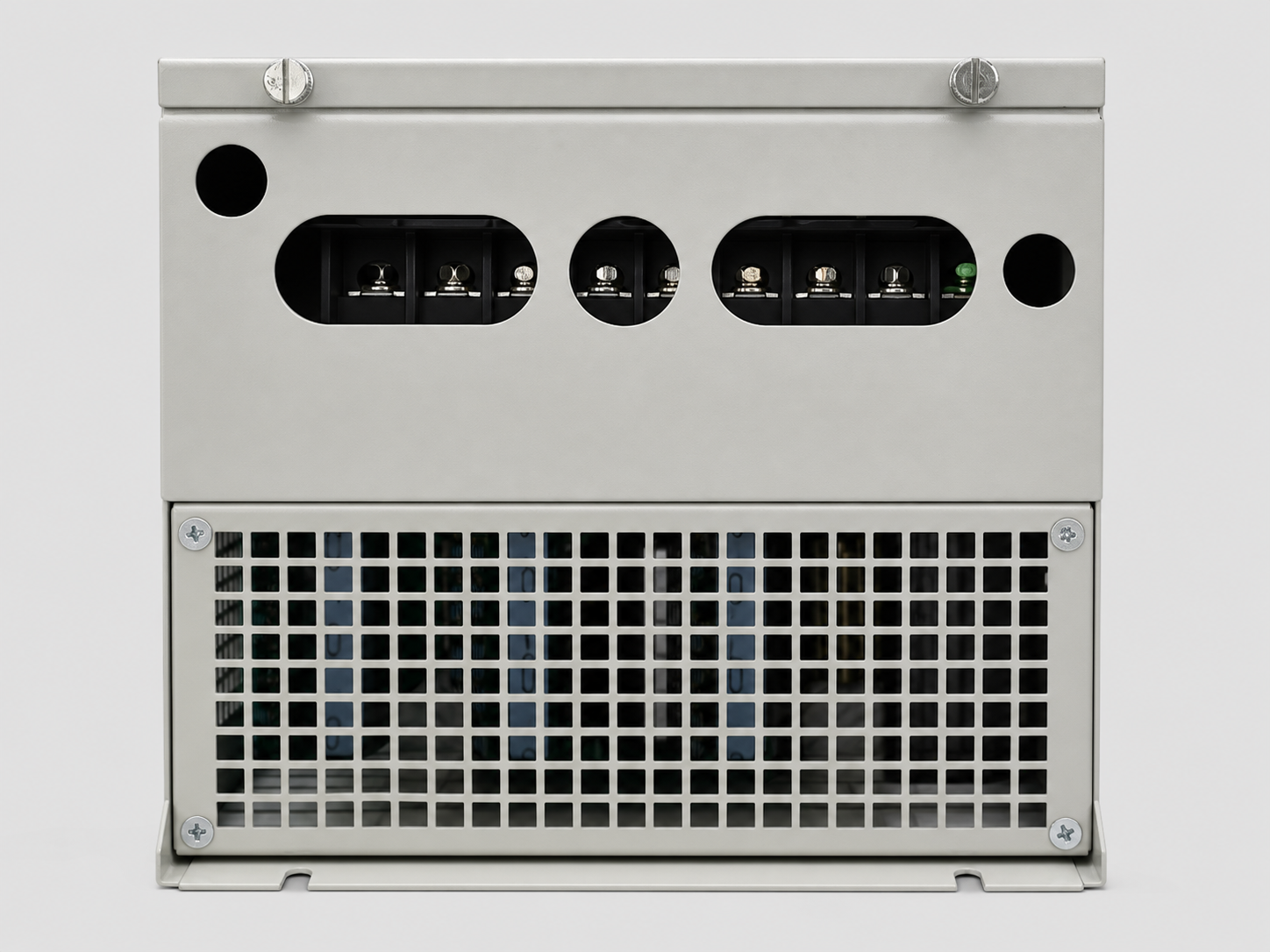
Solar pump inverters work in hard places: hot cabinets, dusty fields, unstable sunlight, long cable runs, and remote wells. A manufacturer should prove that the inverter is tested before shipment.
Ask these questions before shipment:
| QC item | What to ask | Why EPC teams should care |
|---|---|---|
| Load testing | Is every unit tested under load? | Reduces dead-on-arrival risk |
| Heat behavior | How does the inverter handle hot cabinet conditions? | Prevents nuisance trips in summer |
| Protection test | Are overvoltage, overload, and short-circuit protections checked? | Reduces site failure risk |
| Terminal and board inspection | Are wiring terminals and boards inspected before packing? | Avoids loose terminal and assembly faults |
| Packing test | Is export packing suitable for long transport? | Prevents damage before the site even starts |
Do not only ask for certificates. Ask what is tested on each unit before shipment.
6. After-Sales Support That Works in the Field
When a pump stops, the farm does not care that the supplier is busy. Water is time-sensitive.
A good manufacturer should offer:
- Fast response from a real engineer
- Fault-code troubleshooting
- Wiring photo review
- Video call support when needed
- Replacement parts policy
- Warranty terms in writing
- Clear contact channel for EPC teams and distributors
This support is even more important for remote jobs. A small fault can become a full-day truck roll. That happens when the supplier cannot help the technician read the alarm code.
For EPC buyers, after-sales support is part of the product.
7. OEM and Project Customization
Some EPC and distributor projects need more than a standard inverter. A manufacturer should be able to support project-specific requirements when volume and application justify it.
Useful customization may include:
- Private label branding
- Cabinet design
- Special terminal layout
- Pump control logic
- Sensor input setup
- Hybrid grid or generator input
- Region-specific documentation
- Packing and labeling for distributor channels
Customization should still stay practical. Do not customize every small detail. Focus on changes that reduce wiring time. Also focus on changes that simplify commissioning or solve a real site condition.
Hidden Cost: The Cheapest Manufacturer May Cost More
A low unit price can hide expensive project problems.
| Supplier weakness | Field result | Hidden cost |
|---|---|---|
| No pump nameplate check | Wrong voltage or phase match | Replacement equipment and delay |
| No PV voltage review | Sleep mode or over-voltage trip | Panel rewiring and site visits |
| Weak documentation | Slow installation | Extra labor days |
| Slow technical response | Technician waits on site | Travel and downtime cost |
| No spare parts plan | Long repair cycle | Lost irrigation time |
| No project experience | Bad recommendations | Low water output and buyer complaints |
The cheapest manufacturer is not cheap if the project needs three return visits.
You can compare this with the cost logic in Cost Breakdown of Solar Water Pump Inverter Systems.
EPC Supplier Checklist
Before choosing a solar pump inverter manufacturer, ask:
- Will you check the pump nameplate before recommending a model?
- Will you provide PV string matching and voltage-window checking?
- Will you confirm 220V single-phase or 380V three-phase PV sizing rules?
- Will you provide parameter settings for dry-run, overload, sleep, and wake?
- Will you provide wiring diagrams and fault code guidance?
- Will a real engineer support commissioning if the site has problems?
- Are warranty terms, spare parts, and replacement rules clear?
- Can you support OEM branding or cabinet design if the project needs it?
- Can you show field experience in similar irrigation conditions?
If the supplier cannot answer these questions clearly, keep looking.
FAQ
What should EPC contractors expect from a solar pump inverter manufacturer?
They should expect model matching, PV array checking, voltage-window review, and protection setting guidance. They should also expect wiring documents, tested hardware, after-sales support, and clear warranty terms.
Why is pump nameplate checking important?
The pump nameplate confirms voltage, phase, current, frequency, and power. Without it, the manufacturer may recommend the wrong inverter model.
Should the manufacturer help size solar panels?
Yes. For 220V single-phase pumps, PV power should usually be at least 2 times pump power. For 380V three-phase pumps, PV power should usually be at least 1.3 to 1.5 times pump power.
What voltage targets should the manufacturer check?
As field targets, 220V single-phase pump inverters often need around 320V DC Vmp. 380V three-phase pump inverters often need around 540V DC Vmp. The exact range still depends on the inverter datasheet.
What support matters most after installation?
Fast fault-code diagnosis, wiring review, parameter support, spare parts, and warranty handling matter most. These reduce truck rolls and shorten downtime.
What should I send before asking for a recommendation?
Send the pump nameplate, pump power, voltage, phase, and rated current. Also send the head and flow target, PV panel model, cable distance, water source type, project location, and backup power requirement if any.
Send Pump Specs Before Choosing a Manufacturer
Before you choose a solar pump inverter manufacturer, send the pump nameplate, panel model, water source type, cable distance, and project location. SolarSeeker can help check the inverter model, PV voltage window, protection settings, and project fit. Do this before you order equipment.