
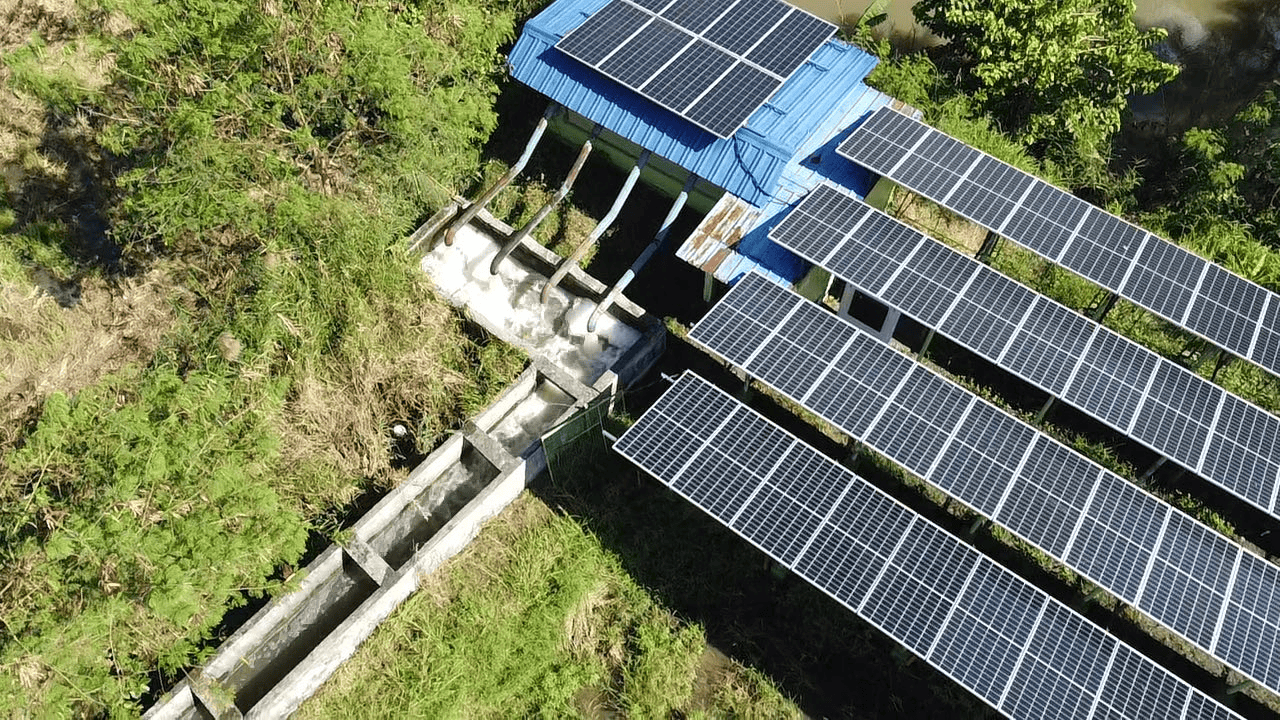
A practical guide for EPC and irrigation projects
This is Andy. I have spent the last eight years working on solar pumping projects.
Choosing a solar water pump inverter for an AC water pump is not just a model match. It is a system decision.
If the inverter does not match the pump, PV array, cable, and water conditions, the system may start late. It may also run weak, trip, or damage the pump.
The right choice starts with the pump nameplate. Then it moves to AC output, PV input, protection settings, and site conditions.
Quick Answer
To choose a solar water pump inverter for an AC water pump, first confirm the pump voltage, phase, power, current, frequency, head, and flow.
Then choose an inverter with matching AC output, enough output current, solar MPPT, the correct DC input range, and pump protection.
Do not choose by kW alone. A 3kW pump needs more than a 3kW inverter label. The inverter must fit the motor, PV string, water source, and daily irrigation target.
For the main product path, start with the Solarseeker solar water pump inverter overview.
1. Check the AC Pump Nameplate
The nameplate is the first thing to check. Do not rely on a pump photo, rough horsepower, or the buyer’s memory.
| Nameplate item | What to check | Why it matters |
|---|---|---|
| Rated power | kW or HP | Sets the inverter power range |
| Rated voltage | 220V, 380V, or another value | Must match inverter output |
| Phase | Single-phase or three-phase | Must match motor winding |
| Rated current | A | Used for inverter and protection settings |
| Frequency | 50Hz or 60Hz | Affects pump speed and flow |
| Head and flow | m and m3/h | Confirms real hydraulic load |
If the nameplate is missing, ask for a clear photo before quoting. This small step prevents many wrong-model orders.
2. Match the Inverter Output
An AC pump needs AC output from the inverter. That output must match the motor.
| AC pump type | Inverter output needed | Common use |
|---|---|---|
| 220V single-phase AC pump | 220V single-phase output | Small farms, gardens, shallow wells |
| 380V three-phase AC pump | 380V three-phase output | Deep wells, larger irrigation, ranch water |
| Existing grid AC pump | Output must match the nameplate | Solar retrofit projects |
Voltage and phase are red lines. If they are wrong, the pump will not run correctly.
3. Check Power and Current
The inverter power rating should usually match or slightly exceed the pump motor rating. However, current matters just as much as kW.
| Check item | Good practice | Field risk if ignored |
|---|---|---|
| Inverter kW | Match or slightly exceed pump kW | Startup failure or overload |
| Output current | Cover pump rated current | Trips under load |
| Overload capacity | Fit pump startup and head | Weak start or current alarm |
| Cooling design | Fit site temperature | Derating or overheating |
Oversizing the inverter does not fix a weak PV array. Undersizing creates trips and weak starts. Match power, current, PV input, and pump load together.
4. Match the PV Array
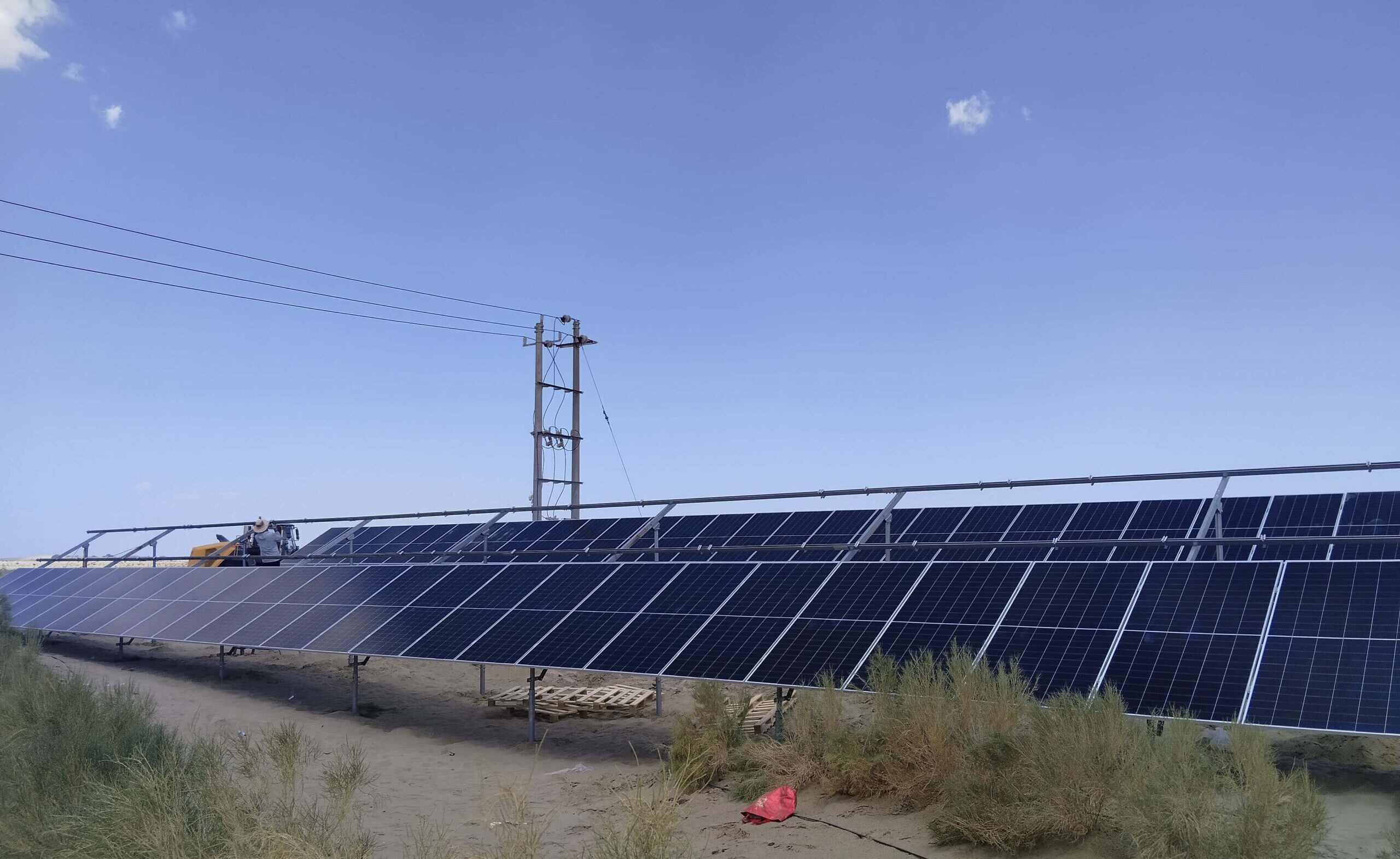
For AC pump solar conversion, the PV array is the energy source. If panel power is too low, the pump starts late and stops early. If string voltage is wrong, the inverter may sleep, trip, or run at weak frequency.
Use these field starting rules:
| Pump system | PV array power starting rule | Useful Vmp target |
|---|---|---|
| 220V single-phase pump | PV Array Power >= Pump Rated Power x 2.0 | Around 320V DC Vmp |
| 380V three-phase pump | PV Array Power >= Pump Rated Power x 1.3 to 1.5 | Around 540V DC Vmp |
Always confirm with the inverter datasheet. Also check cold-weather Voc and hot-weather Vmp. Cold weather raises Voc. High heat lowers Vmp.
5. Check Solar Control Logic
A normal grid VFD is built for stable AC input. A solar water pump inverter is built for changing PV input.
For AC pump solar projects, the inverter should include:
| Function | Why it matters |
|---|---|
| MPPT | Tracks available solar power |
| Smooth frequency control | Reduces water flow swings |
| Sleep/wake logic | Avoids weak repeated starts |
| Dry-run protection | Protects the pump when water drops |
| Overload protection | Helps when pump load rises |
| Fault history | Speeds up service diagnosis |
Stable frequency does not mean fixed 50Hz or 60Hz all day. It means the inverter changes frequency smoothly as sunlight changes.
6. Choose the Product Path
The product path depends on the pump.
For larger 380V three-phase AC pumps, deep wells, and agricultural irrigation, the Solarseeker SP4 solar pump inverter is a useful model path to review.
For 220V single-phase pump projects, ask the supplier to check the matching SP series model before shipment. Final selection still depends on the pump nameplate, rated current, PV string, and field conditions.
7. Use Case Context Before Ordering
Real sites are not the same as test benches. A shallow canal pump behaves differently from a deep-well pump. A dusty farm also behaves differently from a clean indoor test.
For project examples, see the Solarseeker solar pump project cases. They help EPC teams compare pump type, site conditions, and expected field behavior before model selection.
Use case pages to ask better questions:
- Is the pump submersible or surface type?
- Is the water source stable?
- Is the site cloudy, dusty, or hot?
- Is the cable distance long?
- Does the farm need fixed flow or daily water volume?
Do not copy a case blindly. Use it to improve the selection.
8. Confirm Site Conditions
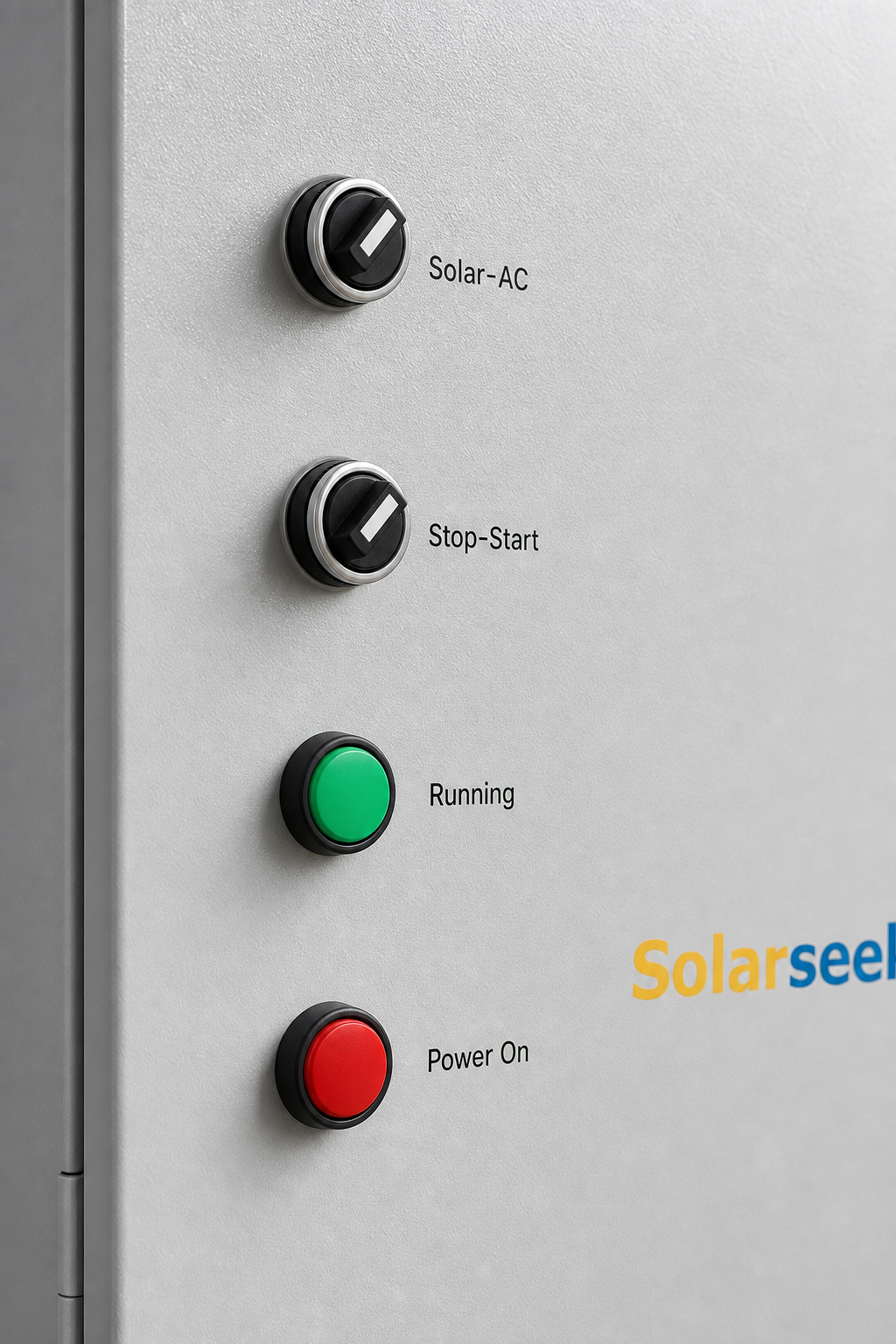
Two AC pumps with the same power rating may need different designs.
| Site factor | Why it matters |
|---|---|
| Water depth | Affects starting load and head |
| Pipe length | Affects pressure loss |
| Cable distance | Affects voltage drop |
| Temperature | Affects cooling and PV voltage |
| Dust and humidity | Affects enclosure and maintenance |
| Cloudy season | Affects PV sizing and sleep/wake settings |
| Water storage | Reduces the need for fixed instant flow |
| Backup power | May require hybrid planning |
Select for the field, not only for the catalog.
AC Pump Inverter Selection Checklist
Before placing an order, check:
- Do you have a clear pump nameplate?
- Is the pump single-phase or three-phase?
- Does inverter output match pump voltage?
- Does output current cover pump rated current?
- Is the pump 50Hz or 60Hz?
- Is the PV array sized for the pump type?
- Does the PV string fit the DC input range?
- Have cold Voc and hot Vmp been checked?
- Are head and flow confirmed?
- Is cable distance known?
- Are dry-run, overload, and sleep/wake settings available?
- Can the supplier check the model before shipment?
If one answer is missing, slow down. It is easier to fix the selection before shipment.
Common Mistakes to Avoid
| Mistake | Field result | Better approach |
|---|---|---|
| Selecting only by kW | Wrong output or current match | Start with the pump nameplate |
| Ignoring pump phase | Pump cannot run correctly | Match voltage and phase |
| Too few panels | Late start and weak flow | Size PV by pump type |
| Wrong DC voltage | Sleep or over-voltage alarms | Check Vmp and Voc |
| Using grid VFD for PV | Poor solar behavior | Use a solar pump inverter |
| Ignoring protection | Pump damage or false trips | Set protection during commissioning |
| No supplier check | Installer guesses settings | Send specs before shipment |
FAQ
Can a solar water pump inverter run an AC water pump?
Yes. It converts DC power from solar panels into AC output for an AC pump. The output voltage and phase must match the pump.
What should I check first?
Start with the pump nameplate. Check power, voltage, phase, current, frequency, head, and flow.
Is inverter kW enough for selection?
No. You must also check output current, voltage, phase, PV input range, MPPT, protection, and site conditions.
How much PV power should I use?
For 220V single-phase pumps, start with PV power at 2 times pump power or more. For 380V three-phase pumps, start with PV power at 1.3 to 1.5 times pump power or more.
What information should I send before ordering?
Send the pump nameplate, voltage, phase, and rated current. Also send the head and flow target, PV panel model, cable distance, site location, and backup power needs.
Send Pump Specs Before You Choose
Before choosing a solar water pump inverter for an AC water pump, send the pump nameplate and PV panel model.
Also send the head and flow target, cable distance, water source type, and project location.
Solarseeker can help check the inverter model, PV array, voltage window, protection settings, and product path.