
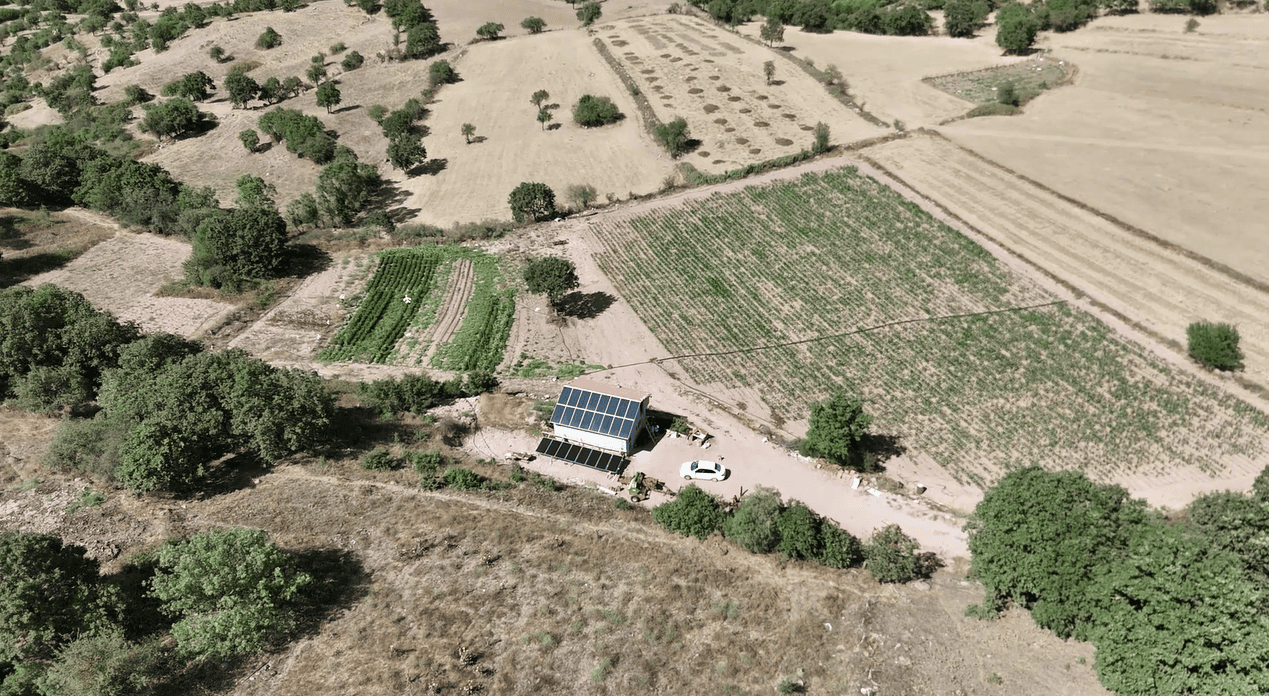
A field guide for EPC contractors choosing the right drive
This is Andy. I have spent the last eight years working on solar pumping projects.
One mistake appears again and again. Buyers use a normal grid VFD for a solar irrigation site. Then they expect it to behave like a solar pump inverter.
It does not.
A grid VFD is built for stable AC grid input. A solar water pump inverter is built for changing PV input.
It also handles MPPT tracking, sleep/wake control, dry-run protection, and long daily pumping. For EPC irrigation projects, use a solar pump inverter when the pump must run from PV panels.
A grid VFD may work in grid-only systems. In off-grid solar pumping, it adds design work and service risk.
Quick Answer
Use a solar water pump inverter when the pump runs from PV panels or when the project needs solar-first irrigation.
Use a grid VFD only when the input power is stable AC grid power. The site should not need solar MPPT, PV voltage tracking, or solar sleep/wake logic.
For solar array sizing, use the correct starting rule:
220V single-phase PV Array Power >= Pump Rated Power x 2.0
380V three-phase PV Array Power >= Pump Rated Power x 1.3 to 1.5
Correct Solar Pump Design = Pump Match + PV Power + DC Voltage Window + Protection Settings
Also check the voltage window. For many 220V single-phase solar pump inverter systems, target around 320V DC Vmp. For many 380V three-phase systems, target around 540V DC Vmp.
Core Difference: Input Power
The first difference is input power. This one difference changes the whole system design.
| Item | Solar water pump inverter | Grid VFD | EPC field result |
|---|---|---|---|
| Main input power | DC from PV panels, sometimes hybrid AC support | Stable AC grid input | Solar pump inverter handles changing sunlight directly |
| Energy tracking | MPPT tracks best PV power point | No solar MPPT in standard models | Grid VFD wastes solar potential without extra control |
| Weak sunlight behavior | Sleep/wake logic protects the pump | Often needs external logic | Solar pump inverter starts and stops more safely |
| DC voltage design | Built around PV string voltage window | Not built for PV string matching | Fewer PV mismatch problems |
| Irrigation use | Designed for off-grid water pumping | Designed for industrial motor speed control | Solar pumping needs a different control strategy |
A grid VFD can control motor speed. That does not make it a solar pump inverter. Solar pumping needs the inverter to manage the energy source, not only the motor.
MPPT: The Function Grid VFDs Usually Miss
MPPT is one of the main reasons solar pump inverters exist. Solar panels do not deliver stable power all day. Clouds, heat, dust, and sun angle keep changing the available power.
A solar water pump inverter tracks the PV array. It adjusts pump frequency to use available solar power.
A grid VFD expects stable AC input. If you use a basic solar DC setup without proper MPPT, water output can become unstable.
In the field, weak MPPT or no MPPT often leads to:
- Late start in the morning
- Low water output under clouds
- Repeated start-stop behavior
- Poor daily pumping hours
- More complaints from farmers
This is why a cheaper grid VFD can become expensive. It may need extra control devices, more wiring, and more commissioning time.
It may also need more service support.
PV Sizing and Voltage Window
Solar pump inverter sizing is not only about motor kW. PV power and DC voltage are just as important.
| Pump system | PV power starting rule | Field Vmp target | If the design is wrong |
|---|---|---|---|
| 220V single-phase pump | Pump power x 2.0 or more | Around 320V DC Vmp | Late start, weak flow, sleep mode |
| 380V three-phase pump | Pump power x 1.3 to 1.5 or more | Around 540V DC Vmp | Low frequency, poor output, or over-voltage trip |
Cold weather raises Voc. High heat lowers Vmp. For this reason, EPC teams should check both hot and cold conditions before panels are shipped.
Too low, and the inverter may stay asleep. Too high, and you risk over-voltage alarms or damaged components.
For a deeper sizing method, read how to size a solar water pump inverter for irrigation projects.
Sleep/Wake Control
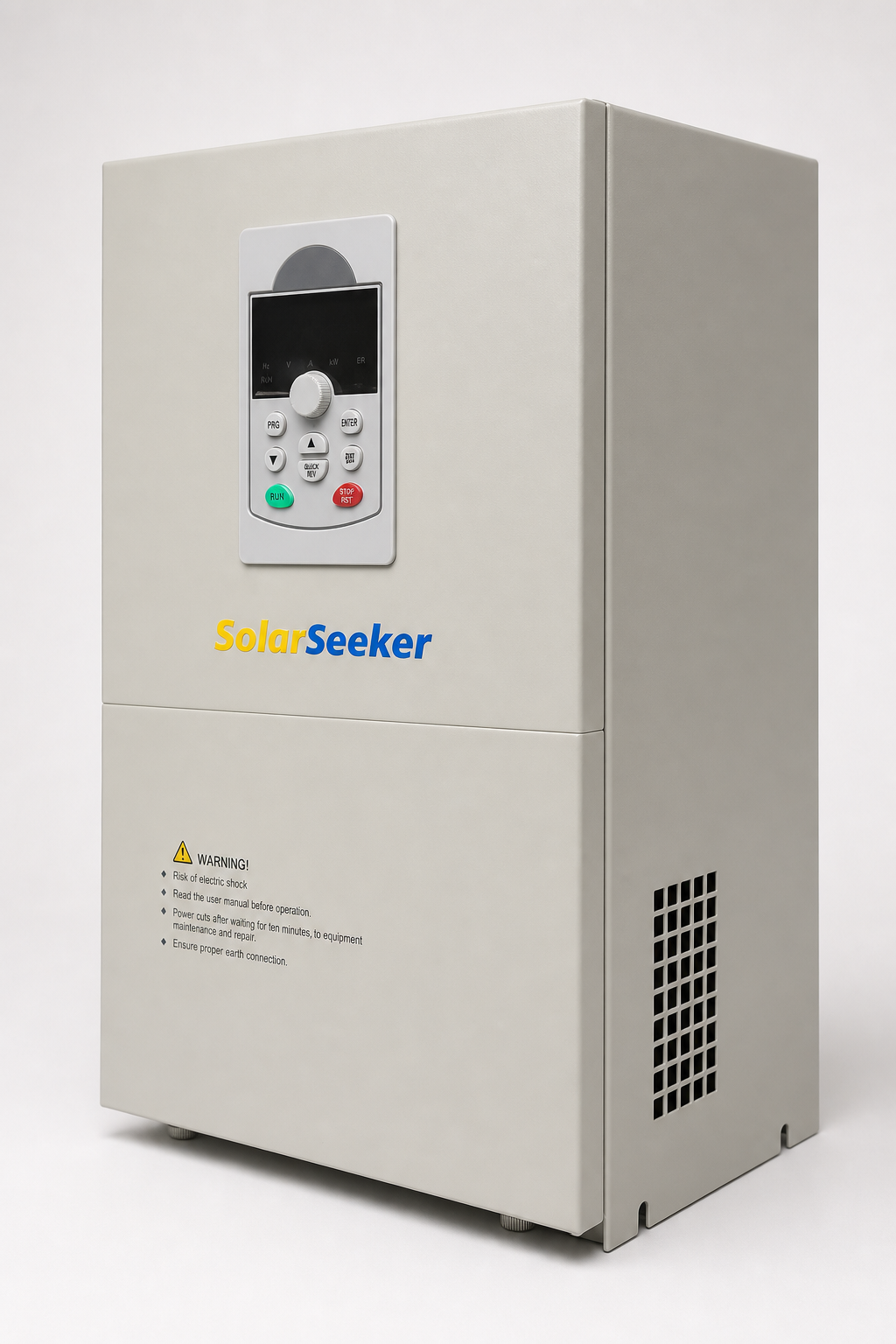
Solar pumping does not start like a grid motor. In the morning, PV voltage rises slowly. At sunset, it drops slowly. Clouds can cut power in seconds.
A solar water pump inverter uses sleep/wake logic to avoid weak, repeated starts. It waits until solar power can run the pump properly. Then it wakes and ramps the pump.
A standard grid VFD usually does not know how to make that decision from PV behavior. You may need external controllers or custom settings.
That adds cost. It also adds failure points.
Pump Protection
Irrigation pumps fail for site reasons, not only electrical reasons. Wells run low. Canals get blocked. Filters clog. Pipes leak. Valves close.
A project-grade solar pump inverter should include protection for these conditions.
| Protection need | Solar pump inverter | Grid VFD | Why it matters |
|---|---|---|---|
| Dry-run protection | Usually built for water pumping | May need sensors or extra setup | Protects pump when water source drops |
| Overload protection | Pump-focused settings | Motor-focused settings | Helps when pipes block or pump load rises |
| DC voltage alarms | Designed for PV input | Not a normal grid VFD focus | Helps find PV string problems |
| Sleep/wake protection | Solar-specific | Usually not solar-specific | Reduces unstable low-sun operation |
| Fault history | Often useful for field service | Depends on model | Speeds up troubleshooting |
Protection settings must still be checked during commissioning. Do not rely on factory defaults for every well or irrigation layout.
For the full protection checklist, see essential protection features in solar water pump inverters.
Commissioning: Solar Inverters Save Field Time
Commissioning cost is where many EPC teams feel the difference.
A solar pump inverter usually needs:
- Pump nameplate check
- PV string check
- Rotation check
- Dry-run setting
- Sleep/wake setting
- Test pumping
- Fault code record
A grid VFD used in a solar project may need more work:
- External solar input design
- Extra control logic
- MPPT workaround
- More parameter tuning
- More testing under weak sunlight
- More troubleshooting when sunlight changes
This is why the lowest hardware price does not always win. Field time under the sun is also project cost.
When a Grid VFD Can Still Make Sense
A grid VFD is not useless. It is a strong motor control device when the power source is stable.
It may make sense when:
- The site has reliable AC grid power
- The pump is part of a factory or building system
- Solar input is not required
- The project only needs motor speed control
- The engineering team will build the solar front-end separately
However, for off-grid irrigation from PV panels, a grid VFD is usually the harder path.
Hidden Cost: Grid VFDs in Solar Pumping
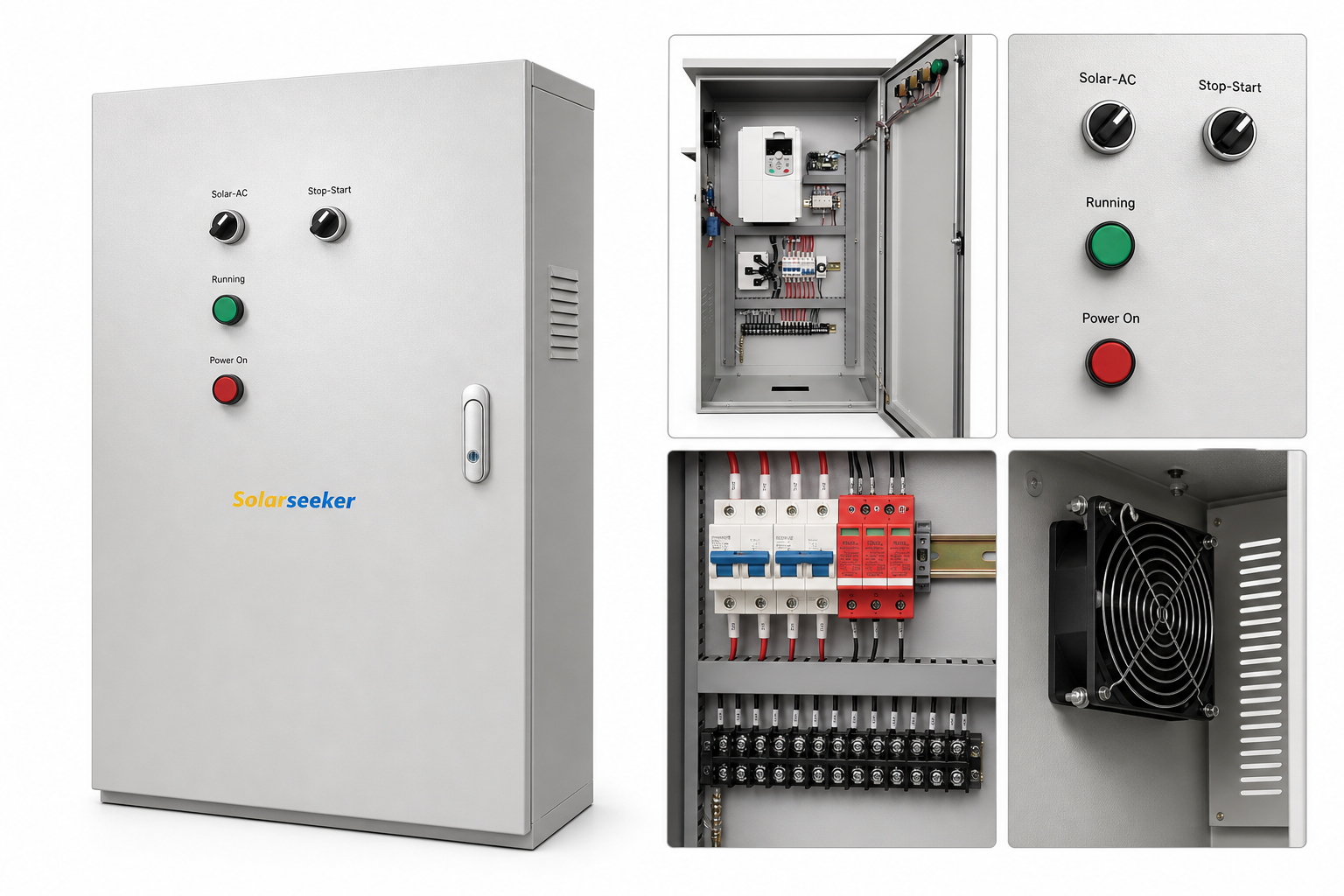
The hidden cost is not always in the invoice. It appears during installation, commissioning, and after-sales support.
| Issue | What happens on site | Hidden cost |
|---|---|---|
| No MPPT | Poor use of solar power | Lower daily water output |
| Weak solar sleep/wake logic | Repeated starts and stops | Pump stress and user complaints |
| Wrong DC voltage design | Sleep mode or over-voltage trips | Panel rewiring and technician visits |
| Extra external devices | More wiring and more failure points | Longer commissioning |
| Weak dry-run setup | Pump may run without enough water | Pump damage and warranty disputes |
| Hard troubleshooting | Fault cause is unclear | Longer service calls |
For EPC projects, these hidden costs can erase the saving from a low-cost grid VFD.
Field Example: Orchard Irrigation
In orchard irrigation, water demand is not only about flow. The farm needs predictable daily pumping hours.
With a grid VFD adapted for solar input, the system may start late and stop early. It may also lose output when clouds pass.
Then the technician must find the cause. It could be the VFD, PV string, pump, or control wiring.
With a solar water pump inverter, the logic is cleaner. The inverter tracks PV power, protects the pump, sleeps under weak sunlight, and wakes when power returns.
That does not remove the need for good design. However, it gives the EPC team a better starting point.
EPC Selection Checklist
Before choosing between a solar pump inverter and a grid VFD, ask:
- Will the pump run from PV panels, grid power, or both?
- Does the inverter have MPPT for solar input?
- Does the DC input range match the panel string design?
- Is the pump 220V single-phase or 380V three-phase?
- Did you size PV power by the correct rule?
- Are dry-run, overload, and sleep/wake settings included?
- Can the installer read fault codes easily?
- Will the supplier support commissioning?
- What happens when the site is cloudy, hot, or far from service?
If most answers point to solar-first operation, use a solar pump inverter.
For product-side selection, start with the Solarseeker solar water pump inverter overview.
FAQ
What is the main difference between a solar pump inverter and a grid VFD?
A solar pump inverter is built for PV input, MPPT, sleep/wake control, and water pump protection. A grid VFD is built for stable AC grid input and motor speed control.
Can I use a grid VFD for a solar water pump?
You can, but it usually needs extra design work. Without solar MPPT, PV voltage matching, and pump protection logic, output can become unstable.
Service calls may also increase.
Which is better for off-grid irrigation?
For off-grid irrigation, a solar water pump inverter is usually better. It is designed for changing sunlight, PV voltage windows, and pump-specific protection.
How much PV power should I use?
For 220V single-phase pumps, start with PV power at 2 times pump power or more. For 380V three-phase pumps, start with PV power at 1.3 to 1.5 times pump power or more.
What Vmp target should I check?
For many 220V single-phase solar pump inverter systems, target around 320V DC Vmp. For many 380V three-phase systems, target around 540V DC Vmp.
Always confirm with the model datasheet.
What should I send before choosing an inverter?
Send the pump nameplate, pump power, voltage, phase, and rated current. Also send the head and flow target, PV panel model, cable distance, water source type, and project location.
Ask an Engineer to Check the Inverter Match
Before using a grid VFD in a solar irrigation project, send the pump nameplate, panel model, cable distance, and water source type.
Solarseeker can check whether you need a solar water pump inverter. It can also check whether a hybrid design or different model fits better.