
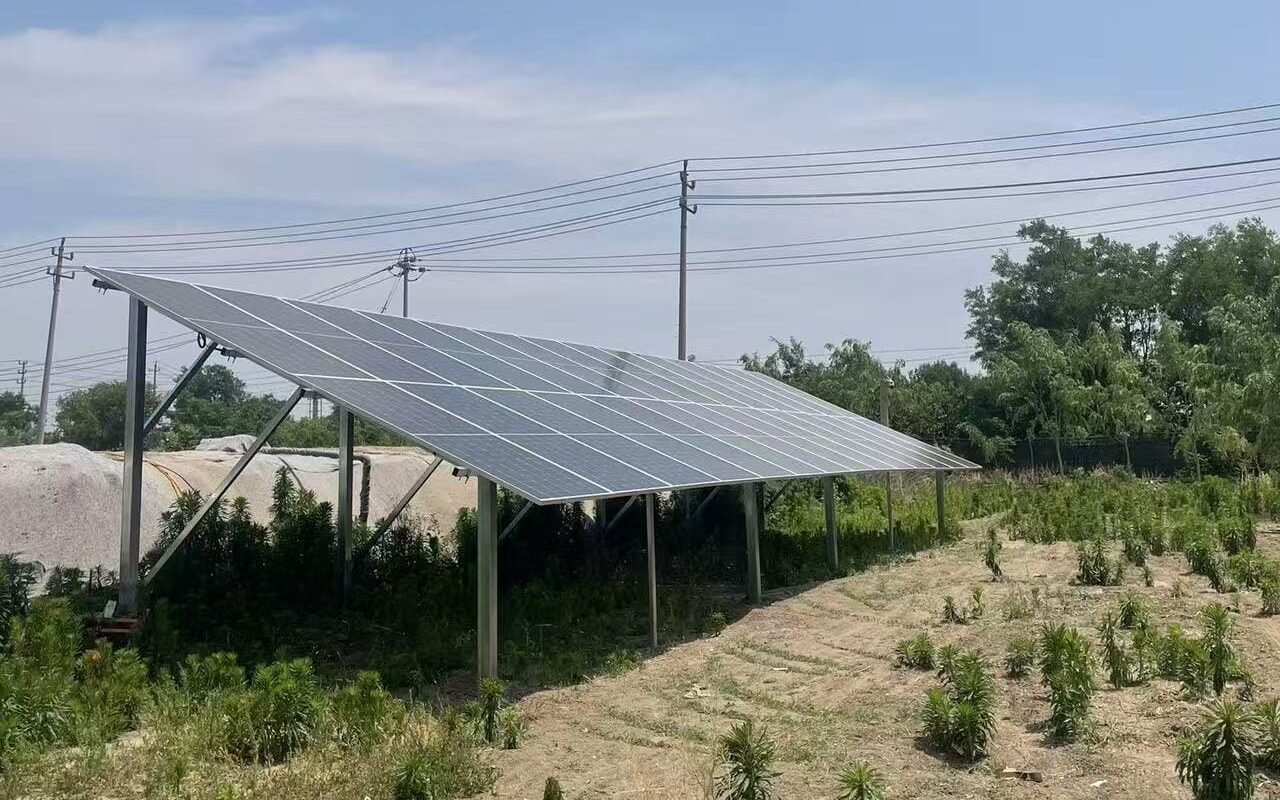
What EPC contractors should expect in real irrigation projects
This is Andy. I have spent the last eight years working on solar pumping projects.
Cloudy-day performance is one of the first questions buyers ask.
“Will the pump still run when the sky is cloudy?”
The honest answer is yes, but not at full output. A solar water pump inverter can keep a pump working under many cloudy conditions. However, water flow, motor frequency, and daily pumping hours will drop when solar power drops.
That is normal. The goal is not to make clouds disappear.
Instead, use a solar pump inverter that can track weak sunlight. It should reduce pump speed safely, protect the motor, and restart cleanly when sunlight returns.
Quick Answer
A solar water pump inverter can run on cloudy days if the PV array still provides enough DC voltage and power.
Under light cloud cover, the inverter usually reduces pump frequency and flow. Under heavy clouds, it may enter sleep mode. Then it waits until solar power recovers.
For EPC contractors, this means cloudy-day performance depends on four things:
- PV array size and string voltage
- MPPT tracking quality
- Sleep/wake settings
- Pump load, head, and water demand
Because of this, cloudy-day operation is not a simple yes or no question. It is a system design question.
What Changes When Clouds Pass
Solar panels do not stop working just because the sky is cloudy. They can still receive diffuse sunlight. However, the available power is lower and less stable.
For a solar pumping system, that affects the inverter first.
| Cloud condition | PV behavior | Inverter response | Water output |
|---|---|---|---|
| Light cloud cover | Lower but usable PV power | Runs at reduced frequency | Lower but continuous flow |
| Fast moving clouds | Power rises and falls quickly | Tracks PV power and adjusts speed | Flow may fluctuate |
| Heavy overcast | PV power may fall below running level | Enters sleep or low-power state | Pump may stop |
| Sun returns | PV voltage and power recover | Wakes and ramps pump again | Flow returns gradually |
This is why a solar pump inverter is different from a normal grid VFD. It is not only changing motor speed. It is also managing a weak and changing energy source.
For a deeper comparison, see solar water pump inverter vs grid VFD.
MPPT Is the Key Function in Cloudy Weather
MPPT stands for Maximum Power Point Tracking. In simple terms, it helps the inverter find the best operating point of the PV array.
On a clear day, this is useful. On a cloudy day, it becomes more important.
When sunlight changes, the PV array does not deliver one fixed voltage and current.
As a result, a good solar water pump inverter keeps adjusting pump frequency. It tries to match the available solar power.
Poor MPPT creates field problems:
- Pump starts late in the morning
- Pump stops too often under clouds
- Water flow changes too sharply
- Inverter reports under-voltage alarms
- Farmer thinks the equipment is faulty
In many cases, the system is not broken. It is just poorly matched or using weak MPPT control.
Cloudy Days Do Not Mean Fixed Water Flow
Some buyers expect the pump to keep the same flow all day. That is not how a direct solar pumping system works.
Without battery storage or stable AC backup, water output follows available sunlight.
When PV power drops, the inverter must reduce pump speed. If the system forces full speed under weak power, the motor can stall, trip, or run hot.
A project-grade solar pump inverter should do three things:
- Track available PV power.
- Reduce frequency smoothly when power falls.
- Protect the pump when power is too weak.
This is better than forcing the pump to run badly.
For irrigation, the practical target is daily water volume. It is not perfect flow every minute.
For this reason, tanks, reservoirs, or flexible schedules can make cloudy-day performance easier to manage.
Sleep/Wake Logic Protects the Pump
Sleep/wake control is one of the most useful cloudy-day functions.
When PV power becomes too weak, the inverter should stop trying to run the pump. It enters sleep mode. When voltage and power recover, it wakes and starts the pump again.
This protects the system from repeated weak starts.
Bad sleep/wake settings can cause trouble:
- Sleep value too high: the pump stops too early.
- Sleep value too low: the pump keeps trying under weak power.
- Wake delay too short: the pump starts and stops repeatedly.
- Wake delay too long: useful sunlight is wasted.
The right setting depends on the pump, water head, PV array, and site weather. Do not copy one setting across every project.
PV Array Design Still Matters
Cloudy-day performance starts before the inverter is installed. It starts with the PV array.
If the PV array is too small, the inverter has no power to work with. If the string voltage is too low, the inverter may stay asleep for long periods. If the voltage is too high, cold mornings can create over-voltage risk.
For this topic, PV sizing rules are relevant because weak light exposes sizing mistakes.
Use these field starting rules:
220V single-phase PV Array Power >= Pump Rated Power x 2.0
380V three-phase PV Array Power >= Pump Rated Power x 1.3 to 1.5
Also check the DC voltage window:
| Pump and inverter type | PV power starting rule | Useful Vmp target | Cloudy-day risk if wrong |
|---|---|---|---|
| 220V single-phase pump | Pump power x 2.0 or more | Around 320V DC Vmp | Late start, weak flow, repeated sleep |
| 380V three-phase pump | Pump power x 1.3 to 1.5 or more | Around 540V DC Vmp | Low frequency, unstable output, voltage alarms |
These are starting rules. They do not replace datasheet checking.
Always check the inverter’s real DC input range. Also check maximum DC voltage and local temperature conditions.
For the full sizing process, read how to size a solar water pump inverter for irrigation projects.
What EPC Contractors Should Tell Customers
Cloudy-day expectations must be clear before the project starts.
I usually explain it this way:
“The pump can run under many cloudy conditions, but output will reduce with sunlight.”
“If you need the same flow during long cloudy periods, we need storage, backup power, or a different operating plan.”
This avoids a common after-sales problem. The equipment is working correctly, but the customer expected grid-like performance from a direct solar system.
Set expectations around these points:
- Morning start time may be later on cloudy days.
- Water flow may be lower under cloud cover.
- The pump may stop under heavy overcast.
- The inverter should restart when sunlight returns.
- Daily water volume matters more than instant flow.
If the farm needs guaranteed water at a fixed time, add a water tank or hybrid backup design.
Protection Features Matter More in Weak Light
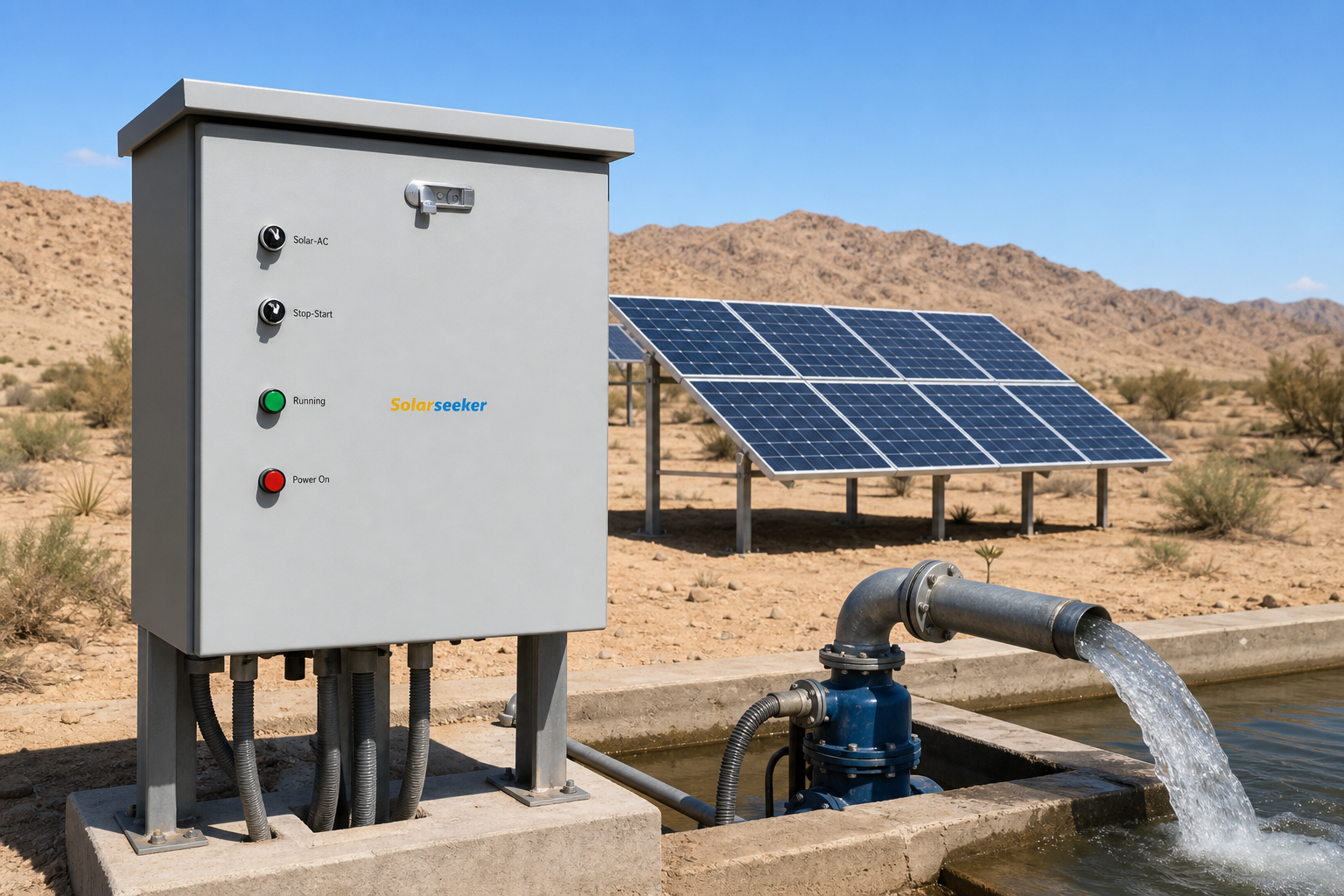
Cloudy weather can expose weak protection settings.
For example, a pump running at low frequency may not produce enough flow to cool itself. This can happen in some pipe layouts.
A deep well may also create higher load during startup. If the inverter keeps trying under poor PV input, the motor can heat, trip, or wear faster.
At minimum, check these protections:
| Protection feature | Why it matters on cloudy days |
|---|---|
| Under-voltage protection | Stops unstable operation when PV power is too weak |
| Dry-run protection | Protects the pump if water level drops during long operation |
| Overload protection | Helps when pump load rises under poor flow conditions |
| Sleep/wake control | Prevents repeated weak starts |
| Fault history | Helps installers separate PV, pump, and water-source problems |
Protection should be tested during commissioning. Factory defaults are not enough for every well, canal, or irrigation layout.
For a deeper protection checklist, see essential protection features in solar water pump inverters.
How to Improve Cloudy-Day Performance
You cannot control the weather, but you can improve the system design.
Start with these checks:
- Confirm the pump nameplate before choosing the inverter.
- Size the PV array for the pump type and local sunlight.
- Check Vmp and cold-weather Voc before panel shipment.
- Use an inverter with stable MPPT control.
- Set sleep/wake values during commissioning.
- Confirm dry-run and overload protection.
- Add a tank if the farm needs steady water delivery.
- Use hybrid AC input only when the project really needs backup.
The best cloudy-day system is not always the largest system. It is the best-matched system.
A larger PV array helps only when the rest of the design also fits. The voltage window, inverter model, pump load, and protection settings still matter.
When Backup Power Makes Sense
Some projects need water even during long rainy periods. In that case, a direct PV-only system may not be enough.
Backup can come from:
- AC grid input
- Diesel generator
- Battery system
- Water storage tank
For many irrigation projects, a storage tank is simpler than batteries. The system pumps more water during strong sun.
Then the farm uses stored water during weak weather or evening irrigation.
Hybrid input can also work. However, it needs correct wiring, switching logic, protection, and commissioning. Do not add backup power without a clear operating plan.
Common Mistakes on Cloudy-Day Projects
Most cloudy-day complaints come from design assumptions made before shipment.
Watch for these mistakes:
| Mistake | Field result | Better approach |
|---|---|---|
| Choosing inverter only by pump kW | Weak starting and frequent sleep | Check pump, PV power, and voltage window together |
| Using too few panels | Low daily water output | Size PV power by pump type |
| Ignoring Vmp under heat | Inverter cannot keep running in real field conditions | Check hot-weather Vmp |
| Ignoring cold Voc | Over-voltage risk on cold mornings | Check maximum DC voltage |
| No water storage | Customer expects fixed flow every hour | Add tank or backup plan |
| Poor protection settings | Trips, restarts, and service calls | Commission sleep/wake and protection values |
If you are reviewing a project plan, this related guide may help: common mistakes when selecting solar water pump inverters.
EPC Cloudy-Day Checklist
Before confirming a solar pumping project in a cloudy or rainy region, check:
- What is the required daily water volume?
- How many cloudy days are common during irrigation season?
- Does the pump need fixed flow, or can flow vary?
- Is there a tank or reservoir?
- Is the pump 220V single-phase or 380V three-phase?
- Does the PV array meet the correct power rule?
- Does the PV string match the inverter DC voltage window?
- Are sleep/wake settings adjustable?
- Can the inverter record fault codes?
- Does the customer understand reduced flow under clouds?
This checklist prevents many service calls.
FAQ
Do solar water pumps work on cloudy days?
Yes, if the PV array still provides enough voltage and power. The pump will usually run at lower frequency and lower flow. Under heavy clouds, the inverter may enter sleep mode.
Why does water flow drop when clouds pass?
Clouds reduce available solar power. The inverter lowers pump frequency to avoid overload, under-voltage trips, or unstable motor operation.
Does a better inverter improve cloudy-day performance?
Yes, within limits. Better MPPT, sleep/wake control, and protection settings help the pump use weak sunlight more effectively.
However, no inverter can create power that the panels do not receive.
Should I add more solar panels for cloudy regions?
Often yes, but do it carefully. Panel power, string voltage, maximum DC voltage, and temperature conditions must all match the inverter.
Do I need batteries for cloudy-day pumping?
Not always. Many irrigation projects use water storage instead of batteries.
Batteries or hybrid backup make sense only when the site needs stable water flow during long cloudy periods.
What should I send before choosing an inverter?
Send the pump nameplate, pump power, voltage, phase, and rated current. Also send the head and flow target, PV panel model, site location, and cloudy-season operating requirement.
Ask an Engineer to Check Cloudy-Day Operation
Before ordering equipment for a cloudy or rainy-season irrigation project, send the pump nameplate and PV panel model.
Also send the water source type and daily water target.
Solarseeker can help check the inverter model, PV array, voltage window, and sleep/wake settings.
It can also check whether the project needs storage or backup power.