
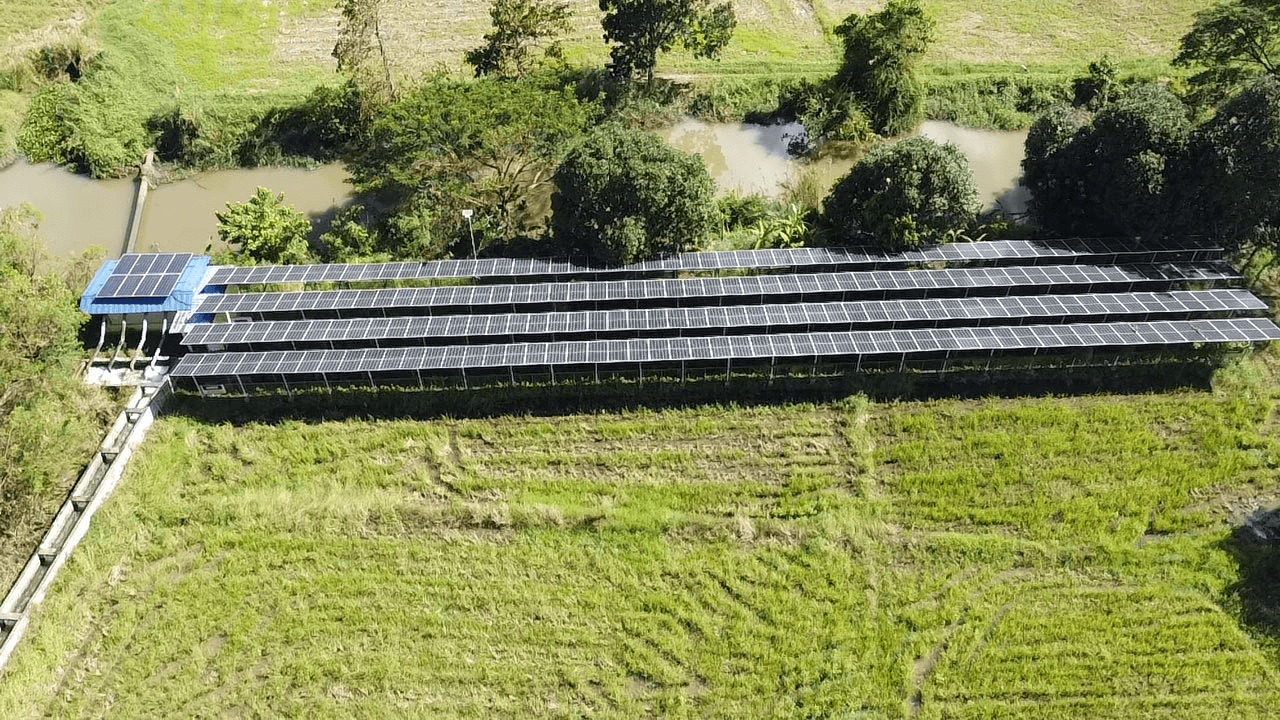
How stable inverter control protects water flow, pump life, and field service time
This is Andy. I have spent the last eight years working on solar pumping projects.
When a solar water pump system has unstable frequency, the site usually tells you quickly. The water flow rises and falls. The pump sounds rough. The inverter may trip, restart, or stay at a weak low frequency.
For EPC contractors, that is not a small detail. Frequency stability affects daily water output, pump protection, commissioning time, and after-sales service.
Quick Answer
Frequency stability matters because a solar pump inverter controls pump speed through output frequency. In a solar pumping system, that frequency should change smoothly as sunlight changes. It should not hunt, jump, or collapse under normal operating conditions.
Stable frequency gives the project:
- More predictable water flow
- Less pump stress
- Fewer nuisance trips
- Easier commissioning
- Faster troubleshooting
However, frequency stability does not mean the pump always runs at 50Hz or 60Hz. In solar pumping, the inverter must reduce frequency when PV power drops. The key is smooth control.
What Frequency Means in a Solar Pump System
The inverter output frequency controls motor speed.
In a typical pump system, higher frequency means higher motor speed. Higher speed usually means more water flow. Lower frequency means lower speed and lower flow.
That sounds simple, but solar pumping adds one challenge. The power source changes all day.
Morning sunlight is weak. Noon sunlight is strong. Clouds can cut power in seconds. Heat reduces panel voltage. Dust lowers power. Because of this, a solar pump inverter cannot treat the pump like a factory motor connected to a stable grid.
It must manage two things at the same time:
- The motor
- The solar energy source
This is where frequency stability becomes important.
Frequency Stability Does Not Mean Fixed Frequency
This point matters.
In a solar water pumping system, stable frequency does not mean the inverter locks the pump at one fixed frequency all day. That would be wrong for direct PV pumping.
Instead, stable frequency means the inverter adjusts frequency in a controlled way.
| Situation | Bad frequency behavior | Good frequency behavior |
|---|---|---|
| Morning startup | Jumps, stalls, then trips | Ramps up when PV power is enough |
| Passing cloud | Frequency drops sharply and restarts | Frequency reduces smoothly |
| Strong sun | Frequency hunts up and down | Frequency holds near the available power point |
| Weak sunlight | Repeated start-stop behavior | Sleeps or runs at a safe low frequency |
| Load change | Motor current spikes | Frequency and current stay controlled |
A good solar pump inverter follows the available solar power. It protects the pump while still trying to maintain useful water output.
For cloudy-day behavior, see how solar water pump inverters perform on cloudy days.
Why Unstable Frequency Hurts Water Flow
Water systems do not like sudden changes.
If frequency jumps up and down, pump speed also changes. As a result, flow and pressure move up and down. In irrigation, that can create uneven water delivery.
For drip irrigation, unstable flow can affect pressure balance. For sprinklers, it can change spray distance. For tank filling, it can extend pumping time.
The farmer may describe the problem in simple words:
“The water is not steady.”
That complaint may come from the pump, piping, water level, or filter. However, unstable inverter frequency is one common cause.
Why It Affects Pump Life
Pumps are mechanical equipment. They do not like repeated stress.
Unstable frequency can create:
- Repeated acceleration and deceleration
- Higher motor current during weak starts
- More vibration
- Poor cooling at low speed
- More starts and stops
One small fluctuation is not a disaster. The problem is repetition. If the inverter hunts all day, the pump and motor feel that stress all day.
In deep-well systems, this matters even more. Pulling and replacing a submersible pump costs time, labor, and sometimes crane or lifting equipment. So the inverter should protect the pump before the field team has to touch it.
MPPT and Frequency Stability Work Together
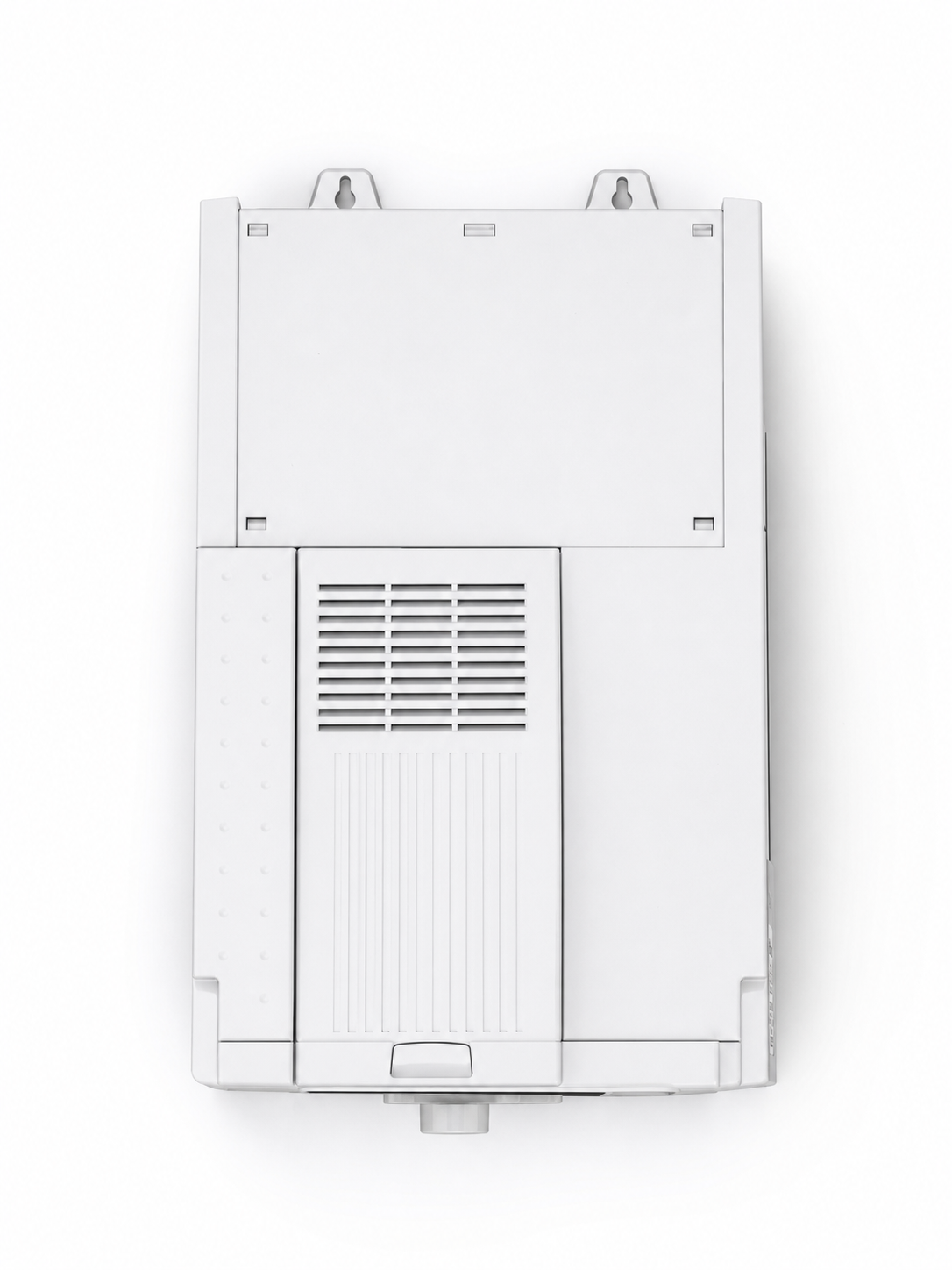
MPPT is not only about getting more energy from the panels. It also affects how smoothly the pump runs.
A solar water pump inverter uses MPPT to track available PV power. Then it adjusts pump frequency to match that power.
If MPPT is weak, the inverter may chase the wrong point. The pump may speed up, lose power, slow down, and repeat the cycle.
That is frequency hunting.
In the field, it can look like this:
- Flow rises and falls every few seconds
- Inverter frequency keeps moving without a clear reason
- DC voltage drops too low during acceleration
- The pump runs for a short time and then stops
- Fault codes appear during clouds or weak sunlight
Because of this, EPC teams should not judge an inverter only by kW rating. The control logic matters.
For a related comparison, read solar water pump inverter vs grid VFD.
Common Causes of Frequency Instability
Frequency instability usually has a cause. Do not replace the inverter before checking the full system.
| Cause | What happens on site | What to check |
|---|---|---|
| Weak PV input | Frequency cannot rise or hold | Panel quantity, shade, dust, wiring |
| Poor MPPT control | Frequency hunts under changing sunlight | Inverter solar pumping logic |
| Wrong pump match | Motor current rises too quickly | Pump power, voltage, current, load |
| High head or blocked pipe | Pump load becomes too heavy | Valves, filters, pipe layout, water level |
| Bad sleep/wake setting | Repeated starts and stops | Sleep frequency, wake delay, restart logic |
| Long cable run | Voltage drop affects motor control | Cable size, distance, terminals |
| Wrong protection setting | Trips appear too early or too late | Overload, dry-run, under-voltage limits |
This table is why field diagnosis should be practical. A frequency problem may come from panels, pump load, wiring, settings, or water conditions.
What EPC Contractors Should Watch During Commissioning
Commissioning should not end after the pump starts. Watch how it behaves.
Start with these checks:
- Confirm pump nameplate data.
- Confirm motor rotation.
- Check DC input under real sunlight.
- Watch output frequency during startup.
- Watch motor current during ramp-up.
- Test flow at several operating points.
- Check sleep and wake behavior.
- Record any fault codes.
The key question is simple:
Does the frequency change smoothly, or does it jump and hunt?
If it changes smoothly, the inverter is probably controlling the pump well. If it jumps without a clear reason, keep checking before the site is handed over.
Frequency Stability and Dry-Run Protection
Dry-run protection also connects to frequency stability.
When water level drops, the pump load changes. A good inverter should detect abnormal operation and protect the pump. However, if frequency and current are already unstable, dry-run detection can become harder to tune.
This can cause two problems:
- False dry-run trips when water is still available
- Late protection when the pump is already running dry
Both are bad. False trips reduce water output. Late trips can damage the pump.
For this reason, dry-run settings should be checked after the system frequency is stable. Protection and frequency control must work together.
For a full protection checklist, see essential protection features in solar water pump inverters.
Frequency Stability and Pipe Systems
The pump is only one part of the system.
Pipes, valves, filters, and irrigation zones also affect frequency behavior. For example, a partially closed valve increases load. A blocked filter can raise pressure. A long pipe run can make flow response slower.
If the inverter tries to hold frequency while the hydraulic load keeps changing, the motor current can move sharply.
That is why installers should not tune the inverter in an empty test condition only. Test it with the real pipe, real head, real valve state, and real water source.
In the field, many “inverter problems” are actually system problems.
How Stable Frequency Reduces After-Sales Cost
Unstable frequency creates service work.
The installer receives calls like:
- “The pump keeps stopping.”
- “Water flow is not stable.”
- “The inverter shows alarms.”
- “It works at noon, but not in the morning.”
- “The pump sound keeps changing.”
Each call costs time. Sometimes it requires a technician visit. In remote irrigation projects, that can mean travel, accommodation, and lost farming time.
Stable frequency reduces those calls because the system behaves in a way the customer can understand. Flow changes with sunlight, but it does not jump without reason.
This is the difference between normal solar behavior and a poorly controlled system.
Buyer Checklist for Frequency Stability
Before choosing a solar pump inverter, ask these questions:
- Is the inverter designed for solar water pumping, not only motor speed control?
- Does it include MPPT for changing PV input?
- Can it ramp the pump smoothly during startup?
- Are sleep and wake settings adjustable?
- Can the installer view output frequency and current?
- Does the inverter store fault history?
- Are dry-run and overload protections easy to tune?
- Can the supplier help check pump matching?
- Has the system been tested under weak sunlight?
- Is local service support available if the site is remote?
For product-level selection, start with the Solarseeker solar water pump inverter overview.
How to Talk About Frequency With Customers
Customers do not always care about technical words. They care about water.
So explain frequency stability in field language:
“The inverter changes pump speed according to sunlight. A good system changes speed smoothly. That gives steadier water and better pump protection.”
This explanation is easy to understand. It also sets the right expectation.
The pump may run slower in the morning. It may slow down under clouds. It may stop under very weak sunlight. However, it should not jump, trip, or restart all day when the system is correctly matched.
FAQ
What is frequency stability in a solar water pumping system?
It means the inverter controls pump frequency smoothly as sunlight, load, and water conditions change. It does not mean the pump must run at one fixed frequency all day.
Why does frequency change in a solar pump system?
Frequency changes because available solar power changes. The inverter lowers or raises pump speed to match the PV power and protect the motor.
Is unstable frequency always caused by the inverter?
No. It can also come from weak PV input, wrong pump matching, blocked filters, high head, long cables, poor settings, or water-source problems.
How does frequency stability affect water flow?
Pump speed affects flow. If frequency jumps, flow often jumps too. Stable frequency helps make water delivery more predictable.
What should I check during commissioning?
Check pump nameplate data, motor current, DC input, startup ramp, output frequency, sleep/wake behavior, protection settings, and fault history.
Can a grid VFD provide the same frequency stability?
A grid VFD can control motor speed when it has stable AC input. However, a solar pumping system also needs PV tracking, sleep/wake logic, and pump protection.
Ask an Engineer to Check the Pump Match
If your pump flow changes too much, or the inverter frequency keeps hunting, send the pump nameplate, water head, flow target, cable distance, PV panel model, and fault code record.
Solarseeker can help check whether the issue comes from inverter selection, pump load, PV input, wiring, settings, or water conditions.