
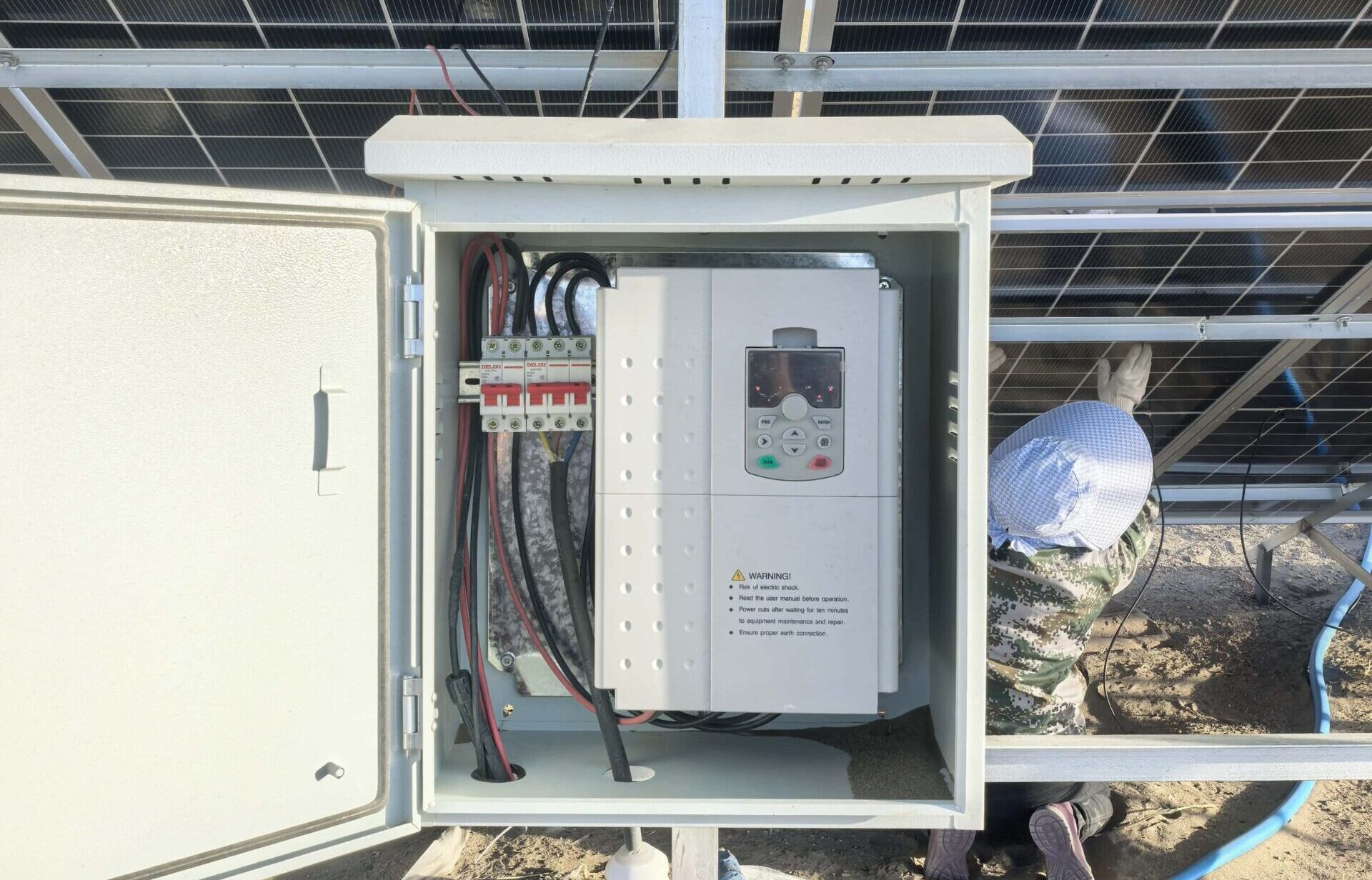
When sourcing solar pump inverters for agricultural irrigation or municipal borehole schemes, procurement teams often default to comparing FOB unit prices on a spreadsheet. In high-volume B2B distribution or competitive EPC tenders, saving $30 to $50 per unit seems like an immediate victory. However, experienced field engineers know that in off-grid solar water pumping, unit price is only a tiny fraction of the Total Cost of Ownership (TCO).
A low-cost inverter that trips continuously when midday ambient temperatures reach 45°C, or one that burns out a downhole submersible pump motor within six months due to unmitigated voltage reflections, turns an apparent $40 savings into a $1,200 emergency field replacement. When crops wither or rural communities lose potable water, commercial liability falls squarely on the contractor and distributor.
To establish long-term profitability and customer trust, EPC contractors and solar pump distributors must evaluate manufacturers across five rigorous electro-mechanical verification layers. Here is the engineering rubric we use at SolarSeeker to compare solar pump inverter suppliers beyond the initial quotation.
1. Dynamic MPPT Efficiency vs. Static Laboratory Datasheets
Almost every inverter manufacturer claims “>99% MPPT efficiency” on their product brochure. However, these figures are invariably measured under static laboratory conditions with stable DC power supplies and constant irradiance.
In field reality, solar water pumping is defined by relentless environmental flux: fast-moving cloud edges, atmospheric haze, seasonal dust accumulation, and sharp diurnal irradiance ramps. When a sudden cloud covers the solar array, available PV power can plummet by 70% in less than 1.5 seconds.
Here is where suppliers diverge technologically:
- Budget Industrial Drives: Use sluggish, static Perturb & Observe (P&O) algorithms adapted from general-purpose industrial drives. When irradiance drops sharply, the drive cannot track the collapsing DC bus voltage quickly enough. It trips on low-voltage faults (
Uu/LU) or causes the motor to stall abruptly. - Solar-Specialized Platforms: Employ high-speed dynamic tracking algorithms with sub-second response times. During cloud transients, the drive smoothly throttles output frequency (e.g., from 50 Hz down to 35 Hz) rather than shutting off. Water discharge decreases gracefully, but the system never stalls, completely avoiding the violent hydraulic shocks associated with sudden cutouts.
When vetting suppliers, ask for dynamic MPPT tracking test reports under rapid irradiance step changes. For an in-depth breakdown of how MPPT dynamics interact with pump mechanics, see our technical primer on what is a solar pump inverter and how it works.
2. Downhole Cable Runs, High dV/dt Stress, and Motor Protection
In deep-well borehole extraction, submersible pump motors are suspended anywhere from 80 meters to 250 meters below ground level. Pumping through these extended downhole drop cables creates complex transmission line phenomena that many generic drive suppliers fail to accommodate.
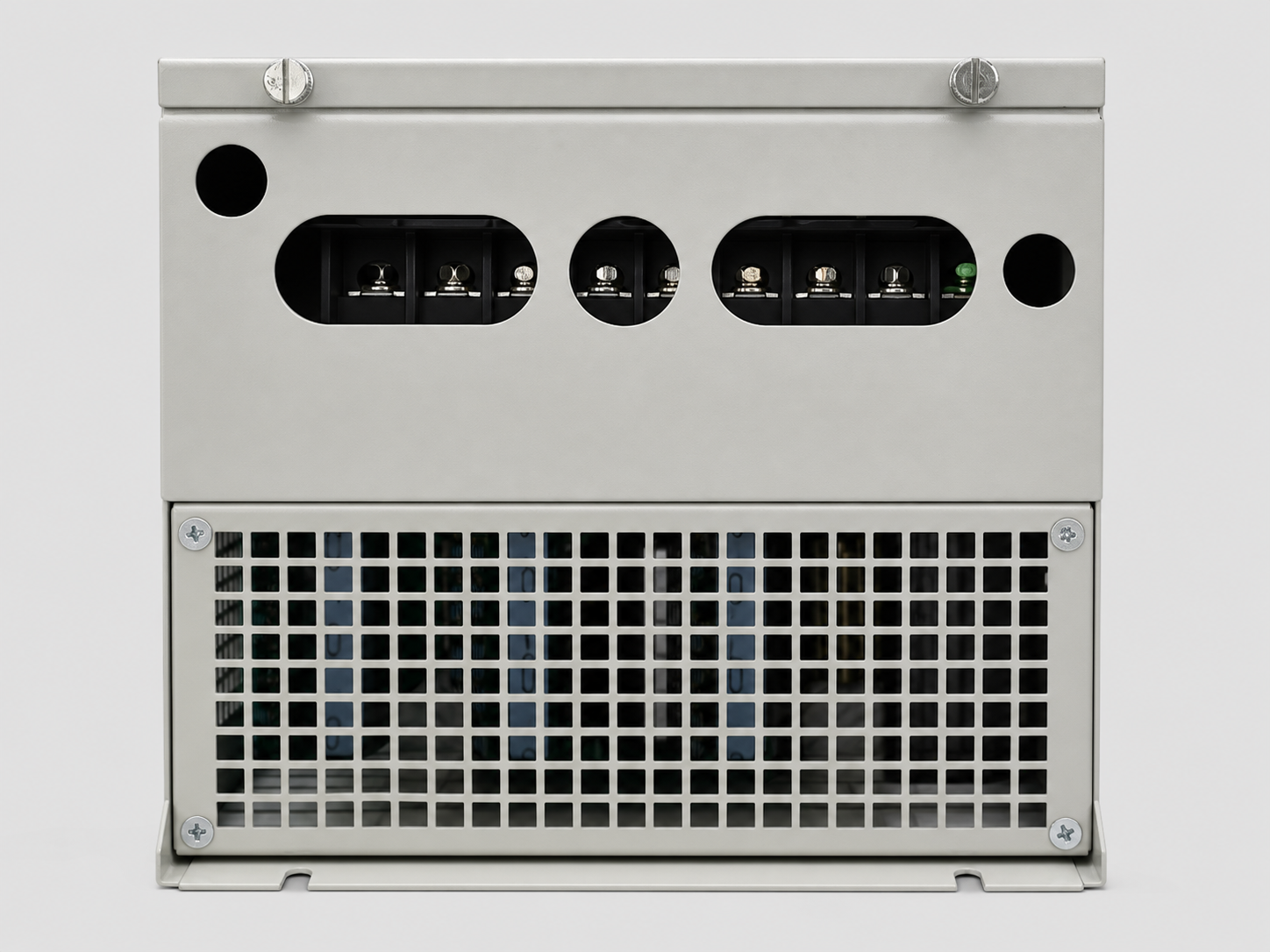
Modern inverter output stages utilize Insulated Gate Bipolar Transistors (IGBTs) switching at high carrier frequencies. With voltage rise times (dV/dt) frequently exceeding 5,000 V/µs, steep voltage wavefronts travel down the cable and reflect off the high-impedance submersible motor terminals.
This reflection wave phenomenon creates peak voltage spikes reaching 1,200 V to 1,600 V at the motor windings. Over 6 to 18 months, continuous partial discharges (corona degradation) erode the motor winding enamel, leading to catastrophic inter-turn short circuits. Replacing a submersible motor at a 150-meter depth involves crane rentals, crew dispatch, and massive labor expenses.
What to demand from the supplier:
- Carrier Frequency Programmability: Does the firmware allow dialing carrier switching frequencies down to 1.5 kHz – 2.0 kHz to minimize dielectric stress on older or long-cable motors?
- Integrated or Matched Output Filtration: Does the supplier provide factory-matched 3% AC output line reactors (for 50 m – 120 m cable runs) or dV/dt filters (for >120 m depths)?
If you encounter voltage reflection or overcurrent issues on existing installations, consult our field troubleshooting guide: Troubleshooting Common Solar Water Pump Inverter Errors.
3. Thermal Engineering and Real High-Ambient Derating Curves
Off-grid solar pumping installations are predominantly deployed in tropical, arid, and semi-arid regions—such as the Middle East, North Africa, Sub-Saharan Africa, and Southeast Asia. Ambient temperatures inside outdoor control cabinets frequently exceed 50°C (122°F) during peak afternoon sun.
Budget inverter manufacturers often publish rated output currents measured at 25°C or 40°C in air-conditioned facilities. Under real 50°C operating conditions, substandard components experience severe thermal saturation, forcing the drive into thermal derating or overheating trips (OH) exactly when solar energy is most abundant and water demand is highest.
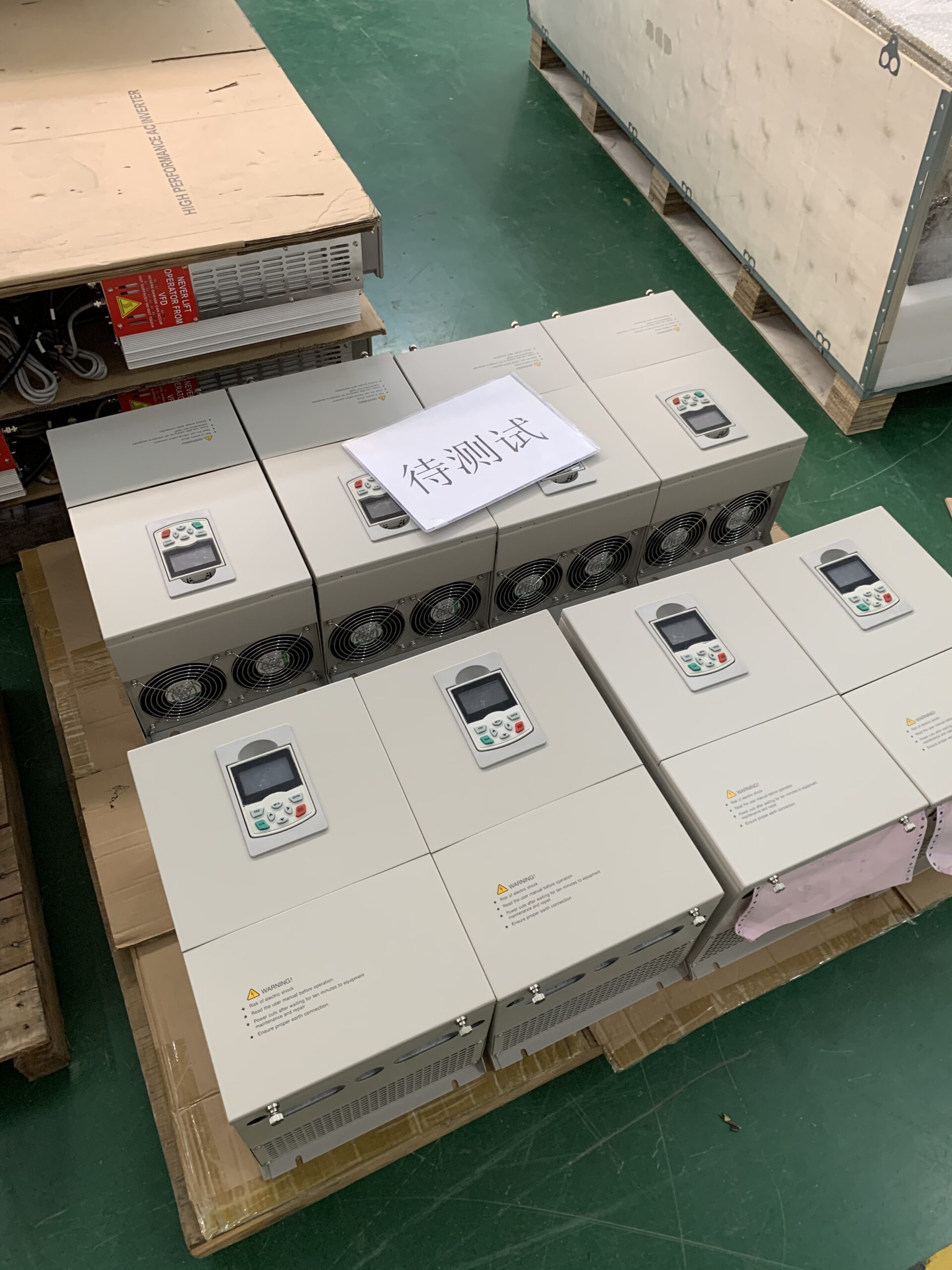
Key thermal design checkpoints to inspect:
- Independent Cooling Air Ducts: Ensure the cooling airflow travels through an isolated heatsink channel, completely sealed off from the sensitive main control PCB. Single-cavity budget drives pull dusty, humid ambient air directly across surface-mount electronics, leading to early board-level corrosion.
- High-Temperature Japanese Capacitors: Electrolytic DC bus capacitors should be rated for 105°C with a minimum operational lifespan of 50,000 hours, not generic 85°C consumer-grade alternatives.
- 50°C Continuous Output Guarantee: Request the official manufacturer derating curve. A reputable supplier will explicitly document whether a 7.5 kW drive can deliver 100% rated current at 50°C without tripping.
4. Sensorless Firmware Algorithms vs. Fragile Water Probes
In rural and remote pumping stations, physical water-level electrode probes installed deep inside boreholes are notorious single points of failure. Mineral scaling, silt deposition, electrolytic probe corrosion, and wire breaks routinely generate false dry-run alarms or fail to protect pumps during aquifer drawdown.
Premium solar pump drive manufacturers resolve this through sensorless algorithmic protection:
- Active Power Factor Monitoring: The drive constantly tracks active output current (Ia) and power factor (cos φ). When the borehole water level drops below the pump suction intake, the motor mechanical load drops sharply from rated conditions down to <60%.
- Automatic Timed Recovery: Upon detecting underload cavitation, the inverter softly ramps down to protect the pump impellers and thrust bearings. It then initiates an intelligent timer (e.g., 30 to 60 minutes) to allow aquifer replenishment before attempting a soft restart.
Before standardizing on a supplier, verify whether their sensorless dry-run detection works reliably on standard AC induction and permanent magnet synchronous motors (PMSM). For proper array and motor power matching, see our sizing formula guide: How Many Solar Panels Do I Need for a 3HP, 5HP, or 7.5HP Water Pump.
5. Supplier Comparison Matrix: Budget vs. Industrial vs. Solar Engineering
To simplify supplier benchmarking during procurement tenders, use the following engineering matrix:
| Evaluation Dimension | Low-Cost Budget Drive | General Industrial OEM | Solar-Specialized Engineering (SolarSeeker SP4) |
|---|---|---|---|
| Primary Target | Lowest FOB unit price | Factory shopfloor conveyors/fans | Dedicated off-grid solar water pumping |
| MPPT Dynamics | Slow P&O (>3s response); frequent trip on clouds | Basic add-on card; limited DC range | Fast dynamic tracking (<0.5s); smooth frequency throttling |
| Borehole Cable Support | <50m only; high dV/dt causes motor burnout | Requires expensive external cabinet reactor | Programmable carrier frequency; matched dV/dt filter options |
| Ambient Rating | 40°C nominal (heavy derating at 45°C) | 45°C nominal; derating required | 50°C continuous operation without derating |
| Air Duct Design | Single cavity; dust pulled across PCB | Semi-isolated | 100% independent air duct; sealed PCB chamber |
| Dry-Run Protection | Requires physical probe wire downhole | External current relay required | Built-in sensorless active power factor tracking |
| Warranty Realization | Return-to-factory only (high shipping cost) | Regional industrial distributor | Local board-level replacement kits + direct engineering support |
6. Warranty Realization and Spare Parts Logistics
The final, and perhaps most critical, criteria in supplier selection is how warranty claims are physically executed.
Many overseas trading companies offer attractive “3-year warranties” on paper. However, when an inverter fails in Nigeria, Kenya, or the Philippines, their standard response is: “Please ship the defective unit back to Shenzhen for factory inspection.” Between international air freight costs, customs clearance delays, and weeks of crop downtime, returning the drive is commercially impossible.
A genuine B2B manufacturing partner provides an accessible, modular warranty structure:
- Board-Level Modularity: The inverter is engineered with plug-and-play modularity: separate power board (IGBT stage), control board (DSP/CPU), and terminal interface.
- Distributor Consignment Spare Kits: For stocking distributors and master EPCs, suppliers should provide consignment spare power boards, cooling fan assemblies, and keypad modules in advance.
- Component Swap Authorization: Local technicians can diagnose fault codes over WhatsApp or video conference, replace a modular board in under 15 minutes, and submit photo documentation for immediate warranty credit.
Conclusion: Building Long-Term Margins Through Engineering Rigor
In the solar water pumping industry, reliability in the field is your greatest sales driver. EPCs that win repeat tenders and distributors that dominate regional agricultural markets do not compete on the cheapest initial quote—they build their brand on zero unplanned callouts and robust field performance.
Before issuing your next supplier purchase order, evaluate their technical architecture, inspect their factory test procedures, and insist on verified 50°C performance datasheets.
Partner with SolarSeeker Engineering
SolarSeeker manufactures dedicated solar pump inverters engineered specifically for harsh agricultural and borehole environments. From 0.75 kW single-phase units to 220 kW industrial deep-well platforms, our products feature independent cooling ducts, sub-second dynamic MPPT, and matched dV/dt output solutions.
Need engineering sizing support, wholesale distributor pricing, or technical datasheets?
Contact Andy and the SolarSeeker engineering team directly at info@solarseeker.tech or explore our SP4 Industrial Platform Specifications.