
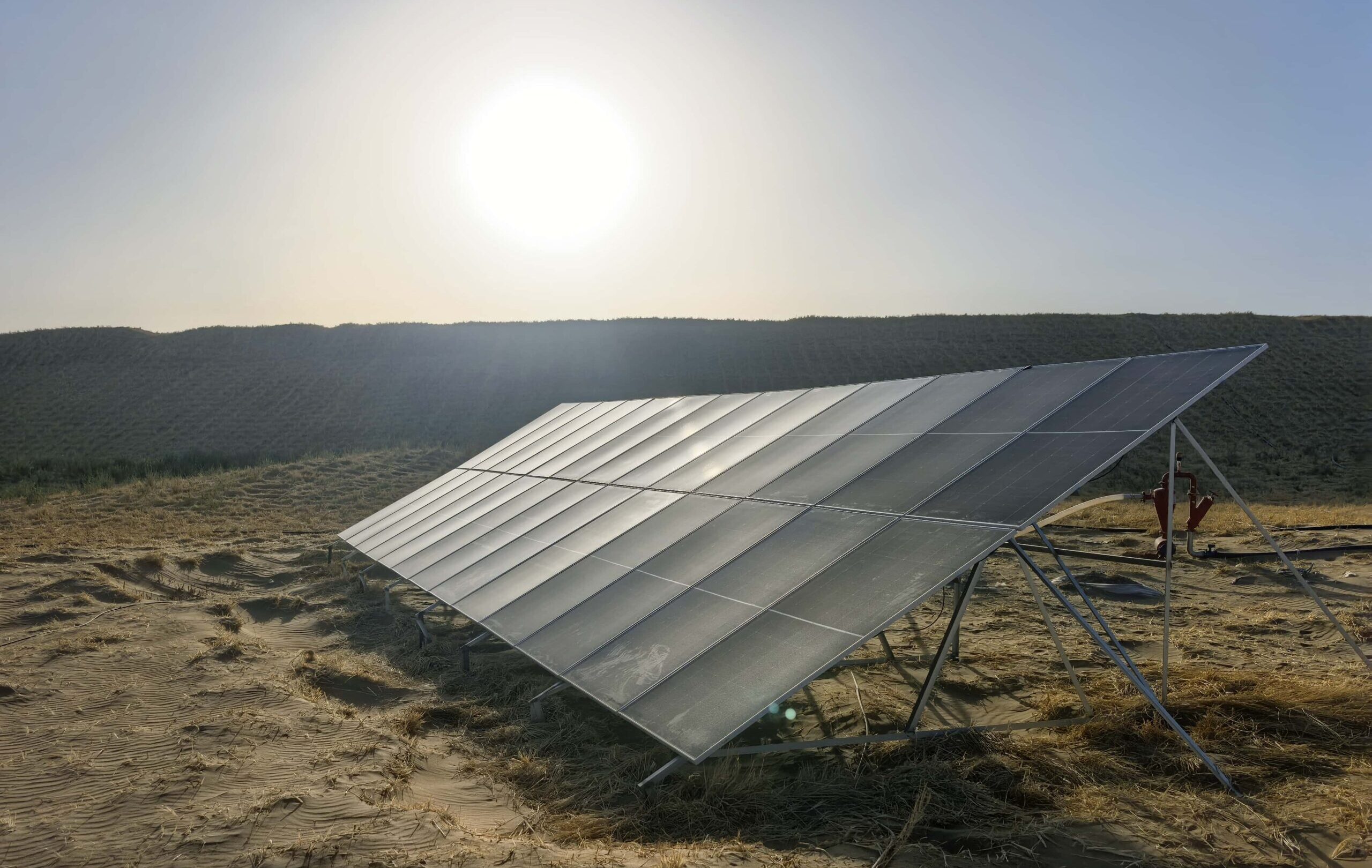
The common mistake is sizing the PV array as if a pump were a light bulb. A 5HP pump does not need only 5HP worth of panels. The inverter must start the motor, hold frequency, survive weak sunlight, and keep enough DC voltage in the working window.
For a 220V single-phase pump, start with PV power at 2 times pump power or more. For a 380V three-phase pump, start with PV power at 1.3 to 1.5 times pump power or more. Then check panel voltage, site sunlight, cable length, pump duty, and the inverter datasheet.
That split rule matters more than the pump horsepower alone.
First Convert HP to kW
Most buyers ask panel quantity by horsepower because the pump nameplate says 3HP, 5HP, or 7.5HP. Inverter and PV planning usually works better in kilowatts.
A practical conversion is:
| Pump rating | Approximate motor power |
|---|---|
| 3HP | 2.2kW |
| 5HP | 3.7kW |
| 7.5HP | 5.5kW |
Use the real pump nameplate when quoting. Some motors have different service factors, current ratings, or efficiency. The table above is a starting point, not a replacement for the nameplate.
The Panel Rule Changes With Pump Type
A 220V single-phase pump and a 380V three-phase pump do not behave the same on solar power. The current stress, starting behavior, and DC bus requirement are different.
| Pump system | PV array power starting rule | Useful Vmp target |
|---|---|---|
| 220V single-phase pump | PV Array Power >= Pump Rated Power x 2.0 | Around 320V DC Vmp |
| 380V three-phase pump | PV Array Power >= Pump Rated Power x 1.3 to 1.5 | Around 540V DC Vmp |
For a 220V single-phase system, the larger PV ratio gives the inverter more headroom during start, weak sunlight, and current-heavy operation. For a 380V three-phase system, the higher DC bus design and lower current usually make the array ratio more efficient.
This is why a single “one size fits all” panel rule causes bad quotes.
Panel Count Examples for 3HP, 5HP and 7.5HP Pumps
The number of panels depends on panel wattage. The table below uses 550W panels because they are common in many agricultural projects. If your market uses 450W, 580W, or 600W panels, keep the same PV power logic and recalculate the quantity.
| Pump size | Pump power | 220V single-phase PV starting point | 550W panel count | 380V three-phase PV starting point | 550W panel count |
|---|---|---|---|---|---|
| 3HP | 2.2kW | 4.4kW or more | 8 panels or more | 2.9 to 3.3kW | 6 panels or more |
| 5HP | 3.7kW | 7.4kW or more | 14 panels or more | 4.8 to 5.6kW | 9 to 11 panels |
| 7.5HP | 5.5kW | 11kW or more | 20 panels or more | 7.2 to 8.3kW | 14 to 16 panels |
These are starting numbers for planning. The final string design must also meet the inverter’s DC input range, MPPT range, and maximum voltage limit.
Why Voltage Is as Important as Wattage
Panel quantity is not only about total watts. The inverter also needs the right DC voltage.
If the array voltage is too low, the inverter may wake up late, stay in sleep mode, or run at weak frequency. The pump may turn, but water output can be poor. If the voltage is too high, the inverter may trip on over-voltage. In cold weather, panel Voc rises, so the risk is higher.
For many Solarseeker solar pump inverter projects, a 220V single-phase pump inverter often needs around 320V DC Vmp. A 380V three-phase pump inverter often needs around 540V DC Vmp. Always verify the exact inverter model and panel datasheet before wiring.
Why Sunlight Hours Change the Final Panel Plan
The tables above give a starting point. They do not replace site planning.
A 5HP pump in a dry, high-sun area may meet the buyer’s daily water target with a clean design and good storage tank. The same pump in a cloudy mountain area may need more panel headroom because the useful pumping window is shorter.
For irrigation, the real target is daily water volume. A system that runs at full speed for one hour at noon may still fail the farm. The pump must run long enough across the day to fill the tank or finish the irrigation cycle.
Ask these questions before reducing the panel count:
- How many hours of useful sunlight does the site get in the pumping season?
- Does the farm need morning water, or is noon pumping enough?
- Is there a storage tank to buffer cloudy hours?
- Are panels likely to collect dust during dry season?
- Will the pump run every day or only for seasonal irrigation?
This is why many EPC teams keep extra PV margin. It is cheaper to plan enough panel power than to send a crew back because the system only performs during a short noon test.
Panel Wattage Is Not the Whole Story
Higher-watt panels can reduce panel quantity, but they do not automatically solve every design issue.
For example, switching from 450W panels to 550W panels may reduce the number of modules. That can lower rail, clamp, and wiring points. However, the string still needs the correct Vmp and Voc. A smaller number of large panels may not reach the inverter’s target voltage unless the series design is correct.
Also check panel availability. Some distributors quote a project using one panel model, then ship another because stock changes. That can shift Vmp, Voc, current, and string count.
Before final shipment, confirm the exact panel datasheet. Do not only confirm the wattage printed on the quote.
A Practical Example for a 5HP Irrigation Pump
Say an irrigation contractor has a 5HP pump. The nameplate shows about 3.7kW.
If it is a 220V single-phase pump, a good planning start is at least 7.4kW of PV power. With 550W panels, that means 14 panels or more. The installer still needs to arrange the panels in series and parallel so the Vmp fits the inverter.
If it is a 380V three-phase pump, the planning start is about 4.8 to 5.6kW. With 550W panels, that means about 9 to 11 panels. The final count may change because the string voltage must reach the correct working window.
The same 5HP number creates two different PV plans. That is the point.
Common Sizing Mistakes
Many callbacks start before the equipment leaves the warehouse. The quote looks cheap, but the system does not have enough panel power or voltage margin.
| Mistake | What happens in the field |
|---|---|
| Using pump HP as panel kW | Array is too small, the pump starts late, and water output drops. |
| Ignoring pump phase | A 220V single-phase system may need more PV headroom than expected. |
| Counting watts but not Vmp | The inverter may not reach its working voltage window. |
| Ignoring cold-weather Voc | Over-voltage alarms or component stress can appear in cold mornings. |
| Choosing small old panels only by price | More rails, clamps, wiring points, and labor can raise project cost. |
For EPC teams, the cheapest panel count can become expensive once the crew returns to the site.
What to Send Before Final Model Selection
Before confirming the solar pump inverter and panel plan, collect:
- Pump power in HP or kW
- Pump voltage and phase
- Rated current from the nameplate
- Required head and flow
- Panel wattage, Vmp, and Voc
- Local temperature range
- Cable distance between array, inverter, and pump
- Whether the pump needs daily full-load irrigation or only seasonal water transfer
This information decides whether the project should use a 220V single-phase path such as Solarseeker SP1 or a larger 380V three-phase path such as Solarseeker SP4.
For the complete sizing workflow, continue to the solar pump system design guide and pump selection guide. Then compare the SolarSeeker inverter range or send the pump nameplate for model checking.
A Simple 6-Step Panel Sizing Check
- Read the pump nameplate first. Record pump power, voltage and phase. The planning examples on this page use 3HP ≈ 2.2kW, 5HP ≈ 3.7kW and 7.5HP ≈ 5.5kW.
- Choose the starting PV power rule by pump type. For a 220V single-phase pump, start with PV power at about 2× pump power or more. For a 380V three-phase pump, start with about 1.3–1.5× pump power or more.
- Convert the required PV power into panel quantity. Divide the target PV power by the actual panel wattage and round up. The examples on this page use 550W modules.
- Check string voltage, not only total watts. Confirm string Vmp and cold-weather Voc against the exact inverter model. The page uses around 320V DC Vmp for many 220V single-phase pump inverter projects and around 540V DC Vmp for many 380V three-phase pump inverter projects, but the exact datasheet remains the final check.
- Add site margin before finalizing the quote. Review sunlight hours, dust, temperature, cable length, pump duty and required daily water volume before reducing panel count.
- Confirm the exact panel and inverter datasheets before wiring. Panel stock substitutions can change Vmp, Voc, current and string count, so do not approve the final array from wattage alone.
FAQ
Can I use fewer panels if the pump runs only at noon?
Sometimes, but it is a risky way to quote. A smaller array may run at noon and fail in the morning, afternoon, cloudy weather, or after panel aging. For irrigation projects, daily water volume matters more than a short noon test.
Do I need the same number of panels for 220V and 380V pumps?
No. A 220V single-phase pump usually needs more PV power headroom. A 380V three-phase pump often works with a lower PV power ratio, but it needs a higher DC voltage window.
Should I size panels by watts or voltage first?
Check both. Watts help with motor load and sunlight headroom. Voltage decides whether the inverter can start and run in the right DC range.
Final Checklist Before Quoting
Do not quote a 3HP, 5HP, or 7.5HP pump by horsepower alone. Check the pump nameplate, choose the correct PV multiplier for the pump type, and confirm the voltage window before ordering panels.
If you want a faster check, send the pump power, voltage, phase, panel model, head, and flow requirement. Solarseeker can help prepare a panel matching sheet and inverter model recommendation before the project goes to site.