
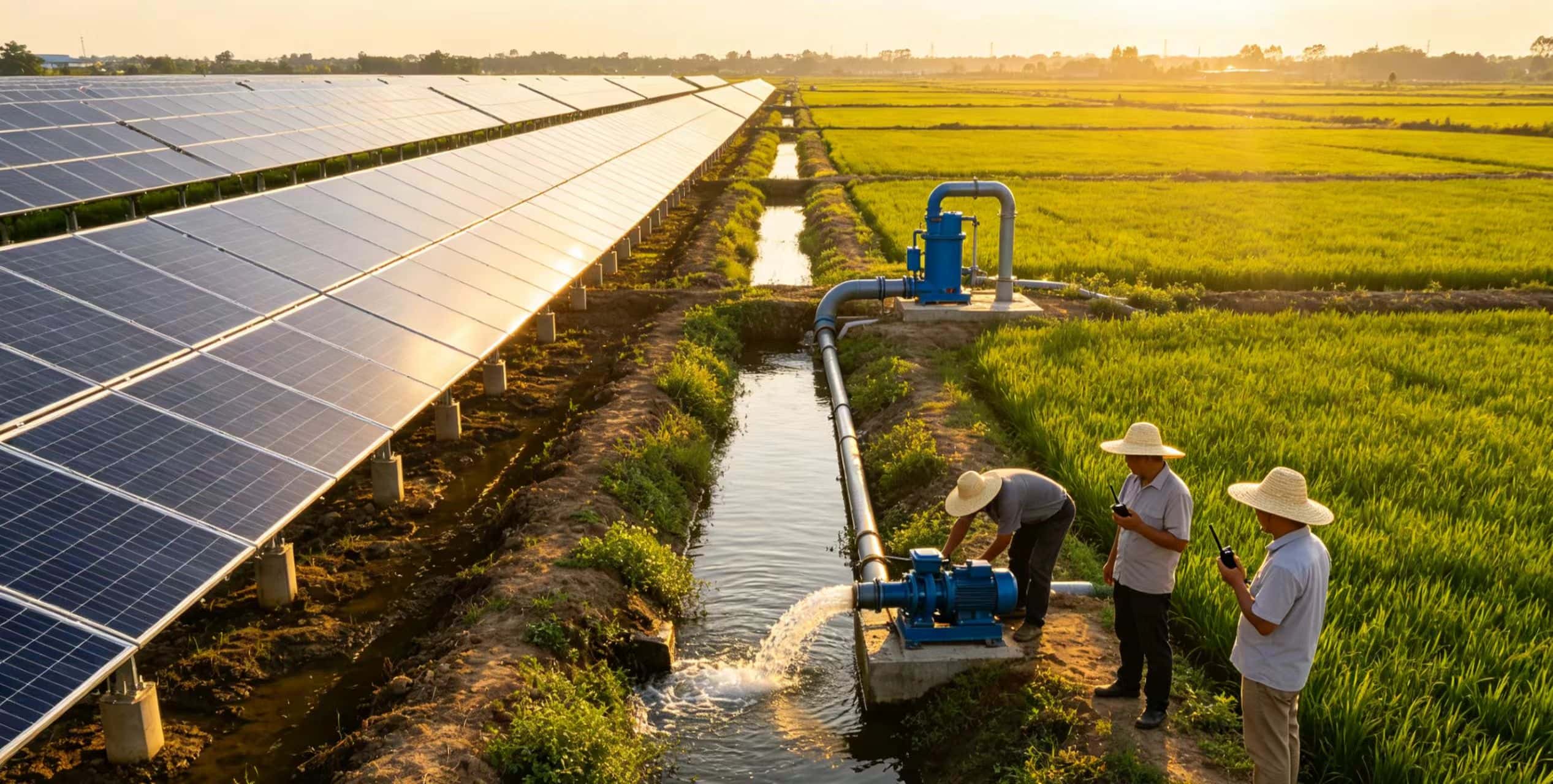
A practical selection guide for buyers who need to confirm whether a 220V single-phase pump can run from solar power.
A single phase solar pump inverter is used when a 220V single-phase AC pump needs to run from solar panels. Before choosing a model, check the pump nameplate, rated current, starting behavior, head, flow, cable distance, and PV voltage plan. Power alone is not enough to confirm a safe inverter match.
Motor Windings and Electrical Specifications First
The first mistake is simple: the buyer asks for an inverter before checking the pump.
That usually leads to a short message like this: “I have a 1.5 kW 220V pump. Which solar inverter should I buy?”
The power rating helps, but it does not answer the real selection question. A 220V single-phase pump may have high starting demand. Its rated current may be higher than expected. The site may have long cable runs, weak morning sunlight, or a water demand that needs longer operating hours.
If those details are missing, the quote may look correct and still fail in the field.
The pump may start late. The inverter may trip during acceleration. The water output may be too weak before noon. The installer may add panels or change wiring after the cabinet is already mounted.
That is why the correct path starts from the pump nameplate and site conditions, not from a random inverter power size.
What Buyers Should Check First
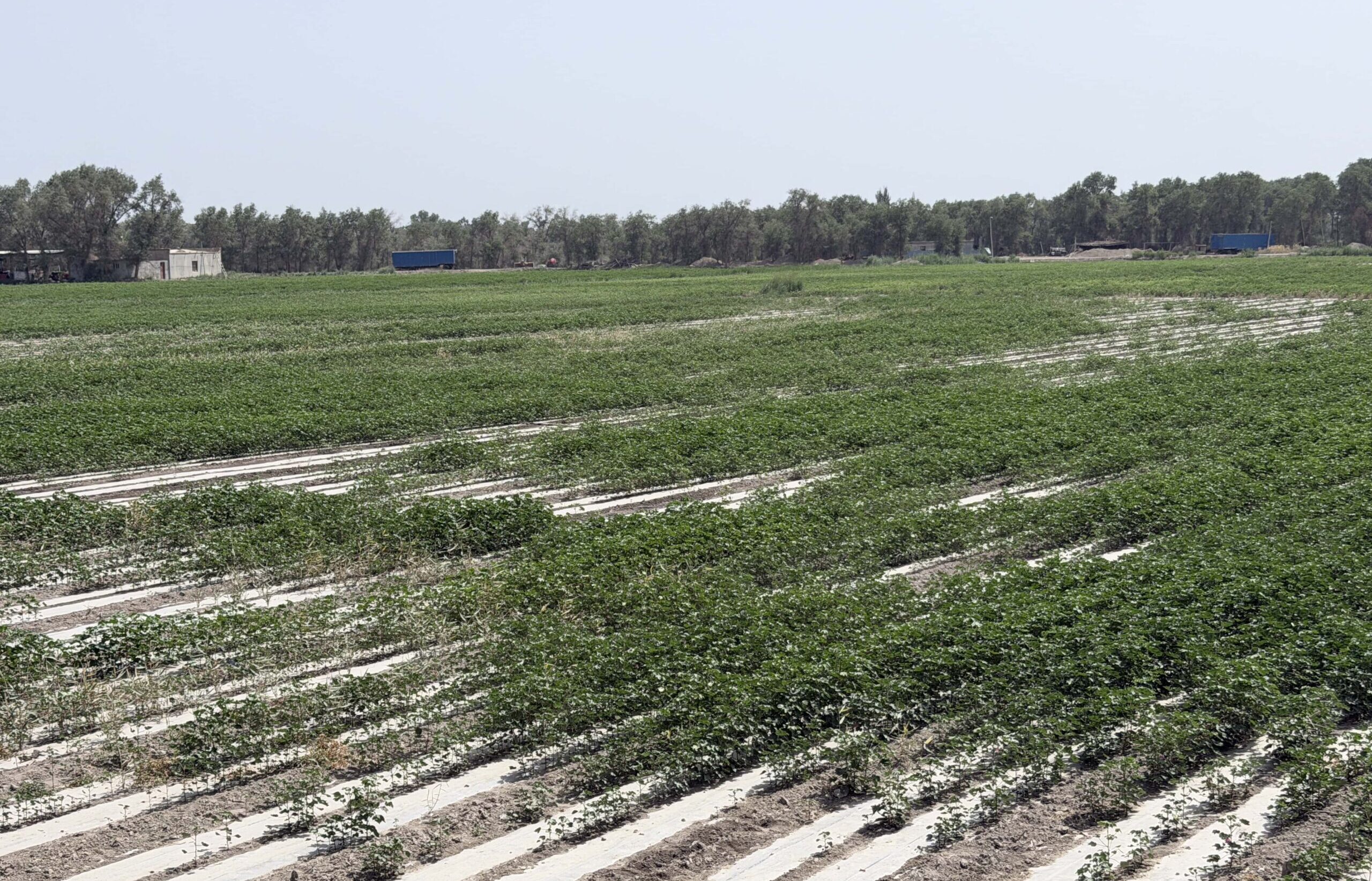
Use this checklist before asking for a final model recommendation.
| Check item | What to confirm | Why it matters |
|---|---|---|
| Pump voltage | Confirm the pump is 220V single-phase AC | The inverter path must match the motor voltage and phase |
| Rated power | Check kW or HP on the nameplate | Gives the first size range, but it is not enough alone |
| Rated current | Read the current value from the nameplate | Helps confirm whether the inverter can carry the motor load |
| Starting behavior | Ask whether the pump starts hard or has a large start load | Some single-phase pumps need more careful inverter matching |
| Pump type | Submersible, surface, centrifugal, or borehole pump | Different pump types create different site risks |
| Head and flow | Confirm the required lift and water volume | The pump must meet the real duty point, not only run electrically |
| Cable distance | Measure distance from inverter to pump | Long cable can increase voltage drop and heating risk |
| PV voltage plan | Check panel Vmp and string direction | Low Vmp can cause late starts or weak output |
| Water source | Well, tank, pond, river, or borehole | Helps set protection logic and dry-run risk |
| Installation site | Shade, heat, dust, cabinet location, and service access | Affects cooling, wiring, maintenance, and long-term reliability |
This table is more useful than a quick price request.
If you can send only one thing first, send a clear pump nameplate photo. If you can send three things, send the nameplate, head, and flow. If the PV panels are already purchased, send the panel label too.
Why 220V Single-Phase Pumps Need Careful Matching
Small 220V pumps look simple, but they can still create selection problems.
Single-phase motors often behave differently during startup compared with three-phase motors. Some have higher starting current. Some are older pumps with unclear labels. Some are used on farms where voltage drop and cable length were never checked carefully.
The inverter must do more than match the kW number. It must handle the motor current, startup behavior, protection settings, and available solar input.
This matters most when the pump is already installed. Replacing the pump may mean pulling equipment from a well, changing pipe connections, or delaying irrigation. A model mismatch can become a field-service cost, not just a small quotation error.
For buyers comparing 220V pump options, Solarseeker’s 220V solar pump inverter page is the right cluster path to review before selecting equipment.
PV Sizing Note for Single-Phase Pump Systems
Solar panels should not be sized like a simple power label.
A 1.5 kW pump does not mean a 1.5 kW PV array is enough for stable solar pumping. Pumps need starting support, sunlight changes through the day, and enough DC voltage for the inverter to operate inside its useful range.
Use this starting rule when the article topic involves panel matching or voltage planning:
| Pump system | PV array power starting rule | Useful Vmp target |
|---|---|---|
| 220V single-phase pump | PV Array Power >= Pump Rated Power x 2.0 | Around 320V DC Vmp |
| 380V three-phase pump | PV Array Power >= Pump Rated Power x 1.3 to 1.5 | Around 540V DC Vmp |
For this article, the first row is the important one.
The 220V single-phase system usually needs a stronger PV power ratio because the pump must start reliably and keep running when sunlight changes. If the array is too small, the pump may run only near noon. That creates weak daily water output even if the inverter model looks correct.
Panel voltage also matters. If Vmp is too low, the inverter may stay asleep in the morning or reduce output too often. If the string design is wrong, adding more wattage may not solve the real voltage problem.
For panel matching details, use the solar panel and pump matching guide before the installer finalizes the string plan.
When SP1 Is the Product Path to Review
For small 220V single-phase pump systems, Solarseeker’s SP1 solar pump inverter is the natural product path to check.
Do not treat that as a blind model answer. The exact selection still depends on the pump nameplate, rated current, head, flow, cable distance, PV array plan, and site conditions.
SP1 is relevant when the project is built around a 220V single-phase pump, often in smaller irrigation, garden pumping, livestock water, or light farm water supply. It helps buyers who want to use solar power without moving directly into a larger three-phase pumping system.
However, a buyer should still confirm whether the existing pump is healthy. If the motor has aging capacitors, unclear labels, damaged cable, or unusual startup behavior, the inverter recommendation becomes less certain.
Field Example: The Buyer Knows 220V, But Not Current
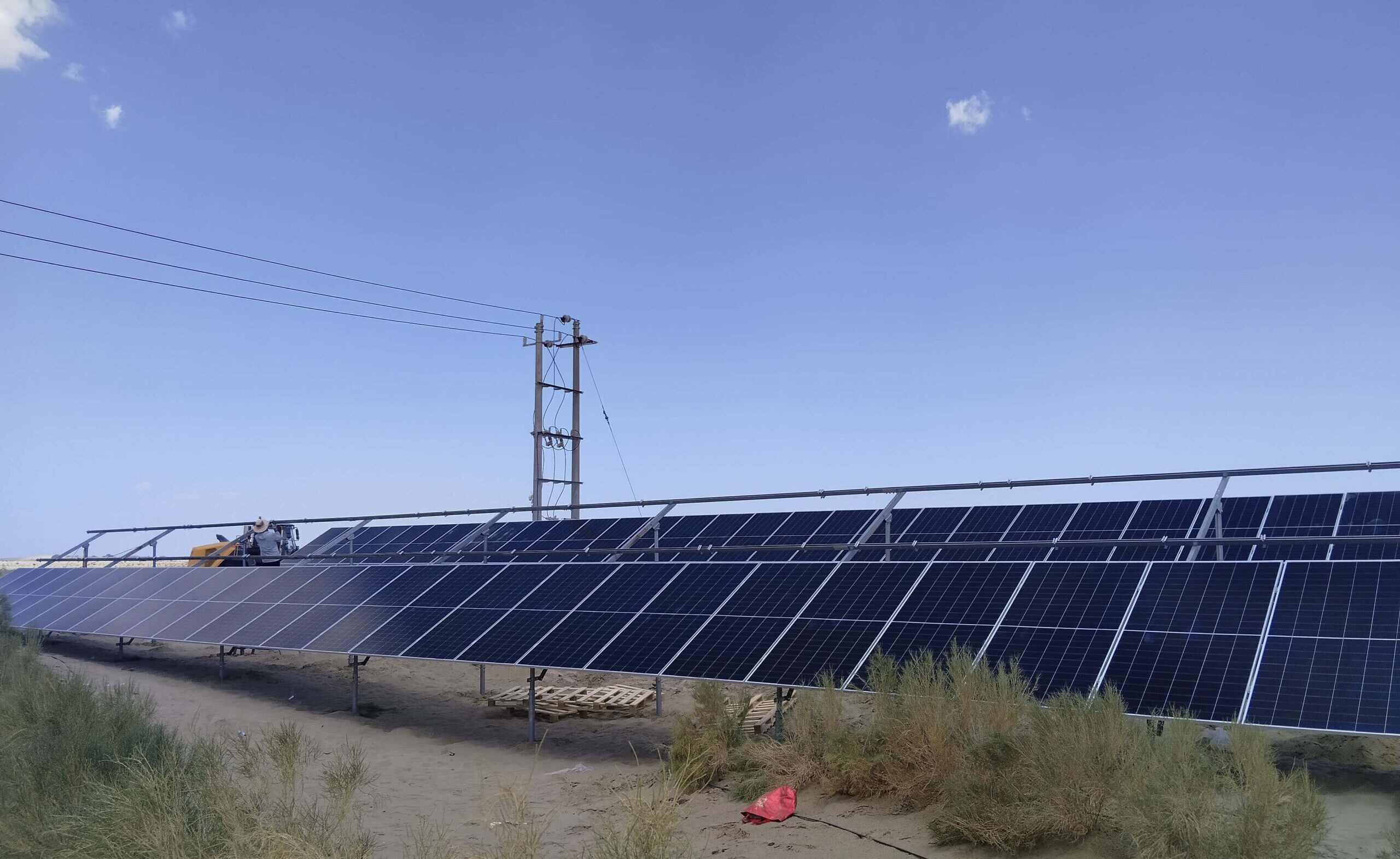
Here is a common small-farm situation.
The buyer has a 220V pump that works from grid power. They want to run it from solar during the day. They know the pump is “single phase” and they know the power rating, but they do not know the rated current or starting behavior.
That is not enough for a final recommendation.
The supplier needs a nameplate photo first. The rated current helps check motor load. Head and flow help confirm whether the pump can meet the water target. Cable distance helps check whether voltage drop may become a problem. If the buyer already has panels, Vmp and string layout must also be checked.
If the pump current is high for its power size, or if the pump starts hard, the inverter selection may need a safer margin. If the PV voltage is too low, the pump may start late every morning. If the head is higher than expected, the pump may run but still deliver weak water.
This is the kind of project where a five-minute nameplate check can prevent a second installation visit.
Limits Buyers Should Understand
A single phase solar pump inverter is useful, but it cannot fix every site problem.
It cannot make an undersized pump deliver more head and flow than the pump curve allows. It cannot remove voltage drop caused by very long cable and poor cable sizing. It cannot make a weak PV array behave like a larger one. It cannot turn a damaged motor into a reliable solar pumping system.
It also should not be selected without checking local electrical rules and installation conditions.
For wiring, grounding, and commissioning, use qualified electricians or trained technicians. Follow local electrical codes, product manuals, grounding requirements, and protection settings. This article is a selection guide, not a wiring manual.
What to Send Before Ordering
Before the buyer asks for a final quote, send the real pump and site data.
Prepare these items:
- Pump nameplate photo
- Pump power, voltage, phase, rated current, and frequency
- Pump type and application
- Required head and flow
- Cable distance from inverter to pump
- Water source and site photos
- Daily working time or irrigation schedule
- PV module power, Voc, Vmp, and planned string layout if panels are already available
This information allows the supplier to check the inverter path, PV matching direction, and field risk before the project reaches the site.
FAQ
Can a single phase solar pump inverter run my existing 220V pump?
It may, if the pump is a 220V single-phase AC pump and its rated current, startup behavior, head, flow, and site conditions fit the inverter range. Send the pump nameplate before choosing a model.
How many solar panels are needed for a 220V single-phase pump?
As a starting rule, PV array power should be at least pump rated power x 2.0, with useful Vmp around 320V DC. The final panel count depends on panel wattage, Voc, Vmp, local sunlight, and the inverter input range.
Is a single-phase pump weaker than a three-phase pump?
Not always. A single-phase pump can work well for smaller water demand and simpler 220V sites. Larger deep-well or high-flow projects often move to three-phase systems because of motor performance, power range, and project scale.
What data is needed before selecting a single phase solar pump inverter?
Send the pump nameplate, power, voltage, phase, rated current, head, flow, cable distance, water source, and site photos. If the solar panels are already planned, send panel power, Voc, Vmp, and string layout.
What if my pump nameplate is unclear?
Send photos of the pump body, motor label, control cabinet, old starter or drive, and any invoice or manual. If needed, ask a qualified technician to confirm voltage and current before the inverter model is locked.
Ask for a Model Check Before Ordering
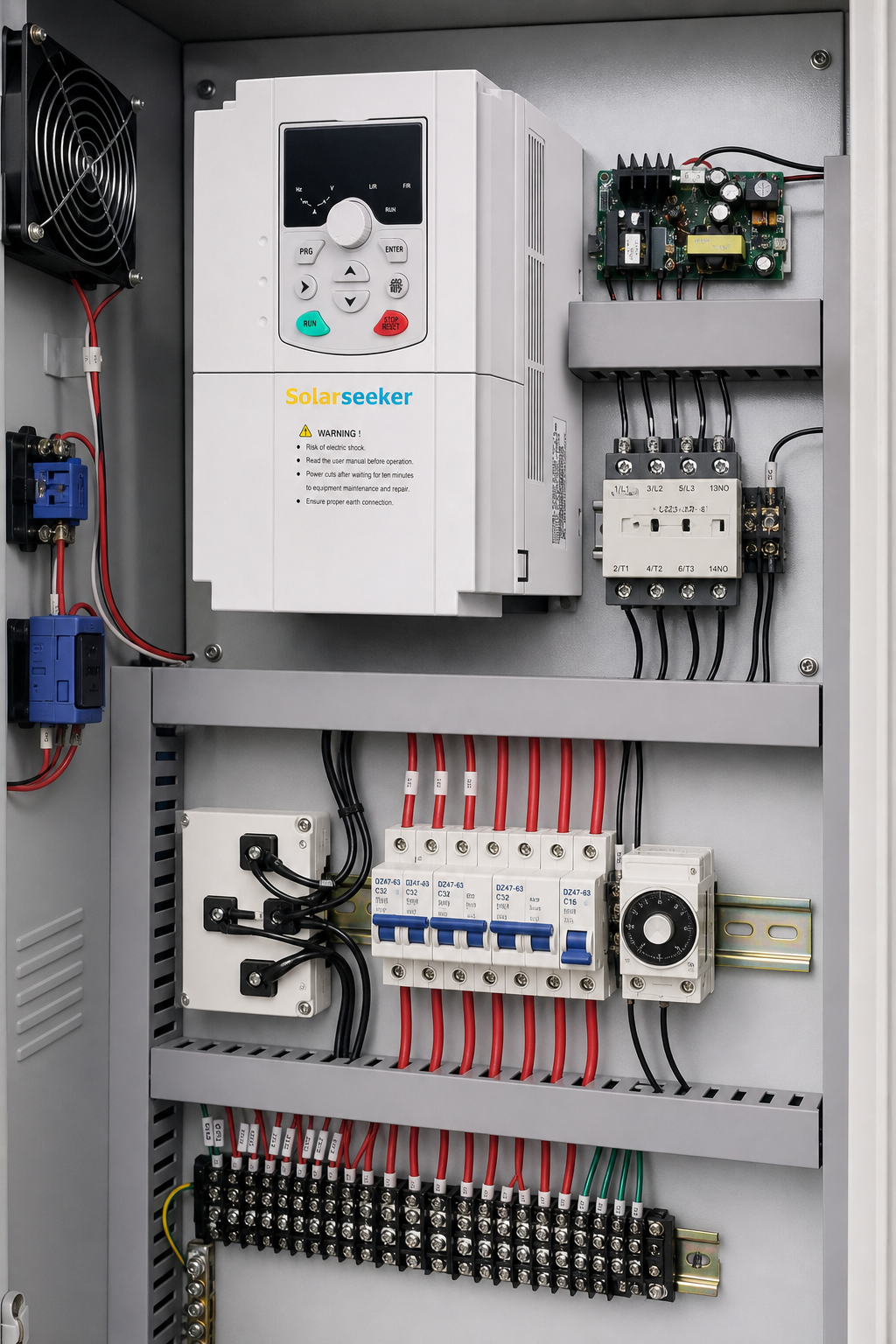
Do not buy the inverter only from a kW number.
For a Solarseeker model check, send the pump nameplate, pump power, voltage, phase, rated current, head, flow, cable distance, and PV panel plan through the contact page. That gives the engineer enough data to confirm whether the SP1 path fits your 220V single-phase pump.