
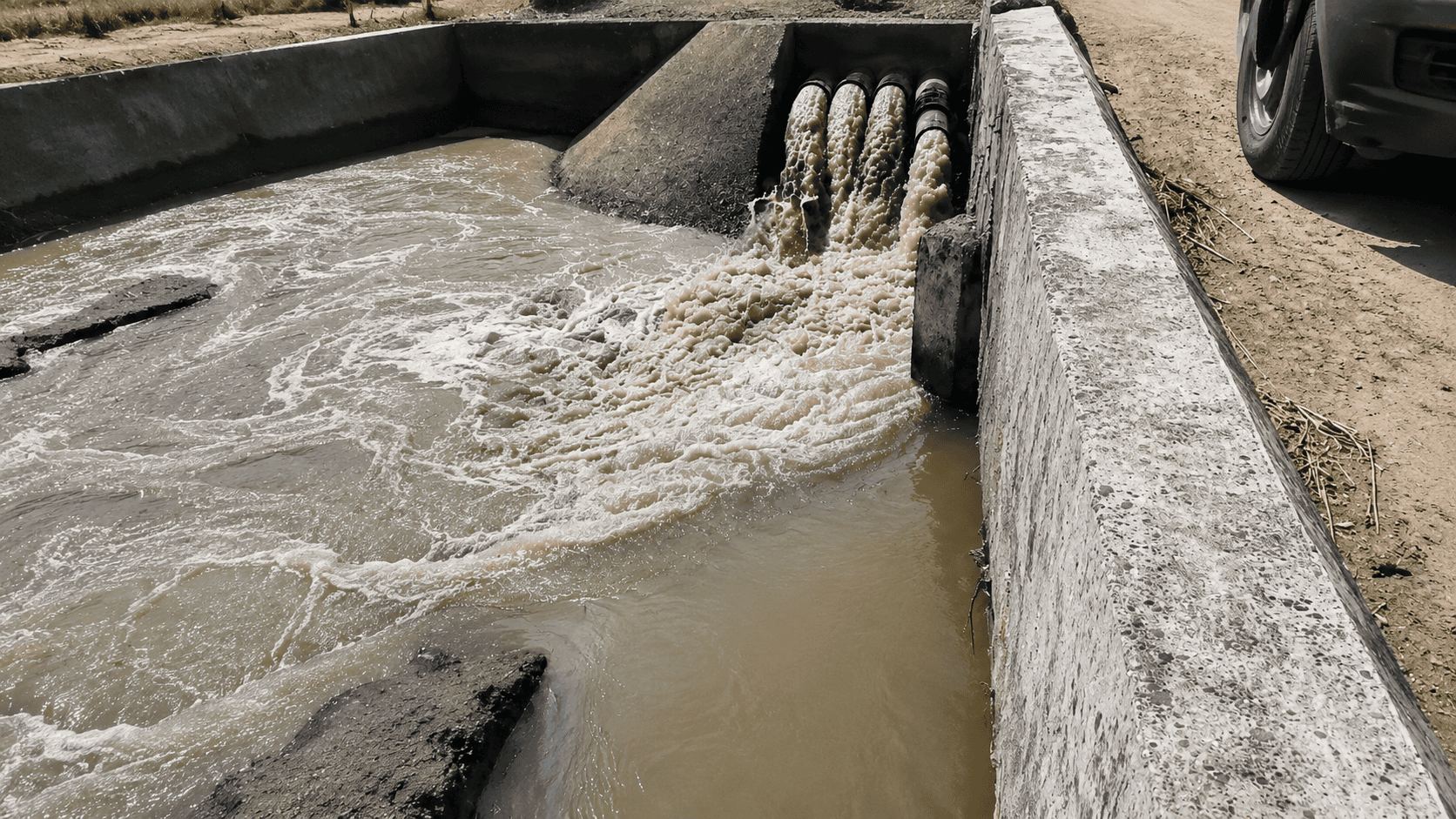
A field troubleshooting guide for installers who see late startup, weak output, sleep mode, or over-voltage alarms after connecting the PV array.
DC input voltage problems in a solar pump inverter usually come from the PV string design, not the pump itself. Low Vmp can cause sleep mode, late startup, or weak output. High Voc can trigger over-voltage protection. Before replacing the inverter, check panel Voc, Vmp, series count, temperature, and the inverter DC input range.
The Symptom Usually Appears After Installation
The pump runs well near noon but starts late every morning.
That is the kind of complaint that sends installers back to the site. The pump may run for a few hours, then slow down in weak sunlight. Sometimes the inverter stays in sleep mode. Sometimes it starts, trips, and restarts. In worse cases, the inverter reports over-voltage when the array is cold or the string count is too high.
The first reaction is often to blame the inverter.
That may be wrong.
In many solar pumping sites, the real problem is the DC input voltage window. The PV array may have enough total wattage, but the voltage may be too low for stable startup or too high for safe operation.
This is why the solar pump inverter installation guide should be checked before the installer changes wiring or replaces equipment.
How to Read the Symptom on Site
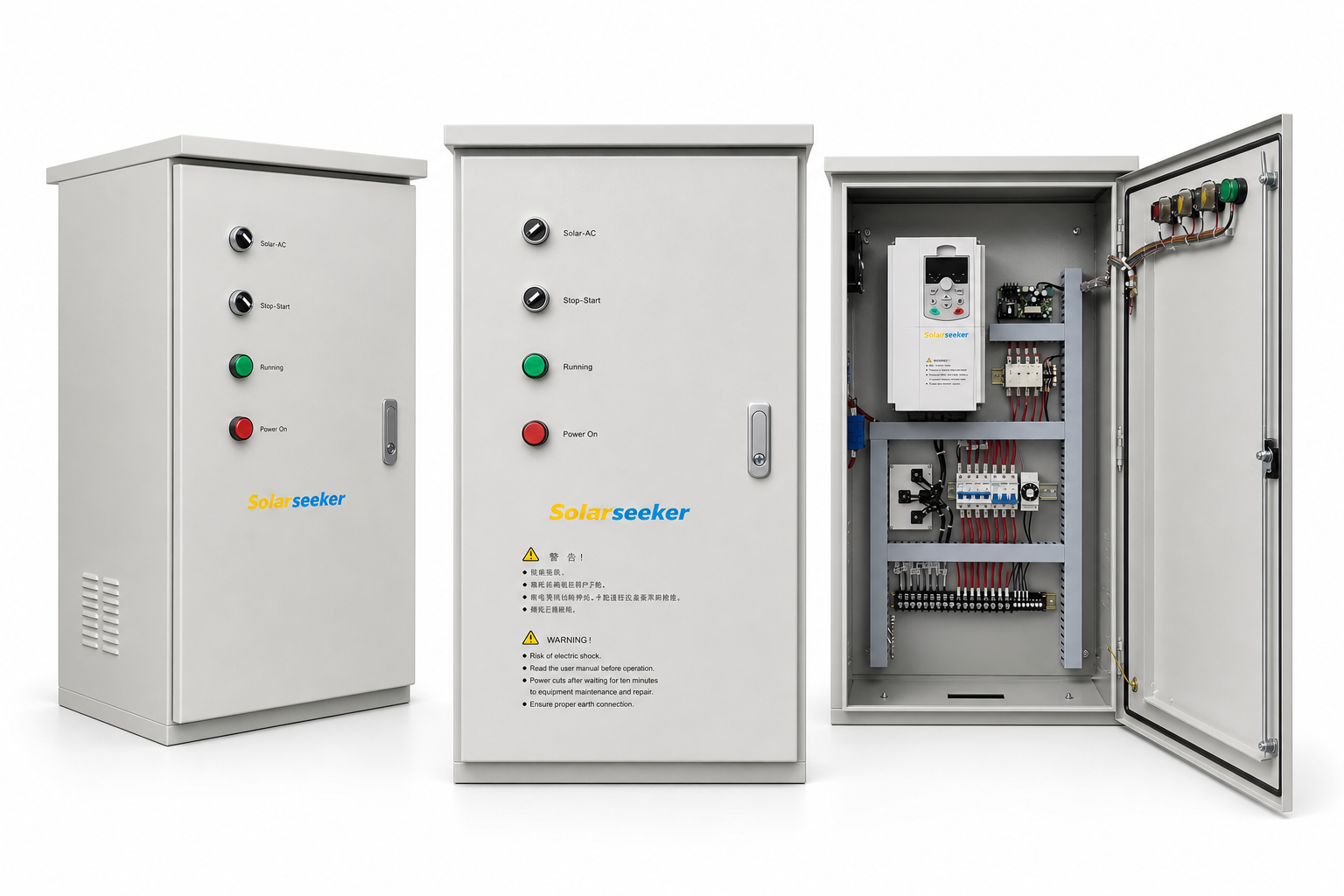
Use the symptom to narrow the first check.
| Site symptom | Likely DC voltage cause | What to check first |
|---|---|---|
| Inverter stays asleep in the morning | PV Vmp is too low under weak sunlight | Panel Vmp, series count, shade, dust, and inverter start voltage |
| Pump starts late but runs near noon | Array voltage only reaches a useful range in strong sunlight | Vmp target, panel quantity in series, and cable loss |
| Pump runs weakly before noon | DC voltage or available PV power is not enough under load | Vmp under load, panel matching, and pump load condition |
| Inverter trips with over-voltage alarm | PV Voc is too high for the inverter DC limit | Voc per panel, series count, cold-temperature Voc rise |
| Voltage looks fine open-circuit, but drops during running | Array is weak under load or string design is poor | Measured Vmp under load, panel condition, connector quality |
| Fault appears after adding panels | Series count may exceed the DC input limit | Recalculate Voc and compare with inverter maximum input |
Do not diagnose from total panel wattage alone.
Wattage tells only part of the story. Voltage window, string layout, temperature, and load behavior decide whether the inverter can actually use that power.
Vmp and Voc Are Not the Same Check
Two PV values matter most during installation: Vmp and Voc.
Vmp is the voltage at maximum power. It is the practical working voltage when the panels are producing useful power. For solar pump inverter operation, Vmp helps decide whether the inverter can wake up, track power, and keep the pump running.
Voc is open-circuit voltage. It is measured when the panel is not under load. Voc is important for safety and over-voltage risk because it can rise in cold conditions.
Confusing these two values creates many site problems.
If the installer checks only Voc, the string may look high enough on paper, while Vmp under load is still too low for stable pumping. If the installer checks only Vmp and ignores Voc, the string may exceed the inverter’s maximum DC input in cold weather.
That is why both values must be checked against the inverter datasheet before installation.
The PV Sizing Rule Behind Stable Startup
For solar pumping, the PV array must support both power and voltage.
Use these starting rules when checking panel matching, voltage windows, weak output, sleep mode, over-voltage risk, or commissioning:
| Pump system | PV array power starting rule | Useful Vmp target |
|---|---|---|
| 220V single-phase pump | PV Array Power >= Pump Rated Power x 2.0 | Around 320V DC Vmp |
| 380V three-phase pump | PV Array Power >= Pump Rated Power x 1.3 to 1.5 | Around 540V DC Vmp |
These are starting points, not a replacement for the inverter manual.
The final design must still check the inverter’s allowed DC input range, the panel datasheet, local temperature, cable length, shade, and pump load. However, the table gives installers a quick way to see whether the array direction is already weak.
For broad 380V three-phase irrigation or deep-well systems, the SP4 solar pump inverter path is often relevant. The same voltage-window thinking still applies: the PV array must match the drive, not just the pump power.
What Usually Causes Low DC Input Voltage
Low DC input voltage does not always mean too few panels.
It may come from several site conditions:
- Too few panels in series
- Weak sunlight during morning or cloudy periods
- Shade from trees, poles, tanks, or buildings
- Dust on panels
- Long cable runs with voltage drop
- Mixed panels with different ratings
- Loose connectors or poor crimping
- Wrong series and parallel layout
- Pump load higher than expected
In the field, these problems often appear as late startup, sleep mode, unstable running, or weak water output.
The hidden cost is labor. Every return visit means travel time, new measurements, possible combiner changes, and another round of buyer complaints. A cheap panel layout can become expensive after rails, wiring, and service work are counted.
What Usually Causes Over-Voltage Risk
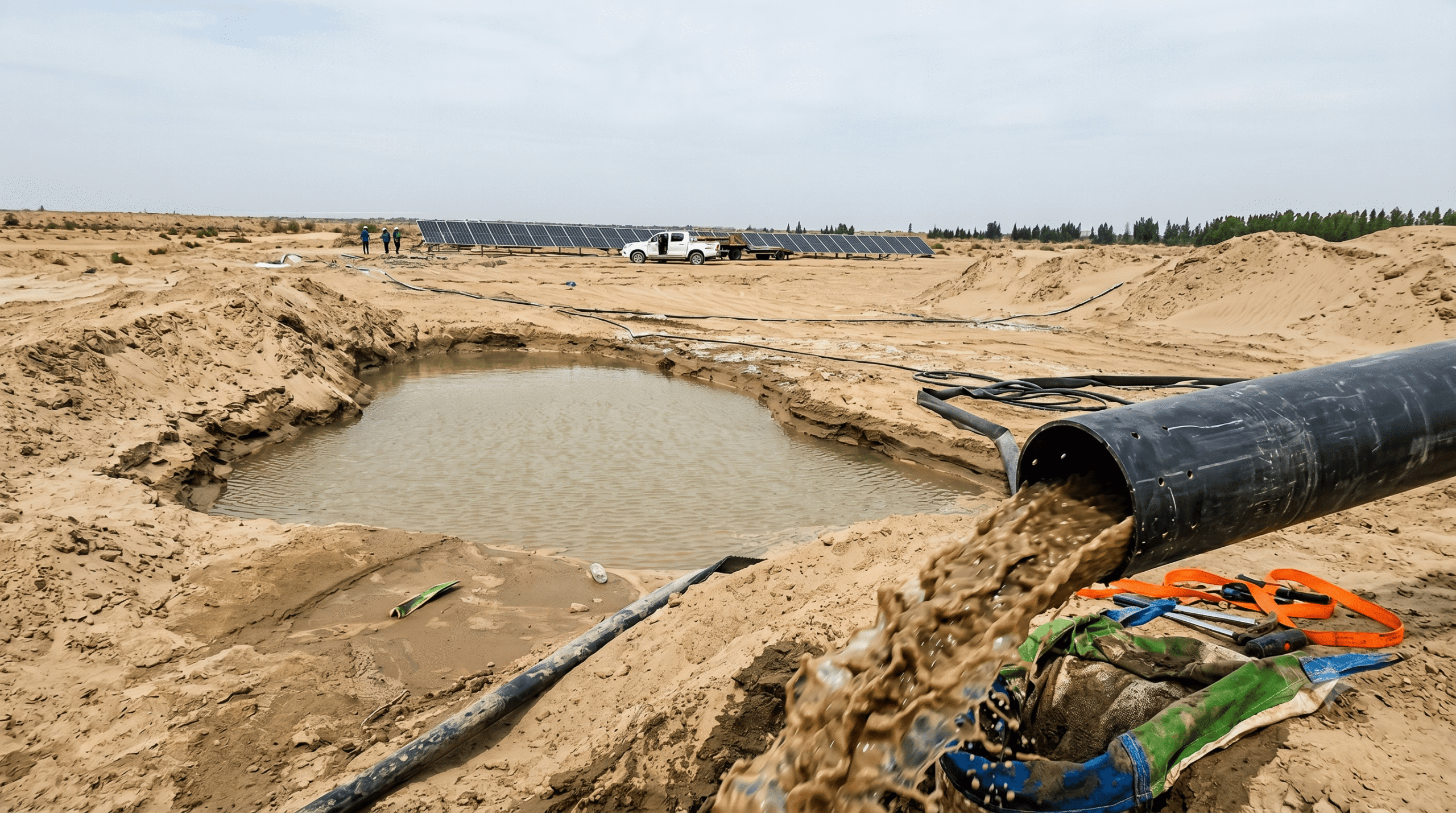
Over-voltage risk is different.
It usually comes from too many panels in series or from ignoring cold-temperature Voc rise. A string that looks acceptable at warm midday conditions may exceed the inverter’s maximum DC input when the panels are cold and unloaded.
This is not a small warning.
Over-voltage can trigger inverter protection. In worse cases, it may damage components. It can also create warranty and safety problems if the installation ignored the inverter’s datasheet.
Before adding panels in series, check:
- Panel Voc from the datasheet
- Number of panels in series
- Lowest expected site temperature
- Inverter maximum DC input voltage
- Whether the measured voltage is open-circuit or under load
Do not solve weak output by blindly adding panels in series. First identify whether the problem is power, Vmp, Voc limit, shade, cable loss, or pump load.
Field Example: Late Startup From Low Vmp
Here is a typical installation issue.
An irrigation pump runs normally at noon, but it does not start early enough in the morning. The installer checks the total panel wattage and thinks the array should be enough. The buyer asks whether the inverter is defective.
The better first check is Vmp.
If the series count is too low, the array may not reach a useful working voltage until sunlight is strong. The inverter may stay asleep, or it may wake up and then reduce output. Water production starts late, even though the panel wattage looks acceptable.
In this situation, replacing the inverter does not fix the root cause. The PV string plan must be checked against the inverter input window. The installer should compare panel Vmp, Voc, series count, site temperature, shade, and cable distance.
For the practical panel-matching process, use the solar panel and pump matching guide before changing the string plan.
First Checks Before Replacing the Inverter
Do not replace the inverter before the DC side is checked.
Start with these non-destructive checks:
- Confirm the inverter model and DC input voltage range
- Check panel Voc and Vmp from the module datasheet
- Count the exact number of panels in series and parallel
- Compare string Voc with the inverter maximum DC input
- Compare useful Vmp with the pump system target
- Look for shade, dust, damaged panels, or mixed panel ratings
- Check whether the voltage was measured open-circuit or under load
- Review cable distance, connector quality, and combiner layout
- Confirm pump voltage, phase, current, head, and load condition
If these checks are missing, the fault report is incomplete.
For an installer, the fastest repair is not always the safest repair. The safest path is to identify whether the voltage problem is low working voltage, high open-circuit voltage, poor panel condition, or wrong pump load.
Safety Note for DC Voltage Checks
PV DC voltage can be dangerous.
Do not open combiner boxes, disconnect strings, or measure live DC circuits unless you are qualified and trained. Follow local electrical codes, lockout procedures, inverter manuals, PV module datasheets, grounding rules, and site safety requirements.
This article explains diagnostic logic. It is not a step-by-step wiring or live-testing manual.
FAQ
Why does a solar pump inverter start late in the morning?
Late startup often happens when PV Vmp is too low under weak sunlight. The inverter may not reach its useful working voltage until sunlight becomes stronger. Check panel Vmp, series count, shade, dust, cable loss, and the inverter input range.
What is Vmp in a solar pump inverter system?
Vmp is the panel voltage at maximum power. It is the practical working voltage when the PV array is producing usable power. For solar pump inverters, Vmp affects startup, MPPT tracking, and stable pump output.
What is Voc and why does it matter?
Voc is open-circuit voltage. It matters because the string Voc must stay below the inverter’s maximum DC input limit, including cold-temperature rise. If Voc is too high, the inverter may trip or be damaged.
Can I add more panels to fix low water output?
Maybe, but do not add panels blindly. First check whether the problem is low Vmp, low PV power, shade, cable loss, pump load, or wrong string design. Adding panels in series can also create over-voltage risk.
What data should I send before changing the PV string?
Send panel datasheets, Voc, Vmp, wattage, series and parallel layout, inverter model, DC input range, pump nameplate, site temperature range, cable distance, shade photos, and the fault symptom.
Before the Installer Changes the Wiring
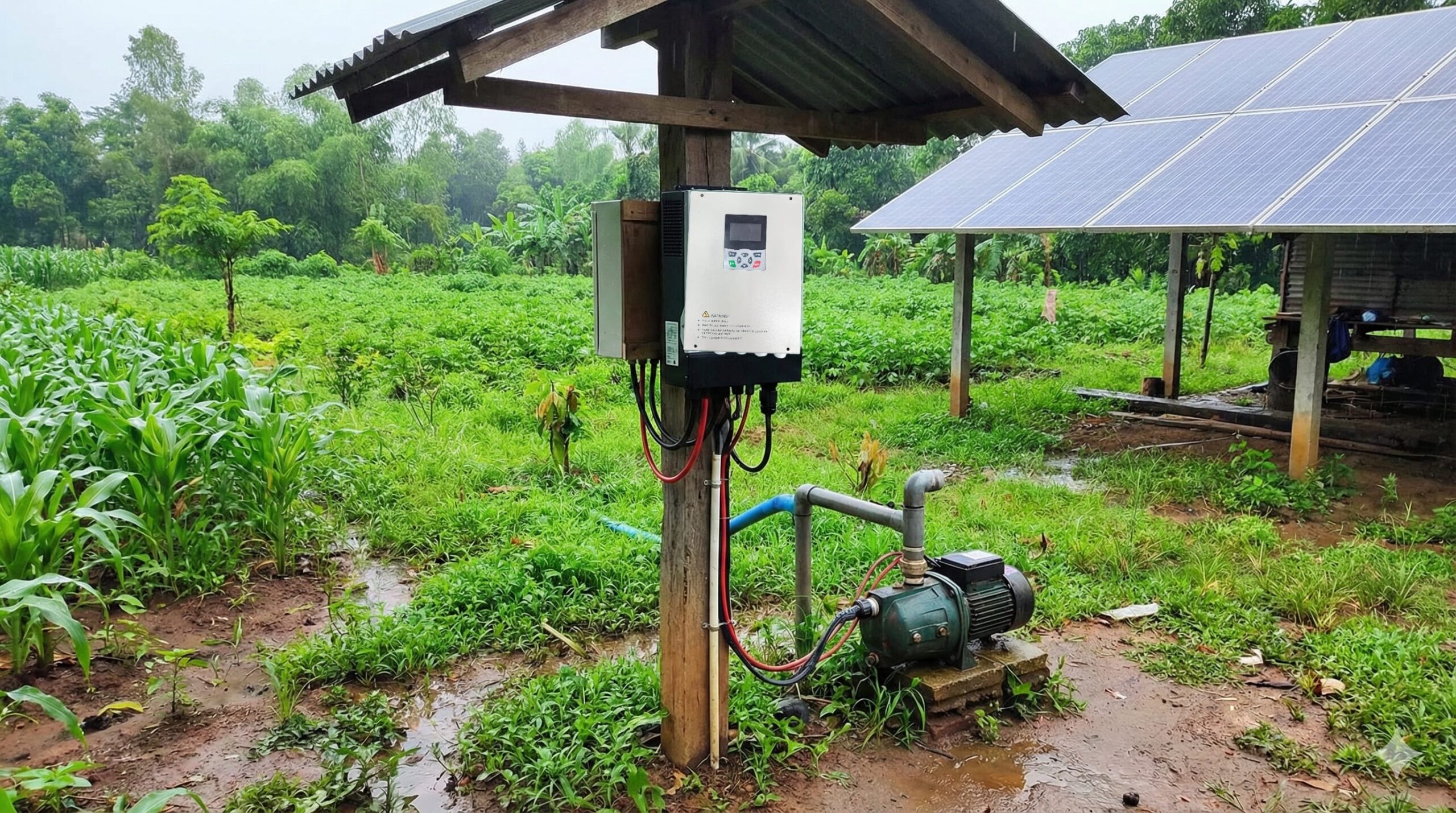
Share the PV string plan before changing panels or replacing the inverter.
For a Solarseeker engineering check, send the panel model, Voc, Vmp, series count, parallel count, inverter model, pump nameplate, fault symptom, cable distance, and site photos through the contact page. That gives the engineer enough data to judge whether the problem is Vmp, Voc, wiring condition, or pump load.