
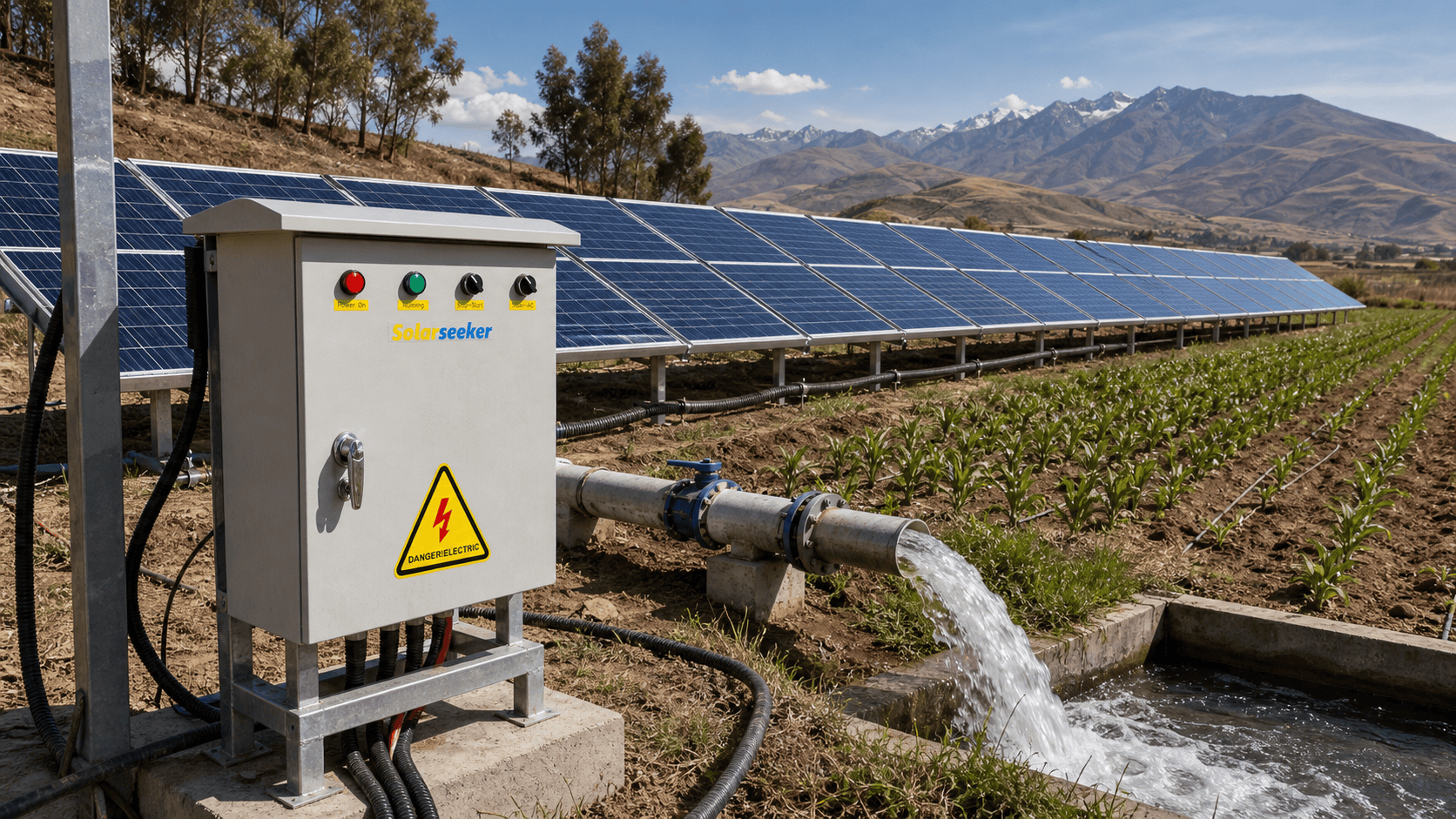
A field-focused guide for Mexico distributors, EPC teams, and irrigation buyers checking solar water pump demand and the safer inverter path.
On a Mexican farm, the pump question often starts before the inverter quote. The buyer may have an orchard, a deep well, a diesel generator, or an existing AC pump that already works but costs too much to run.
The Mexico solar water pumps market is driven by irrigation demand, strong solar resource, off-grid farms, orchards, and the need to reuse AC pumps. Buyers should select inverter by pump voltage, phase, current, head, flow, and PV string plan. For larger irrigation, a 380V SP4 path is often safer.
Why Mexico Irrigation Buyers Are Asking About Solar Pumps
Mexico is not one single pumping market. A lemon orchard, a cattle ranch, a deep-well farm, and a greenhouse irrigation site do not need the same inverter path.
That is where many quotations go wrong.
The demand is real because irrigation depends on water timing. If power is weak, fuel is expensive, or the well is far from the grid, the buyer does not only compare equipment prices. They compare water risk.
Two background signals support the demand story. The World Bank tracks Mexico under its agricultural freshwater withdrawals indicator using FAO AQUASTAT data. For solar planning, the Global Solar Atlas gives site-level solar resource and PV potential data that EPC teams can use before final panel matching.
Still, market demand does not choose the inverter. The pump does.
Inverter selection starts with the nameplate, the water duty, and the site condition. After that, the buyer can decide whether a small 220V path is enough or a 380V three-phase path should be checked first.
Mexico Application vs Inverter Requirement Table
| Mexico application | Common demand pattern | Inverter requirement to check | Data buyers should send |
|---|---|---|---|
| Lemon or fruit orchard irrigation | Long daily watering window, stable flow, crop timing pressure | Higher-power solar pump inverter, correct PV string, pump protection | Pump nameplate, orchard water schedule, head, flow, panel plan |
| Deep-well farm pumping | High lift, submersible pump, possible 380V three-phase motor | SP4 path for 380V three-phase pumps, rated current check | Well depth, total head, pump curve, voltage, phase, current |
| Surface water irrigation | River, canal, pond, or reservoir pumping over distance | Flow stability, pipe loss check, dry-run or low-water protection | Water source, pipe route, flow target, pump type |
| Diesel generator replacement | Buyer wants lower running cost and less fuel handling | Solar inverter sized around existing AC pump and PV window | Generator use pattern, pump nameplate, operating hours |
| Remote ranch water supply | Off-grid site, livestock water, limited service access | Simple model path, protection settings, spare unit planning | Distance, water tank target, pump power, site access |
| Distributor stock planning | Mixed inquiries from farms, wells, and orchards | Shortlist by voltage, phase, power range, and application | Common local pump ranges, service coverage, installer skill |
This table is a starting filter. It should not replace model selection.
If the application is small and the pump is single-phase, the product path may stay simple. If the project uses a high-power three-phase pump, the quotation should slow down and check voltage, current, PV input, and field service.
What Makes Mexico Different for Inverter Selection
Many irrigation buyers in Mexico are not starting from a blank project. They may already have a pump, a well, a pipe network, and a known water schedule.
That is good news for selection if the data is complete.
It is bad news when the supplier only asks for pump power. A 55kW pump, for example, is not selected like a 5.5kW pump. The cable distance, panel string voltage, cabinet location, and motor current all matter.
For buyers comparing inverter functions, Solarseeker’s solar water pump inverter page explains the basic role of the inverter: it takes PV DC input, tracks solar power, and controls the AC pump motor for variable-frequency operation.
The market need is practical. Farmers want water during the useful solar window. EPC teams want fewer callbacks. Distributors want a product path they can repeat without guessing each project from zero.
When SP4 and 380V Become the Safer Path
Larger irrigation projects often move toward 380V three-phase pumping.
That does not mean every Mexico solar pump project needs SP4. It means SP4 should be checked when the pump nameplate, project size, and water duty point move beyond small single-phase pumping.
The SP4 solar pump inverter path is relevant for 380V three-phase pumps, deep wells, and larger agricultural water projects. It is especially useful when the buyer needs a wider power range and a clearer service path.
Use this PV starting rule when pump voltage and inverter sizing are part of the selection:
| Pump system | PV array power starting rule | Useful Vmp target |
|---|---|---|
| 220V single-phase pump | PV Array Power >= Pump Rated Power x 2.0 | Around 320V DC Vmp |
| 380V three-phase pump | PV Array Power >= Pump Rated Power x 1.3 to 1.5 | Around 540V DC Vmp |
For Mexico orchard and deep-well irrigation, the second row often becomes the key check.
Panel watts alone are not enough. Cold conditions raise Voc. Heat can pull Vmp down. Long cable runs add loss. A string plan that looks strong by total wattage can still cause startup problems if the working voltage is weak.
Field Example: Mexico Lemon Orchard Irrigation
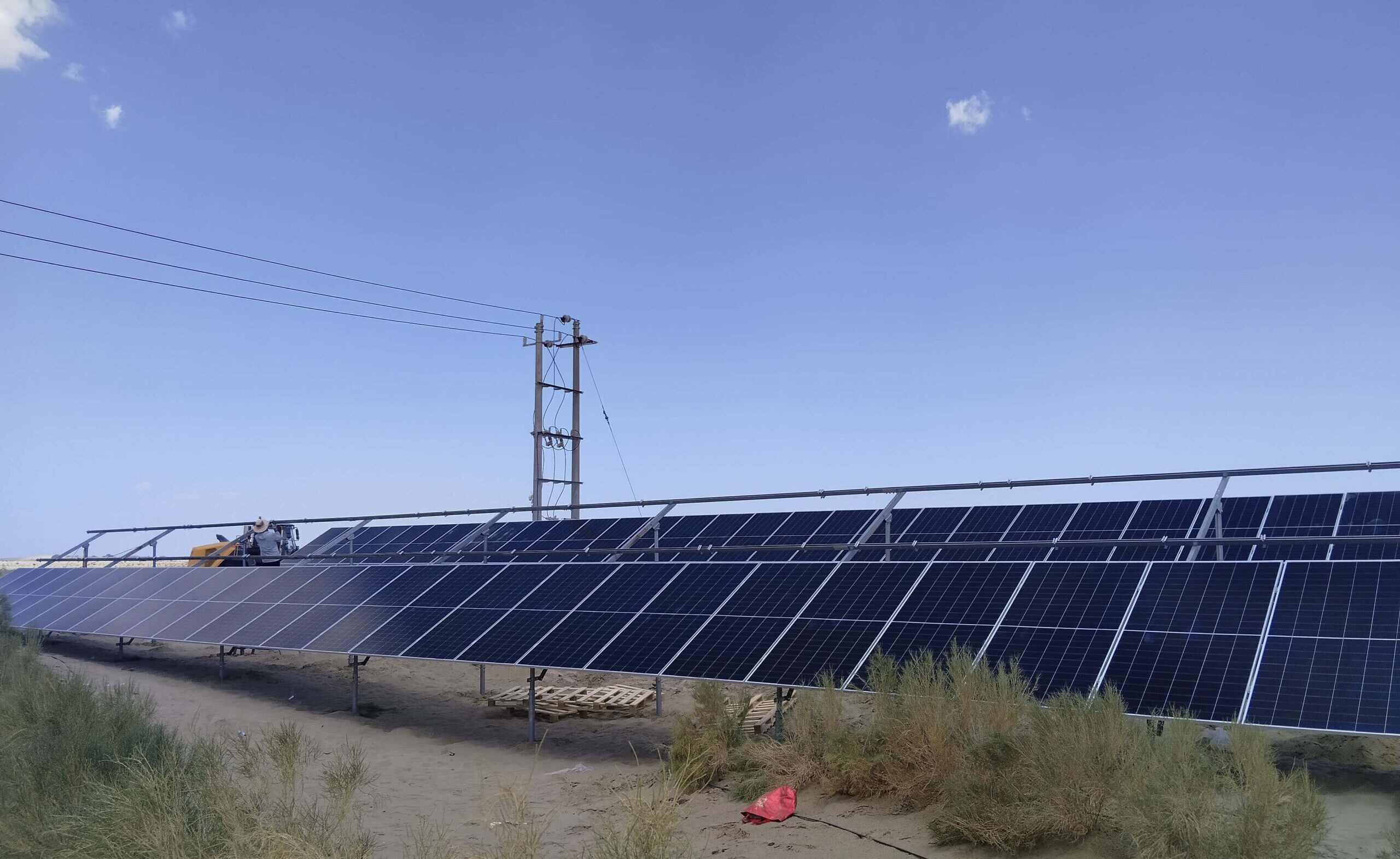
One Solarseeker Mexico reference is useful because it shows the scale of some orchard irrigation projects.
The project note describes a 75kW Solarseeker inverter for lemon orchard irrigation, driving a 55kW pump. The PV side used 210 pieces of 620W Jinko solar panels, arranged as 15 panels in series and 14 strings in parallel.
That is not a small farm kit.
It is the kind of project where inverter selection, panel string layout, cabinet planning, and commissioning support matter. A small mismatch can create late starts, protection trips, or unstable water delivery during the irrigation window.
For readers who want the project context, the Solarseeker page on Mexico lemon orchard irrigation is the natural case reference. Treat it as one field example, not a universal sizing rule.
For broader proof of application, the solar water pump projects page can help buyers see how solar pumping is used across different irrigation and water supply conditions.
What Buyers Should Confirm Before Quoting
A Mexico solar water pump quote should not start with only “how many horsepower?”
Ask for the pump nameplate first. The photo should show rated power, voltage, phase, current, frequency, and pump type.
Next, confirm the water duty. Well depth is not enough. The supplier needs total head, flow target, pipe distance, pipe diameter, elevation difference, and daily irrigation hours.
Then check the PV side. Panel wattage, Voc, Vmp, planned series and parallel layout, installation temperature, and cable distance all affect the inverter’s working window.
Finally, look at service access. A remote ranch or orchard may need a simpler spare strategy than a site close to a distributor’s workshop. In Mexico, service distance can turn a small selection error into a long and expensive repair visit.
Common Mistakes in the Mexico Market
The first mistake is quoting by pump power alone.
Power is only one line on the nameplate. Voltage, phase, current, frequency, and pump condition decide whether the inverter can drive the motor safely.
Another mistake is ignoring water duty. A pump that fills a tank slowly is different from a pump that must irrigate an orchard in a fixed time window.
Some buyers also copy a panel layout from another project. That can be risky. The same inverter model may need a different string plan when panel Voc, Vmp, climate, cable length, or pump load changes.
Distributors make one more mistake: stocking only the fastest-moving small models. Those units may sell often, but 380V three-phase irrigation projects can build stronger EPC relationships if the support path is ready.
FAQ
What drives the Mexico solar water pumps market?
Irrigation demand, strong solar resource, off-grid farms, orchard water schedules, diesel replacement, and existing AC pump reuse all drive demand. Buyers want stable water output and lower operating pressure, not only a cheaper inverter.
Which inverter fits Mexico irrigation projects?
The right inverter depends on pump voltage, phase, rated current, head, flow, PV string plan, and site conditions. For larger 380V three-phase irrigation pumps, Solarseeker’s SP4 path is often the safer starting point.
Can an existing AC pump be used in a Mexico solar water pumping system?
Yes, if the pump nameplate, voltage, phase, rated current, condition, and water duty match the solar pump inverter. The supplier should check the pump data and PV input plan before confirming the model.
What data should buyers send before quotation?
Send the pump nameplate, pump power, voltage, phase, rated current, well depth, total head, flow target, pipe route, water source, PV panel model, Voc, Vmp, and planned string layout.
Is SP4 only for deep wells in Mexico?
No. SP4 is mainly a 380V three-phase product path, so it can fit deep wells, orchard irrigation, larger farms, and other higher-power pumping projects. The final choice still depends on the pump and site data.
Send Site Conditions Before Quoting
Before quoting a Mexico solar water pump project, collect the field data in one message.
Send Solarseeker the pump nameplate, head, flow, pipe route, water source, panel model, PV string plan, site temperature, cabinet location, and service distance. Use the contact page to ask for an inverter and panel matching check before you commit the project price.