
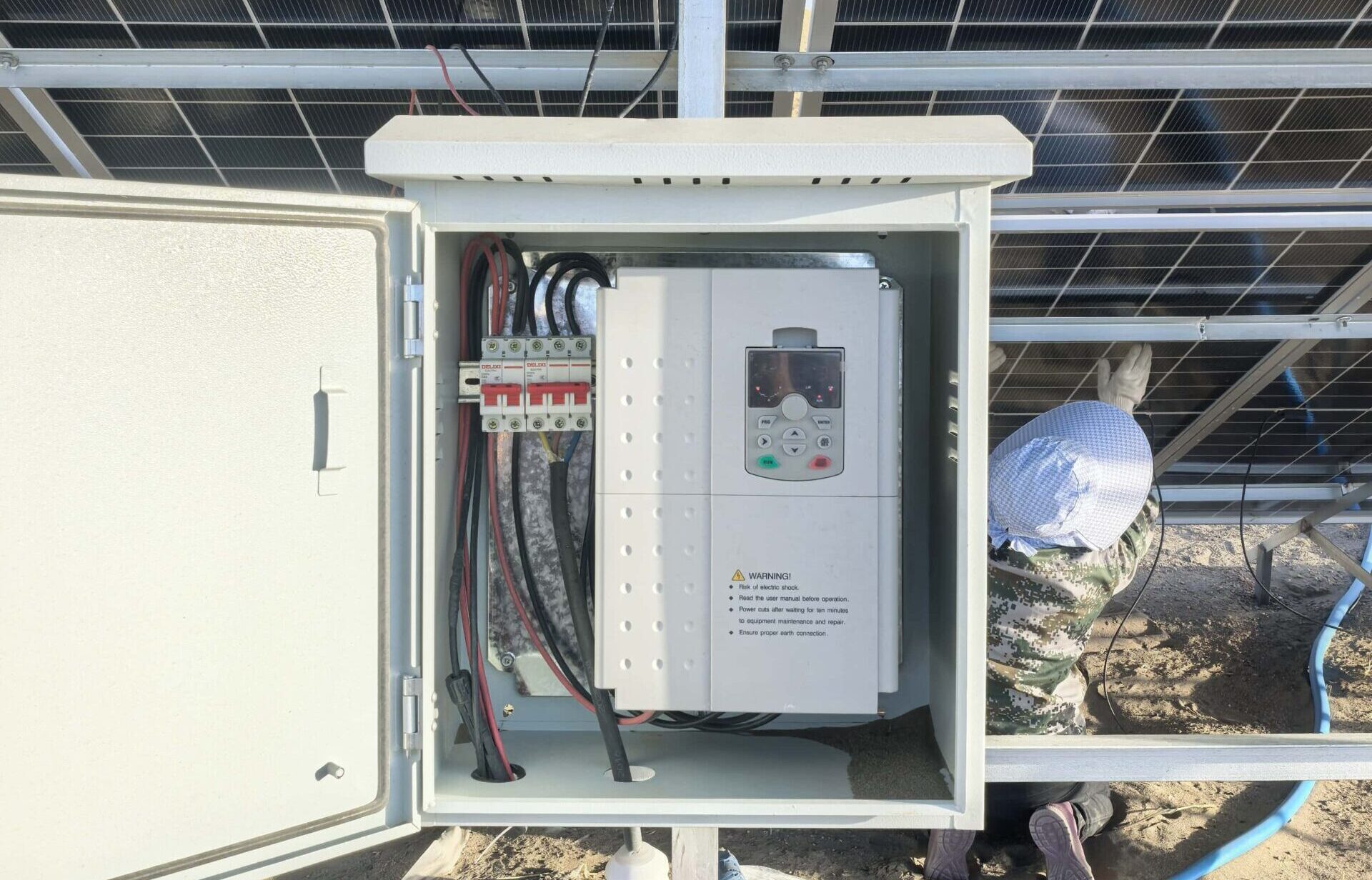
For agricultural pump distributors, borehole equipment wholesalers, and regional water engineering suppliers, adding solar pump inverters to your product catalogue is the single fastest way to capture the off-grid irrigation boom. However, structuring a profitable inverter inventory is notoriously tricky. Stocking every conceivable kilowatt rating across both 220V and 380V voltages can easily tie up $150,000 in slow-moving stock. Conversely, stocking too narrow a range forces you to turn away local drilling contractors who need immediate same-day warehouse dispatch.
Over the past decade partnering with master distributors across Southeast Asia, the Middle East, Sub-Saharan Africa, and Latin America, we have seen that successful wholesalers do not win by carrying 30 different inverter SKUs. They win by rationalizing their product range into a streamlined, high-turnover matrix that covers 85% of field pump applications with just five to six core frame sizes.
Here is an engineering and commercial blueprint for how pump distributors can structure an agile, high-margin solar pump inverter product portfolio while minimizing working capital risk.
1. Market Segmentation: Understanding the Three Core Voltage Tiers
Pump distributors must build their product architecture around the electrical realities of installed submersible and surface pumps in their territory. In B2B water engineering, projects generally fall into three distinct voltage and power tiers:
Tier 1: Smallholder Agriculture & Domestic Boreholes (0.75 kW to 2.2 kW / 1 HP to 3 HP)
This segment represents the highest unit transaction volume. Typical applications include drip irrigation for 1 to 5 hectares, livestock drinking troughs, and domestic deep wells (40 m to 80 m depth).
- The Electrical Bottleneck: In rural off-grid areas, village micro-grids or small solar arrays typically produce single-phase AC or require 220V systems. However, standard single-phase AC induction motors with start/run capacitors (PSC motors) suffer from low starting torque and frequently burn out capacitors under weak solar morning ramp-ups.
- The Distributor Solution: Distributors should offer two distinct solutions in this tier:
- Dedicated Single-Phase Inverters (SolarSeeker SP1): Designed for existing single-phase 220V pumps already installed downhole, utilizing specialized low-frequency capacitor-boost algorithms.
- Single-to-Three Phase Conversion Drives (SolarSeeker SP2): Takes single-phase 220V solar DC/AC power and outputs true three-phase 220V to drive high-reliability, capacitor-free three-phase motors. Savvy distributors bundle SP2 inverters with 220V 3-phase motors as a complete retrofit package.
Tier 2: Commercial Irrigation & Medium Boreholes (4.0 kW to 15 kW / 5.5 HP to 20 HP)
This is the profit engine for agricultural distributors. Projects include commercial horticulture, center-pivot feeds, community borehole water kiosks, and deep-well water supply (80 m to 180 m depth).
- The Electrical Standard: 380V/440V three-phase is universally standard here.
- Distributor Range Structure: You do not need to stock 4 kW, 5.5 kW, 7.5 kW, 11 kW, and 15 kW in equal quantities. In field practice, 7.5 kW (10 HP) and 15 kW (20 HP) make up over 70% of total commercial demand. Stocking a heavy-duty platform like the SolarSeeker SP4 380V Series allows you to cover intermediate ratings seamlessly by configuring software motor parameter limits.
Tier 3: Heavy-Duty Agricultural Estates & Municipal Schemes (18.5 kW to 75 kW+)
Covering large-scale river lifting schemes, mining dewatering, and municipal bulk water schemes. Inverters in this class require specialized output filtering (dV/dt reactors or sine-wave filters) due to downhole cable lengths exceeding 150 meters.
Rather than stocking multiple large frames on your warehouse floor, distributors should maintain one demonstration 30 kW or 37 kW unit, backed by an OEM factory stocking agreement for 7-day express dispatch on larger 45 kW to 110 kW units.
2. The “80/20” SKU Rationalization Matrix for Stocking Wholesalers
To prevent warehouse inventory paralysis, distributors should adopt the One-Step Upsizing Stocking Principle. In solar water pumping, operating an inverter one size larger than the motor nameplate (e.g., pairing a 7.5 kW inverter with a 5.5 kW submersible motor) is not only acceptable—it is an engineering best practice.
Submersible pumps operate in hot, high-ambient outdoor conditions where solar irradiance reaches its peak at midday. An upsized inverter runs significantly cooler, offers higher peak starting current (typically 150% to 180% for 60 seconds), and completely avoids nuisance thermal tripping (OH faults).
Here is how a distributor can cover 85% of all market inquiries with just 5 core inverter SKUs:
| Core Stocking SKU | Rated Voltage | Direct Motor Coverage | Alternative Coverage via Parameter Config | Target Market Share |
|---|---|---|---|---|
| SKU 1: 2.2 kW (SP1/SP2) | 220V 1-Phase / 3-Phase | 2.2 kW (3 HP) | 0.75 kW (1 HP), 1.5 kW (2 HP) | 25% of warehouse units |
| SKU 2: 4.0 kW (SP4) | 380V 3-Phase | 4.0 kW (5.5 HP) | 3.0 kW (4 HP) | 15% of warehouse units |
| SKU 3: 7.5 kW (SP4) | 380V 3-Phase | 7.5 kW (10 HP) | 5.5 kW (7.5 HP) | 35% of warehouse units (Top Seller) |
| SKU 4: 15 kW (SP4) | 380V 3-Phase | 15 kW (20 HP) | 11 kW (15 HP) | 15% of warehouse units |
| SKU 5: 30 kW (SP4) | 380V 3-Phase | 30 kW (40 HP) | 18.5 kW (25 HP), 22 kW (30 HP) | 10% of warehouse units |
By rationalizing down to these five SKUs, your warehouse capital efficiency increases by over 40%, inventory turnover accelerates, and your sales counter staff never need to hesitate when quoting local drilling contractors.
For an in-depth breakdown of inventory planning numbers, see our practical distributor guide on How to Build a 220V and 380V Solar Pump Inverter Stocking Mix.
3. Hardware Enclosure Strategy: IP20 Indoor Drives vs. IP55/IP65 Outdoor Ready
When structuring your catalogue, hardware enclosure rating dictates how easily local installers can adopt your drives.
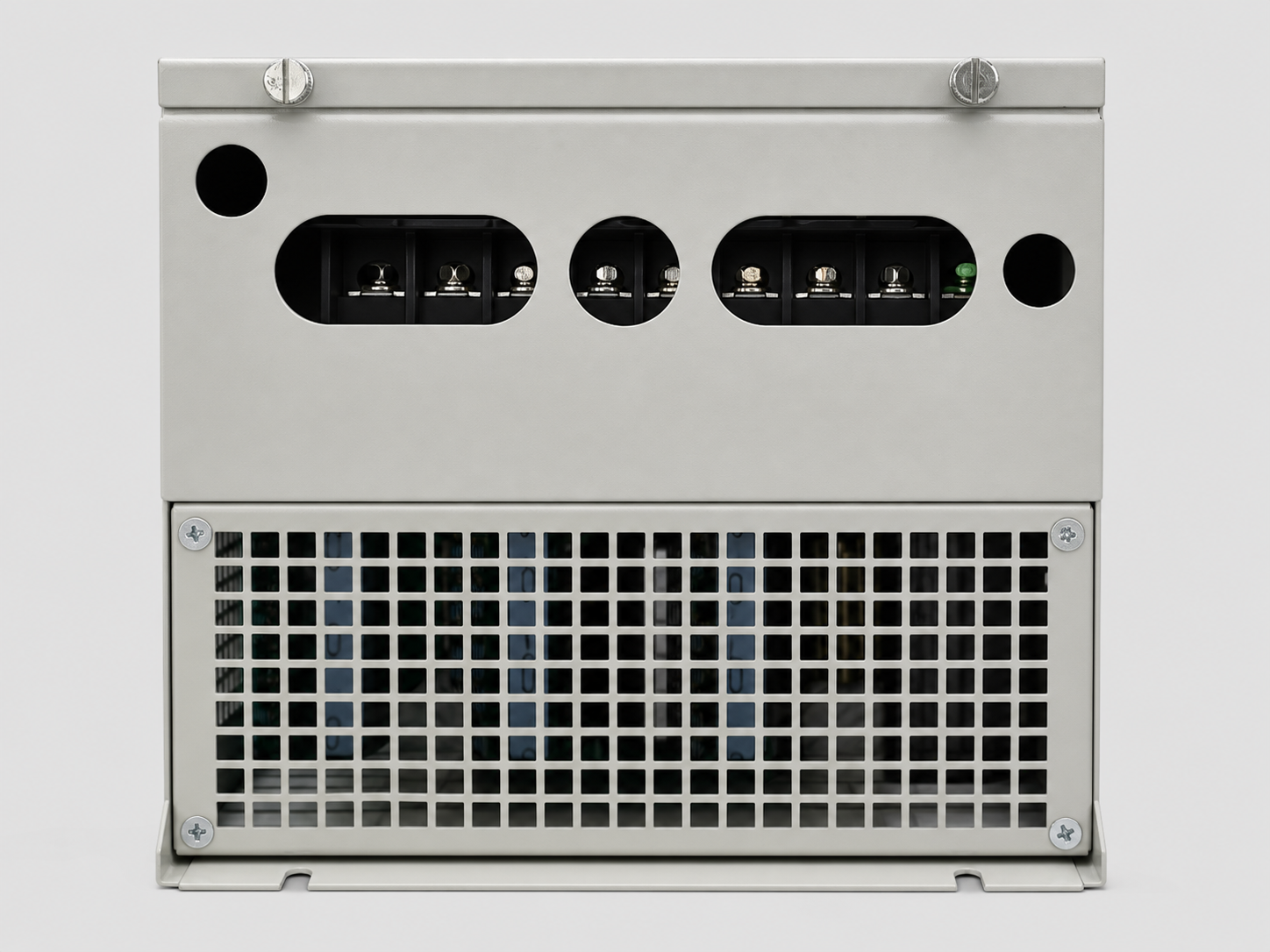
Option A: Standard IP20 Inverters in Custom Pre-Wired Cabinets
Traditional industrial drives have an IP20 open rating. If installed in an open agricultural field, dust, lizards, and rain will destroy them within weeks. Distributors traditionally purchase bare IP20 drives and build their own custom galvanized control cabinets locally.
- Pros: Maximum customization; allows integrating local breakers, surge protectors, and timers.
- Cons: High labor cost; cabinet assembly bottlenecks warehouse throughput during peak irrigation planting seasons.
Option B: Integrated Outdoor Plug-and-Play Drives (SolarSeeker SP6 Series)
Die-cast aluminum, fully sealed IP55 or IP65 drives that mount directly to the solar panel racking structure in the field with zero external cabinet needed.
- Pros: Turnkey installation in under 20 minutes; eliminates local cabinet fabrication labor; highly attractive to drilling contractors who sell complete borehole packages.
- Recommendation: Every progressive distributor should carry at least one IP55/IP65 model line in the popular 2.2 kW to 7.5 kW range to capture mobile and remote farm installations.
4. Critical Feature Checklist: What Features Sell Inverters to Installers?
Drilling contractors and EPC engineers remain loyal to a distributor when the inverters they buy install easily and never cause callbacks. When evaluating manufacturer lines for your wholesale portfolio, insist on the following core electro-mechanical features:
- Dual AC/DC Hybrid Auto-Switching: Farmers frequently require supplemental pumping at night using grid power or a diesel generator. Modern inverters should feature integrated dual-input terminals with automatic changeover logic, ensuring seamless switching without requiring dangerous manual knife-switches.
- Sensorless Algorithmic Dry-Run Protection: Borehole level sensor wires corrode, scale, and snap. Premium platforms track active output power and motor power factor (&cos; φ) in software. When the water level drops and the pump draws air, the drive safely ramps down, initiates a 30-minute aquifer recovery timer, and restarts automatically.
- Wide MPPT DC Input Windows: Inverters with narrow voltage windows force installers into rigid panel configurations. A wide DC bus window (e.g., 250V to 800V DC for 380V pumps) allows contractors to use whatever solar panels are locally available in their warehouse.
- Long Downhole Motor Protection: Ensure the drive includes programmable carrier switching frequencies (down to 1.5 kHz) to mitigate high dV/dt voltage reflection spikes on borehole cables exceeding 100 meters. (Refer to our comparison guide: How to Compare Solar Pump Inverter Suppliers Beyond Unit Price).
5. Spare Parts & Warranty Architecture: Protecting Distributor Margins
Nothing destroys a distributor’s brand reputation faster than telling an agricultural customer with wilting crops that their failed inverter must be sent back to China for a 6-week factory repair.
When selecting your solar pump inverter manufacturing partner, demand a Modular Regional Service Kit agreement:
- Plug-and-Play Board Architecture: Ensure the inverter is built with three separable layers: CPU control motherboard, IGBT power stage board, and cooling fan module.
- Consignment Spare Stock: Negotiate with your manufacturer to provide a consignment pack of 2 power boards, 2 control boards, and 4 cooling fans for every 50 complete units purchased.
- Field Service Turnaround: When a failure occurs, a local distributor technician can swap a modular board in 15 minutes, send photo/video diagnostic proof to the manufacturer, and receive immediate warranty replacement credit.
Conclusion: Building a Scalable Water Pumping Business
Structuring a successful solar pump inverter product range is not about having the thickest product catalogue—it is about stocking the right electro-mechanical configurations that match your local agricultural water table and power grid infrastructure.
By focusing on five rationalized core SKUs, standardizing on 380V heavy-duty platforms, offering single-to-three phase solutions for smallholders, and backing your sales with local board-level replacement support, your distributorship will establish undisputed technical leadership in your region.
Scale Your Distributorship with SolarSeeker
SolarSeeker partners with pump distributors, agricultural wholesalers, and master EPCs across 35 countries. We provide tailored distributor stocking packages, co-branded OEM marketing collateral, and full board-level warranty support across our complete SP1, SP2, SP4, and SP6 product lines.
Ready to optimize your warehouse stocking mix or request distributor wholesale pricing?
Contact Andy and our distribution support desk directly at info@solarseeker.tech or explore our Solar Water Pump Inverter Systems Hub.