
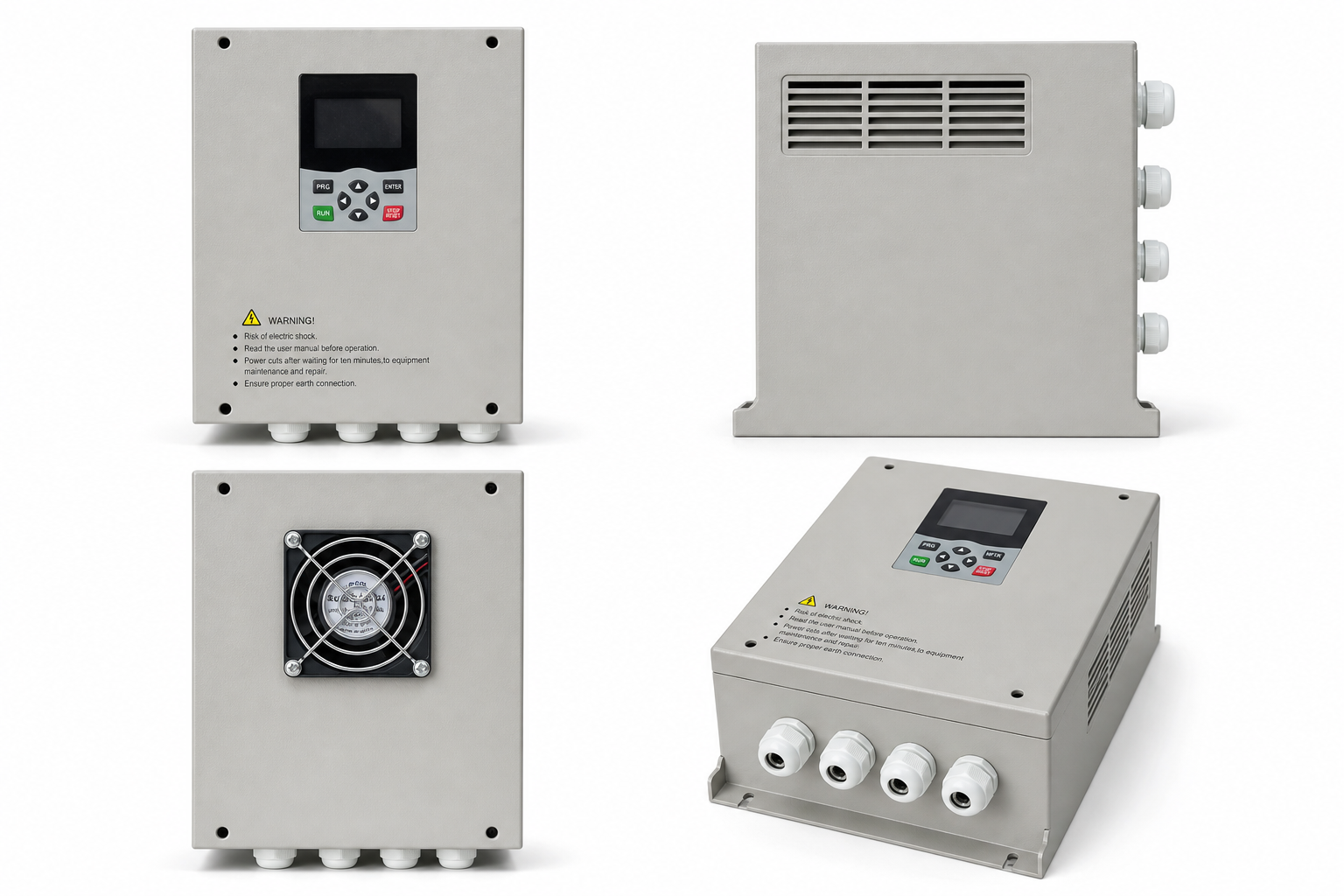
Use SP6 when the site needs stronger enclosure protection, but select it from pump and well data, not from IP rating alone.
SP6 fits projects where a submersible pump controller must work near a dusty, humid, coastal, or remote well site while still managing solar pumping control. Every well still needs its own check. Pump voltage, phase, current, head, flow, cable distance, and PV data decide the model.
IP55 Helps at the Site, But It Does Not Select the Pump
A remote well site can be hard on electrical equipment.
Dust gets into pump rooms. Humidity attacks terminals. Coastal air can be unfriendly to exposed hardware. Some farm sites also have weak maintenance access, so the controller must handle the environment better from the start.
That is where an IP-rated enclosure becomes useful.
However, enclosure protection is only one part of selection. A controller with a stronger shell still needs to match the motor and the pumping job. Wrong voltage, wrong phase, high rated current, long cable distance, or an unrealistic head and flow target can still create failure.
The SP6 IP55 submersible pump controller is the product path to review when the buyer asks for an IP55 controller for harsh well-site conditions. Buyers should read the name carefully: it is used for submersible pump applications, but the controller itself is not installed underwater.
SP6 Fit / Not Fit Table
Use this table as a first filter before quoting SP6.
| Project condition | SP6 fit? | What to confirm before selection |
|---|---|---|
| Remote well site with dust, humidity, or outdoor service risk | Strong candidate | Pump nameplate, well data, enclosure mounting position, cable distance, and PV data |
| Coastal, desert, or damp agricultural pump room | Worth checking | Salt exposure, dust level, ventilation, cable entry direction, and maintenance access |
| Buyer needs an IP55 controller path for a submersible pump | Often suitable | Pump voltage, phase, current, frequency, head, flow, and protection needs |
| Existing well pump but no readable nameplate | Not ready yet | Ask for clear motor label photos, old controller label, and measured site data |
| Request says “submersible controller” and expects underwater installation | Not suitable | Controller must be installed in a proper dry mounting position, not inside the well |
| Pump data points to a different inverter or controller path | Check another path | Motor type, voltage, phase, current, and system design must decide the route |
| Outdoor cabinet already gives enough protection | Possible, but compare | Cabinet rating, heat, airflow, service space, and total installed cost |
| High dry-run or sediment risk at the water source | Only after water checks | Water level change, pump curve, dry-run protection method, and site photos |
| Quote is based only on pump power | Not enough data | Add rated current, head, flow, cable length, PV module data, and installation conditions |
This table is not a final model selector. Instead, it shows when SP6 deserves an engineering check and when the inquiry needs more data first.
What IP55 Means in Practical Field Terms
IP55 is an enclosure protection rating.
The first “5” refers to dust protection. The second “5” refers to protection against water jets. In field language, that makes IP55 useful where the controller may face dust, humidity, splashing, or rougher outdoor service conditions.
It is not an immersion rating.
For this reason, IP55 should not be treated as permission to put a controller inside a well, leave cable glands loose, or ignore mounting location. Cable entries, sealing, shading, drainage, and service access still matter.
The SP6 product page also notes IP65-level protection for the internal fan and PCB areas. That is a useful product detail for harsh environments, especially where dust and moisture are real concerns. Even so, the system still needs correct installation practice.
A simple rule works well here: IP55 helps protect the controller from the site. The rating does not prove the controller can run the pump.
Where SP6 Fits Best
SP6 is most relevant when the buyer has a submersible pump project and the site environment is part of the risk.
Remote wells are a common example. The controller may be installed far from service teams, near dusty access roads, or in a small pump shelter with humidity during rainy months. If the controller enclosure is too weak, the site may create problems before the electrical design is even tested.
SP6 also fits buyers who need a clearer controller path for well-pump applications. Distributors may receive repeated requests for “IP55 submersible pump controller” from farm dealers or installers. EPC teams may need a product route that can be explained to the end user without adding a large cabinet at every site.
The fit still depends on the pump.
For well projects, the buyer should connect the SP6 decision with the actual hydraulic job. A pump that cannot meet the required head and flow will not become correct because the controller has a protected enclosure. For related well-side checks, Solarseeker’s submersible well water pump guide is a useful reference.
Where SP6 Does Not Fit
SP6 should not be chosen just because the project uses a well pump.
Selection is not ready when the pump nameplate is missing. A message such as “2.2 kW well pump” or “deep well pump” still leaves the controller supplier without key data. Rated current, voltage, phase, frequency, cable distance, and duty point decide whether the controller can work safely.
The controller is also not a fix for an unsuitable pump. A pump outside its curve may overload, deliver weak water, or run in unstable conditions. A poor PV string plan can cause late start, sleep mode, or DC input faults. Long cable distance can add voltage drop and heating risk.
Some projects belong in another product path. A standard AC pump project may need a broader solar inverter selection review. In that case, the solar water pump inverter path may be more suitable. The correct route depends on the pump and application, not the wording used in the inquiry.
Special industrial sites need extra caution as well. Chemical vapor, explosive atmospheres, severe corrosion, or strict local certification needs should be reviewed by qualified engineers. IP55 alone does not cover every site approval requirement.
Field Example: Remote Well Site With a Harsh Environment
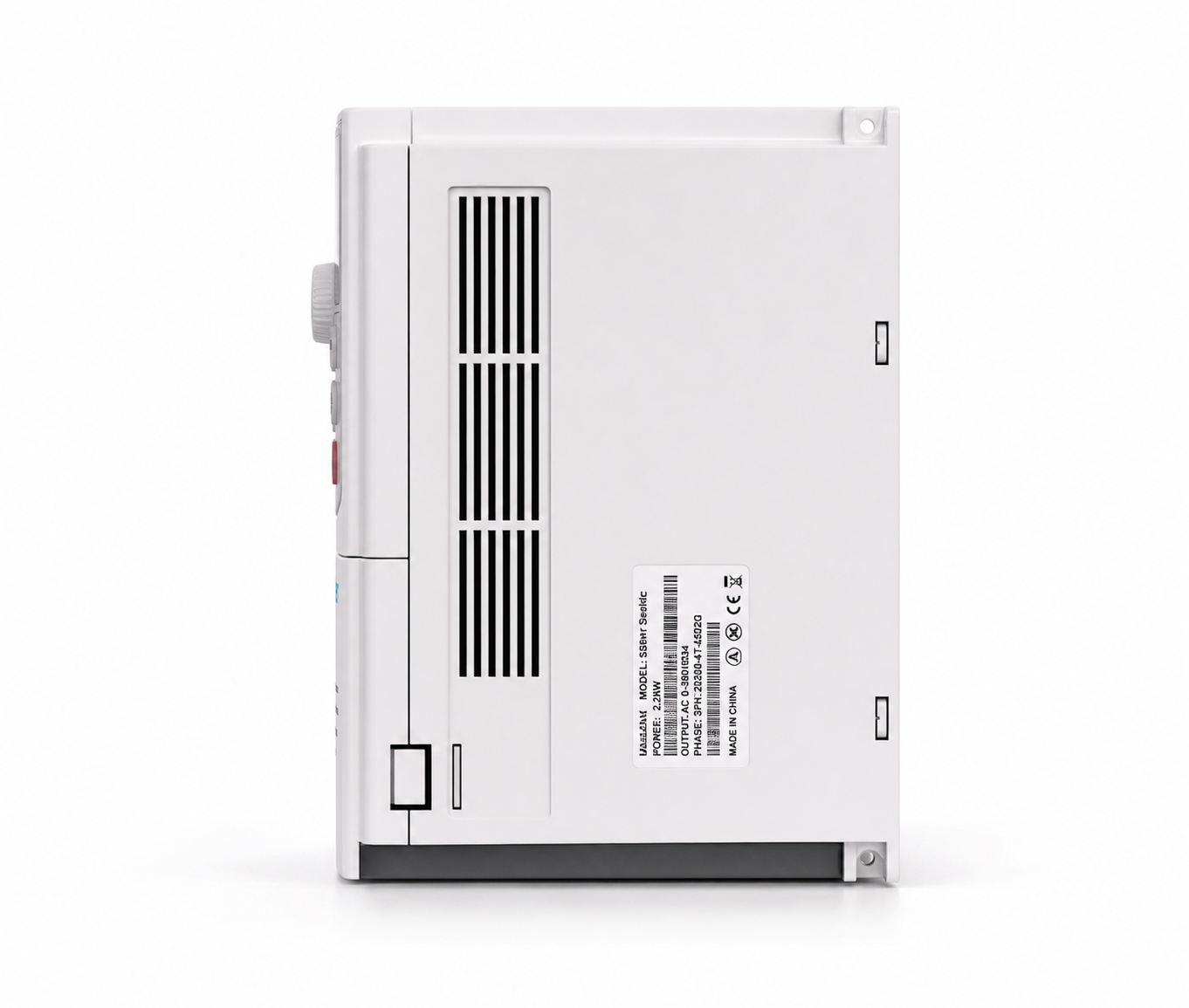
An EPC team receives a remote well request from a farm buyer.
The well is far from the main road. The pump shelter is basic. Dust is heavy in the dry season, while humidity rises during the rainy season. The buyer asks for SP6 because the IP55 enclosure looks safer than a normal exposed controller.
That request makes sense as a starting point.
Still, the engineer cannot select the controller from the enclosure rating alone. The next request is practical: pump nameplate, well depth, static and dynamic water level, required flow, pipe route, cable distance, PV module Voc and Vmp, and site photos.
After those details are checked, SP6 may become the right controller path. Mismatched pump data should change the quotation before equipment is shipped.
This is the field lesson: enclosure protection reduces site risk, but pump data controls selection.
Data to Send Before Choosing SP6
A useful SP6 inquiry should include both pump data and site data.
Pump information should start with a clear nameplate photo. The engineer needs power, voltage, phase, rated current, frequency, and motor type when available. For an existing installation, add the old controller label and any fault history.
Well data should include well depth, static water level, dynamic water level, total dynamic head, required flow, pipe route, and outlet pressure demand. These details decide whether the pump itself fits the water target.
PV information is also needed. Send module power, Voc, Vmp, planned series and parallel layout, and any existing combiner or protection plan. A controller cannot run well if the PV side is outside the usable input range.
Site photos are often underrated. Clear images of the pump room, controller mounting location, cable route, water source, and nearby weather exposure can prevent a poor enclosure decision.
For distributor projects, add the commercial context. Share the common pump range, typical well conditions, market voltage, expected order pattern, and service model. That helps Solarseeker decide whether SP6 is only a one-time fit or a repeatable product path.
Safety and Installation Notes
Controller selection is not a wiring instruction.
Installation should follow local electrical codes, product manuals, grounding requirements, PV protection rules, and qualified-technician practice. Cable glands, conduits, breakers, earthing, surge protection, and enclosure mounting should be checked by trained personnel.
Do not assume an old well-site installation is correct. Before replacing equipment, record the wiring layout, pump label, controller label, cable route, protection devices, and measured voltage where safe to do so.
FAQ
What does IP55 mean on a submersible pump controller?
IP55 means the enclosure has dust protection and protection against water jets. It helps in dusty, humid, or rough well-site conditions. It does not mean the controller can be submerged in water.
Is SP6 for all wells?
No. SP6 should be checked when the well project needs an IP55 controller path and the pump data fits. The controller still needs to match pump voltage, phase, rated current, head, flow, cable distance, and PV input conditions.
Can SP6 be installed inside the well?
No. SP6 is for submersible pump applications, but the controller should be installed in a proper dry mounting position. The pump goes into the well. The controller does not.
What specs are needed before SP6 model selection?
For model selection, send the pump nameplate, voltage, phase, rated current, frequency, well depth, dynamic water level, total head, required flow, cable distance, PV module Voc and Vmp, string plan, and site photos.
Can SP6 replace a standard solar pump inverter?
Sometimes it can be the right controller path, but not automatically. When the pump or project requires a different inverter route, the model should be selected from motor data, hydraulic duty point, and PV design.
Send Well and Pump Data Before You Quote
Before choosing SP6, collect the well data and pump data in one message.
Through the contact page, send Solarseeker the pump nameplate, well depth, dynamic water level, total head, required flow, cable distance, PV module data, planned string layout, and photos of the installation location. That gives the engineering team enough information to check whether SP6 fits the job or whether another path is safer.