
Every month, rural installers ask whether a single phase 220v to 3 phase solar pump inverter can run their three-phase borehole pump off a single-phase 220V farm utility line plus solar panels. The short engineering answer comes down to motor voltage: a 220V phase-converting solar drive (such as the Solarseeker SP2 series) outputs three-phase 220V AC, which directly runs dual-voltage 220V/380V motors wired in Delta (Δ)—but it cannot drive a fixed 380V-only Star (Y) motor from 220V AC utility power without a dedicated step-up boost architecture, transformer, or pure high-voltage solar DC array.
Missing that single distinction between three-phase 220V and three-phase 380V is one of the costliest air-freight mistakes in export pump projects.
What I Check First on the Pump Motor Nameplate
When a distributor or farm electrician in South America, Southeast Asia, or Africa sends a request for phase conversion, the first thing to inspect is the stamped metal nameplate on the motor—not just the horsepower sticker on the carton:
- Dual-Voltage Nameplate (
220V Δ / 380V Yor230V / 400V): Most surface centrifugal pumps and accessible three-phase motors up to 5.5kW bring six winding leads into the terminal box. Moving the brass jumper links from Star (Y, 380V) to Delta (Δ, 220V) lets the motor run at full rated torque on three-phase 220V AC output. Note that motor full-load amps increase by1.73xin 220V Delta, so size the inverter by the 220V amp rating, not the 380V amp rating. - Sealed Submersible Fixed
380VNameplate: Deep borehole submersible motors usually come potted from the factory with a single three-wire + ground drop cable internally permanently connected for 380V Star (Y). You cannot re-link a sealed downhole stator to 220V Delta on site. Feeding only 220V three-phase into a 380V-wound submersible motor starves magnetic flux, stalls the shaft under head pressure, and trips overcurrent or overload alarms.
Matching available rural AC input and PV DC voltage windows to 220V Delta versus 380V Star pump motor windings.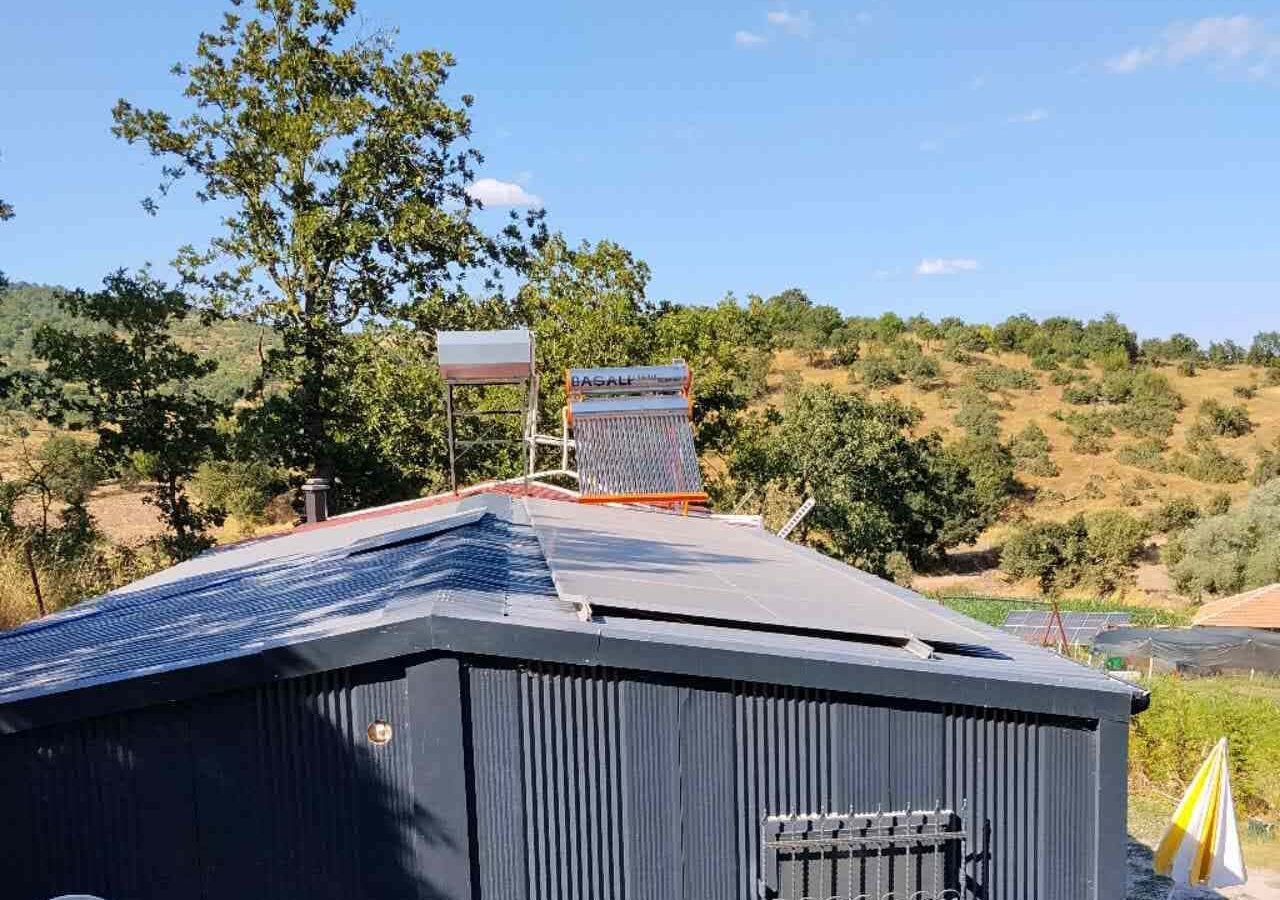
Site Power Supply vs. Motor Voltage Matching Table
Use this selection table to match site supply, motor winding configuration, and the right solar water pump inverter family before issuing an invoice:
| Available Site Power | Motor Winding & Voltage | Matched Solarseeker Platform | Key Electrical Rule |
|---|---|---|---|
| PV DC + 1-Phase 220V–240V AC | 1-Phase 220V–240V motor (1.5–5.5kW) | SP1 Series (2.2–7.5kW) |
No phase conversion needed; target ~320V DC Vmp |
| PV DC + 1-Phase 220V–240V AC | 3-Phase 220V Delta (Δ) motor (1.5–5.5kW) |
SP2 Series (2.2–7.5kW, 10–32A) | Outputs 220–240V 3-phase AC; size drive for 220V Delta amps |
| Solar PV Only (No 220V Grid Wired) | 3-Phase 380V Star (Y) motor (1.5–200kW) |
SP4 Series (2.2–220kW, 270–800V DC) | Wire PV strings for ~540V DC Vmp (Voc <= 800V DC) straight to SP4 |
| 1-Phase 220V Grid Backup Required | Sealed 3-Phase 380V Star (Y) motor |
Step-up transformer / boost solution + 380V drive | Never connect 220V AC directly to a standard 380V drive without step-up |
DC Bus Physics: Why a Standard 220V Single-Phase to 3-Phase Solar Pump Inverter Stops at 220V
Buyers sometimes ask why parameter settings cannot simply switch 380V output on inside a 220V inverter. The barrier is hardware physics inside the rectifier and DC bus:
- Rectifying 220V single-phase AC (
220V x 1.414) charges the internal DC bus capacitors to roughly 310V DC. From a 310V DC bus, an IGBT bridge can synthesize at most 220V to 240V three-phase AC. - Synthesizing full 380V to 400V three-phase AC under load requires at least 538V to 560V DC on the internal bus (aligned with standard motor voltage tolerances under IEC 60034-1).
Without an active DC-DC boost stage or an external step-up transformer raising the AC backup source, a 310V bus physically cannot push 380V RMS across the motor leads.
Solarseeker SP2 series drive (220–240V single-phase AC + PV DC input to 220–240V three-phase motor output, 2.2–7.5kW).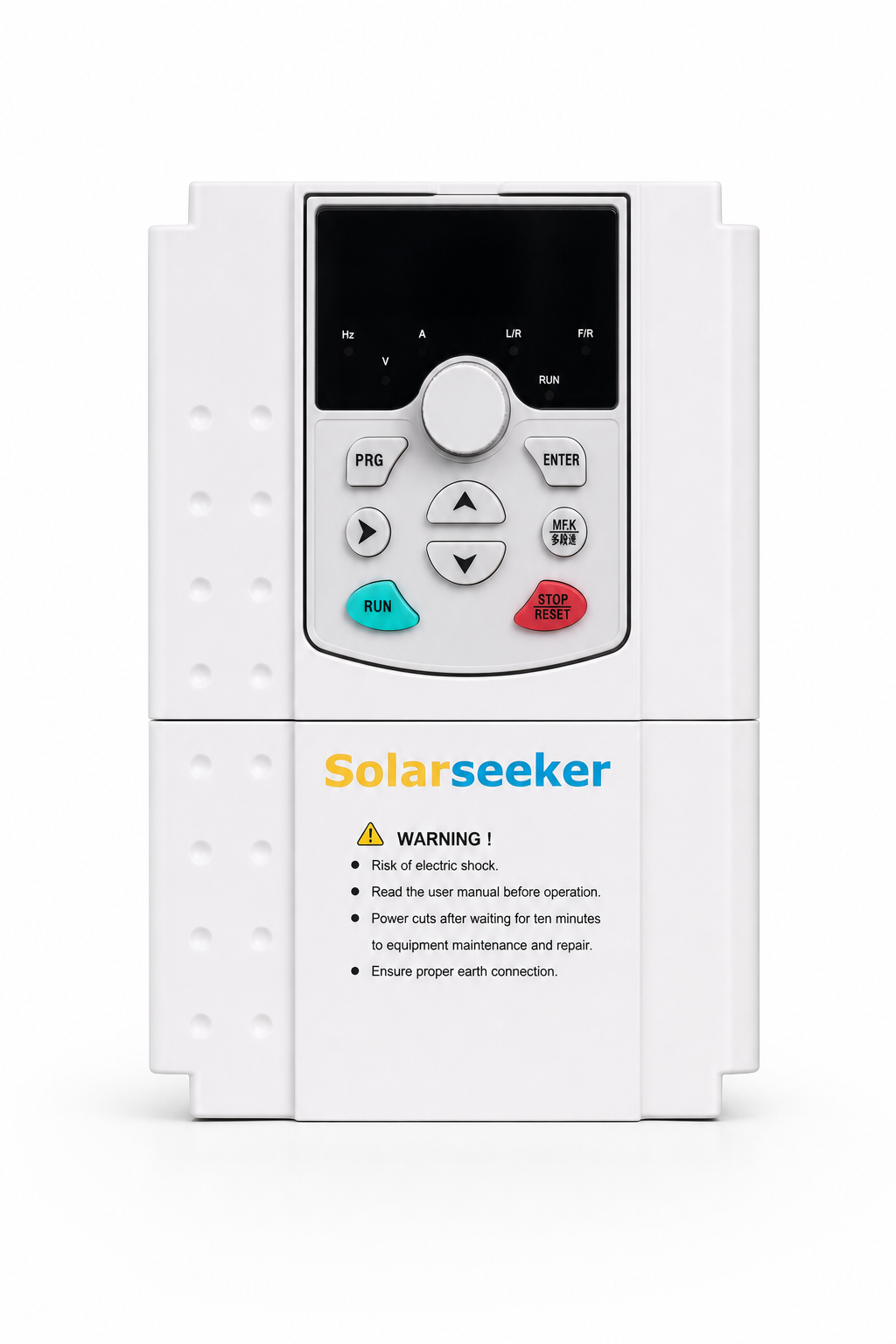
Three Field-Proven Ways Farms Solve Rural Single-Phase Limits
When a rural farm only has a single-phase 220V utility pole nearby, choose one of three clean paths instead of forcing incompatible voltages together:
- Order a 220V Three-Phase Submersible Motor + SP2 Drive: If the pump has not been purchased yet (between 1.5kW and 5.5kW), specify a 220V three-phase motor from your pump supplier and pair it with an
SP2single phase 220v to 3 phase solar pump inverter. You get smooth three-phase starting torque during the day on solar DC (170V–800V DCrange) plus seamless nighttime backup from the farm's 220V single-phase line. - Skip the Weak Rural Grid and Run Pure Solar on SP4: If a 380V submersible pump is already down the borehole and daytime water tank storage covers farm demand, leave the 220V utility line disconnected. Wire the PV array in series for ~540V DC
Vmp(1.3x to 1.5xpump kW,Voc <= 800V DC) straight into anSP4380V solar pump inverter. - House Outdoor Protection Properly: Because standard
SP1,SP2, andSP4drives carry an IP20 enclosure rating, any outdoor pole-mount or dusty wellhead installation should mount the drive, DC/AC breakers, and surge arresters inside a weatherproof Solarseeker IP65 Solar Pump Control Cabinet. Always use a licensed electrician to verify Delta/Star terminal links and local earthing rules before energizing.
Four Checks to Send Before Ordering Phase-Conversion Hardware
Before shipping a single phase 220v to 3 phase solar pump inverter to a rural site, send four details through the Solarseeker Engineering Contact Page: a clear photo of the pump motor nameplate, whether the motor is surface-accessible or sealed submersible, rated amps at both listed voltages, and whether nighttime 220V grid backup is mandatory. One two-minute nameplate review prevents weeks of return freight.