
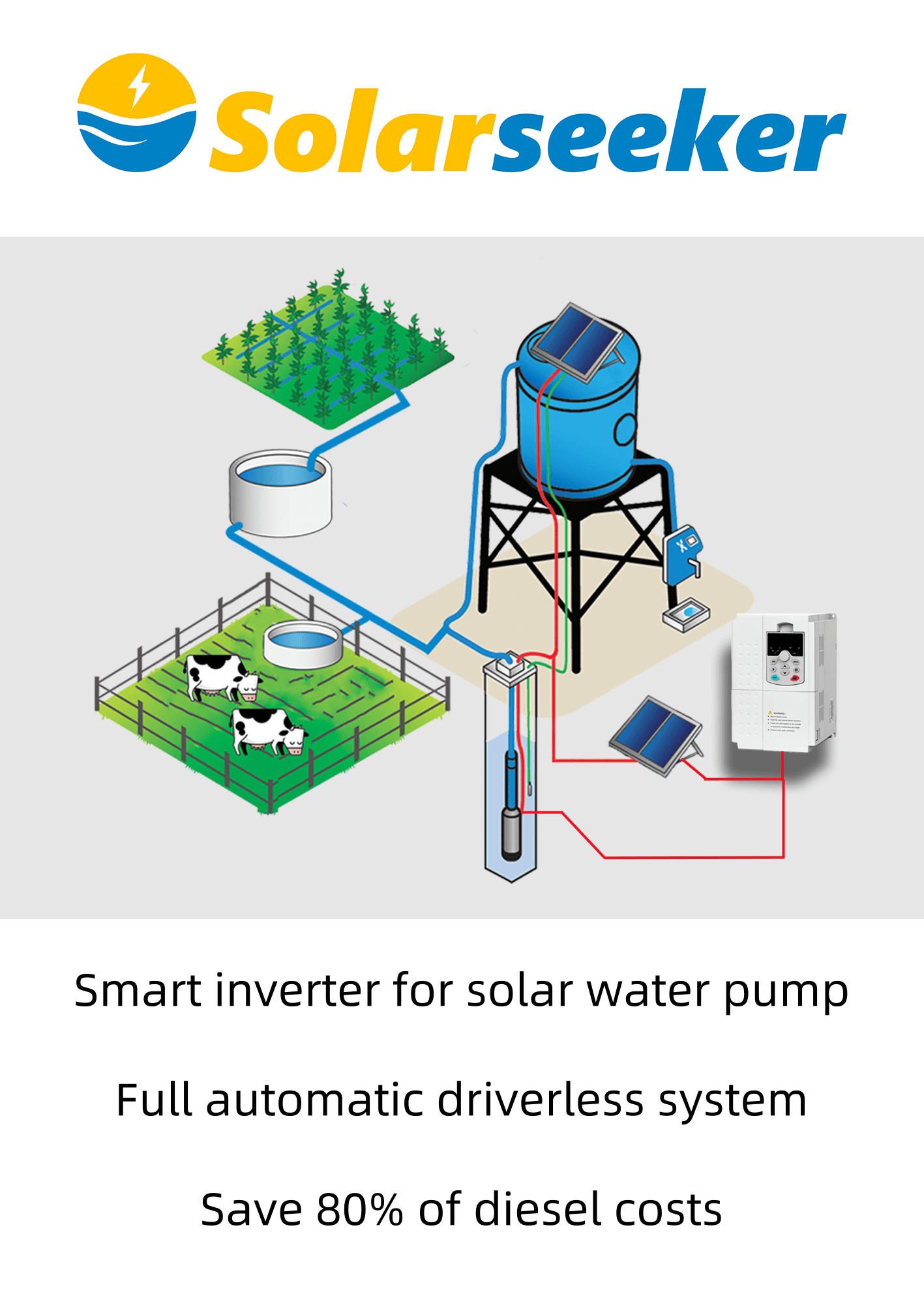
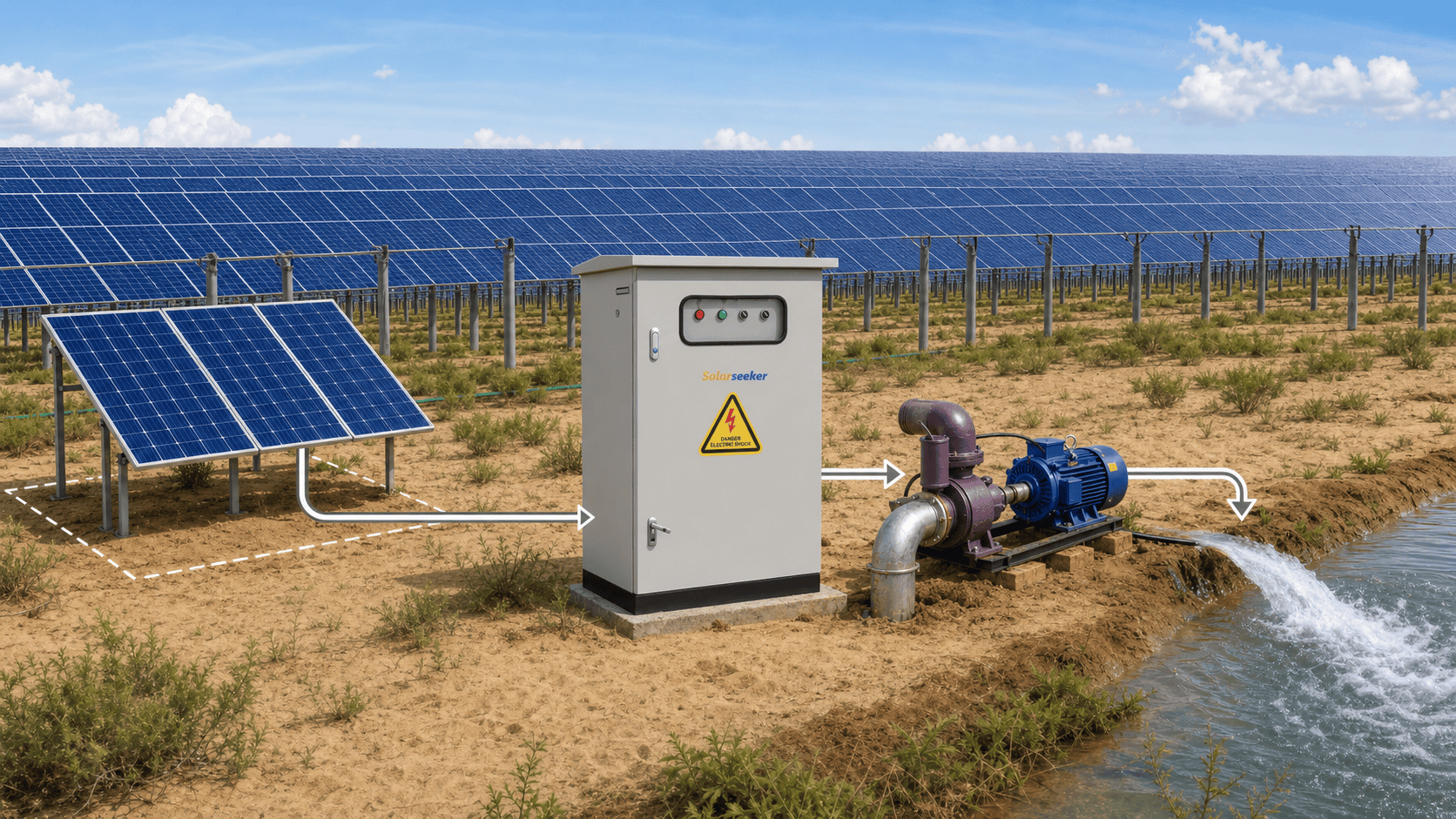
Off-grid solar pumping works when the PV window, pump curve, water demand, and service plan are designed together.
An off-grid solar pumping system cannot depend on the utility grid to hide design mistakes. If the PV array is too small, the pump starts late. If the pump curve is wrong, flow stays weak. If the cabinet is poorly installed, heat and dust shorten equipment life.
AC inverters make off-grid pumping more flexible because they can run standard AC pumps from solar power. However, the system still needs careful matching. Solar energy is variable, water demand is fixed, and the pump must work inside a real hydraulic system.
For Solarseeker off-grid projects, I usually start with the water schedule, not the inverter model. The inverter is important, but the site needs water first.
Design Around Water, Not Around the Inverter
Start with daily water demand, head, flow, pipe distance, well behavior, and irrigation schedule. Then choose the pump and inverter. A solar pump inverter is the control center, but it cannot create water the pump cannot deliver.
PV Sizing Rules for Common Pump Systems
| Pump system | PV array power starting rule | Useful Vmp target |
|---|---|---|
| 220V single-phase pump | PV Array Power >= Pump Rated Power x 2.0 | Around 320V DC Vmp |
| 380V three-phase pump | PV Array Power >= Pump Rated Power x 1.3 to 1.5 | Around 540V DC Vmp |
These rules give a starting point. Final design must also check inverter input range, panel Voc in cold conditions, cable distance, and site sunlight.
Storage Is Usually Water, Not Batteries
Many off-grid pumping projects store water in tanks or reservoirs instead of storing electricity in batteries. This keeps the electrical system simpler and reduces replacement cost. The pump runs when solar energy is available, and the tank supplies water later.
Batteries may be useful for some control systems or special applications, but they usually make large pumping systems more expensive and more maintenance-heavy. Water storage is often the cleaner answer.
Pump Curve Comes Before Panel Count
A larger PV array cannot fix a pump selected outside its curve. The pump must deliver the required flow at the real head, including static lift, pipe loss, fittings, and outlet pressure. If the pump is wrong, the system may run but never deliver the promised water.
This is why EPC teams should confirm head and flow before ordering panels and inverters.
Site Conditions Change the Design
- Dust can reduce panel output and block cabinet ventilation.
- Long cable runs increase voltage drop and installation cost.
- Changing well level affects pump load and dry-run risk.
- High temperature reduces component margin.
- Untrained operators need clearer local controls and labels.
For a project-style reference, Solarseeker’s solar water pump project cases can help teams discuss real off-grid installation conditions without assuming every site uses the same configuration.
Model Path for Larger Off-Grid Pumps
For high-flow irrigation or deep-well systems, a three-phase path such as SP4 is often reviewed with pump current and duty point before PV sizing is finalized. Large off-grid systems need enough solar power and enough service margin.
Hybrid Backup May Still Be Needed
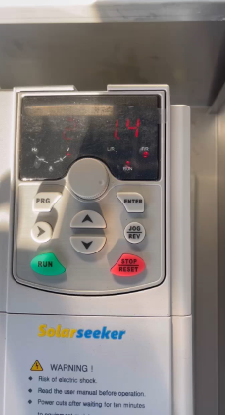
Off-grid does not always mean solar-only. Some projects use a generator for emergency pumping or seasonal backup. If backup is needed, plan it early. Do not add generator support after the cabinet and controls are already fixed.
Hybrid planning should be handled by qualified technicians and follow local electrical rules. The goal is safe source management, not improvised wiring.
Commissioning Checks for Off-Grid Sites
- Confirm PV voltage at startup and while running.
- Record output frequency and motor current.
- Check water flow against the expected duty point.
- Test dry-run or low-water protection where applicable.
- Inspect cabinet ventilation, shade, grounding, and cable protection.
- Confirm operator instructions and alarm response.
Plan the Water Tank With the Pump Schedule
In many off-grid projects, the tank is the real storage device. The pump fills the tank during solar hours, and the user draws water later. Tank size should match daily water demand, irrigation timing, and cloudy-day tolerance.
If the tank is too small, the pump may stop even when sunlight is available. If the tank is too large but the pump cannot fill it during the solar window, the owner may blame the inverter for a water planning problem.
Design for Weak Sunlight, Not Only Noon
Noon performance is not enough. A good off-grid design should consider morning startup, afternoon output, seasonal sunlight, dust on panels, and cloudy periods. Oversizing the array within safe voltage limits often improves daily water yield more than chasing a single peak output number.
Off-Grid Project Planning Table
| Design item | Question to answer | Risk if ignored |
|---|---|---|
| Water demand | How much water per day? | Wrong pump size |
| Solar window | How many useful pumping hours? | Low daily yield |
| Tank size | How much storage is needed? | Water shortage after sunset |
| Well behavior | Does water level change? | Dry-run events |
| Service access | Who can inspect faults? | Long downtime |
Signs the Off-Grid Design Is Weak
- The pump starts only near noon.
- The tank never reaches the planned level.
- The inverter trips when clouds pass.
- Motor current is high compared with the nameplate.
- The site needs repeated visits for the same alarm.
- The operator disables protection to keep water flowing.
These signs should trigger a design review. They may point to PV string voltage, pump curve, pipe loss, water level, or protection settings.
Use Project Records for Future Sites
Off-grid projects repeat patterns. Keep records of pump size, panel count, site temperature, water level, alarms, and daily output. These records help distributors quote the next project more accurately.
A field note from one site can prevent a mistake on the next site, especially in regions with similar wells and sunlight.
Safety and Code Boundaries
PV arrays and pump inverters involve hazardous voltage. System selection can be discussed in planning documents, but wiring, grounding, protection devices, and source switching must be handled by qualified technicians under local electrical codes.
Handover Documents for EPC Teams
At project handover, keep a simple record: pump nameplate, inverter model, PV string design, panel datasheet, cable route, parameter notes, protection settings, and photos of the installation. These documents make future troubleshooting faster.
Off-grid sites often have limited service access. A clear handover file can save hours during the next dry-season fault call.
Do Not Oversell Solar-Only Operation
Some customers expect the pump to deliver the same water at any hour. Off-grid solar pumping follows sunlight unless storage or backup is designed. Explain the operating window clearly before quotation.
FAQ
Do off-grid solar pumping systems need batteries?
Usually not for the main pumping load. Many projects store water in tanks or reservoirs instead of storing electricity in batteries.
Can an off-grid inverter run any AC pump?
No. The pump voltage, phase, rated current, curve, head, flow, and PV input design must match the inverter and site.
Why does an off-grid pump run weakly even with many panels?
The PV string may have poor Vmp, the pump may be outside its curve, the cable may have voltage drop, or the water level may be lower than expected.
Before You Build Off-Grid
Send head, flow, pump nameplate, panel datasheet, site temperature, cable distance, and daily water target to Solarseeker. Off-grid design should be checked before equipment arrives at the site.