
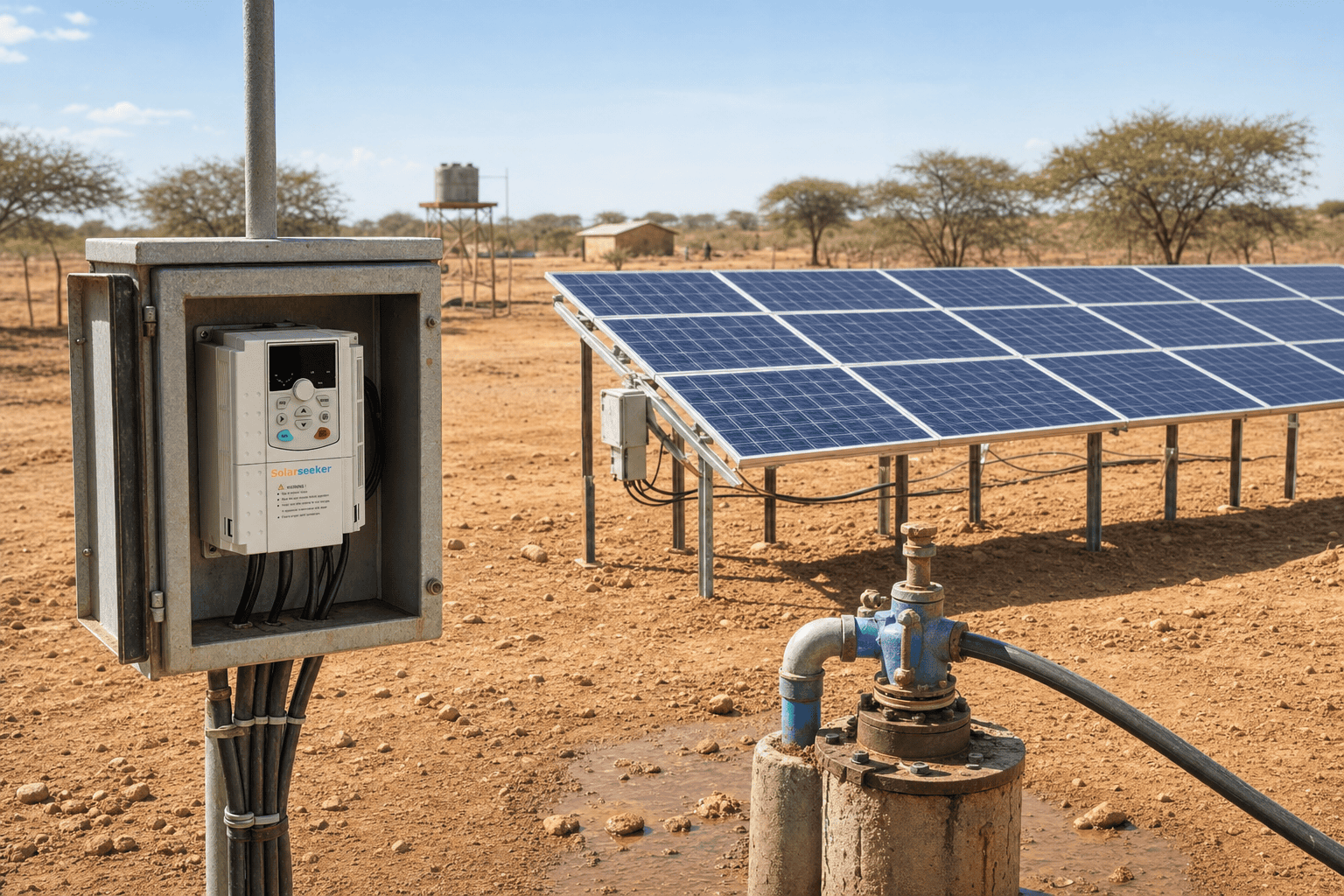
For a new distributor, the real question is not only who Solarseeker is. It is whether the company can help match pumps, prepare orders, support OEM needs, and reduce field trouble before the goods leave the factory.
Solarseeker is a solar water pump inverter manufacturer focused on solar pumping products for distributors, pump dealers, EPC contractors, irrigation projects, and OEM partners. Its product scope includes solar pump inverters, pump controllers, submersible pumps, solar pump cabinets, kits, and accessories for irrigation, wells, livestock water, and remote water supply.
Solarseeker in One Practical Sentence
Solarseeker builds and supplies solar pumping equipment for water projects where pump matching matters.
That is the simple version.
A procurement buyer should also look at the working details behind that sentence. Does the supplier understand pump voltage and phase? Can it discuss default settings before shipment? Does it support distributors who need repeat orders, labels, packing, and project documentation?
Those questions matter because a solar pump inverter is not a general electrical box. It has to match the pump, PV input, water demand, cable distance, protection needs, and installation environment.
The main company profile and factory reference is the Solarseeker solar water pump inverter manufacturer page. This article turns that profile into a buyer-side checklist.
Brand Capability Table
Use this table when checking whether Solarseeker fits your buying role.
| Buyer question | Solarseeker capability to check | Why it matters before inquiry |
|---|---|---|
| Is Solarseeker a manufacturer? | Factory page shows production line, testing area, inspection area, stock, and OEM order support | Buyers can discuss production, settings, testing, and order details before shipment |
| What products does it supply? | Solar pump inverters, PV pump controllers, submersible pump controllers, submersible pumps, cabinets, kits, and accessories | A project may need more than one inverter box |
| Does it support distributors? | Sample orders, repeat supply, local stock planning, OEM labels, packing, and product path discussion | Distributors need repeatable supply and fewer service surprises |
| Can it help with pump matching? | Buyers are asked to send pump nameplate, voltage, phase, power, head, flow, water source, and PV string plan | Correct model selection starts before quotation |
| Does it support OEM work? | Label, packing, default parameter, and repeat-order consistency can be discussed | OEM buyers need batch consistency, not only product price |
| Can settings be prepared before shipment? | Factory page describes parameter setup, function checks, and testing before packing | Pre-shipment setup can reduce installer time and after-sales pressure |
| Which projects fit the brand? | Irrigation, wells, livestock water, remote supply, solar pump cabinets, and pump kit projects | Buyer role and site condition decide the product path |
This table is not a sales claim. It is a practical way to decide what to ask before sending an inquiry.
What Solarseeker Supplies
Solarseeker’s product system starts with solar water pump inverters.
The inverter range covers common product paths such as 220V pump projects, 380V three-phase pump projects, and single-to-three-phase applications. Buyers should still choose the model from the pump nameplate, not from product names alone.
The broader solar water pump inverter product system also includes pump controllers, submersible pumps, solar pump cabinets, solar pump kits, and related accessories. That matters for EPC and distributor buyers because many water projects need a matched package.
For example, an irrigation project may start with an inverter inquiry but later need a cabinet for outdoor protection. A well project may need pump data checked together with controller selection. A distributor may need a clear product path for SP1, SP2, SP3, SP4, SP5, or SP6 rather than a single generic quote.
The useful buying rule is simple: send the pump and site data first, then ask which product path fits.
Who Usually Contacts Solarseeker
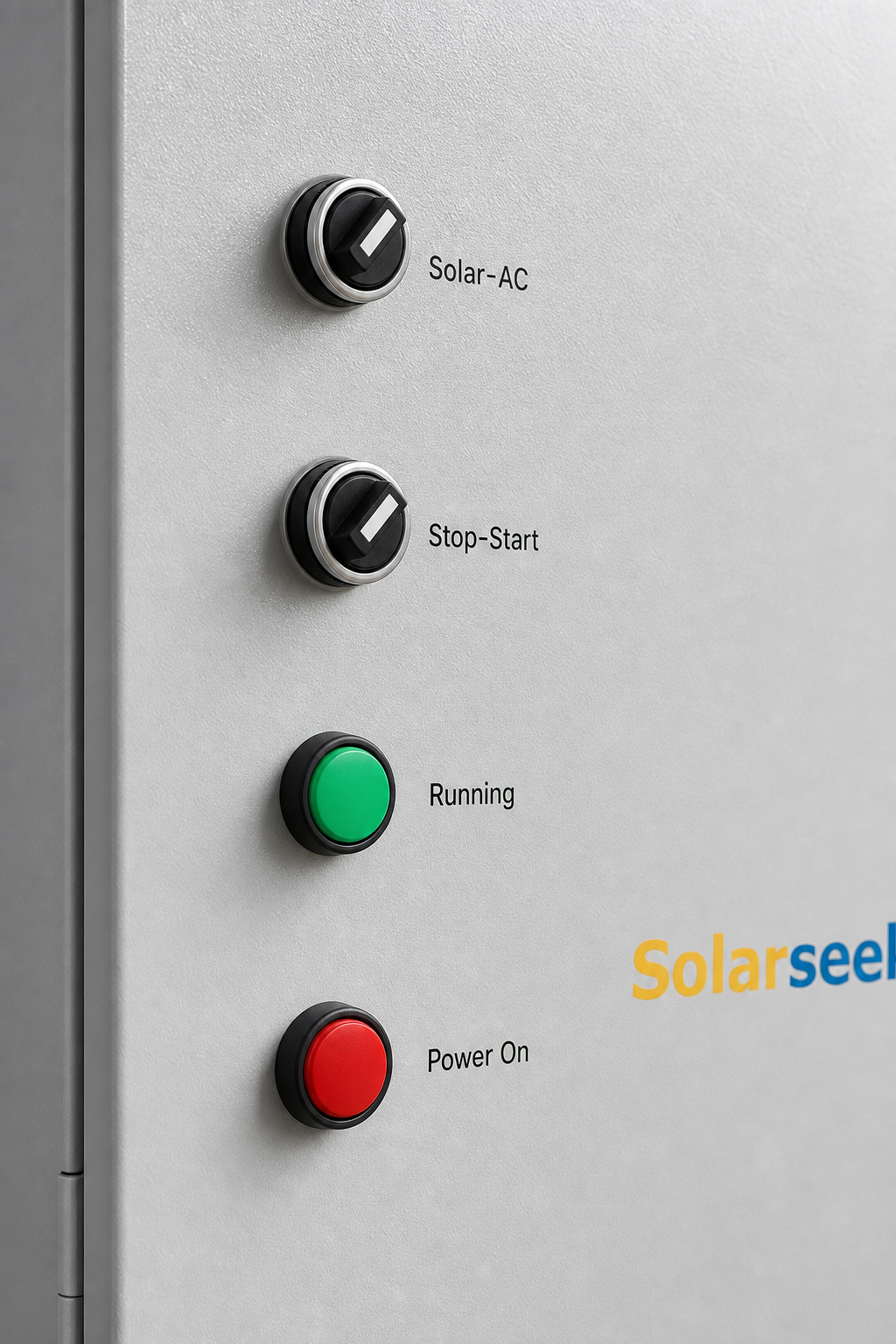
Different buyers contact Solarseeker for different reasons.
Distributors usually care about repeat supply, model range, product labels, packing, local stock, and after-sales support. They need a supplier that can help turn scattered customer inquiries into a clear product shortlist.
Pump dealers often need matching support. Their customers may already have an AC pump, a submersible pump, or a basic irrigation pump. The dealer needs to know which inverter or controller path can run that pump safely.
EPC contractors care about project conditions. They may need cabinet requirements, parameter settings, pump nameplate checks, PV string review, and commissioning support. For them, wrong selection can mean return visits and unhappy farm owners.
OEM partners look at consistency. Labels, packing, default settings, and batch notes matter when repeat orders go into the same market.
Farm and project buyers may contact the company directly when they need solar pumping for wells, irrigation, livestock water, or remote water supply. In that case, the first engineering question is still the same: what pump and site data are available?
What Makes the Manufacturer Profile Useful for Procurement
A good manufacturer profile should reduce uncertainty.
For solar pumping buyers, uncertainty usually appears in three places: product fit, factory handling, and after-sales risk.
Product fit means the inverter or controller must match the pump motor and water duty point. A wrong voltage or phase path can stop commissioning. A weak PV design can lead to poor water output.
Factory handling means the supplier can prepare the order according to buyer requirements. Solarseeker’s factory page describes assembly, wiring checks, order notes, testing, inspection, stock, OEM label discussion, packing, and default parameter preparation.
After-sales risk is what happens after the goods arrive. Clear model selection, settings prepared before shipment, and better order notes can reduce the chance of a long service loop.
This is why a distributor should not judge Solarseeker only by product photos. A better check is whether the company can confirm the right product path before production.
Field Example: A Distributor Checks the Brand Before Inquiry
A new distributor finds Solarseeker while searching for a solar pump inverter manufacturer.
At first, the buyer wants a price list. That is normal. The distributor wants to know whether the company can supply common models and whether the price can fit the local market.
Then the real questions begin.
The distributor sells to pump dealers and small EPC teams. Some customers use 220V single-phase pumps. Others need 380V three-phase deep-well systems. A few buyers ask for OEM labels because they want to build their own local channel.
A simple price sheet cannot answer all of that.
The distributor should ask Solarseeker for company and product capability confirmation. That means product paths, model range, pump matching process, OEM label discussion, packing needs, default settings, and support for common local project types.
This is the practical value of a manufacturer profile. It helps the buyer decide what to ask before ordering samples.
What Information to Send Before Asking for Confirmation
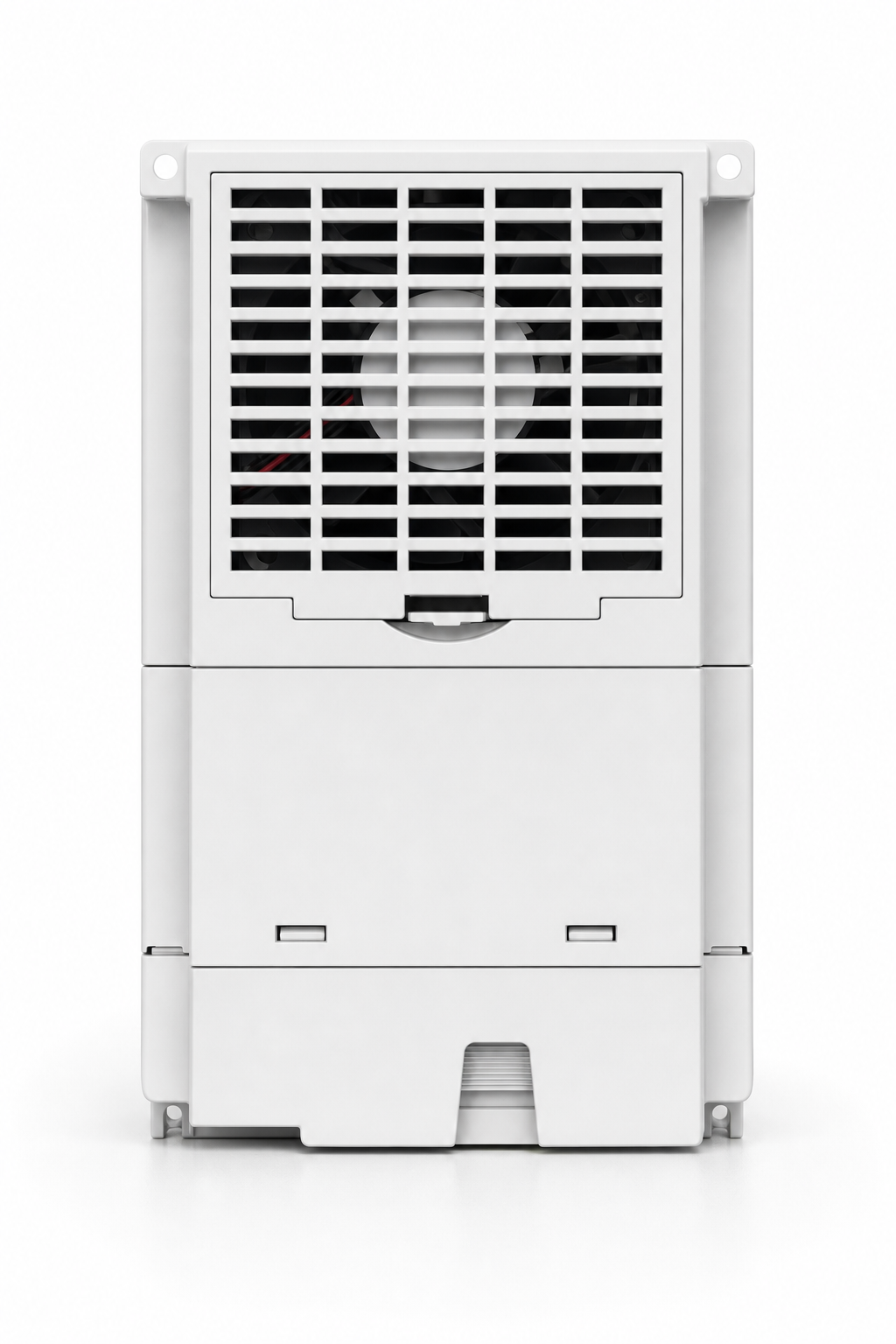
Solarseeker can respond faster when the inquiry includes real project data. Buyers who want more background can also read the Solarseeker Our Story page before they start a supplier conversation.
For product selection, send the pump nameplate first. Include pump power, voltage, phase, rated current, frequency, head, flow, water source, pipe route, and cable distance.
For solar-side checking, include PV module power, Voc, Vmp, planned string layout, and whether the site uses solar-only, grid-only, generator backup, or hybrid operation.
For distributor or OEM discussion, add the market context. Share the target pump range, common voltage, application type, monthly inquiry pattern, preferred labels, packing needs, and service model.
For cabinet or kit projects, explain the installation environment. Outdoor use, dust, humidity, rain, cable entry, breakers, and protection requirements can change the recommendation.
The goal is not to make the inquiry complicated. The goal is to avoid a vague quote that creates problems later.
What Solarseeker Is Not
Solarseeker should not be treated as a generic price list website.
This company profile is most useful when the buyer needs solar pumping selection, manufacturer communication, OEM handling, or project support. If a buyer only compares the lowest unit price without sending pump data, the supplier cannot confirm a safe model path.
Solarseeker is also not a substitute for local installation responsibility. Wiring, grounding, protection devices, cabinet installation, and commissioning should follow local electrical codes, product manuals, and qualified-technician practice.
For procurement teams, the right expectation is straightforward: use Solarseeker to confirm product capability, model path, settings, and order requirements before shipment.
FAQ
What is Solarseeker?
Solarseeker is a solar water pump inverter manufacturer focused on solar pumping equipment for irrigation, wells, livestock water, remote water supply, distributor channels, EPC projects, and OEM cooperation.
Is Solarseeker a manufacturer?
Yes. Solarseeker presents itself as a solar water pump inverter manufacturer and factory, with production line, testing, inspection, stock preparation, and OEM order support shown on its factory page.
What products does Solarseeker supply?
Solarseeker supplies solar water pump inverters, PV pump controllers, submersible pump controllers, submersible pumps, customized solar pump cabinets, solar pump kits, and related accessories.
Does Solarseeker support OEM or distributor orders?
Yes. OEM and distributor discussions can include labels, packing, default parameters, repeat-order consistency, sample orders, local stock planning, and project model paths. Final details depend on the product and order requirement.
What should I send before asking Solarseeker for a recommendation?
Send the pump nameplate, voltage, phase, rated current, head, flow, water source, cable distance, PV module data, planned string layout, application type, buyer role, and any OEM or cabinet requirements.
Ask for Company and Product Capability Confirmation
Before ordering samples or building a local product plan, confirm the company and product capability together.
Send Solarseeker your pump range, voltage and phase needs, target applications, OEM or distributor requirements, cabinet needs, and project support questions through the contact page. The team can confirm the product path, factory setting needs, and support scope before the order moves forward.