
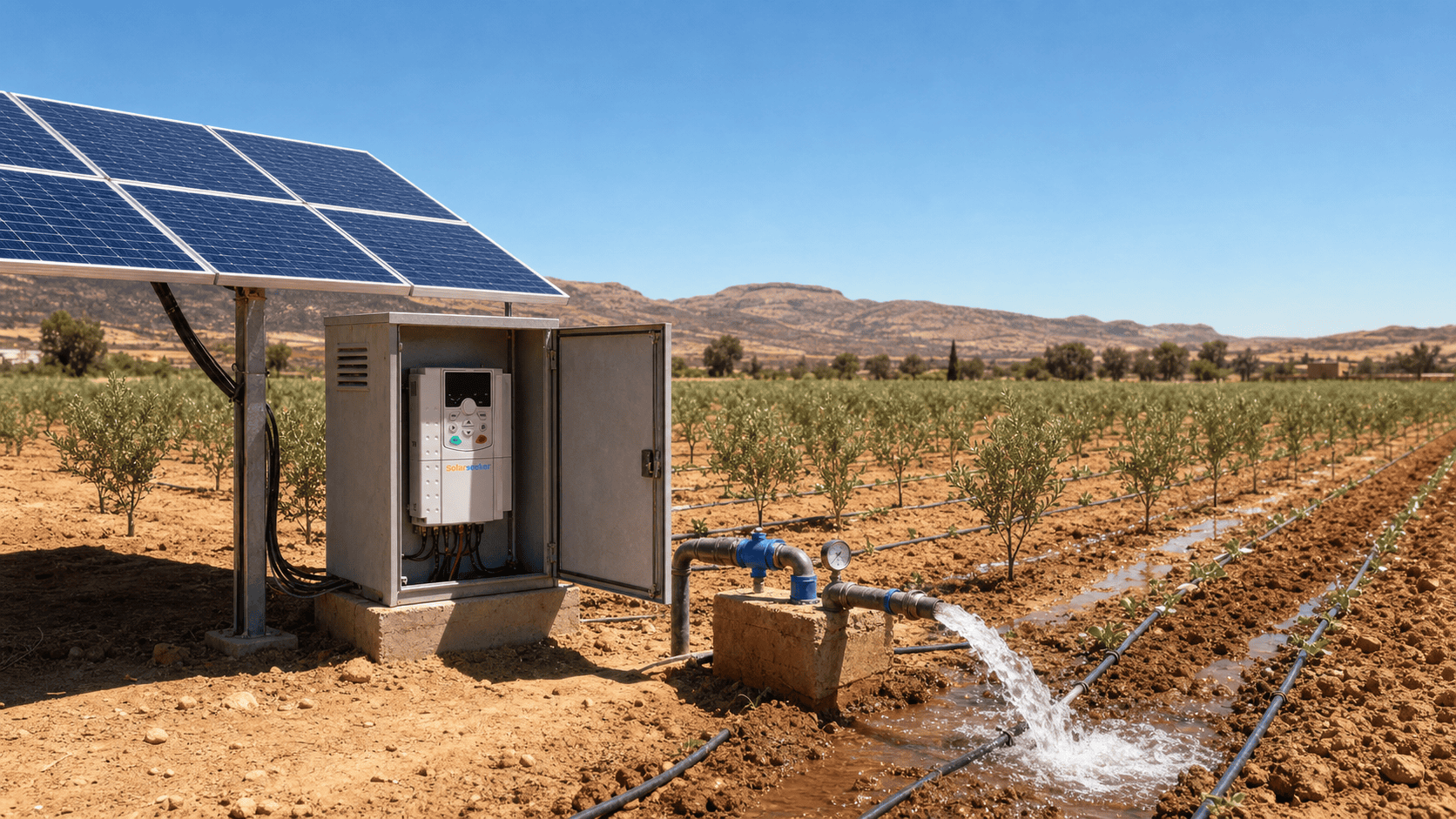
In the PV pump market, the cheapest inverter is often not the lowest-cost inverter after installation.
Buyers searching the solar inverter for PV pump market are usually not only comparing price. They need a selection path that avoids wrong voltage, wrong phase, weak PV input, poor water output, and service calls. For distributors, model fit and after-sales risk matter more than a low unit price.
Market Demand Creates a Quotation Problem
Dry-season irrigation, remote wells, livestock water, and off-grid farm supply are pushing more buyers toward solar pumping.
That demand is good for distributors. It also creates a practical problem: many buyers send short inquiries and ask for the lowest price first.
A typical message may include only pump power and country. Sometimes it includes a photo of panels but no pump nameplate. The buyer may ask for a “solar inverter for PV pump” without saying whether the motor is 220V single-phase, 220V three-phase, 380V three-phase, or part of a matched controller package.
That is where cheap quotations become risky.
A low price can win the first conversation. It can also create the first callback if the inverter does not match the pump, PV array, cable distance, or field condition. In solar pumping, the wrong model does not only affect electronics. It affects water output.
For the main product path, Solarseeker’s solar water pump inverter page is the reference point. This article explains what market-facing buyers should compare before they treat price as the main decision.
Market Phrase vs Buyer Action Table
Use this table when a buyer searches with market wording but needs a real selection decision.
| Market phrase or buyer request | What the buyer may really need | Action before quoting |
|---|---|---|
| “Best price for solar inverter for PV pump” | A model that matches pump voltage, phase, current, and PV input | Ask for pump nameplate and PV module data |
| “Solar pump inverter for irrigation market” | A system path for farm water output, not only an inverter box | Confirm head, flow, crop water schedule, and pump curve |
| “Low-cost PV pump inverter” | Lower project cost without future service calls | Compare installed cost, callbacks, and replacement risk |
| “Distributor price list” | A repeatable product shortlist for common pump types | Build model paths by voltage, phase, power range, and application |
| “Deep well solar pump inverter” | Often a stronger three-phase path with careful PV design | Check pump current, total head, cable distance, and Vmp target |
| “Can this pump run on solar?” | A compatibility check, not a price request | Confirm motor type, output voltage, phase, and existing wiring |
| “Solar inverter for PV pump market demand” | Guidance on which products to stock or promote | Match local pump stock, service skill, and common irrigation sites |
This table is useful for sales teams because it turns broad market language into engineering data.
Why Price Alone Fails in Solar Pump Projects
A solar pump inverter is not a phone charger.
It has to start a motor, manage changing solar input, protect the pump, and keep water moving under field conditions. That means a cheaper unit can become more expensive after one failed installation.
Voltage and phase mismatch is the first risk. A 220V single-phase pump, 220V three-phase pump, and 380V three-phase pump do not belong in the same path. When this detail is missed, the product may arrive at the site but fail during commissioning.
PV mismatch comes next. A weak array can make the inverter start late, run at low frequency, or stop during cloudy periods. An unsafe string plan can also create over-voltage risk.
Service distance is the risk many price sheets ignore. A distributor selling into rural irrigation markets must think about truck rolls, technician time, replacement freight, and the cost of arguing with the end user. The cheapest quotation does not pay those costs. The distributor does.
For a cost-oriented view, the Solarseeker guide on solar water pump inverter system cost breakdown is a useful next reference.
Selection Has to Follow the Pump
The pump decides the inverter path.
Start with the pump nameplate. Look for rated power, voltage, phase, current, frequency, and motor type. After that, check the hydraulic job: total head, required flow, pipe route, water source, and daily operating window.
Only then should the buyer compare inverter families.
For many 380V three-phase pumps, deep wells, and larger irrigation projects, the SP4 solar pump inverter path is often the first route to review. Smaller 220V single-phase projects or phase-conversion projects may need other SP paths.
This is why a market-facing quotation sheet should not only list kW. It should separate product routes by voltage, phase, pump type, and site condition.
Distributor Service Cost Is Part of the Market
Market demand looks attractive from the sales side.
Service cost is what tests the business model after delivery.
A distributor can sell many low-price units and still lose money if too many projects need remote troubleshooting, replacement boards, extra site visits, or manual support. Solar pumping customers often work far from city service centers. A small selection mistake can become a long service loop.
Some service problems are not caused by product quality. They come from missing data before quotation.
A buyer says the pump is 3 kW but does not share rated current. Another buyer sends panel power but not Voc or Vmp. A third buyer asks for a deep-well system but gives only well depth, not total dynamic head.
Each missing detail increases the chance of a wrong recommendation.
For distributors, a better process is simple: do not treat every inquiry as a price request. Treat it as a project filter.
What Buyers Should Compare Instead of Price
A serious comparison should include the inverter, the pump, the PV array, and the support path.
First, compare compatibility. Does the inverter output match the motor voltage and phase? Can it handle rated current and overload behavior? Does the selected path fit the pump type?
Next, compare PV input design. Check module power, Voc, Vmp, string layout, local temperature, and cable distance. The inverter needs enough DC voltage and power to run reliably, not only at noon.
Then compare protection and service support. Dry-run protection, overload protection, fault records, and clear commissioning guidance can reduce service calls. For distributors, documentation and engineer access also matter.
Finally, compare installed cost. A cheaper inverter may need more panels, more troubleshooting, longer commissioning, or replacement freight if the selection was wrong.
The better question is not, “Which inverter is cheapest?” It is, “Which model path gives this pump the lowest service risk?”
Field Example: Low Price, Wrong Shortlist
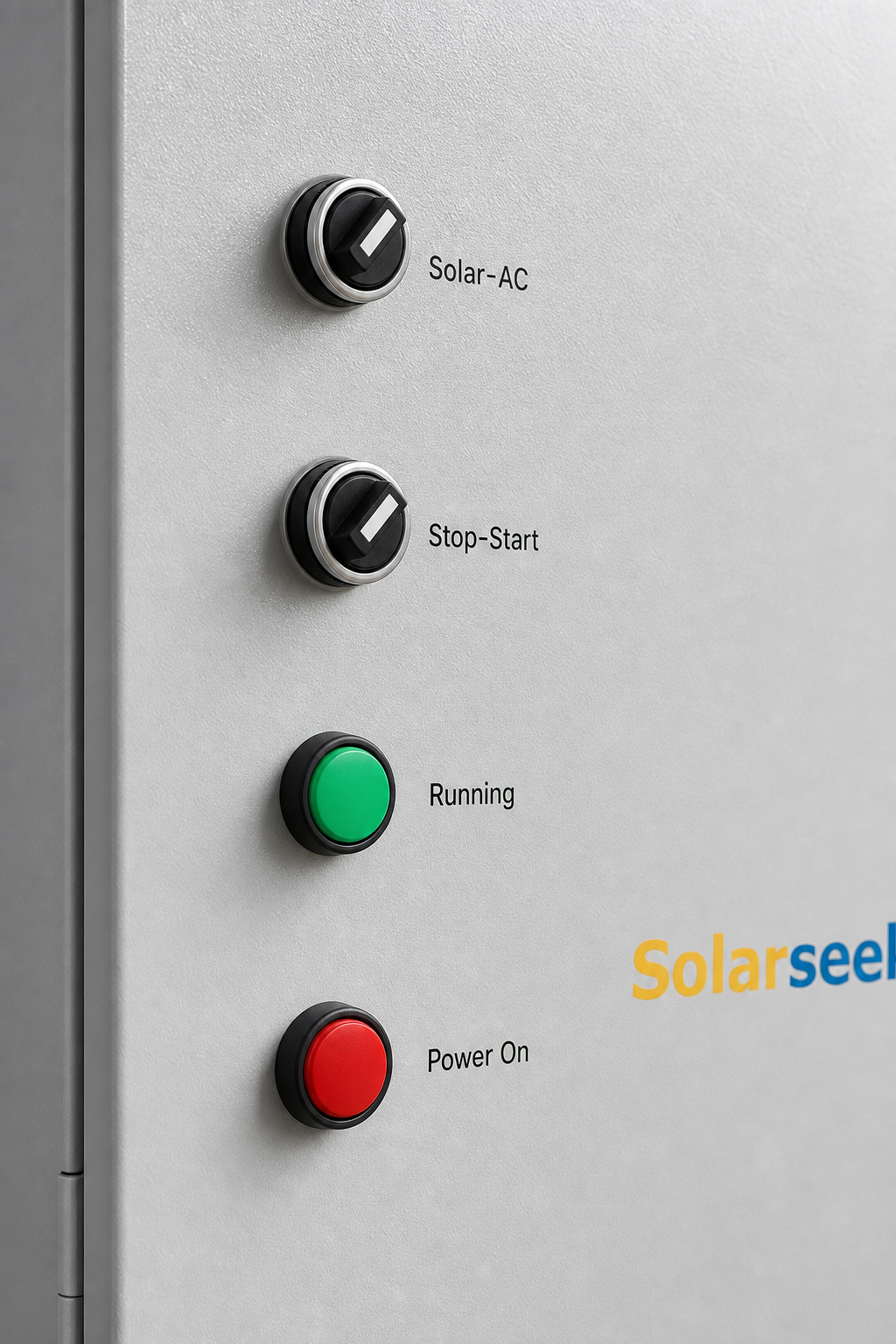
A distributor receives several irrigation inquiries in the same month.
The local market is price-sensitive, so the sales team starts by asking suppliers for the lowest unit price. At first, the quotes look attractive. On paper, the distributor can offer a competitive package.
Then the real project data arrives.
One pump is 220V single-phase. Another is a 380V three-phase deep-well pump. A third site has long cable distance and weak PV planning. A fourth buyer wants solar operation but has not selected the pump yet.
The low-price list no longer helps.
What the distributor needs is a project shortlist: small 220V pump path, phase-conversion path, 380V three-phase path, deep-well path, and backup questions for unclear inquiries. With that structure, the sales team can quote faster and avoid forcing every buyer into one cheap model.
This is the field lesson: market demand rewards distributors who can sort projects, not only those who can ask for the lowest price.
How to Build a Better Project Shortlist
A useful distributor shortlist should start with common local pump types.
Group inquiries by pump voltage and phase first. Then add application type: shallow well, deep well, drip irrigation, flood irrigation, tank filling, livestock water, or remote village water supply.
After that, add the data required for each group. For a deep-well project, ask for total dynamic head, dynamic water level, pump curve, cable distance, and PV string plan. For a smaller 220V pump, check starting behavior, single-phase compatibility, and array sizing.
Do not ignore service skill.
A product that looks easy for the supplier may still be hard for the distributor if local installers cannot set parameters, read fault codes, or measure current. Training, manuals, and a clear escalation path should be part of the comparison.
Data to Request Before Comparing Suppliers
Before asking suppliers for price, collect a small but complete project file.
Ask for the pump nameplate, pump power, voltage, phase, rated current, frequency, total head, required flow, water source, pipe route, and cable distance. If the pump has not been selected yet, ask for the duty point and application first.
For the PV side, request module power, Voc, Vmp, planned string layout, and site temperature range when available. If the buyer has existing panels, ask for photos of the module label.
For the commercial side, record whether the buyer is an EPC, pump dealer, farm owner, distributor, or OEM partner. Service expectations change by buyer type.
This file does not need to be long. It just needs to prevent blind quoting.
Safety and Installation Notes
Selection guidance is not a wiring instruction.
Solar pump inverter projects involve PV DC input, inverter output, motor cable, grounding, protection devices, and sometimes hybrid power sources. Installation should follow local electrical codes, product manuals, and qualified-technician practice.
Before changing a model, replacing an inverter, or modifying wiring, record the pump nameplate, old controller label, cable route, protection devices, and measured values where safe.
FAQ
Why is demand rising in the solar inverter for PV pump market?
Demand is pushed by irrigation needs, remote water supply, deep-well pumping, livestock water, and buyers who want to reduce dependence on unstable grid or fuel-based pumping. The exact opportunity still depends on local pump stock, water demand, and service channels.
Why is price not enough when choosing a PV pump inverter?
Price does not confirm voltage, phase, rated current, PV input range, protection logic, or service support. A cheap inverter can become expensive if it causes weak output, commissioning failure, or return visits.
What should distributors compare besides unit price?
Distributors should compare pump compatibility, PV input design, protection functions, documentation, model availability, fault support, installer training, and the cost of servicing remote projects.
Which product path fits larger irrigation or deep wells?
For many 380V three-phase pumps, deep wells, and larger irrigation projects, SP4 is usually the first Solarseeker path to review. Final selection still depends on pump current, head, flow, PV string plan, and cable distance.
What data should buyers send before asking for price?
Send the pump nameplate, voltage, phase, rated current, head, flow, cable distance, PV module Voc and Vmp, planned string layout, site power condition, and application type.
Ask for a Distributor Project Shortlist
Before comparing only price, build a short list of the project types you actually see.
Send Solarseeker your common pump ranges, market voltage, typical applications, well depth range, cable distance, PV module data, and buyer type through the contact page. The team can suggest a distributor project shortlist and model path before you stock or quote the wrong inverter.