
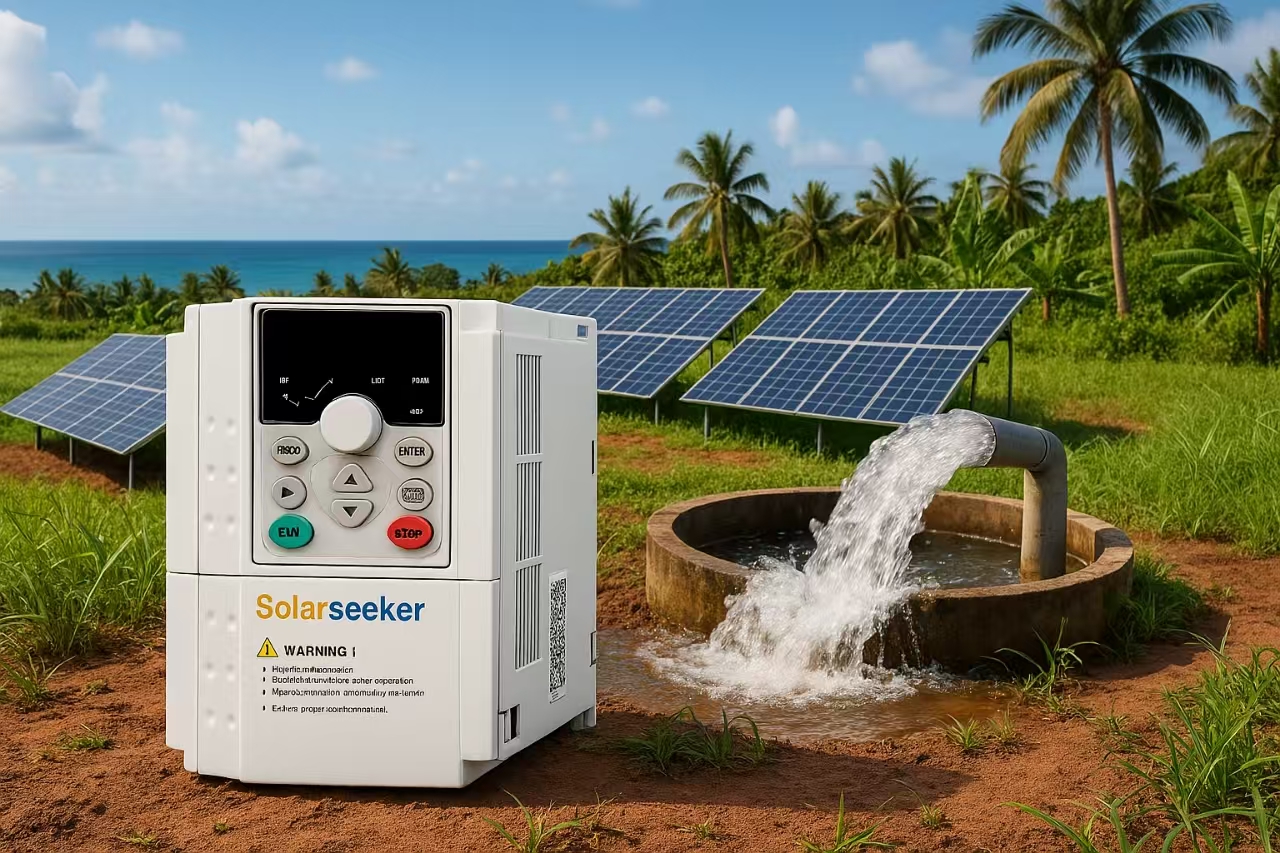
0.75kW Solar Water Pump: When a 1HP System Is the Right Choice
A 0.75kW pump can be a smart small-water solution, but only when the head, flow, voltage, and daily water target are honest.
The easy mistake is treating 0.75kW as “small, so it will work anywhere.” It will not.
A 0.75kW solar water pump, roughly 1HP, is a good fit for small wells, livestock water, garden irrigation, tank filling, pond circulation, and light farm water transfer. It is not the right choice for deep wells, long pipe runs, high-flow irrigation blocks, or sites that need strong pressure across many sprinklers.
Short answer: start with the pump nameplate, then check head, flow, voltage, phase, cable distance, and PV array size. For many 220V single-phase 0.75kW pump jobs, the PV array should start at about 1.5kW or more. The inverter must also reach the right DC voltage window, not only the right wattage.
Engineering Priority: Technical Verification Before Quoting
The first question is not “Can solar run a 0.75kW pump?”
Yes, it can. The better question is: what water job does the buyer expect that pump to finish?
A 0.75kW pump may work well when the site needs modest flow and moderate head. It can fill a storage tank during daylight, supply a small orchard section, move water from a shallow well, or feed livestock troughs.
It becomes risky when the buyer expects it to behave like a larger irrigation pump. A 1HP pump cannot beat physics. If the total head is high, the pipe route is long, or the farm needs fast water delivery, a smaller pump only runs longer and still may miss the daily water target.
Use this quick first check:
| Site condition | 0.75kW pump fit |
|---|---|
| Shallow well, small tank filling | Usually suitable if flow demand is modest |
| Livestock water troughs | Often suitable with storage tank planning |
| Small garden or greenhouse irrigation | Suitable when pressure and zone size are limited |
| Deep well with high lift | Risky; check pump curve before quoting |
| Large drip irrigation block | Often too small unless water demand is low |
| Sprinkler irrigation with pressure demand | Often underpowered |
If the buyer cannot provide head and flow, do not quote only from pump power. That is how small systems turn into service calls.
What 0.75kW Really Means on the Nameplate
0.75kW is the motor rated power. It is not the daily water output.
Two 0.75kW pumps can perform very differently. One may be built for higher head and lower flow. Another may be built for lower head and higher flow. The motor size is the same, but the pump curve is not.
Before choosing the solar pump inverter or the PV array, collect these nameplate details:
- Pump rated power: 0.75kW or 1HP
- Rated voltage: often 220V for small single-phase pumps
- Phase: single-phase or three-phase
- Rated current
- Frequency: usually 50Hz or 60Hz depending on market
- Pump type: submersible, surface pump, centrifugal, screw pump, or other type
- Required head and flow from the site
The current rating matters. Some small single-phase pumps draw higher current during starting and under load. If the inverter is selected only by kW, the system may trip, derate, or run weakly during cloudy periods.
For small 220V single-phase pump systems, the Solarseeker SP1 product path is usually the closest place to start. It still needs a nameplate check. Do not assume every 0.75kW pump uses the same current.
The PV Array Should Not Be 0.75kW
A common bad quote uses 0.75kW of panels for a 0.75kW pump.
That looks neat on paper. In the field, it is too tight.
The pump motor needs starting headroom. The inverter needs enough DC bus voltage. Sunlight drops in the morning, late afternoon, dusty season, and cloudy weather. Cable loss also eats voltage and power.
For solar pumping, the PV array must be larger than the pump rated power.
| Pump system | PV array power starting rule | Useful Vmp target |
|---|---|---|
| 220V single-phase pump | PV Array Power >= Pump Rated Power x 2.0 | Around 320V DC Vmp |
| 380V three-phase pump | PV Array Power >= Pump Rated Power x 1.3 to 1.5 | Around 540V DC Vmp |
For a 0.75kW 220V single-phase pump, that means:
0.75kW x 2.0 = 1.5kW PV array starting point
This is only the first planning number. The final panel count depends on panel wattage, Vmp, Voc, the inverter input range, local temperature, and the water schedule.
For example, using 550W panels, three panels give 1.65kW in total power. However, the series voltage must still match the inverter’s working range. If the voltage is too low, the inverter may wake late or run weakly. If Voc is too high in cold weather, over-voltage risk appears.
Power and voltage must both fit. One without the other is a half-checked system.
When a 0.75kW Pump Is the Right Choice
Small pumps are not weak by default. They are useful when the water task is controlled.
A 0.75kW solar water pump is often the right choice when the buyer wants:
- Daytime tank filling instead of instant high-pressure irrigation
- Small livestock water supply
- A shallow or moderate-depth well
- A low-flow drip zone
- A small greenhouse or garden irrigation line
- Pond circulation or light water transfer
- A low-cost trial system for a dealer’s local market
The best 0.75kW systems usually use storage. The pump runs during useful sunlight and fills a tank. The water is then used when needed. This removes pressure from the pump schedule and makes cloudy periods easier to handle.
For project-style references, Solarseeker keeps general solar water pump project cases where buyers can see how different pump sizes are used in field conditions. Do not copy a case size blindly. Use it as a reference for project logic.
When It Is Too Small
There are also jobs where a 0.75kW pump is the wrong starting point.
The most common mismatch is head. A buyer may say, “It is only a small farm.” But the well depth, elevation difference, pipe loss, and pressure demand can make the real duty point much larger.
Use this simple head logic:
Total head = static lift + pipe friction loss + required outlet pressure + safety margin
If the total head is high, the pump must work harder. Flow drops. In some cases, the pump may run but deliver too little water to matter.
Watch these warning signs:
| Warning sign | Field consequence |
|---|---|
| Deep well but no pump curve | Flow may be far below the buyer’s target |
| Long pipe route with small pipe | Friction loss reduces usable flow |
| Sprinklers need pressure | 0.75kW may not hold pressure across the zone |
| Buyer wants fast irrigation | Pump may run all day and still miss the water target |
| Weak PV margin | Pump starts late and stops early |
This is where a cheap small system becomes expensive. The installer may need to change pump size, add panels, replace the inverter, or return to site for testing. Rails, clamps, cable, and crew time under the sun are not free.
220V Single-Phase or Three-Phase: Confirm Before Quoting
Small pumps are often 220V single-phase in rural and small-farm markets. But do not guess.
The inverter output must match the pump voltage and phase. A 220V single-phase pump needs a different product path from a 380V three-phase pump. The wrong match can cause poor running, nuisance faults, or equipment damage.
For a general overview of inverter types and model families, use the Solarseeker solar water pump inverter page. It helps separate 220V single-phase, phase-conversion, and 380V three-phase applications.
For small 0.75kW jobs, the most common buyer question is simple: “Can I use my existing AC pump with solar?”
Often, yes. But only after these checks:
- The pump is in good condition.
- The voltage and phase match the inverter.
- The rated current is within the inverter output limit.
- The PV voltage fits the inverter’s DC input range.
- The pump curve can meet the head and flow target.
If any item is missing, the quote is still a guess.
A Practical Example
Say an installer has a 0.75kW, 220V single-phase submersible pump for a small farm tank.
The buyer wants daytime tank filling from a moderate-depth well. The pipe route is short. The tank stores water for later use. This is a reasonable 0.75kW solar pump project.
A first PV planning number is 1.5kW or more. With 550W panels, the installer may start around three panels for total PV power. Then the panel string must be checked for Vmp and Voc against the selected inverter. If local mornings are cold, Voc check becomes more important.
Now change the job.
The same 0.75kW pump is expected to supply a sprinkler line on a higher field, with a long pipe route and no tank. That is a different project. The pump may run, but the pressure and flow may disappoint the buyer. In that case, a larger pump or a different irrigation layout may be the better answer.
Same motor power. Different water result.
What Distributors Should Stock Carefully
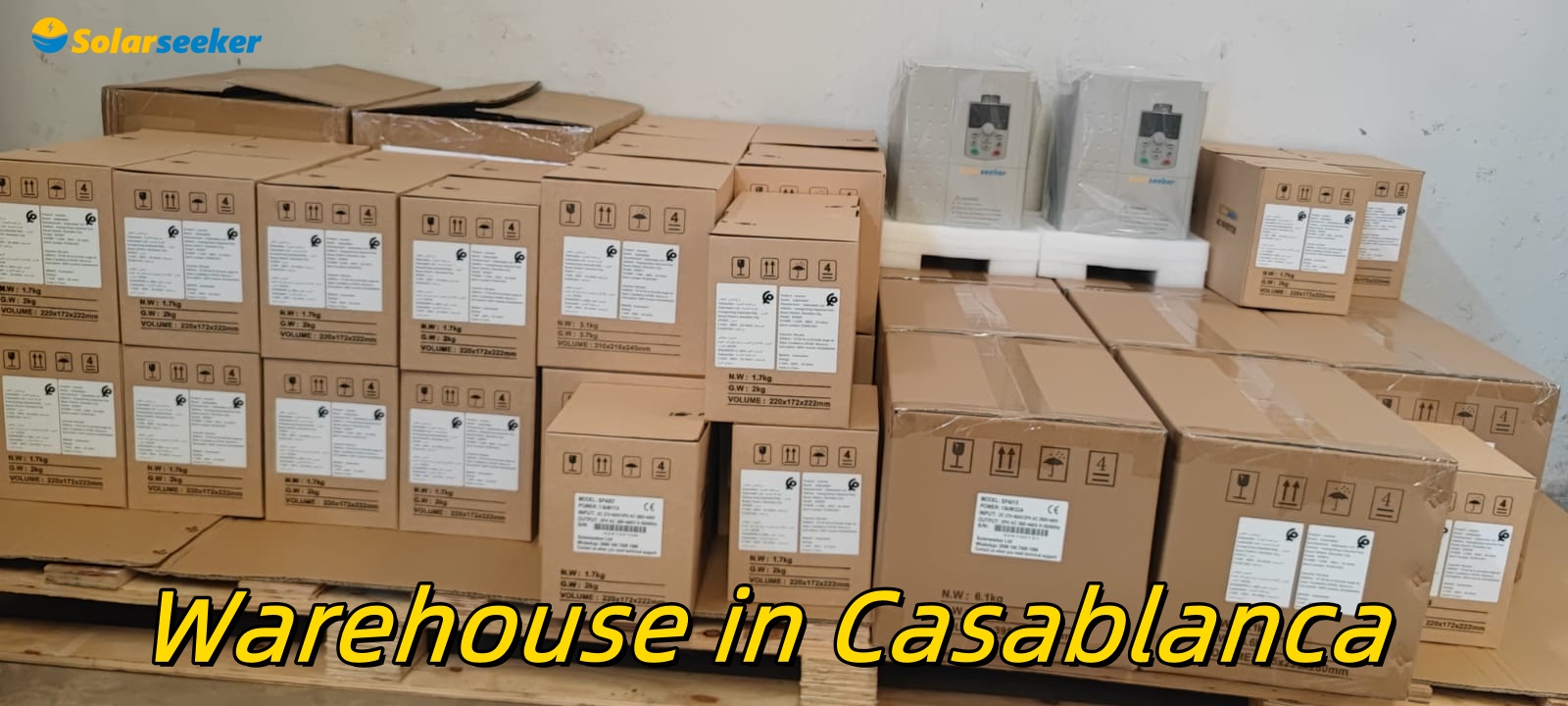
For distributors, 0.75kW systems can be useful entry-level products. They sell into wells, small farms, livestock, and garden irrigation. They also help dealers show solar pumping at a lower project cost.
However, small systems create trouble when sales teams oversimplify them.
Train the dealer network to ask for:
- Pump photo and nameplate
- Well depth or lift requirement
- Desired flow or tank size
- Pipe distance and pipe diameter
- Panel model available in local stock
- Whether the pump is new or already used
Panel stock matters more than many people think. A cheaper panel may create more mounting points, more cable joints, and more labor. A higher-watt panel may reduce module count, but it still must reach the correct voltage window.
The distributor’s real margin is not only on the invoice. It is also in fewer returns, fewer wrong shipments, and fewer support calls.
FAQ
Is a 0.75kW solar water pump enough for irrigation?
It can be enough for small drip zones, gardens, greenhouses, and tank filling. It is often too small for large irrigation blocks or pressure-heavy sprinkler systems. Check head, flow, and daily water volume before quoting.
How many solar panels are needed for a 0.75kW pump?
For a 220V single-phase 0.75kW pump, start with about 1.5kW of PV array power or more. Panel count depends on panel wattage and voltage. Also check Vmp, Voc, inverter input range, and local temperature.
Can I run an existing 1HP AC pump with solar?
Often, yes, if the pump voltage, phase, current, and condition fit the inverter. The PV array must also meet the inverter’s voltage and power needs. A nameplate photo is the fastest first check.
Is 0.75kW the same as 1HP?
In practical pump quoting, 0.75kW is commonly treated as about 1HP. Always use the actual pump nameplate for final selection, because current, voltage, and pump curve can still differ.
Should I choose 0.75kW or 1.5kW?
Choose by the water duty point, not by price. If the well is deeper, the pipe route is longer, or the buyer needs more flow, 1.5kW may be safer. If the job is small tank filling or light water transfer, 0.75kW may fit well.
Before You Quote the System
A 0.75kW solar water pump is a good small-system choice when the duty point is realistic. It is a bad choice when the quote ignores head, flow, voltage, and PV margin.
Before ordering, confirm:
- Pump power, voltage, phase, and rated current
- Total head and required flow
- Pipe distance and pipe size
- PV panel wattage, Vmp, and Voc
- Inverter DC input range and output current
- Whether the buyer needs tank filling, drip irrigation, or pressure irrigation
If you want a quick engineering check, send the pump nameplate, head, flow, panel model, and site notes through the Solarseeker contact page. A small system is still an electrical and hydraulic system. It deserves a real check before it goes to the field.