

Field service is faster when the inverter, motor, pump, cable, and PV input can be checked separately instead of being hidden inside one sealed unit.
The real test of a solar pumping system is not whether it runs during a clean demonstration. The real test is what happens when a remote site stops pumping and the dealer has to decide what failed.
AC VFD systems are easier to maintain because the fault path is visible. The technician can check PV input, inverter alarms, output current, cable condition, motor insulation, and pump load one by one. With an integrated DC motor/controller package, more of that path is locked inside one unit. When the fault is unclear, replacement often becomes broader than the failed part.
That matters to distributors and installers. Every unclear failure can become a truck roll, a warranty argument, and several days without water.
Engineering Priority: Technical Verification Before Quoting
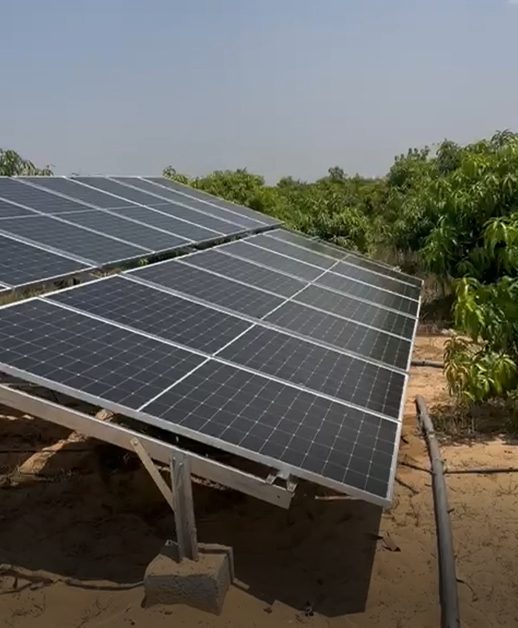
A stopped pump does not always mean a failed inverter. It may be weak PV voltage, a loose connector, a dry well, a blocked inlet, a damaged cable, or a motor overload condition.
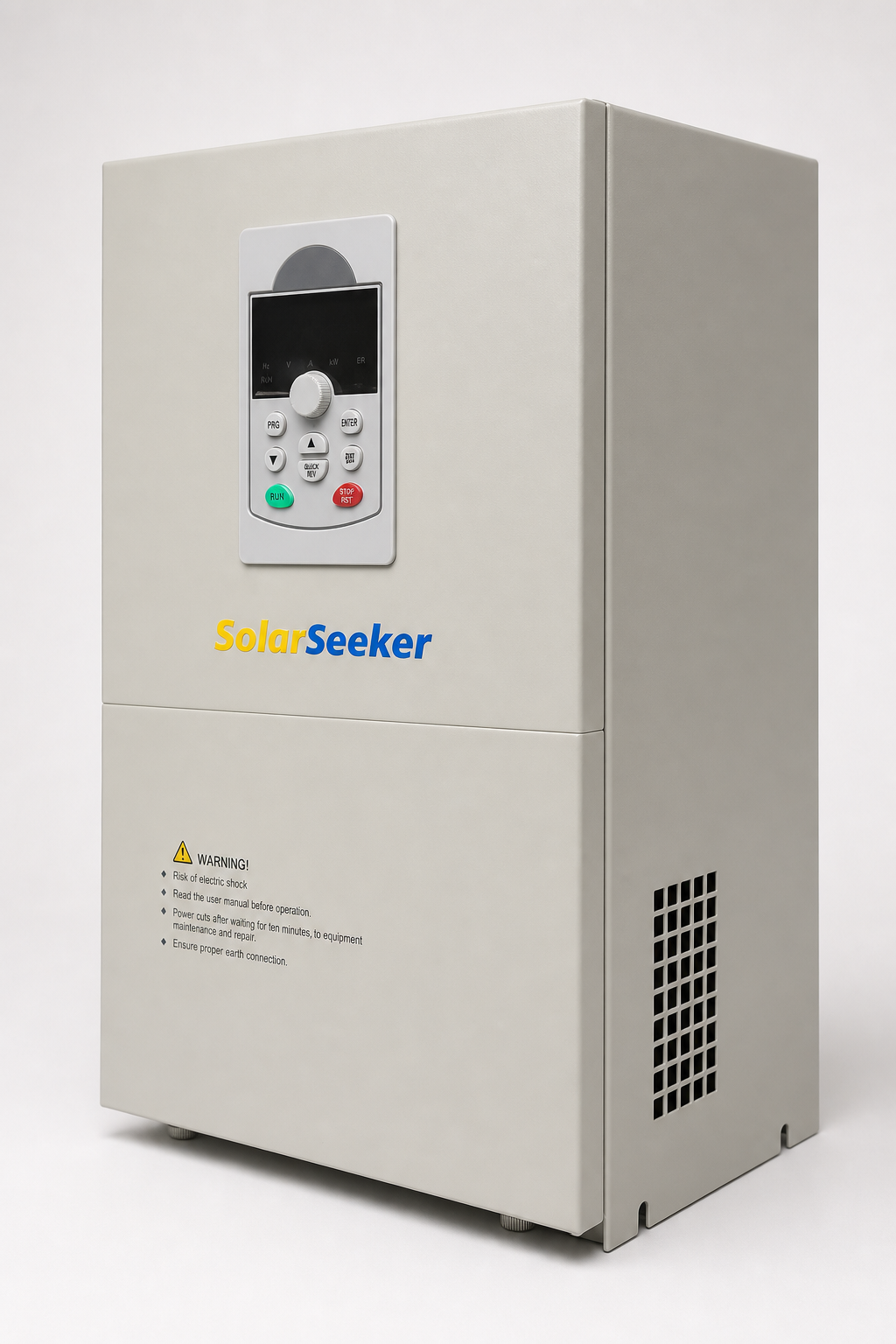
In an AC system, the technician can test each part of the chain. That is the main service advantage. The solar pump inverter gives fault codes and running data, while the motor and pump remain separate service items.
| Site symptom | First AC-system check | Why it helps |
|---|---|---|
| Pump starts late | PV string Vmp and morning voltage | Confirms weak input before blaming the pump |
| Frequent stop at noon | Running current and overload alarm | Separates motor load from inverter quality |
| No water but motor runs | Water level, inlet, and pump curve | Finds hydraulic problems |
| Random trips | Cable joints, grounding, and alarm history | Finds installation faults |
The Four Checks That Shorten Downtime
- PV input: Measure DC voltage under real sunlight, not only at noon.
- Inverter: Record the fault code, output frequency, and output current.
- Motor and cable: Check rated current, insulation, terminals, and cable length.
- Pump and water source: Check dry well, sand, blocked inlet, and pump curve mismatch.
This sequence prevents a common mistake: replacing the controller before proving the fault.
Why Integrated DC Units Slow the Dealer Down
Integrated DC packages can be convenient for small water points. The problem appears when the controller, motor, and pump are treated as one service unit. If the controller is sealed inside the motor package, the installer may not know whether the fault is electronic, hydraulic, or mechanical.
That creates stocking risk. A dealer may need full pump-controller packages instead of smaller service parts. It also creates downtime when the original supplier is far away.
What to Keep in the Service File
- Pump nameplate photo
- PV string plan, Vmp, Voc, and panel quantity
- Fault code or display photo
- Running current at stable water output
- Well depth, water level change, and visible sand condition
- Wiring and parameter record after commissioning
For larger three-phase sites, the SP4 inverter path is usually checked against the pump nameplate before any replacement decision.
What the Fault Path Tells the Buyer
The commercial value of modular troubleshooting is not only faster repair. It also gives the buyer evidence. If PV voltage is low, the quotation may need a different string plan. If current is high, the pump curve or pipe loss may be wrong. If insulation is weak, the motor or cable needs attention before the inverter is blamed.
This evidence protects both sides. The farmer gets a clearer repair path. The dealer avoids replacing parts without proof. The installer can document what was measured on site instead of relying on a verbal complaint.
Common Maintenance Mistakes
- Replacing the inverter before checking PV voltage under load.
- Ignoring motor rated current and treating all overload alarms as controller failure.
- Not keeping a record of parameter settings after commissioning.
- Shipping a replacement part before checking cable joints and water level.
Component-Level Isolation: The Field Service Advantage
When an integrated DC pump stops working at the bottom of a borehole, the field technician cannot determine whether the brushless BLDC controller circuit board burned out, the permanent magnets demagnetized, or the motor stator shorted. The entire assembly must be hoisted out of the well using a crane truck, incurring steep labor and downtime costs.
In contrast, a modular AC solar pump system places the intelligence on the surface inside an IP54 outdoor cabinet. Technicians can measure DC string voltage, AC output phase currents, and check fault history codes (such as over-current, dry-run, or under-voltage) directly from the keypad without pulling a single meter of pipe.
| Maintenance Factor | Integrated Submerged DC Pump | Modular AC VFD Solar System |
|---|---|---|
| Diagnostic Location | Submerged inside the borehole; invisible from surface | Ground-level inverter keypad and terminal block |
| Repair Labor | Requires crane, pipe crew, and complete wellhead teardown | Simple surface module replacement or setting adjustment |
| Spare Part Availability | Proprietary manufacturer boards; long overseas lead time | Standard IEC/NEMA AC motors available from local pump supply stores |
| Average Field Downtime | 2 to 4 weeks waiting for factory warranty or replacements | Under 24 hours with local pump technician replacement |
For commercial irrigation, minimizing downtime during peak dry season is the difference between saving a harvest and losing an entire year’s crop investment.
When to Ask for an Engineering Check
If the site has repeated alarms, do not guess. Send the pump nameplate, PV string data, fault code, measured current, and a short site video to Solarseeker. A clean fault path is cheaper than replacing the wrong part.