

Dry-run and overload protection works best when the inverter can read motor load, not just basic voltage faults.
Dry-run damage often starts quietly. The pump may still spin, but the water level has dropped, the inlet is blocked, or sand has changed the load. By the time the buyer sees weak water, the impeller or motor may already be under stress.
An AC VFD can protect the pump by watching current, frequency, voltage, and load behavior. This gives the installer more evidence than a simple on/off controller. The point is not that every sensor disappears. The point is that the inverter has more ways to see abnormal pump behavior.
What the Inverter Can Read Without a Water Sensor
Sensorless protection uses motor behavior as evidence. It is not magic, and it is not a guess.
- Low current can show loss of hydraulic load.
- High current can show blockage, overload, or wrong pump curve.
- Frequency behavior can show whether the pump reaches normal running condition.
- DC input voltage can show whether weak PV power is part of the problem.
That is why a proper solar pump inverter is useful for remote troubleshooting as well as protection.
How to Read the Fault Before Replacing Parts
| Fault condition | Likely signal | First field check |
|---|---|---|
| Dry well or low water | Low-load behavior | Water level and restart delay |
| Sand or blocked inlet | High current or overload alarm | Inlet, filter, and pump current |
| Weak sunlight | Low DC bus or unstable frequency | PV voltage during the fault |
| Wrong pump match | Current does not fit expected curve | Nameplate and pump curve review |
Where External Sensors Still Help
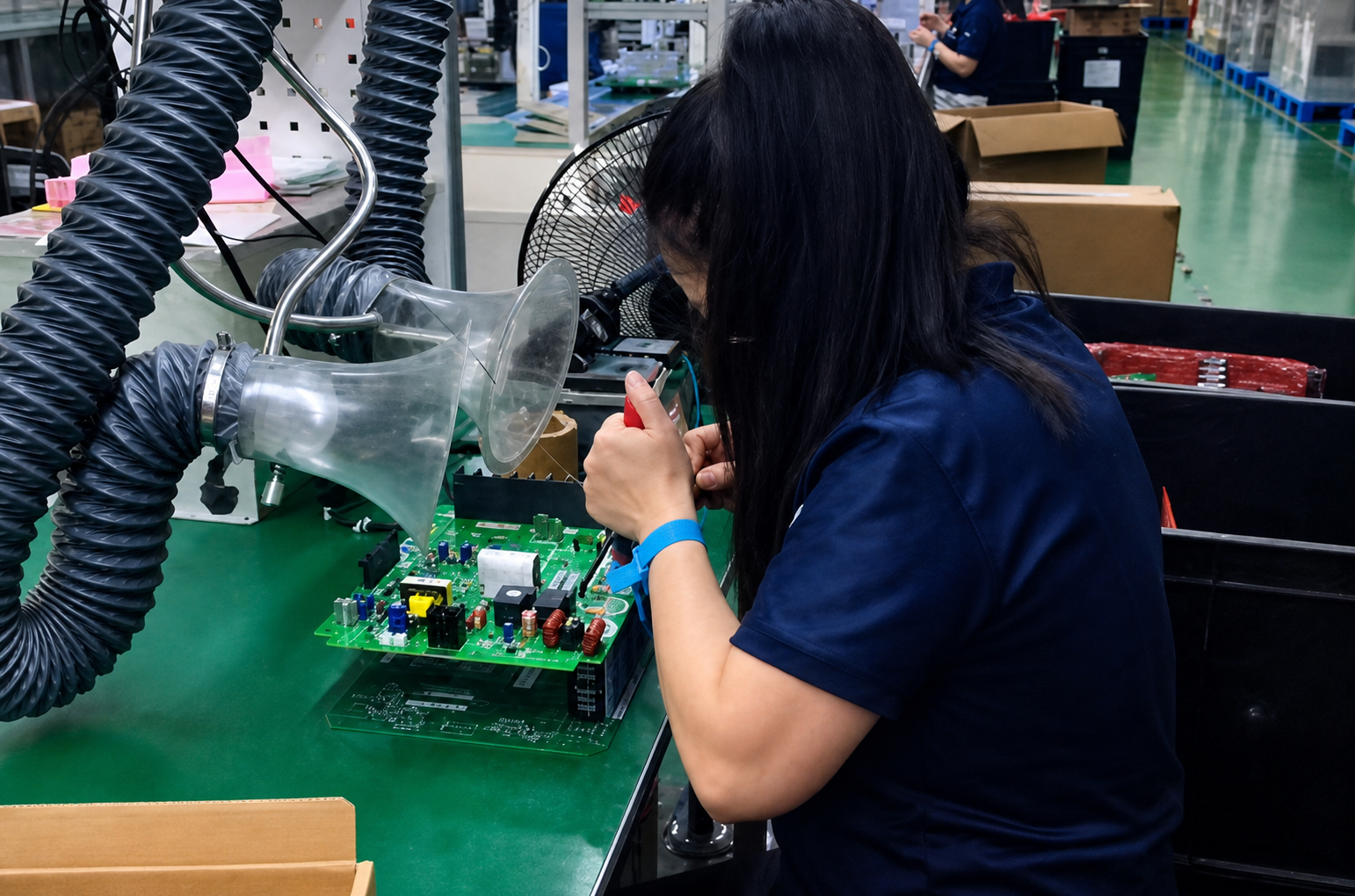
Sensorless protection is the base layer. It does not replace every water-level sensor. Tanks, fast-changing wells, and unattended livestock water systems may still need float switches or level probes.
The correct design uses inverter logic first, then adds sensors where the water management problem needs them.
Commissioning Settings That Matter
- Set rated motor current from the pump nameplate.
- Set dry-run detection and restart delay for the water source.
- Check overload limits against real running current.
- Record alarm history after the first operating period.
- Use qualified technicians for wiring and grounding.
For larger three-phase pumps, the SP4 inverter path should be checked with rated current, pump curve, and site water behavior.
Why Nuisance Trips Happen
Some installers disable protection after a few nuisance trips. That is dangerous. A nuisance trip usually means the settings, pump curve, water level, or PV supply has not been understood. Turning protection off may make the pump run today, but it can damage the motor tomorrow.
The better method is to compare the alarm with measured current and site condition. If dry-run trips happen only in the afternoon, the well may be drawing down. If overload appears after sand movement, the inlet or impeller may be under stress. If trips appear in weak sunlight, the PV string may be the real cause.
Protection Settings Need a Baseline
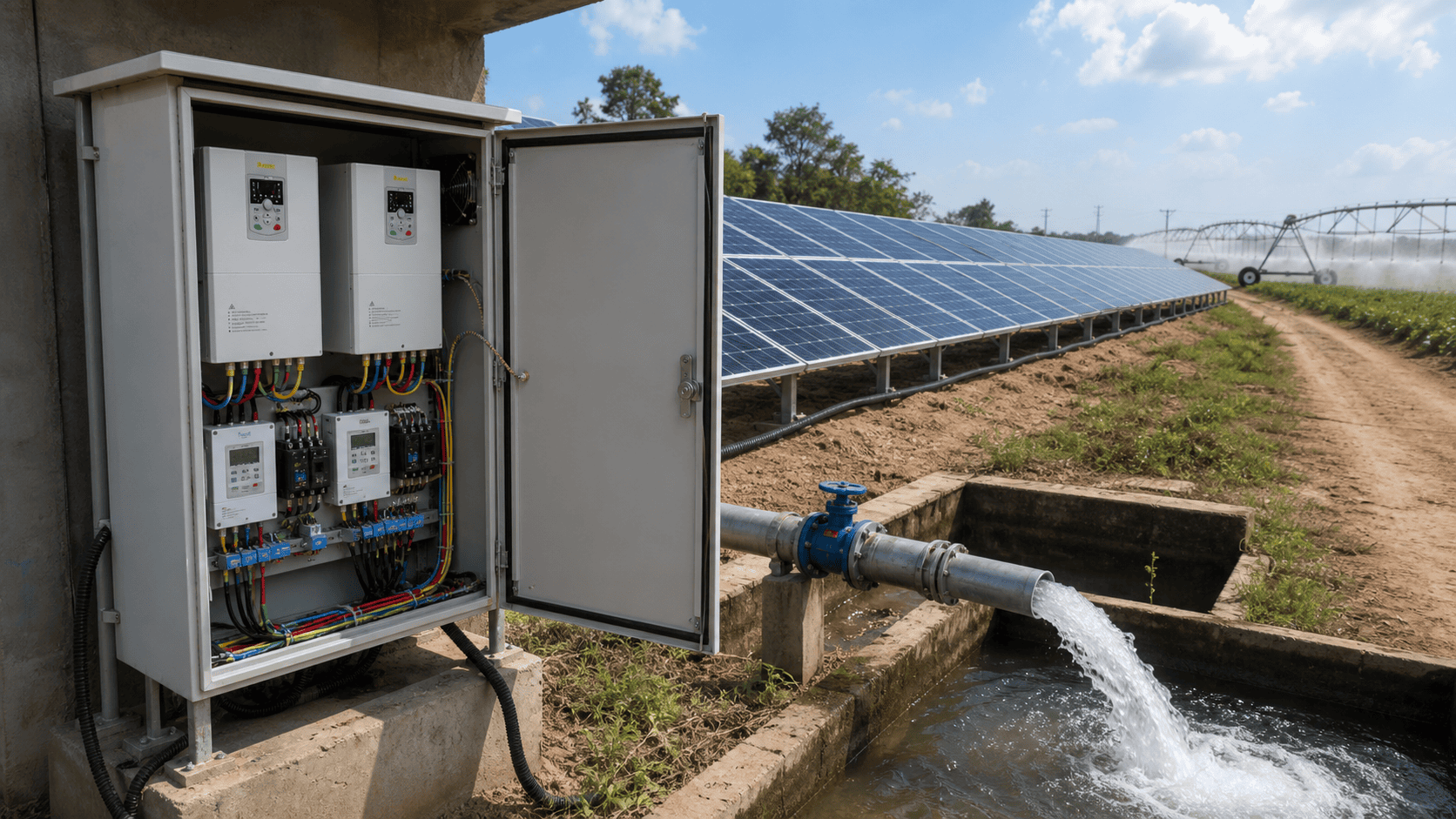
Record stable running current when the pump is producing normal water. That baseline helps the dealer judge later faults. Without a baseline, every alarm becomes an argument.
Software-Driven Sensorless Dry-Run Detection vs Physical Well Probes
Submersible pumps running dry will burn water-lubricated bearings and warp plastic impellers in under 90 seconds. While traditional DC systems rely on delicate electrode probes lowered down the well with fragile sensor wiring, AC solar inverters utilize sophisticated sensorless motor load algorithms.
As the aquifer water level drops below the pump suction screen, air enters the impellers. The pump motor suddenly experiences a 60% to 80% reduction in shaft load torque. The AC inverter continuously calculates active motor current and power factor in real-time. When it detects this sudden load drop, it immediately triggers an under-load fault (LL or A-01), stopping the motor before mechanical damage occurs.
| Protection Method | Physical Well Sensor Cables | AC Inverter Sensorless Algorithm |
|---|---|---|
| Installation Complexity | Requires running 100m+ fragile sensor wire down the casing | Zero downhole wiring; fully programmed in drive software |
| Failure Vulnerability | Probe corrosion, silt fouling, and severed cable during pipe drop | Immune to silt, sand, and groundwater chemistry |
| Auto-Restart Recovery | Requires manual reset or static probe re-immersion | Programmable well recharge timer (e.g. auto-restart after 30 mins) |
This eliminates the #1 cause of false alarms on remote farm installations: severed or calcified water level sensor probes.
A Field Rule Worth Keeping
Do not wait for visible damage before checking protection logic. Send the pump nameplate, current reading, fault code, water source condition, and PV string plan to Solarseeker before changing hardware.