
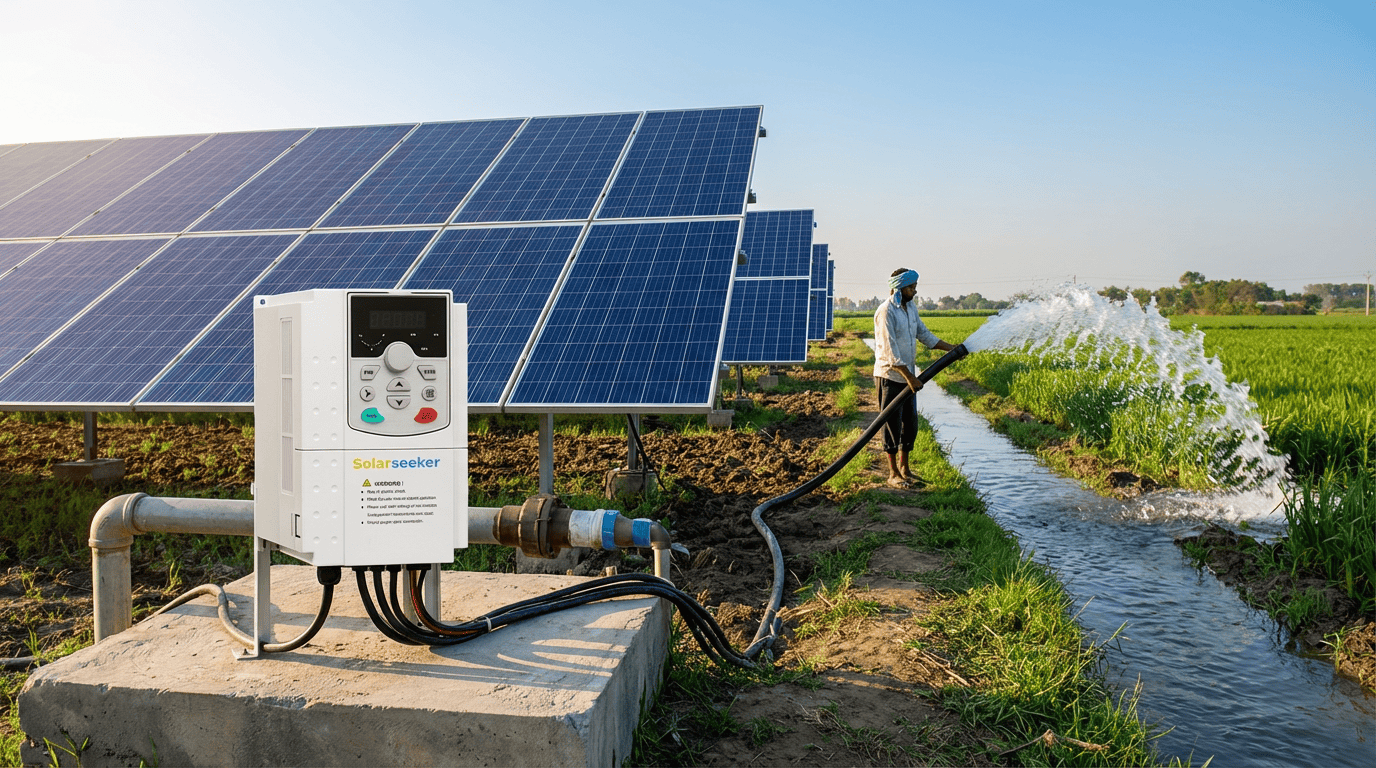
Voltage compatibility starts with the pump nameplate, not the inverter power rating.
Voltage compatibility is not a slogan. It decides whether the pump can run, whether the PV string is practical, and whether the installer avoids a costly replacement after delivery.
AC VFD flexibility across 110V to 480V matters because export pump markets are mixed. Some sites use smaller single-phase pumps. Others use 380V or 480V three-phase motors. A flexible inverter range lets distributors match the local pump instead of forcing every buyer into a proprietary DC pump package.
Read These Four Nameplate Lines First
- Rated voltage
- Phase
- Rated current
- Frequency
Two pumps with the same kW can need different inverter paths. Power alone is not enough.
PV Voltage Rules That Actually Matter
| Pump system | PV array power starting rule | Useful Vmp target |
|---|---|---|
| 220V single-phase pump | PV Array Power >= Pump Rated Power x 2.0 | Around 320V DC Vmp |
| 380V three-phase pump | PV Array Power >= Pump Rated Power x 1.3 to 1.5 | Around 540V DC Vmp |
These rules are starting points for matching, not a substitute for checking the inverter datasheet and PV module Voc under local temperature.
Why Export Buyers Need a Wider Model Path
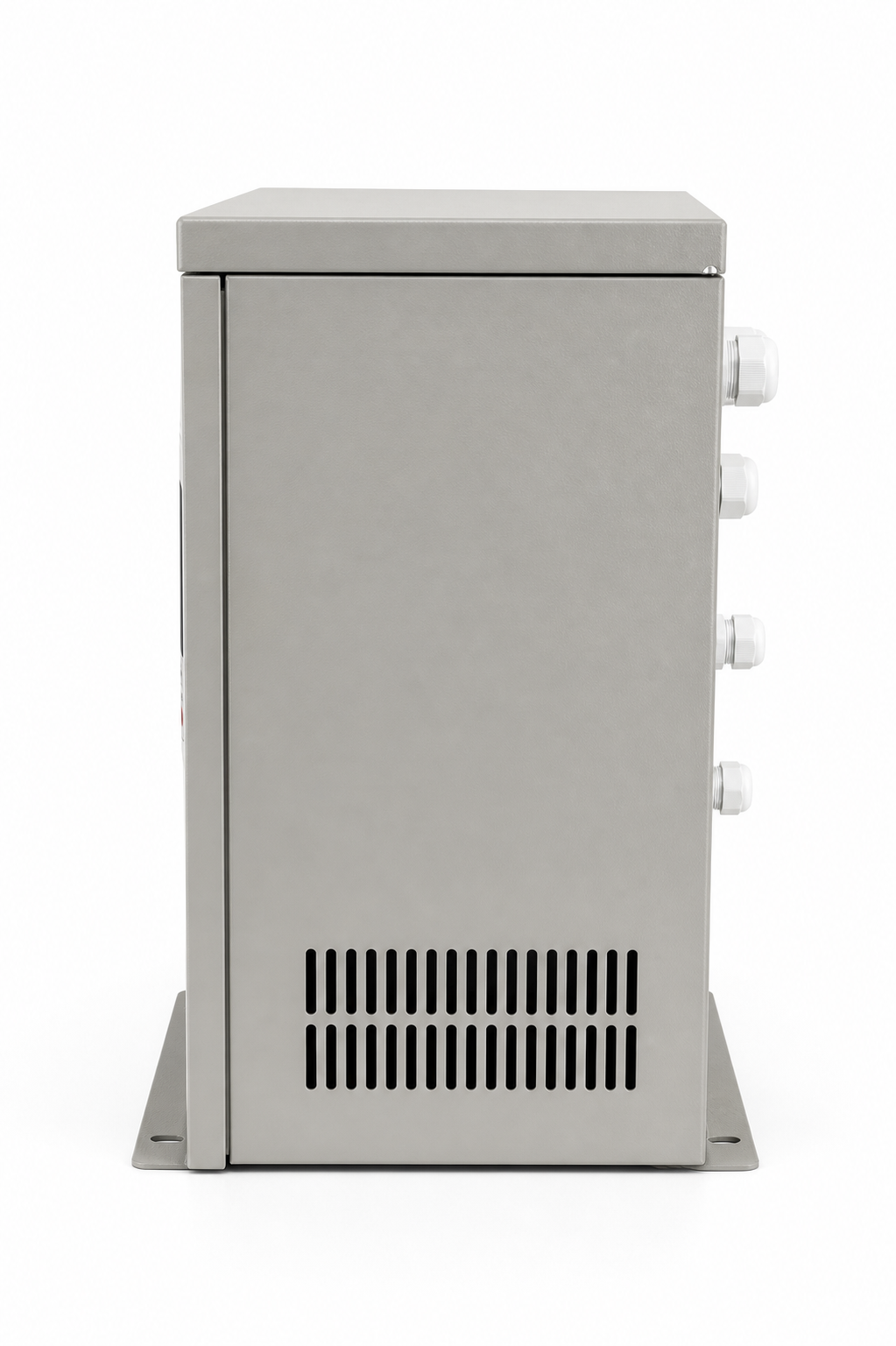
A distributor may sell into several voltage standards. One market may use 220V pumps. Another may use 380V three-phase pumps. Some industrial sites may work around 480V systems.
That is why the solar pump inverter selection should be built around the pump voltage first. For smaller single-phase systems, the SP1 220V path may fit. For larger three-phase irrigation, the SP4 path is often the better starting point.
Compatibility Mistakes That Cost Freight
| Mistake | Field consequence |
|---|---|
| Matching only kW | Wrong current or phase path |
| Ignoring cold-weather Voc | Over-voltage alarm or damage risk |
| Low Vmp design | Late starts and weak cloudy-weather output |
| Wrong export voltage | Replacement freight and delayed handover |
Vmp and Voc Create Different Problems
Low Vmp and high Voc are different risks. Low Vmp usually creates weak operation, late starts, or unstable output in poor sunlight. High Voc is more dangerous because cold weather can push the PV string above the inverter limit.
Export buyers should check both conditions before shipment. A panel string that works in one country may be wrong in another country because temperature and module choice change the voltage window.
Voltage Review Checklist
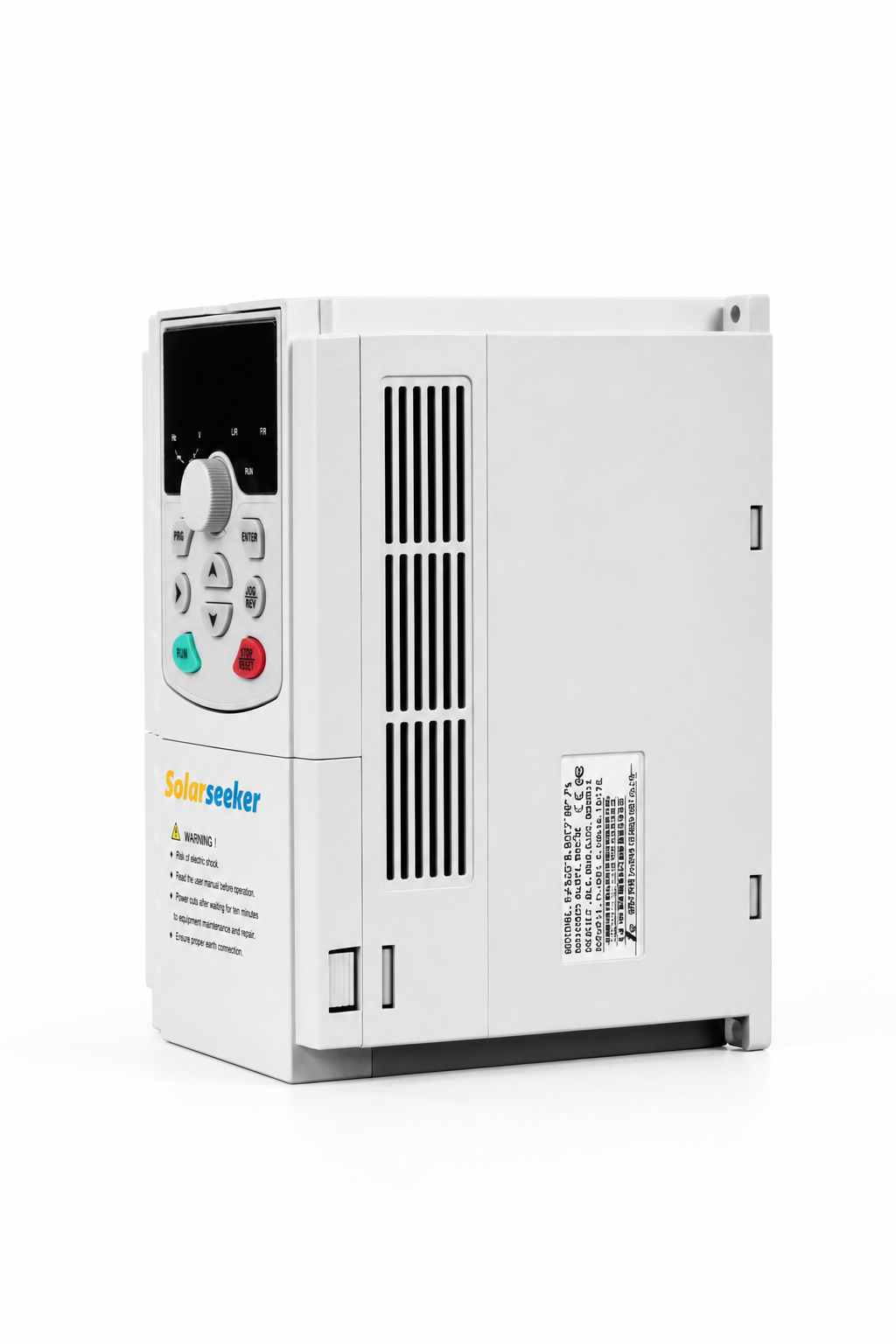
- Confirm pump voltage and phase from the nameplate.
- Check rated current, not only kW.
- Calculate PV string Vmp for normal operation.
- Calculate cold-weather Voc against inverter maximum input.
- Confirm local frequency and grid/generator backup if used.
Global Voltage Flexibility: Designing Across 110V to 480V Standards
Global water projects encounter widely divergent electrical grids: 110V/220V dual-voltage in North and Central America, 220V–240V single-phase across Southeast Asia and Africa, and 380V–440V three-phase in commercial agricultural districts worldwide.
AC solar pump inverters provide modular hardware platforms that cater to all these voltages without requiring custom motor manufacturing. A standard dual-voltage 220V/380V motor can be configured in Delta for 220V three-phase solar drive, or in Star for 380V drive, allowing distributors to maintain minimal SKU counts while serving diverse local markets.
Global Voltage Grid Reference Table for Solar Pumping
| Target Region | Grid Standard | Pump Motor Configuration | Recommended Solar Inverter Route |
|---|---|---|---|
| North America / Mexico | 120V / 240V split-phase or 480V 3-phase | 230V single-phase or 460V 3-phase | Solarseeker SP1 (220V) or SP4 (wide voltage window up to 480V) |
| South America (Brazil, Chile, Peru) | 220V 3-phase or 380V 3-phase | 220V Delta or 380V Star dual-voltage | Solarseeker SP2 (phase conversion) or SP4 |
| Middle East & North Africa (MENA) | 380V–415V 3-phase 50 Hz | Standard 380V–400V 3-phase squirrel cage | Solarseeker SP4 high-power series (7.5 kW to 110 kW) |
| Southeast Asia (Philippines, Vietnam) | 220V single-phase / 220V 3-phase delta | 220V single-phase or 220V 3-phase | Solarseeker SP1 or SP2 phase conversion series |
Because AC solar pump inverters synthesize their own output frequency and voltage directly from DC bus potential, a single SP4 drive can be programmed via software parameters to output 380V, 400V, 415V, or 440V without replacing power hardware components.
What to Confirm Before Ordering
Send pump power, voltage, phase, rated current, frequency, head, flow, and PV module datasheet to Solarseeker. The safe rule is simple: voltage first, kW second.