

A standard AC induction motor is easier to trust because local service teams already know how to test it, repair it, and replace it.
A standard AC induction motor is boring in the best way. Electricians understand it. Pump suppliers stock it. Test methods are familiar. Remote water projects need that kind of ordinary reliability.
Proprietary DC pump designs can be compact and useful in small systems. The risk rises when the motor, controller, and spare path are tied to one supplier. If the unit fails far from the distributor, the buyer may not know what actually failed or what can be replaced locally.
Reliability Is Also a Supply Chain Question
Motor reliability is not only about the motor winding. It is also about who can test it, who has spares, and how long the site waits for water.
- Can a local electrician test insulation and current?
- Can a pump dealer source a compatible motor?
- Can the inverter be replaced without replacing the pump?
- Can the warranty team prove the failed part?
AC Motor Service Path vs Proprietary DC Path
| Service question | Standard AC motor | Proprietary DC pump |
|---|---|---|
| Local testing | Usually familiar | Depends on supplier design |
| Controller replacement | Separate inverter path | Often tied to pump package |
| Distributor stock | Inverter ranges by voltage and power | Many pump-controller combinations |
| Retrofit option | Existing AC pump may stay | Package replacement may be required |
For standard three-phase pumps, the SP4 inverter path is usually checked against motor voltage, current, and application load.
Where DC Pumps Still Make Sense
Small water points, simple livestock systems, and low-head applications can still fit DC pump packages. The problem is not DC itself. The problem is using a small, proprietary package where the project needs scale, serviceability, and replacement flexibility.
What Dealers Should Ask Before Stocking
- Which motor sizes are common locally?
- Which voltage and phase standards dominate?
- Can local electricians test the motor?
- What spare parts must be stocked?
- How fast can the site return to water after a failure?
The main solar pump inverter page is a better starting point than a closed pump package when the dealer must support many pump brands.
Warranty Diagnosis Is Easier With Standard Parts
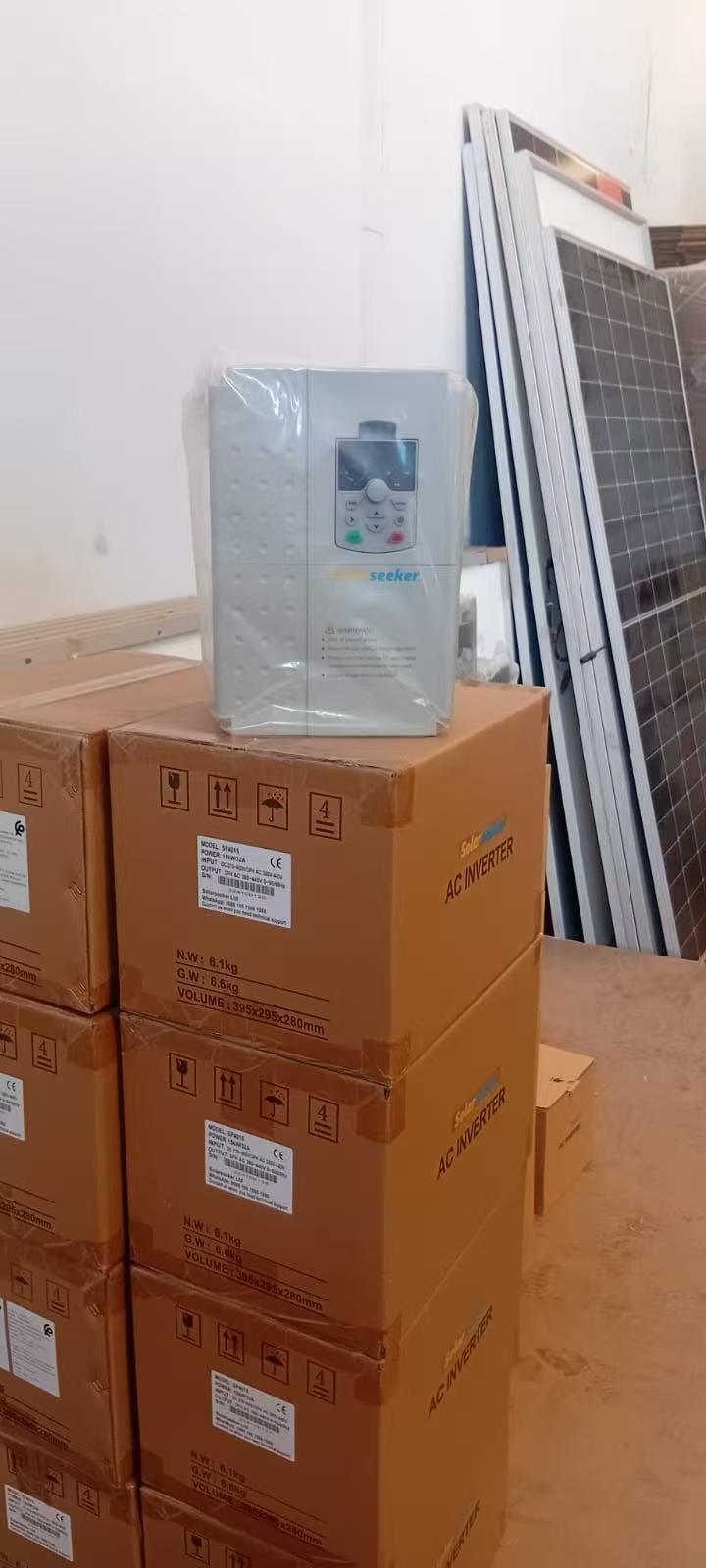
When a standard AC motor is used with a separate inverter, warranty diagnosis has more evidence. The dealer can test motor insulation, read inverter alarms, measure current, and inspect the pump load. That makes the failure discussion clearer.
With a proprietary integrated pump, the failure may be real, but the evidence is often harder to separate. The buyer may not know whether the motor, controller, cable, or hydraulic side caused the stop. That uncertainty is expensive for distributors.
What Procurement Teams Should Ask
- Can the motor be tested locally?
- Can the inverter be replaced without changing the pump?
- Are spare parts available outside one supplier?
- Can the installer document current and insulation readings?
Standard AC Induction Motors vs Proprietary DC Permanent Magnet Designs
The core advantage of standard AC induction motors is 120 years of standardized engineering. Standard IEC and NEMA motor frames adhere to strict dimensional and electrical tolerances. If an AC motor burns out after a lightning strike, a replacement can be purchased off the shelf from any regional pump supplier within hours.
Proprietary DC brushless motors require matching motor controllers with specific Hall-effect sensor feedback or tuned back-EMF profiles. If the controller or motor fails five years later, finding an exact match is frequently impossible, forcing the farm owner to scrap the entire system.
Standard IEC Motor Availability vs Proprietary DC Replacement Supply Chains
The agricultural calendar waits for no one. If an irrigation pump fails during peak crop pollination or mid-summer drought, water must be restored within 24 to 48 hours to prevent total harvest loss.
| Supply Chain Factor | Standard AC Submersible Motor | Proprietary DC Brushless Motor |
|---|---|---|
| Replacement Availability | Off-the-shelf from any regional agricultural pump distributor | Must be shipped from original manufacturer overseas (3 to 6 weeks) |
| Local Repairability | Any local electrical motor workshop can rewind copper stator coils | Requires specialized factory magnetic balancing and rotor alignment |
| Mounting Flange Standards | Standard NEMA 4-inch, 6-inch, and 8-inch connection splines | Custom non-standard shaft splines and proprietary coupling dimensions |
By pairing standard AC induction motors with Solarseeker inverters, EPC contractors eliminate reliance on a single overseas component vendor.
The Safer Buying Path
Before trusting any pump design, ask who can diagnose it, who can replace it, and how fast the site gets water again. Send the motor nameplate and local service conditions to Solarseeker for a model check.