
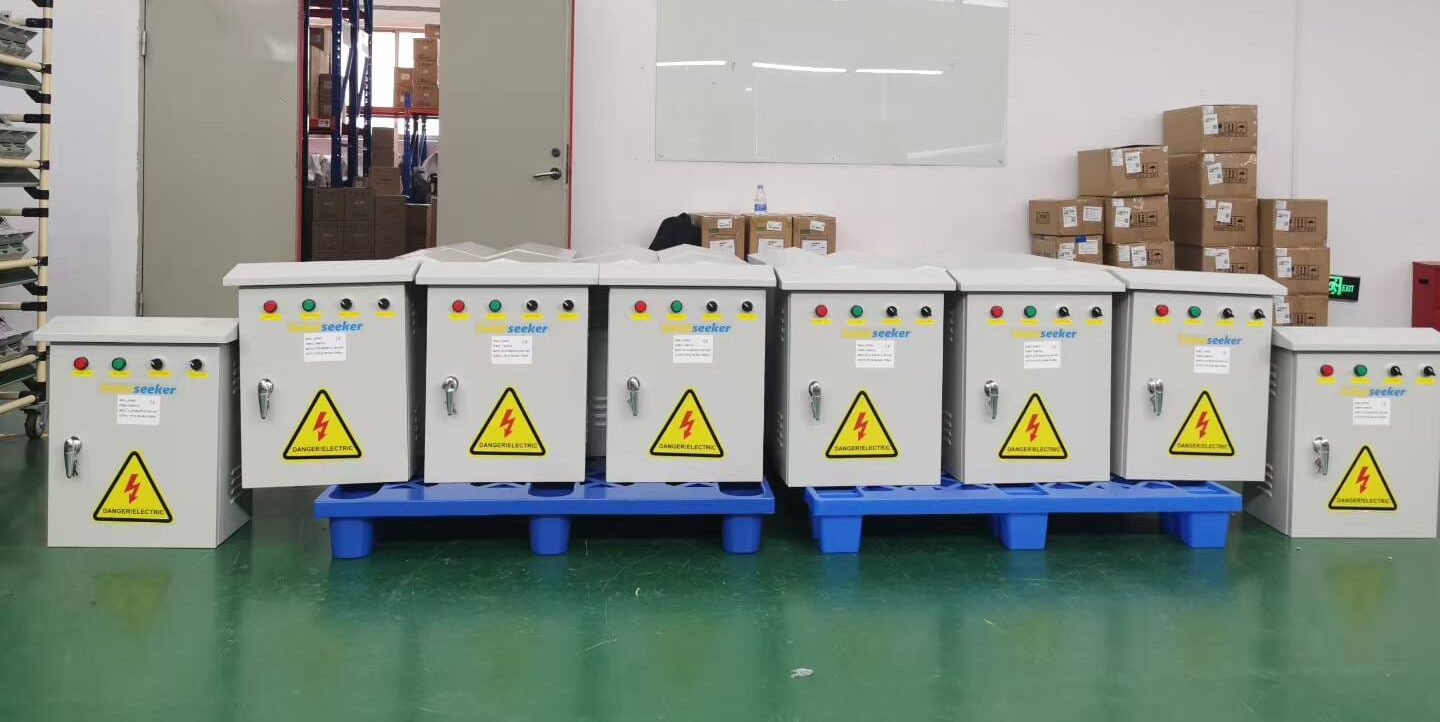
Customers understand AC solar pumping better when you explain serviceability, pump availability, and project scale instead of only saying “AC is better.”
Distributors often need to explain why an AC water pump with a solar inverter is a better choice than a DC pump package for many projects. The explanation must be practical. If it sounds like a slogan, customers will push back.
AC is not better for every small water point. It becomes better when the customer needs standard pump options, higher power, deeper lift, easier local repair, clearer fault diagnosis, or hybrid backup. The sales team should explain the job fit, not argue about technology in general.
When Solarseeker helps distributors prepare local sales material, the first rule is simple: start with the customer’s water problem. Then explain why an AC system solves that problem with less service risk.
Start With the Customer’s Job
Ask what the customer is trying to pump, how high, how far, how often, and who will repair it if it stops. A small tank-filling pump and a commercial irrigation pump do not need the same system.
Once the job is clear, explain how a solar pump inverter lets standard AC pumps run from PV while keeping familiar motor and pump service paths.
Simple Talking Points for Sales Teams
| Customer concern | How to explain AC | Why it matters |
|---|---|---|
| Maintenance | Motor, inverter, cable, and pump can be checked separately | Faster diagnosis |
| Large water demand | AC pumps offer wider power and flow options | Better project scaling |
| Existing pump | Some projects can reuse a standard AC pump after checks | Lower replacement cost |
| Backup power | Grid or generator planning is cleaner at higher power | Better water scheduling |
| Local service | AC motors are familiar to many technicians | Less dependence on proprietary parts |
Explain Serviceability Before Efficiency
Many customers ask about efficiency first. That is normal. But field reliability often depends on serviceability. If a pump stops in a remote farm, the customer needs a technician to find the cause quickly. AC systems make this easier because the inverter, motor, cable, and pump can be tested separately.
That does not mean AC wastes energy. It means the commercial value is bigger than one efficiency number. Water output, uptime, local repair, and spare parts also matter.
Where DC Still Makes Sense
Do not oversell. DC pumps can fit small, simple, low-head projects where the buyer wants a compact package and local replacement is easy. Honest comparison builds trust.
A distributor who admits where DC fits will sound more credible when recommending AC for larger systems.
How to Explain Product Paths
For smaller single-phase projects, point customers toward a suitable 220V path such as SP1. For larger three-phase irrigation or deep-well projects, explain why SP4 or another three-phase path may be more practical.
The product path should follow pump voltage, phase, rated current, head, and flow. It should not start from whichever model is easiest to sell.
Customer Objections and Better Answers
| Customer objection | Weak answer | Better answer |
|---|---|---|
| DC is simpler | AC is always better | DC can be simple for small systems; AC is easier to scale and service for larger jobs |
| AC costs more | Quality costs money | Compare total cost, including service visits, pump replacement, and downtime |
| I already have a pump | Use our inverter | Check pump voltage, phase, current, insulation, head, and flow first |
| I need water after sunset | Add more panels | Review storage tank, grid, or generator backup options |
Use the Right Example for the Right Buyer
A farmer wants to know whether irrigation will finish on time. A pump dealer wants to know whether parts are available. An EPC contractor wants to know whether the system will pass commissioning without repeated callbacks. Use the example that matches the buyer.
For distributor training, the best sales story is usually not a brochure line. It is a clear field example: standard pump, solar inverter, correct panel matching, and a local technician who can diagnose the system.
Avoid the Weak Sales Pitch
Do not tell customers that AC is always better. Tell them when it is better, and why. Standard motor supply, local repair, high-power range, and separate fault diagnosis are stronger arguments than broad claims.
What Sales Teams Should Collect Before Quoting
- Pump power, voltage, phase, and rated current.
- Head, flow, pipe distance, and water source condition.
- Daily water target and irrigation schedule.
- Local grid or generator backup needs.
- Service distance and technician skill level.
- Customer priority: lowest first price, uptime, or long-term service.
Different Buyers Need Different Explanations
| Buyer type | What they care about | Best AC explanation |
|---|---|---|
| Farmer | Water output and simple repair | AC uses familiar pumps and gives more power options |
| Pump dealer | Local stock and service | Standard AC pump supply is easier to support |
| EPC contractor | Commissioning and callbacks | Separate fault diagnosis reduces service confusion |
| Municipal buyer | Uptime and documentation | AC systems fit larger duty points and support records better |
| Distributor | Repeat sales and warranty risk | One inverter range can support many pump applications |
Build a Local Sales Script Around Questions
The best sales teams do not start by talking. They ask good questions. What pump do you have? What voltage? How deep is the well? What flow do you need? Who repairs the pump? Do you need backup power?
After those answers, the AC recommendation becomes natural. The customer can see why the system fits the job.
Training Dealers to Avoid Wrong Promises
Dealers should not promise that any AC pump can run from any solar inverter. The pump must match voltage, phase, current, and duty point. PV voltage must also be designed correctly.
A practical dealer training sheet should include pump nameplate photos, panel matching rules, common fault codes, and the questions to ask before quotation. This is more useful than a brochure full of broad claims.
A Simple Quotation Decision Tree
If the pump is small, low-head, and easy to replace, compare DC and AC honestly. If the pump is larger, three-phase, deep-well, or far from service support, move the discussion toward AC. If the customer already has an AC pump, check whether it can be reused safely before recommending a new pump.
If the customer needs water outside solar hours, discuss storage tank, grid, or generator backup. Do not promise that more panels alone will solve every schedule problem.
How to Keep the Message Consistent Across a Sales Team
Distributors should train every salesperson to use the same core questions and the same comparison logic. Otherwise one salesperson may oversell AC, another may undersell it, and the customer receives mixed messages.
A short internal checklist can prevent this. It should include pump data, site data, customer priority, model path, PV matching needs, and service notes.
FAQ
Is AC solar pumping always better than DC?
No. AC is usually stronger for larger, service-sensitive, high-head, or high-flow projects. DC can fit small simple water points.
Can a customer use an existing AC pump with a solar inverter?
Sometimes. The pump voltage, phase, rated current, insulation condition, head, and flow must be checked before reuse.
How should distributors explain higher first cost?
Compare total cost, not only equipment price. Include service visits, spare parts, replacement risk, downtime, and customer complaints.
Before Your Sales Team Recommends AC
Ask the customer for pump power, voltage, phase, head, flow, site distance, daily water target, and backup needs. If the sales team is unsure, send those details to Solarseeker before promising a system.