
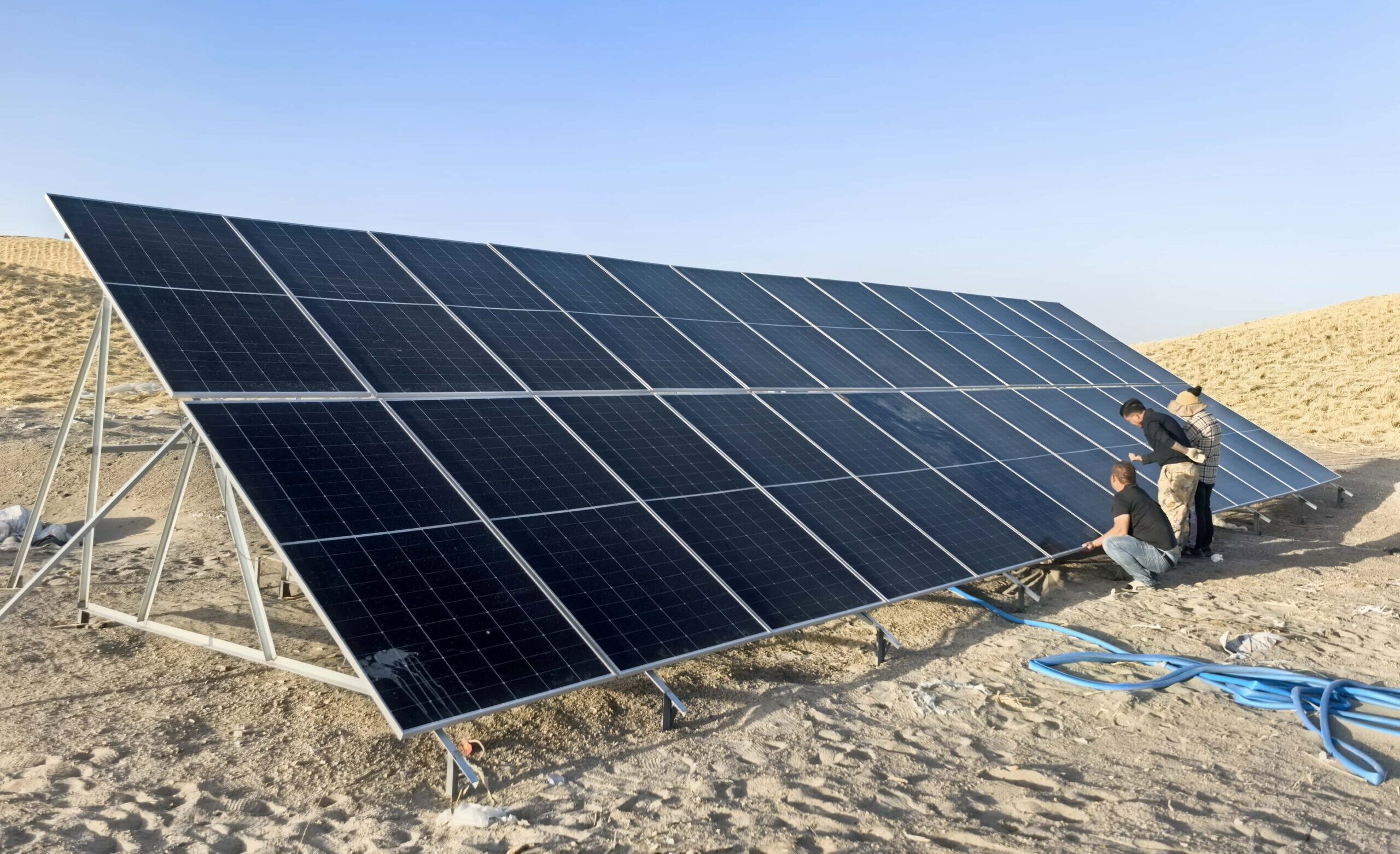
A solar pump inverter for a Pakistan deep-well or tubewell project should be selected from the existing pump nameplate, dynamic water level, total dynamic head, required flow, and daily water demand. For conversion projects, also record the present diesel or grid operating condition before changing the power source or motor-control method.
Start With the Existing Tubewell, Not the Solar Array
Many Pakistan projects begin with an existing agricultural tubewell. The pump may already run from diesel, grid electricity, or a conventional motor starter. Solarization can change the energy source, but it does not remove the pump’s hydraulic load.
The first job is to document what already exists. Photograph the pump and motor nameplates. Record the normal current, discharge pressure, pipe size, water output, and the water level while the pump is running.
Pakistan’s national planning documents describe a large programme for solarizing existing agricultural tubewells. That reinforces the commercial opportunity, but it does not make every tubewell an identical design. Different provinces, aquifers, crops, pumping depths, and motor types require different engineering checks.
The Data Checklist for a Deep-Well Conversion
| Data to collect | Why it changes the design | What evidence to send |
|---|---|---|
| Pump and motor rating | Sets voltage, phase, power, current, and frequency requirements. | Clear nameplate photos. |
| Static water level | Shows resting depth before pumping. | Measured level and well profile. |
| Dynamic water level | Shows drawdown during real operation. | Level measured at the required flow. |
| Total dynamic head | Connects depth, pipe loss, elevation, and outlet pressure. | Well depth, outlet height, pipe route, and fittings. |
| Required flow and daily volume | Defines the actual irrigation target. | m³/h and m³/day. |
| Existing operating current | Helps detect overload, poor voltage, or an unsuitable pump duty. | Measured running current on each phase. |
| Current power source | A diesel and grid conversion can need different switching and control decisions. | Starter, generator, transformer, and cable photos. |
If these values are missing, a quotation can look complete but still fail in the field. Pump kilowatts do not reveal water-table drawdown or pipe loss.
Why Dynamic Water Level Matters
Static water level is measured before pumping. Dynamic water level is the level after the pump has been running at a given discharge. The difference is drawdown.
Designing only from total well depth can oversize or undersize the system. A deep borehole may have a relatively high dynamic water level. A shallower borehole can experience large drawdown during dry periods.
Use the deep-well solar water pumping page as the application destination, then apply the system design workflow to head, flow, and pump-curve checks.
Match the Inverter to the Motor and Duty
Large agricultural tubewells commonly use three-phase motors. A 380 V pump normally enters a product route such as the SP4 380 V three-phase solar pump inverter. The exact model must cover rated current and the real operating load.
Do not replace a starter with an inverter based only on horsepower. Confirm motor insulation condition, cable length, grounding, overload protection, and whether the pump can operate over a variable-speed range.
The PV array must also meet the inverter’s voltage window in hot and cold conditions. Panel count is both a wattage and voltage decision. Use the product datasheet and an engineering check rather than a generic online calculator.
A Practical Conversion Scenario
A pump dealer receives a request to solarize an existing diesel-driven tubewell. The buyer provides a motor power but no nameplate, well level, or flow data. The cheapest response is to quote panels and an inverter from horsepower. It is also the riskiest response.
A better process starts with a site survey. The dealer records motor voltage and current, confirms whether the pump is directly coupled or electrically driven, measures dynamic water level, and checks the irrigation outlet. The buyer also states how many hours and how much water the farm needs.
If the existing motor and pump are suitable, the project may keep them and change the power/control path. If the pump duty is already poor, adding solar will not fix the hydraulic mismatch. The pump may need service or reselection first.
Groundwater Use Must Stay Part of the Design
Solar energy can reduce fuel dependence, but low operating cost can also encourage longer pumping. Pakistan water authorities and international development organisations have highlighted groundwater-management risks around solar tubewells.
The project should connect pumping capacity with crop water demand, aquifer condition, storage, and efficient distribution. Metering, level monitoring, drip or other efficient irrigation methods may be appropriate depending on the farm.
The World Bank’s work on Pakistan’s Indus Basin describes groundwater as central to agriculture and domestic supply. That makes monitoring and water productivity part of responsible solarization, not an optional extra. Review the World Bank groundwater overview for Pakistan.
Electrical and Site Checks Before Commissioning
- Confirm motor voltage, phase, current, frequency, and insulation condition.
- Check cable length, conductor size, grounding, and existing protection.
- Measure PV string Vmp and cold-condition Voc against the allowed inverter range.
- Install level or dry-run protection suitable for the well.
- Protect the inverter from dust, heat, rain entry, flooding, and unauthorized changes.
- Record baseline current, flow, head, and water level at commissioning.
- Train the operator to stop and report repeated alarms.
All wiring, switching, grounding, and commissioning should follow local electrical rules and the equipment manuals. Use qualified electricians or trained technicians. The Solarseeker selection guide shows the buyer data needed before a model is fixed.
FAQ
Can an existing diesel tubewell be converted directly to solar?
It depends on the mechanical and electrical arrangement. If a diesel engine drives the pump directly, the project may need an electric motor and new control equipment. If an electric motor already exists, verify its condition, voltage, phase, current, and pump duty first.
Is well depth enough for sizing?
No. The design needs dynamic water level, discharge elevation, pipe loss, outlet pressure, required flow, and daily volume. Total bore depth alone is not total dynamic head.
Can the original three-phase motor stay?
Often yes, if its insulation, rated current, voltage, frequency, cable, and operating load fit the inverter. A site test and nameplate review are still required.
Should the system pump whenever sunlight is available?
Not automatically. Pumping should follow crop demand, storage capacity, well recovery, and groundwater-management requirements. Controls and monitoring can prevent wasteful operation.
What should a Pakistan distributor send for a quotation?
Send nameplate photos, province and site, current energy source, well depth, static and dynamic water levels, head, flow, daily demand, pipe details, panel proposal, and site photos.
Copy This RFQ Message
Pakistan deep-well project in [district/province]. Existing source: [diesel/grid/other]. Pump motor: [kW/HP], [voltage], [phase], [rated current]. Well depth: [m]. Static level: [m]. Dynamic level: [m]. Total head: [m]. Required flow: [m³/h]. Daily water target: [m³/day]. Pipe: [length/diameter]. Please check the inverter and PV system path.
Ask for a Tubewell Model Check
Send the pump nameplate, well profile, dynamic water level, head, flow, current source, and site photos through the Solarseeker project contact page. A responsible quotation should show both the motor match and the water-demand assumptions.