
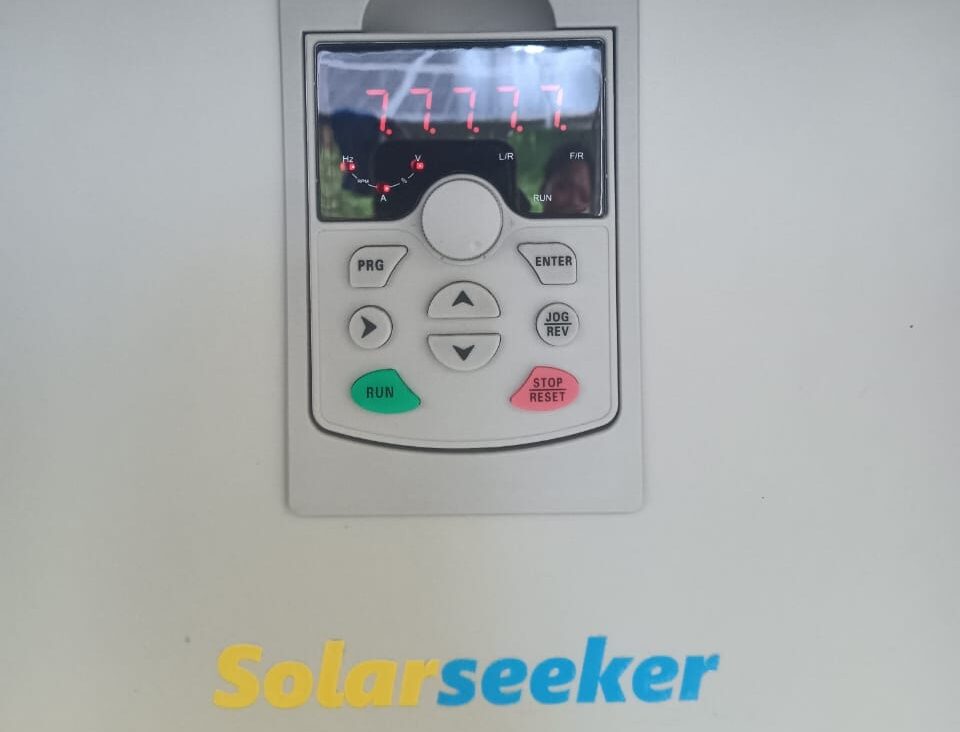
Most inverter error calls become faster when the technician reads the fault code, measures the basics, and separates pump load from inverter failure.
Solar water pump inverter errors are not all product failures. Many field faults come from weak PV voltage, wrong pump matching, overloaded motors, dry-run conditions, wiring mistakes, poor grounding, cabinet heat, or blocked pumps.
For EPC engineers, the right response is simple: record the code, measure input and output, check the pump load, and only then decide whether the inverter needs replacement. Guessing from a phone photo wastes time.
When I review a Solarseeker support case, I do not start by asking whether the inverter is broken. I ask for the fault code, pump nameplate, PV string data, running current, and site photos. That usually shows the direction within minutes.
Start With the Error Code, Then Measure
The display tells you what the inverter detected. It does not always tell you the root cause. A low-voltage alarm can come from a weak PV string. An overload alarm can come from sand, pipe blockage, wrong pump current, incorrect parameters, or a pump working outside its curve.
A modern solar pump inverter gives useful fault information, but the site team still needs basic measurements and a disciplined process.
Common Error Patterns in the Field
| Error symptom | Likely checks | Field consequence |
|---|---|---|
| Starts late or stops in clouds | PV Vmp, panel count, shading, cable loss | Low daily water output |
| Overload trip | Pump current, head, sand, blocked pipe | Motor heating or repeated stops |
| Dry-run alarm | Well level, suction condition, protection setting | Pump damage risk if ignored |
| Over-voltage alarm | Cold-weather Voc and series count | Inverter damage risk |
| Display or keypad issue | Keypad cable, cabinet moisture, terminal condition | Slow diagnosis |
What to Measure Before Calling It an Inverter Failure
- PV string voltage at rest and while running.
- Motor rated current from the nameplate.
- Running current on each phase where applicable.
- Pump voltage and phase against inverter output type.
- Cable length, terminal tightness, and grounding condition.
- Recent changes to pump, pipe, well level, or parameters.
For larger three-phase systems using a path such as SP4, current measurement is especially important. A high-power inverter should not be blamed before the pump load is checked.
Low Voltage Is Often a PV Problem
If the inverter starts late, runs weakly, or stops when clouds pass, check PV voltage before replacing equipment. The panel array may have low Vmp, shading, wrong series count, loose connections, or long cable voltage drop.
Do not check only panel wattage. The inverter needs useful voltage inside its operating range. A system can have enough panel watts on paper and still fail because the string voltage is wrong.
Overload Is Often a Pump or Hydraulic Problem
Overload does not always mean the inverter is too small. It can mean the pump is loaded harder than expected. Sand, blocked valves, pipe restrictions, high head, worn bearings, or wrong pump selection can all increase current.
Compare running current with the pump nameplate. If current is high, inspect the water path and pump condition before changing inverter settings.
Overcurrent Detected in a Solar Pump: What to Check First
An overcurrent alarm means the drive has measured more current than the permitted operating condition. Start with the pump nameplate and compare it with the running current on each phase where applicable. Then check whether head, a blocked valve or pipe, sand, bearing wear, or a pump operating outside its expected duty is increasing the load.
Do not raise protection limits or keep resetting the inverter before the load is understood. If the alarm began during first start, after a wiring change, or after parameters were changed, use the solar pump inverter installation guide to recheck the model, pump voltage, phase, PV input, and commissioning sequence.
Dry-Run Alarms Need Water Source Review
Dry-run protection is meant to protect the pump. If the alarm repeats, check well level, suction condition, water recovery time, sensor condition if used, and restart timing. Do not simply disable protection to keep the pump running.
Repeated dry-run operation can damage seals and pump parts. The alarm is a warning, not an annoyance.
Do Not Clear Alarms Blindly
Repeated reset without diagnosis can damage the pump or motor. If the inverter is protecting against overload, dry-run, or over-voltage, the alarm is doing its job. Find the reason before forcing the system to run again.
Safe Troubleshooting Sequence
- Record fault code and operating condition.
- Photograph inverter display, wiring cabinet, pump nameplate, and PV array.
- Measure PV voltage only with qualified personnel and proper safety practice.
- Check motor current and compare it with the pump nameplate.
- Inspect water source, pipe route, valve position, and pump load.
- Review parameter changes and restart behavior.
- Escalate with evidence if the fault repeats.
Electrical checks must follow local codes and should be handled by qualified electricians or trained technicians. This article is a diagnosis guide, not a substitute for site safety rules.
Three Field Misjudgments That Waste Time
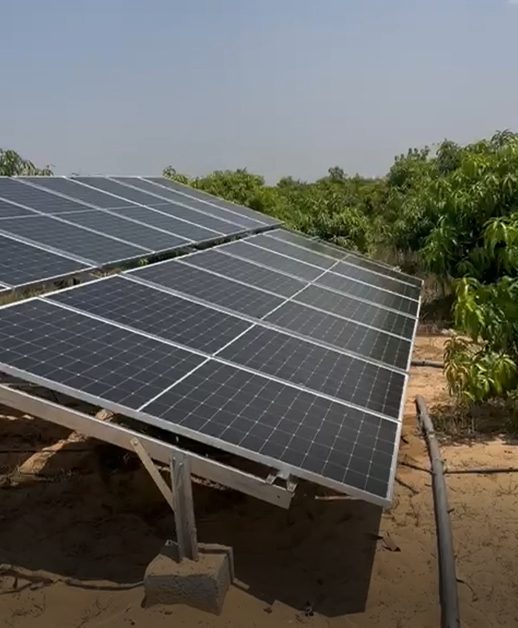
The first misjudgment is replacing the inverter when the PV array is weak. The second is increasing overload limits when the pump is actually blocked or overloaded. The third is disabling dry-run protection because the customer wants water immediately.
All three create risk. They may make the system run for a short time, but they do not solve the cause. A good EPC engineer protects the pump and the customer, not only the day's output.
Evidence Package for Remote Support
When the site is far away, the support evidence must be complete. Send one clear package instead of ten scattered messages. Include display photo, fault code, pump nameplate, PV string count, panel datasheet if available, running current, cabinet photo, and a short description of weather and water source conditions.
| Evidence | Why support needs it |
|---|---|
| Fault code photo | Shows protection event |
| Pump nameplate | Confirms voltage, phase, current |
| PV string data | Checks voltage window |
| Running current | Checks pump load |
| Cabinet photo | Checks wiring, heat, moisture, and installation |
Heat and Cabinet Conditions Matter
Some errors appear only during the hottest part of the day. If the cabinet has poor ventilation, direct sun, dust blockage, or tight spacing, thermal stress may trigger faults or shorten component life. Check the environment before assuming the inverter is defective.
When the Error Appears Matters
Ask when the fault appears. Startup faults often point to PV voltage, parameters, or motor starting conditions. Noon faults may point to heat, overload, or water source changes. Faults after several minutes may point to pump load, dry-run behavior, or cabinet temperature.
This timing clue is simple, but it helps engineers avoid chasing the wrong cause.
Before Replacing Hardware
Before replacing the inverter, confirm that PV voltage is inside range, motor current is reasonable, wiring is tight, grounding is acceptable, and the pump is not blocked or running dry. Hardware replacement should be the result of diagnosis, not the first guess.
This protects both the EPC team and the customer. It also prevents a new inverter from being installed into the same bad site condition.
Keep a Fault Log
For repeat projects, keep a simple fault log by site. Record date, weather, fault code, measured current, PV voltage, action taken, and result. Patterns appear quickly when the same fault repeats across similar sites.
FAQ
Does an inverter fault code always mean the inverter is damaged?
No. Fault codes often show protection events caused by PV voltage, pump load, dry-run, wiring, heat, or parameters.
Why does overload repeat after reset?
The pump may be drawing too much current because of high head, sand, blockage, wrong pump selection, or mechanical wear.
What information should EPC engineers send for support?
Send fault code, pump nameplate, PV string data, running current, site photos, and a short description of when the fault appears.
Product Path After the Diagnosis
If the fault is caused by wrong voltage, phase, or load matching, do not replace parts blindly. Recheck the solar pump inverter family against the pump nameplate. Many 380V three-phase field faults should be reviewed against the SP4 path, while smaller 220V systems need a different model check.
| After diagnosis | Next check | Useful page |
|---|---|---|
| PV voltage problem | String Vmp and Voc | Panel matching guide |
| Motor overload | Nameplate current and pump duty point | Selection guide |
| Repeated installation faults | Wiring, grounding, cabinet heat | Installation guide |
When to Escalate to Engineering
Escalate when the fault repeats after basic checks, when the site has unusual voltage, when the pump current is close to the inverter limit, or when the installation team cannot confirm wiring and grounding. Send fault photos, pump nameplate, PV string data, and running current to Solarseeker for a cleaner diagnosis.