
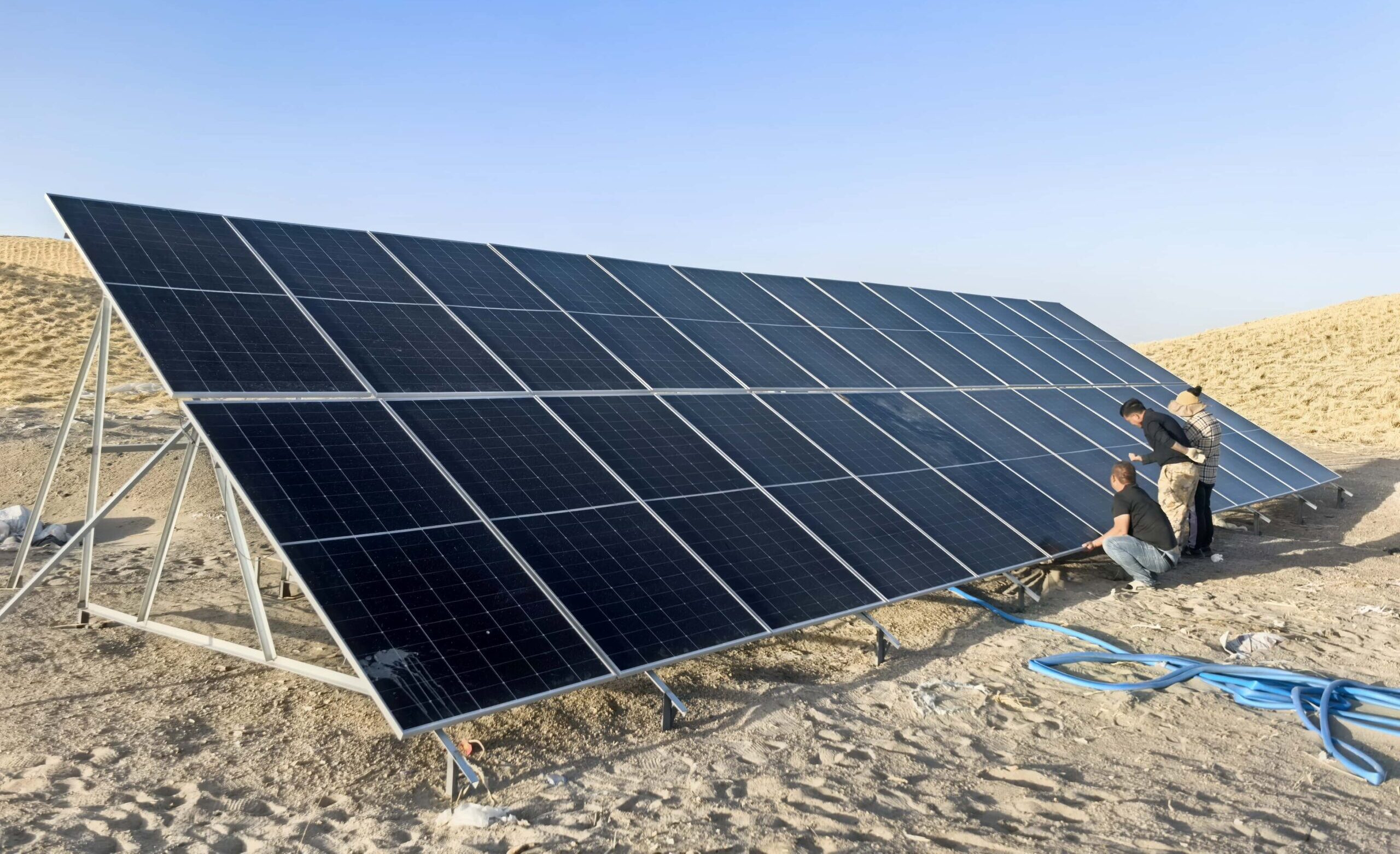
Converting a Pakistan tubewell from a smoking Peter diesel engine to solar is one of the highest-ROI investments a farmer can make—if the inverter is sized for real Punjab ground realities.
In Pakistan’s primary agricultural belts across Punjab and Sindh, tubewell pumping faces two severe site realities: rapidly dropping groundwater tables and summer temperatures frequently exceeding 45°C. Selecting a solar pump inverter based merely on the horsepower of an old diesel engine inevitably leads to mid-day thermal throttling, low flow rates, and electrical callbacks.
This guide explains how EPC contractors and tubewell installers should evaluate Indus Basin groundwater dynamics, motor rated amps, and ambient heat before selecting a drive. For robust agricultural installations, explore our Solarseeker SP4 380V three-phase inverter series and the full solar water pump inverter product path.
Groundwater Depletion in Punjab: Sizing for Dynamic Drawdown
Over the past decade, intensive tubewell pumping in districts such as Multan, Lodhran, Sahiwal, and Bahawalpur has caused groundwater tables to drop by 20 to 50 feet or more. A tubewell that previously produced 1 cusec of water at 60 feet may now operate at a dynamic level of 120 to 150 feet during peak cotton and rice season.
When converting an existing borehole, never calculate head based on the static water level observed when the pump is off. Once pumping begins, aquifer drawdown creates a substantial cone of depression:
- Measure the dynamic water level after at least 2 hours of continuous diesel or grid operation.
- Add vertical delivery head up to the field delivery channel or water storage tank.
- Account for friction losses through the existing delivery pipe column.
Underestimating dynamic head means the solar pump inverter will run at high frequency (50 Hz) but deliver only a fraction of the required discharge.
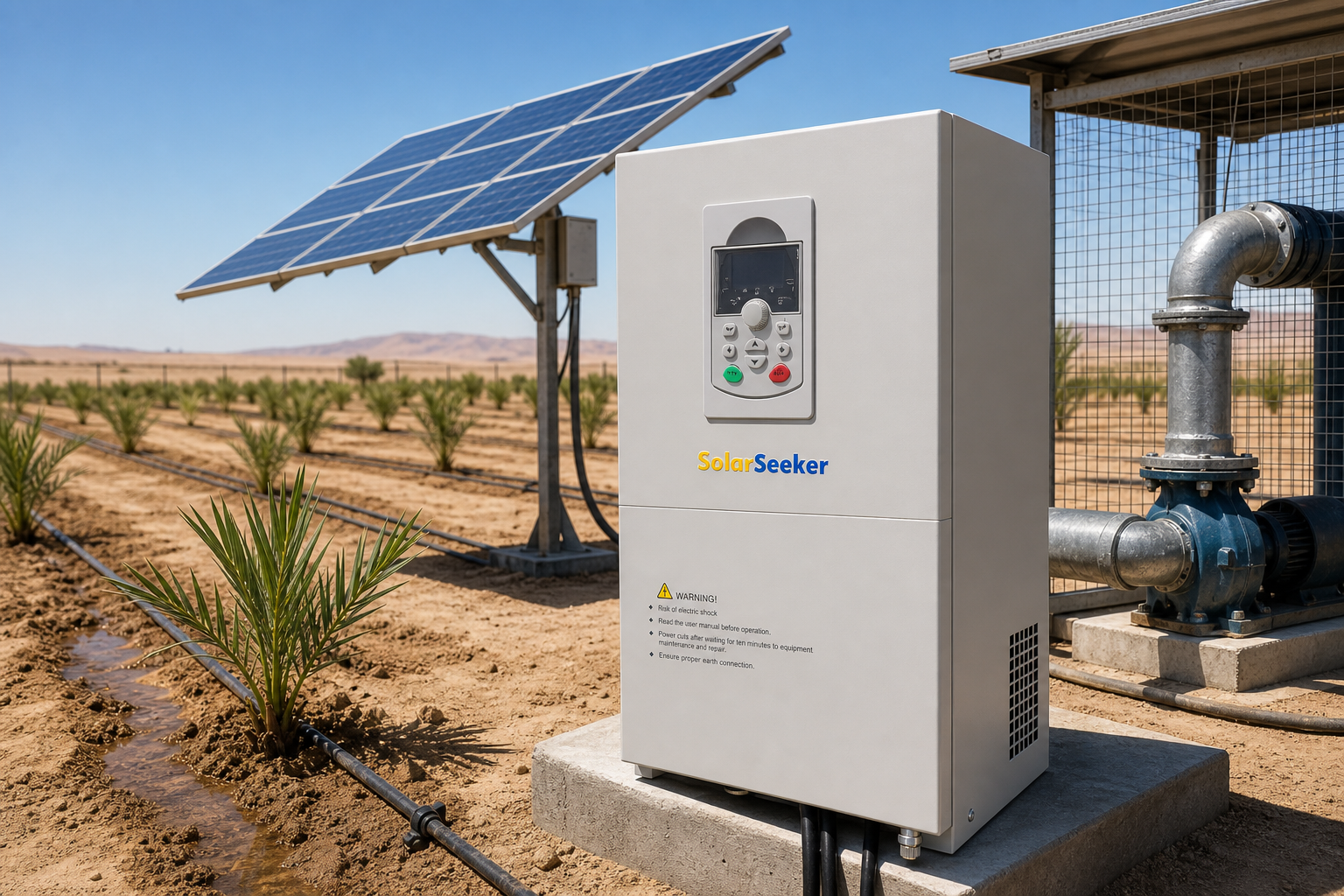
Handling 45°C+ Ambient Summer Heat in Multan and Sindh
In southern Punjab and Sindh, daytime temperatures routinely hit 45°C to 48°C during peak irrigation months. Standard commercial VFDs with undersized heat sinks begin thermal derating at 40°C, automatically throttling output frequency and cutting water flow right when crops need it most.
To ensure full 50 Hz operation under extreme Pakistani field conditions, follow these three enclosure rules:
- Dual High-Velocity Cooling Fans: The inverter must feature independent cooling channels that isolate sensitive control boards from dusty airflow while blasting high CFM across the power IGBT heat sink.
- Double-Door Ventilated Canopy: Never mount an inverter exposed to direct sunlight. Use an IP54 outdoor cabinet equipped with a secondary sunshade roof, louvered side vents, and washable dust filters.
- One-Step Frame Upsizing: For 15 kW (20 HP) tubewells running in extreme heat zones, consider upsizing the inverter drive to 18.5 kW. This ensures the IGBT modules operate well below their thermal saturation threshold.
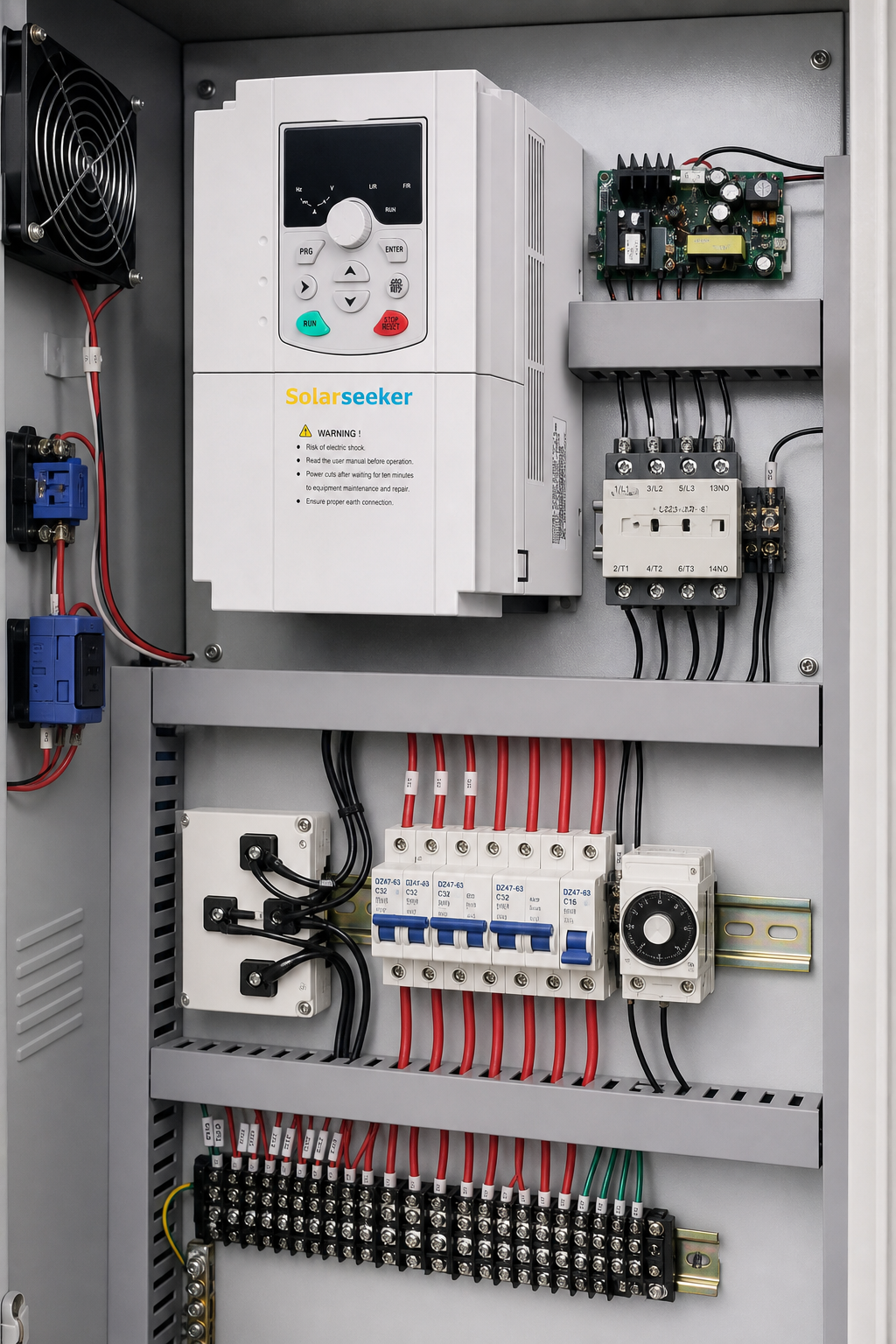
Hybrid Solar and Grid/Generator Switching for Wheat and Cotton
In Pakistan, uninterrupted irrigation during critical crop stages (such as wheat flowering or cotton boll formation) cannot pause for monsoon rain or winter haze. Agricultural systems frequently integrate an AC/DC dual-supply manual or automatic transfer switch.
This allows the farmer to run the tubewell on free solar power from 8:00 AM to 5:00 PM, and switch seamlessly to WAPDA grid power or a backup diesel generator for night irrigation when canal water shares (Warabandi) open up. Solarseeker inverters are engineered to handle high transient DC bus voltages during dual-source switching.
PV Sizing Guidelines for Pakistan Tubewell Projects
| Tubewell Motor Size | Recommended Solar Array | DC String Configuration | Typical Water Output (Head < 35m) |
|---|---|---|---|
| 7.5 kW (10 HP) 380V | 10.5 kW to 11.5 kW PV | Around 540V–580V DC Vmp | 400–600 Gallons/min (1 cusec approx) |
| 11 kW (15 HP) 380V | 15.0 kW to 16.5 kW PV | Around 540V–580V DC Vmp | 700–900 Gallons/min |
| 15 kW (20 HP) 380V | 20.0 kW to 22.5 kW PV | Around 540V–580V DC Vmp | 1000–1200 Gallons/min |
| 18.5 kW (25 HP) 380V | 25.0 kW to 28.0 kW PV | Around 560V–600V DC Vmp | 1300–1500 Gallons/min |
Review proven agricultural case studies on our solar water pump projects page.
Frequently Asked Questions
Can I keep my existing local Pakistani electric motor when converting to solar?
Yes, provided the motor is a three-phase 380V induction motor in good mechanical condition. However, locally rewound motors often have lower insulation resistance and higher running current. Always measure actual full-load amps with a clamp meter under load before selecting the inverter model.
How do I protect the solar panels and inverter from lightning in open fields?
Agricultural fields in Punjab are vulnerable to seasonal thunderstorm lightning. Install a dedicated 16 mm² copper earth grounding rod driven at least 8 to 10 feet into moist soil, bonding the panel structure, cabinet enclosure, and inverter earth terminal.
What is the payback period for a solar tubewell conversion in Pakistan?
With diesel fuel prices and WAPDA agricultural electricity tariffs continuously rising, most 15 HP to 25 HP tubewell conversions achieve complete capital payback within 14 to 20 months of regular irrigation operation.
What EPCs and Farmers Should Send for a Quote
To receive a verified inverter selection and string design for your Pakistan tubewell project, gather these four site parameters:
- Tubewell Delivery Pipe Size & Discharge Goal: (e.g. 4-inch, 5-inch, or 6-inch pipe; desired cusec flow).
- Total Dynamic Depth: Measured depth to water during active pumping.
- Motor Nameplate Current (FLA): Measured running amps under existing diesel/electric operation.
- Available Solar Panel Specifications: Wattage and quantities planned.
Send your project data directly to our technical team via the Solarseeker contact page. We will prepare an engineering proposal tailored to local provincial water conditions.