
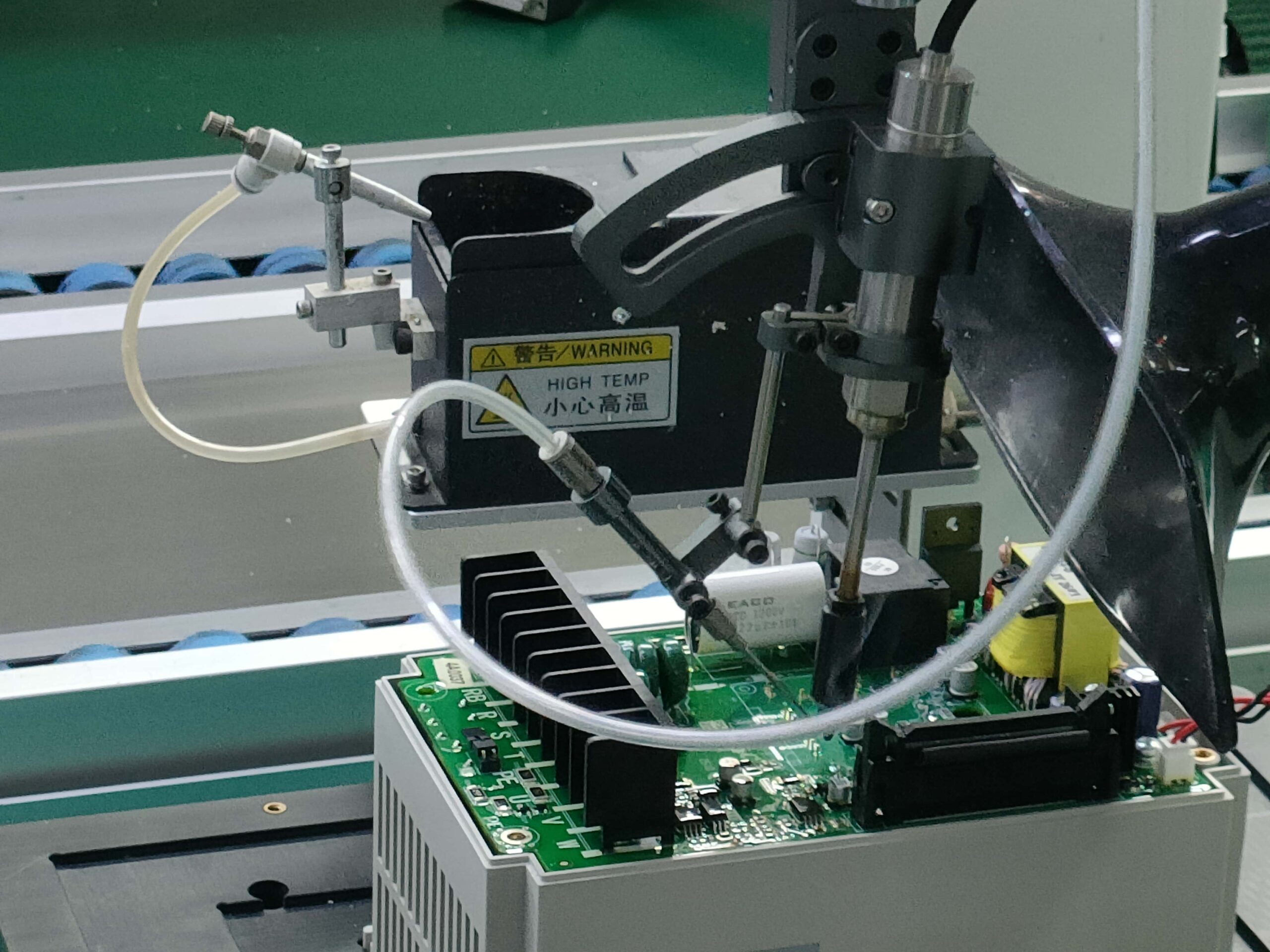
A field guide for EPC teams checking duty point, pump curve, pipe loss, and inverter fit before quoting a solar pumping system.
Head and flow are not enough for inverter selection because they only describe the target duty point. The pump curve shows whether the pump can reach that point efficiently. The inverter must then match the pump motor, current, voltage, and PV input. A solar pump inverter cannot fix a pump chosen outside its curve.
The Common Mistake: Treating Head and Flow as the Whole Design
A buyer sends two numbers: required head and required flow.
That looks useful, and it is. But it is not the full selection. Those two numbers tell you where the system needs to operate. They do not prove that the selected pump can work there.
The missing document is the pump curve.
The pump curve shows how the pump behaves at different flow rates and heads. It also helps the engineer see whether the required duty point sits inside a stable working area. If the duty point is too far from the pump’s useful range, the system may run, but water output and motor load can become unreliable.
For full system planning, Solarseeker’s solar pump system design guide is the main pillar path to review.
Head, Flow, and Pump Curve Decision Table
| Buyer data | What it tells you | What it does not tell you | Field risk if ignored |
|---|---|---|---|
| Required head | Lift and pressure target | Whether the pump can reach that head at the needed flow | Weak output or no useful water |
| Required flow | Daily or hourly water target | Whether the pump curve supports that flow at the target head | Pump runs outside the efficient range |
| Pump curve | Relationship between head and flow | Motor voltage, phase, and inverter input needs | Wrong inverter or wrong pump path |
| Pipe route | Friction loss and hidden head | Pump motor compatibility | Underestimated total dynamic head |
| Pump nameplate | Voltage, phase, power, current, frequency | Whether the hydraulic duty point is correct | Phase mismatch, overload, or trips |
| PV string plan | DC input voltage and power | Whether the selected pump is hydraulically suitable | Late starts, sleep mode, or over-voltage |
This table is the reason the duty point is only the start.
The final selection needs three matches at the same time: hydraulic match, motor match, and PV input match.
What a Pump Curve Actually Does
A pump curve is a map of pump behavior.
At one point on the curve, the pump may deliver high flow at low head. At another point, it may deliver lower flow at higher head. The useful operating area is not unlimited.
In the field, the most important point is the duty point.
Duty point means the required flow at the required total dynamic head. When the pump curve passes through that point in a suitable operating range, selection can move forward. Otherwise, the buyer should change the pump before choosing the inverter.
The inverter controls motor speed and protects the pump. It does not create a new pump curve from nothing.
This is why “same kW” is not enough. Two pumps with the same motor power can have different curves. One may suit a deep well. Another may suit lower head and higher flow.
The curve also helps avoid a second problem: choosing a pump that barely touches the duty point but works at the edge of its useful range.
That kind of selection can create noise, heat, unstable flow, or frequent service calls. It may also leave no margin when the water level drops, a filter gets dirty, or the pipe route changes.
For irrigation projects, a small curve mismatch can become a daily water problem. The pump may not fail immediately. Instead, it may run longer, deliver less water, and make the buyer think the inverter is weak.
Where the Inverter Fits After the Pump Curve
Once the pump curve supports the duty point, the inverter selection becomes more meaningful.
The engineer should check:
- Pump motor voltage.
- Pump phase.
- Rated current.
- Rated frequency.
- Starting and running load.
- Cable distance.
- Protection requirements.
- PV input range.
For larger 380V three-phase pumps, Solarseeker’s SP4 solar pump inverter is often the product path to check first. It is especially relevant for deep wells, larger irrigation systems, and higher-power agricultural projects.
However, the SP4 path still depends on the pump and site data. A wrong pump curve at the duty point cannot be repaired by choosing a larger inverter.
For model selection workflow and buyer data preparation, the solar pump selection guide gives a broader checklist.
PV Array Matching Still Matters
After the pump and inverter path are clear, the PV array must support the system.
Use the starting rules below when the topic includes inverter sizing, pump voltage, panel matching, weak output, or commissioning behavior.
| Pump system | PV array power starting rule | Useful Vmp target |
|---|---|---|
| 220V single-phase pump | PV Array Power >= Pump Rated Power x 2.0 | Around 320V DC Vmp |
| 380V three-phase pump | PV Array Power >= Pump Rated Power x 1.3 to 1.5 | Around 540V DC Vmp |
These rules do not replace the inverter manual or final string design.
Panel Voc, Vmp, temperature, cable distance, inverter input range, and water schedule still need to be checked. A system can have the correct pump curve and the correct inverter, yet still start late if PV working voltage is too low.
Field Example: Flow Is Given, but the Pump Cannot Reach It
An EPC team receives a request for a solar irrigation system.
The buyer gives a required flow and a rough head estimate. The first supplier quotes an inverter by motor power. On paper, the kW looks close.
Then the pump curve is checked.
At the required head, the selected pump cannot deliver the requested flow. If the team continues with that pump, the inverter may run correctly, but the water target will still be missed. Increasing inverter size will not move the pump into a healthy operating range.
The better path is to change the pump selection first. After the pump curve supports the duty point, the inverter can be matched by voltage, phase, current, and PV input.
This example is common in deep-well and irrigation projects. The buyer thinks the problem is inverter size. The real issue is pump curve fit.
What EPC Teams Should Send Before Quoting
Before an inverter recommendation, send the design data together.
Ask for:
- Pump curve or pump model datasheet.
- Required flow.
- Total dynamic head, not only well depth.
- Pipe length, pipe diameter, fittings, and elevation change.
- Pump nameplate photo.
- Pump voltage, phase, rated current, and frequency.
- Water source and dry-run risk.
- PV module Voc, Vmp, power, and planned string layout.
- Cable distance between inverter and motor.
This package lets the engineer check the hydraulic side and the electrical side at the same time.
Safety and Commissioning Note
Pump curve review is a selection task, not a wiring shortcut.
Commissioning still needs qualified technicians, correct grounding, protection devices, cable checks, and local electrical-code compliance. If the site has long motor cables, unstable water level, or mixed power sources, check the inverter manual and use trained installers.
FAQ
What is a pump curve in inverter selection?
A pump curve shows how a pump’s flow changes as head changes. In inverter selection, it helps confirm whether the pump can reach the required duty point before the inverter is matched to the motor.
Are head and flow enough to choose a solar pump inverter?
No. Those values describe the target, but they do not prove the pump can operate there. You also need the pump curve, pump nameplate, pipe route, motor current, voltage, phase, and PV string plan.
Can a solar pump inverter fix a wrong pump selection?
No. A solar pump inverter can control motor speed and protect the pump, but it cannot make a pump deliver water outside its hydraulic curve. When the pump selection is wrong, change the pump first.
Why does pipe loss matter if I already know head and flow?
Pipe loss can increase the real total dynamic head. If it is not included, the duty point may be too low on paper, and the selected pump may fail to deliver the required flow in the field.
What should I send before asking for inverter sizing?
Send the pump curve, pump nameplate, required head and flow, pipe route, cable distance, PV module Voc and Vmp, planned string layout, and site conditions. These details let the engineer check both pump fit and inverter fit.
Data to Confirm Before Production
Before production or ordering, send Solarseeker the pump curve, pump nameplate, head, flow, pipe route, cable distance, PV module data, and planned string layout through the contact page. That gives the engineer enough information to check whether the pump curve and inverter selection match the same duty point.