
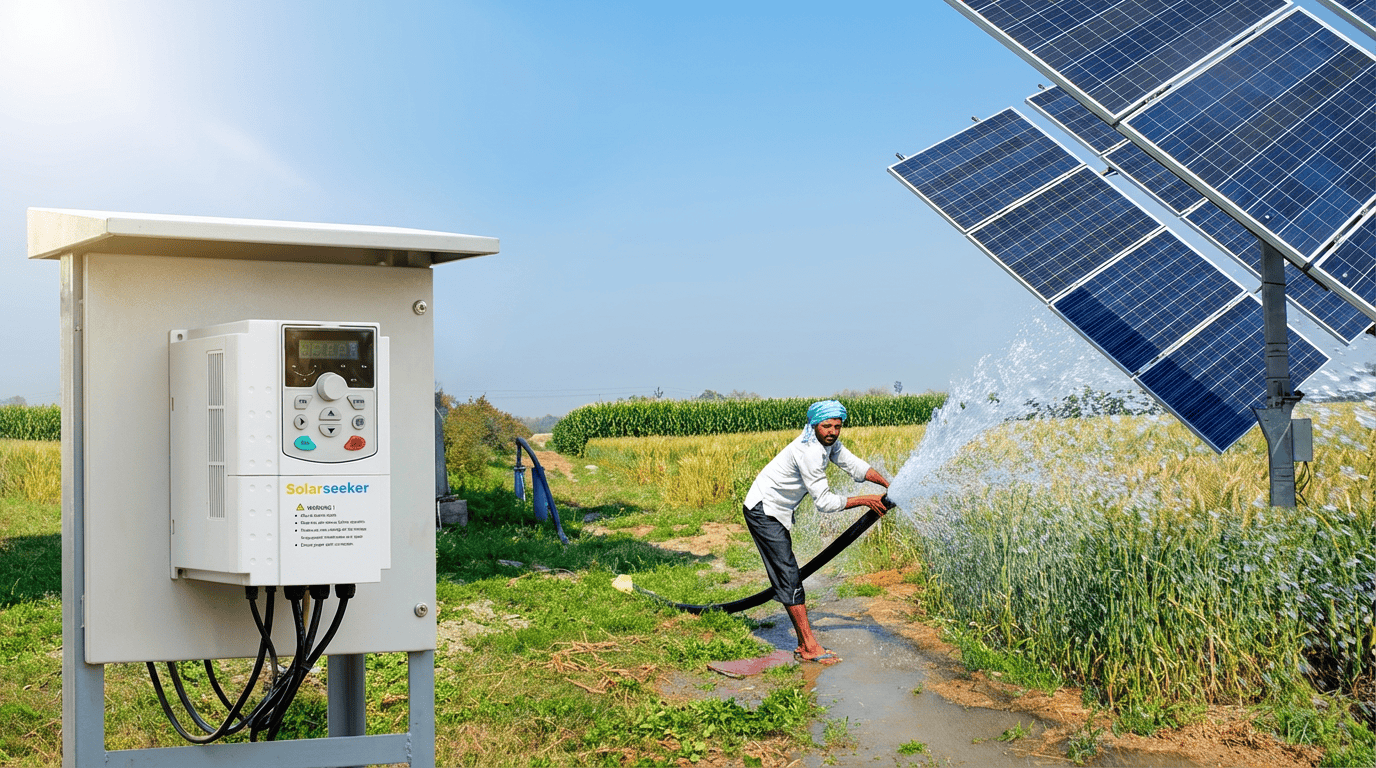
The cheapest solar pump system is only cheap if it keeps producing water without expensive service surprises.
The lowest first quote can become the most expensive option after one failed season. Weak output, proprietary parts, replacement freight, and repeated site visits all belong in the cost calculation.
To compare AC and DC solar pump systems fairly, calculate total cost of ownership. Count purchase cost, installation labor, PV mounting, wiring, service trips, downtime, spare parts, and replacement risk.
The TCO Formula
Total Cost of Ownership = Purchase Cost + Installation Cost + PV/Mounting Cost + Service Cost + Downtime Cost + Replacement Cost
Do not argue about inverter price alone. The inverter price is only one line in the project cost.
Where the Hidden Costs Appear
| Cost item | Who feels it | When it appears |
|---|---|---|
| Extra PV modules | EPC team | During mounting and wiring |
| Service visits | Dealer and farmer | After alarms or weak output |
| Proprietary spare parts | Distributor | During warranty support |
| Downtime | End user | When crops or livestock need water |
| Wrong voltage or phase | Importer | After shipment and installation |
When AC Often Wins the Long Game
AC systems often win when the pump is large, three-phase, already installed, or far from the supplier. Standard motors, modular inverters, and readable fault data reduce uncertainty.
The solar pump inverter choice should be checked with pump power, voltage, phase, service distance, and yearly runtime. For larger three-phase systems, the SP4 path is often part of that review.
Where DC Can Still Be the Better Fit
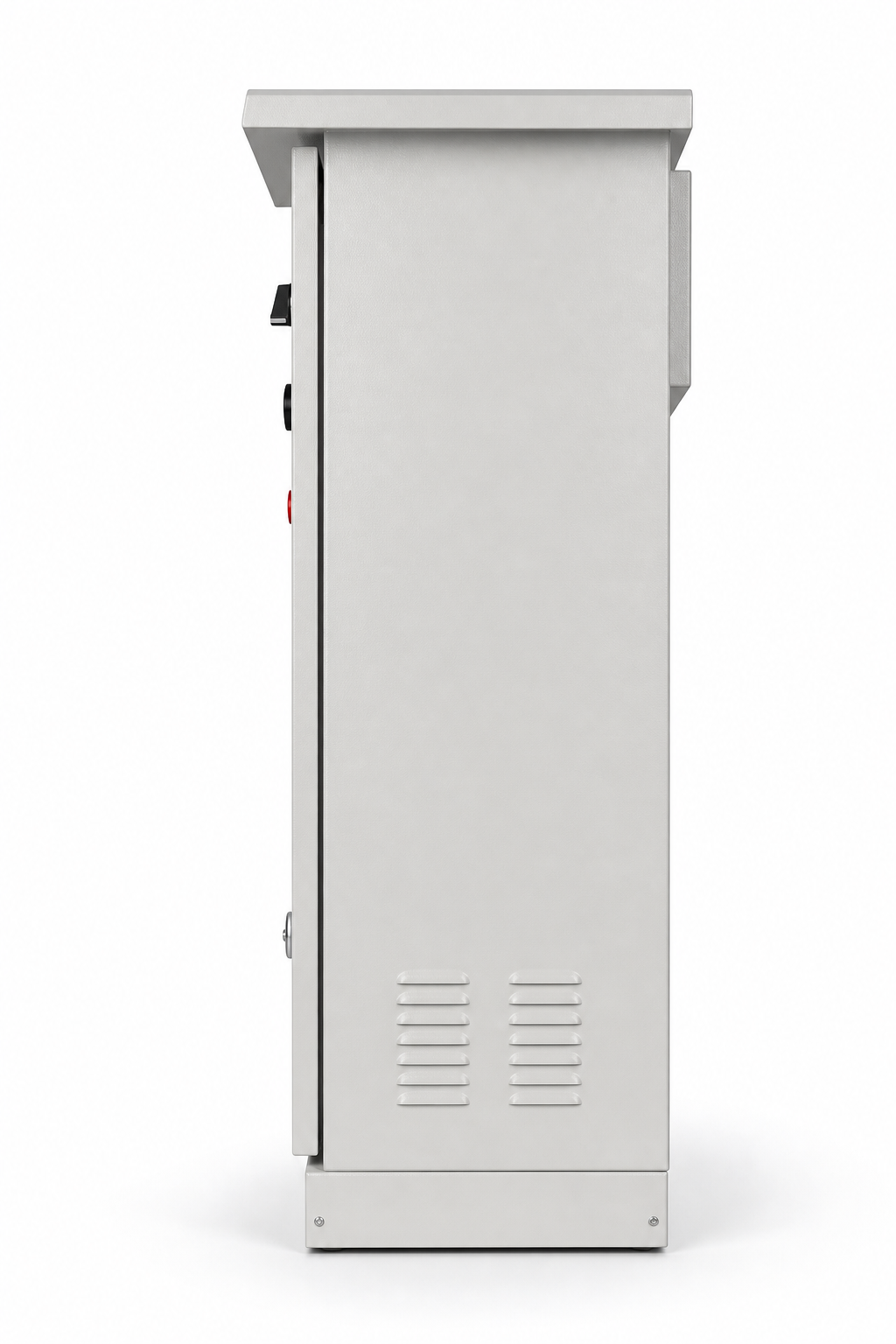
Small water points, low head, short service distance, and modest water demand may still fit DC packages. The point is not to reject DC everywhere. The point is to stop using small-system economics for large or remote projects.
ROI Questions Before Procurement
- How far is the site from service support?
- Who stocks replacement parts?
- How many hours must the pump run each day?
- What happens if water stops for three days?
- Can the motor and inverter be replaced separately?
Who Pays for the Hidden Cost?
Hidden cost does not disappear. It moves to someone else. If the system is undersized, the farmer pays through weak water output. If spare parts are proprietary, the distributor pays through inventory and warranty pressure. If the wiring or voltage is wrong, the EPC team pays through rework.
A useful ROI comparison names who carries each risk. That makes the purchase decision more honest. The best system is not always the lowest quote; it is the system that keeps water moving with a service path the local team can support.
When a Higher First Price Is Reasonable
- The site is remote and truck rolls are expensive.
- The pump is three-phase or high power.
- Downtime affects crops, livestock, or municipal supply.
- The buyer needs local motor and inverter service.
- The project will run for many seasons, not one trial period.
Total Cost of Ownership (TCO) Breakdown: AC vs DC Over a 10-Year Horizon
While an integrated DC solar pump kit may feature a lower upfront purchase price for residential hobby farms, commercial EPCs evaluate 10-year Total Cost of Ownership. When factoring in pump replacement frequency, cable costs, and crane mobilization fees, AC systems deliver a significantly lower cost per cubic meter of pumped water.
| 10-Year Lifecycle Expense | DC Integrated Pump System | AC VFD Solar Inverter System |
|---|---|---|
| Initial Equipment Capex | Moderate (packaged kit) | Competitive (standard motor + inverter) |
| Drop Cable Copper Expense | High (thick gauge required for low voltage) | Low (high voltage allows thin, economical cable) |
| Year 4-6 Motor Replacement | High (must replace entire integrated pump/motor) | Low (standard AC motor repair or local replacement) |
| 10-Year Net Cost per m³ Water | $0.08 – $0.12 / m³ | $0.03 – $0.05 / m³ |
Before You Accept the Lowest Quote
Add the hidden cost lines first. If the site is large, remote, or service-sensitive, send pump power, yearly runtime, service distance, and replacement concerns to Solarseeker before choosing the system.