
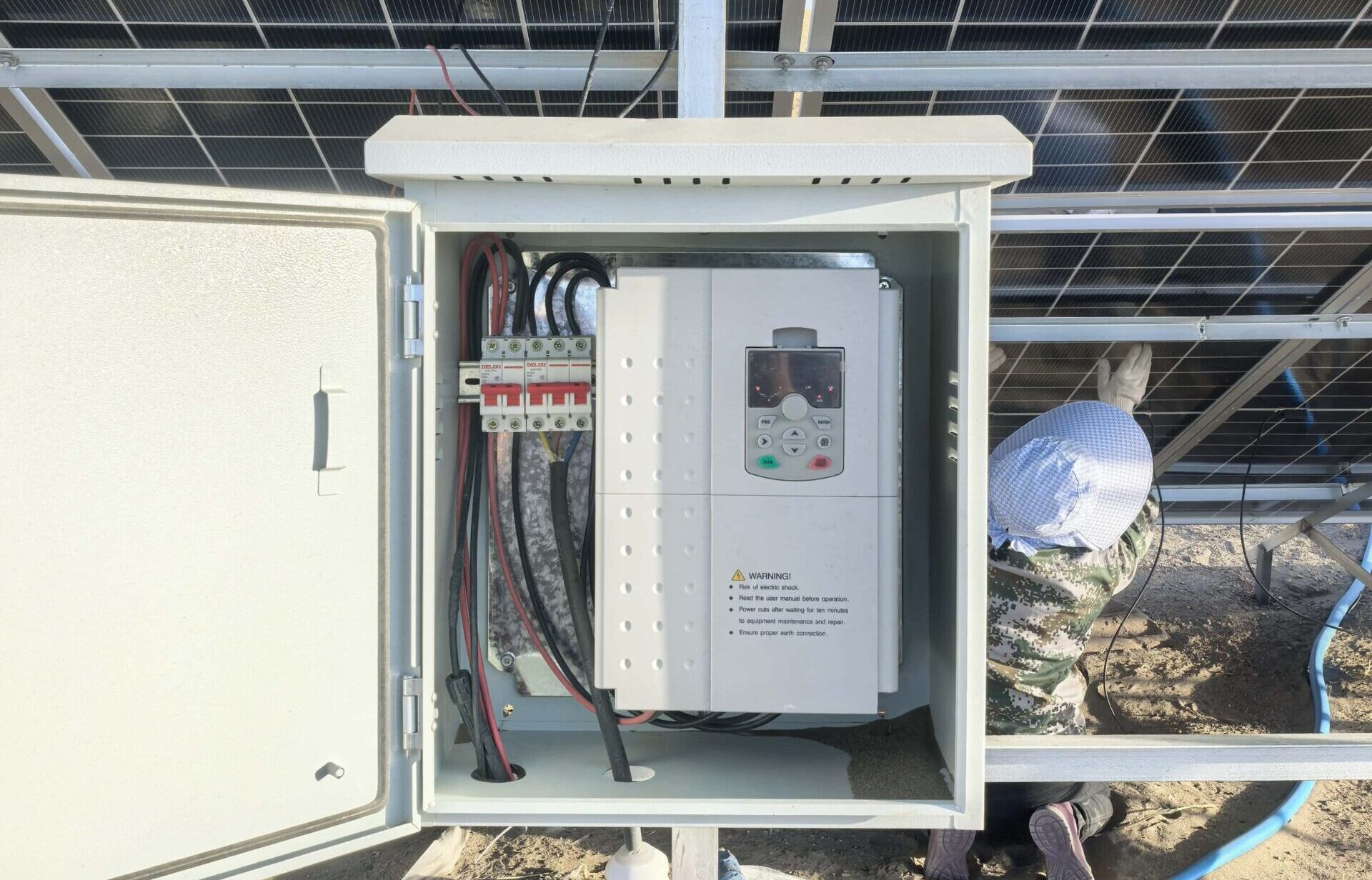
What should an EPC or distributor check before trusting a solar pump inverter manufacturer? Not the brochure first. Start with whether the supplier can help your team avoid wrong model selection, bad panel matching, unclear wiring, and slow after-sales support.
Evaluate a solar pump inverter manufacturer by product fit, technical documentation, model selection support, PV matching ability, protection logic, project experience, response speed, spare-part handling, and channel support. For EPC and distributor work, a supplier must reduce project risk, not only offer a low unit price.
This is a practical procurement check, not a factory beauty contest.
What I Check First
When a distributor asks about a manufacturer, I look at how the supplier handles the first technical question.
If the answer is only “What power do you need?”, the support is weak.
A serious supplier should ask for:
- Pump voltage
- Pump phase
- Rated current
- Pump power
- Head and flow
- Panel model
- Site temperature
- Cable distance
- Application type
Those questions show whether the supplier understands field risk.
Product Fit Is More Important Than Product Range
A long model list does not always help EPC teams. The question is whether the manufacturer can map the correct inverter to the pump and site.
For Solarseeker product paths, buyers often start from the Solarseeker solar water pump inverter page. Smaller 220V single-phase projects may point toward SP1. Larger 380V three-phase pump projects often point toward SP4.
The manufacturer should explain that fit clearly.
| Project type | What the manufacturer should confirm |
|---|---|
| Small 220V pump | Output phase, current, PV voltage, and panel headroom |
| 380V irrigation pump | Three-phase output, PV string voltage, protection, cable distance |
| Deep well project | Head/flow logic, dry-run risk, motor cable length |
| Distributor stock | Common pump range, local voltage, fast model selection |
| EPC tender | Documentation, technical drawings, and support response |
If the supplier cannot explain product fit, the distributor will carry the risk.
Documentation Tells You How the Project Will Go
Good documentation saves labor. Weak documentation creates calls from the site.
Check whether the manufacturer can provide:
- Clear datasheets
- User manuals
- Wiring references
- Parameter guidance
- Fault code explanations
- PV matching guidance
- Product photos and dimensions
- Export documents when needed
For wiring and electrical work, the manual must still be used with local electrical codes and qualified electricians. A manufacturer should not encourage random wiring based on copied diagrams.
What to Request in Writing
Before placing a serious EPC or distributor order, ask the manufacturer to put key support details in writing. This avoids confusion later when sales, engineering, warehouse, and after-sales teams are all involved.
Useful written items include:
- Model recommendation based on pump nameplate
- PV panel matching notes
- Input voltage range for the chosen model
- Protection function list
- Wiring reference for the exact model
- Fault code explanation
- Warranty handling process
- Packing and labeling requirements
- Lead time and spare-part support
This is not paperwork for its own sake. It protects the distributor when the installation team asks for help during the season.
Ask About PV Matching
Solar pumping is not only inverter kW. The manufacturer should understand PV power and voltage matching.
For PV-related projects, these starting rules matter:
| Pump system | PV array power starting rule | Useful Vmp target |
|---|---|---|
| 220V single-phase pump | PV Array Power >= Pump Rated Power x 2.0 | Around 320V DC Vmp |
| 380V three-phase pump | PV Array Power >= Pump Rated Power x 1.3 to 1.5 | Around 540V DC Vmp |
If a supplier uses one universal panel multiplier for every pump type, be careful. That can create weak output, late starts, or over-voltage problems.
Evaluate Support Before the First Order
Ask a test question before buying.
For example:
“We have a 5.5kW 380V three-phase pump, 550W panels, and a deep well irrigation site. What data do you need before recommending the inverter and panel string?”
A good manufacturer should ask for pump current, head, flow, panel Vmp/Voc, local temperature, cable distance, and installation requirements. A weak supplier may only send a price.
That difference becomes important when the EPC team is on site.
Red Flags for EPC and Distributor Buyers
Watch for these signs:
| Red flag | Why it matters |
|---|---|
| Supplier quotes by power only | Pump voltage, phase, and current may be wrong. |
| No PV voltage check | System may stay in sleep mode or trip on over-voltage. |
| No clear manual | Installers waste time during commissioning. |
| No fault-code guidance | After-sales work becomes slow. |
| Over-promised performance | Creates customer disappointment. |
| No channel support | Distributor handles every technical complaint alone. |
For distributors, the manufacturer is not only selling hardware. They are affecting your local reputation.
After-Sales Diagnosis Should Be Practical
Ask how the manufacturer handles a fault report from the field.
A weak response is: “Check the installation.” That does not help the distributor.
A better response asks for:
- Fault code or alarm photo
- Pump nameplate
- Panel string voltage reading
- Inverter model
- Parameter settings
- Cable distance
- Water source condition
- Photos of cabinet wiring when safe to provide
This kind of diagnosis helps separate real inverter faults from low PV voltage, wrong pump matching, wiring issues, dry-run conditions, or sensor logic problems. It also helps the distributor explain the situation to the end customer without guessing.
After-sales quality is not only warranty replacement. It is the ability to identify the cause quickly.
Questions to Ask Before Placing a Batch Order
Use these questions in procurement:
- Which pump voltages and phases do your models support?
- What PV input range and MPPT range apply to each model?
- Can you check panel string design before shipment?
- What protection functions are included?
- Can you support deep well and irrigation projects?
- What documents do you provide for installers?
- How do you handle fault diagnosis?
- What information do you need for model recommendation?
- Can you support distributor stock planning?
- What is your response process during installation season?
The answers will tell you more than a polished catalog.
Distributor Training Matters
Even a good manufacturer cannot fix every problem if local sales teams quote without basic data. Distributor training should be part of the evaluation.
A useful manufacturer should help your team understand:
- How to read a pump nameplate
- When to ask for head and flow
- Why panel Vmp and Voc matter
- Which model families fit common local pumps
- What information must be collected before after-sales diagnosis
This training does not need to be fancy. A clear checklist, a few real examples, and fast engineering feedback can save many mistakes.
How to Compare Two Manufacturers
Do not compare only unit price. Compare project risk.
| Evaluation area | Stronger manufacturer behavior |
|---|---|
| Model selection | Asks for nameplate and site data before recommending |
| PV matching | Checks both panel power and voltage window |
| Documentation | Provides clear manuals and fault explanations |
| Application knowledge | Understands irrigation, deep wells, and remote sites |
| Distributor support | Helps with common models and repeat project planning |
| After-sales | Gives practical diagnosis steps, not vague replies |
For visible project proof, review available Solarseeker solar pump project cases and use only verified information from the page.
FAQ
What is the most important factor when choosing a solar pump inverter manufacturer?
For EPC and distributor projects, technical matching support is one of the most important factors. Wrong selection creates field failures and after-sales cost.
Is the lowest manufacturer price the best choice?
Not always. Low price can be useful, but only if the inverter matches the pump, PV array, site, and support needs.
Should a manufacturer help with panel matching?
Yes. A serious solar pump inverter manufacturer should help check PV power and voltage window before the project goes to site.
Distributor and EPC CTA
Before placing a batch order, test the manufacturer’s technical support with real pump data. Ask for model selection, panel matching, and fault-support logic.
If you are building a distributor shortlist or EPC project plan, send the target pump range, common site conditions, voltage, phase, and monthly project type. Solarseeker can help prepare a model path and project checklist for your market.