
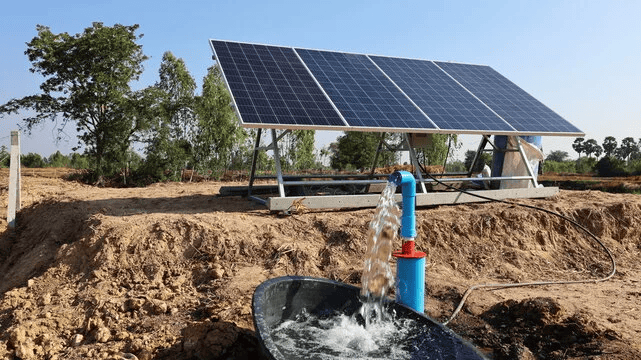
A field checklist for EPC contractors, distributors, and irrigation projects
This is Andy. I have spent the last eight years working on solar pumping projects.
Most solar pump inverter problems do not start on the installation day. They start earlier, during selection. The pump nameplate is not checked. The PV string is guessed. The buyer compares only kW and price.
Then the site starts late, trips under clouds, or gives weak water flow.
That is why inverter selection must be treated as a system decision. The inverter, pump, PV array, cable, water source, and protection settings all work together.
Quick Answer
The most common mistakes when selecting solar water pump inverters are choosing by pump kW only, ignoring pump voltage and phase, using the wrong PV array size, missing the DC voltage window, using a grid VFD for solar pumping, and overlooking protection settings.
For EPC irrigation projects, the right selection process starts with the pump nameplate. Then check PV power, DC input range, MPPT behavior, cable distance, water head, flow target, and site climate.
A cheap inverter can become expensive if it causes callbacks, rewiring, pump damage, or weak daily water output.
Mistake 1: Selecting Only by Pump Power
Pump kW matters, but it is not enough.
A 3kW pump does not automatically need any 3kW inverter on the shelf. The inverter output must match the pump motor. It also must handle startup load, solar input changes, and the real water head.
Before quoting, check:
- Pump rated power
- Pump voltage
- Pump phase
- Rated current
- Rated frequency
- Head and flow target
- Cable distance
- Water source type
If you skip this step, the inverter may look correct on the surface but fail in the field.
For product-side selection, start with the Solarseeker solar water pump inverter overview.
Mistake 2: Ignoring Voltage and Phase
Voltage and phase are red lines.
The inverter output must match the pump nameplate. A 380V three-phase pump needs the right three-phase output inverter. A 220V single-phase pump needs a compatible single-phase output inverter.
Do not guess from the pump size. Do not rely on a photo of the pump body. Ask for the nameplate.
| Nameplate item | Why it matters | Field risk if ignored |
|---|---|---|
| Voltage | Sets the inverter output type | Weak torque, wrong model, no proper operation |
| Phase | Must match motor winding | Pump cannot run correctly |
| Rated current | Used for protection setting | Trips, overheating, or poor protection |
| Frequency | 50Hz or 60Hz affects motor speed | Wrong speed and flow |
| Head and flow | Confirms real load | Pump runs but cannot deliver water |
This mistake often creates expensive rework. Freight, replacement time, and delayed irrigation cost more than the small price difference between models.
Mistake 3: Using the Wrong PV Array Size
This mistake is common because buyers think inverter selection is only an AC-side issue.
It is not.
A solar water pump inverter depends on the PV array. If panel power is too low, the pump starts late and stops early. If the string voltage is wrong, the inverter may sleep, trip, or run at weak frequency.
For selection topics, PV rules are relevant. Use these field starting rules:
| Pump system | PV array power starting rule |
|---|---|
| 220V single-phase pump | PV Array Power >= Pump Rated Power x 2.0 |
| 380V three-phase pump | PV Array Power >= Pump Rated Power x 1.3 to 1.5 |
Also check the voltage window:
| Pump and inverter type | PV power starting rule | Useful Vmp target | If wrong |
|---|---|---|---|
| 220V single-phase pump | Pump power x 2.0 or more | Around 320V DC Vmp | Late start, sleep mode, weak flow |
| 380V three-phase pump | Pump power x 1.3 to 1.5 or more | Around 540V DC Vmp | Low frequency, poor output, voltage alarms |
These are starting rules. Always confirm the exact range with the inverter datasheet.
Cold weather raises Voc. High heat lowers Vmp. For this reason, check both cold and hot conditions before panels are shipped.
For a deeper sizing method, read how to size a solar water pump inverter for irrigation projects.
Mistake 4: Using a Grid VFD Instead of a Solar Pump Inverter
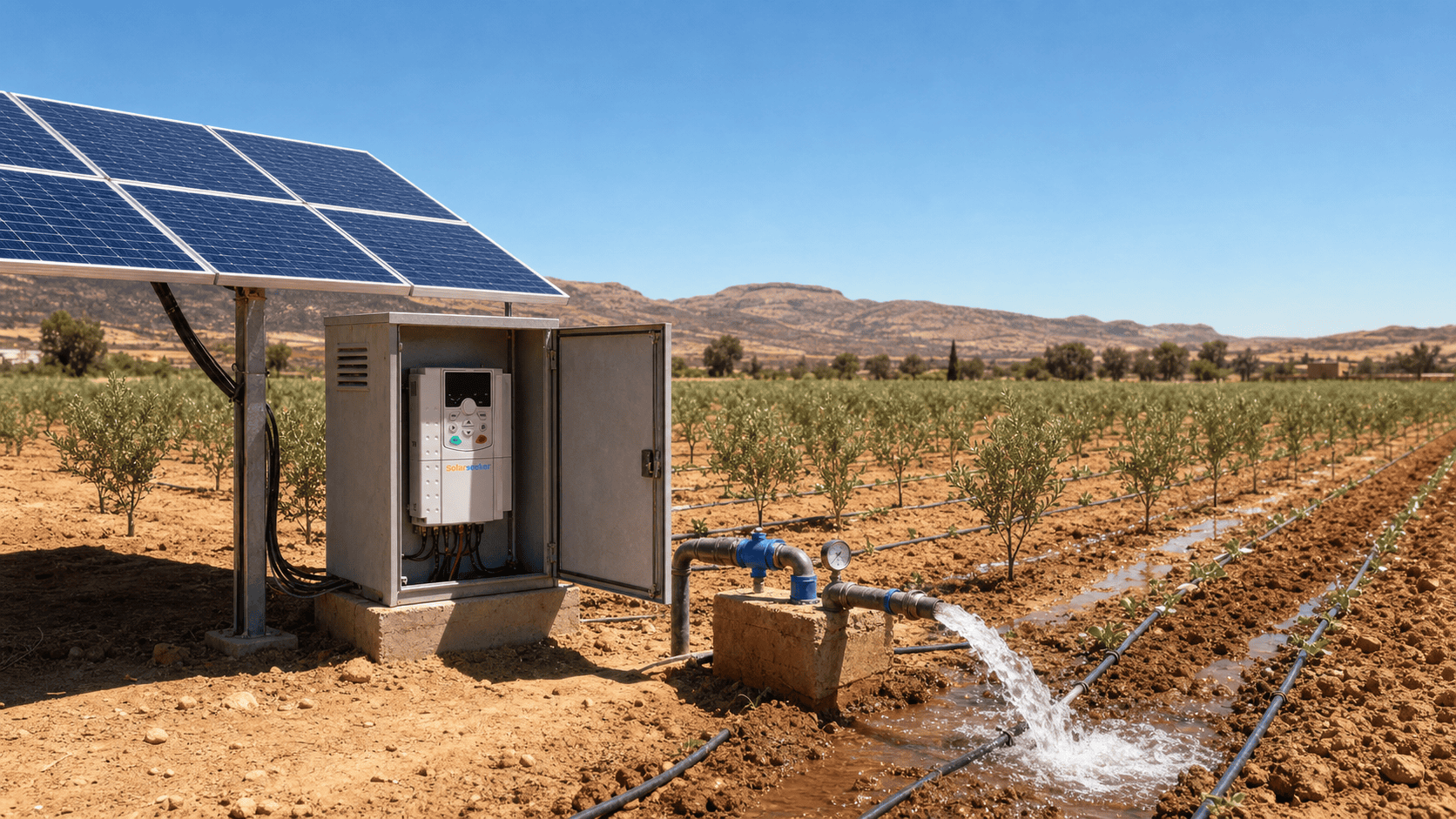
A grid VFD can control motor speed. That does not make it a solar pump inverter.
Grid VFDs are designed for stable AC input. Solar pumping uses changing DC power from panels. The inverter must manage MPPT, weak sunlight, sleep/wake logic, and pump protection.
If an EPC team uses a standard grid VFD in a solar pumping project, common problems include:
- Poor startup under weak sunlight
- Trips when clouds pass
- No proper solar MPPT
- Extra external control devices
- More wiring and commissioning time
- Harder troubleshooting
The low purchase price can disappear quickly.
For a practical comparison, see solar water pump inverter vs grid VFD.
Mistake 5: Ignoring MPPT and Frequency Stability
Solar pump inverter selection is also about control quality.
A good inverter does not only convert DC to AC. It tracks available solar power and adjusts pump frequency smoothly. This is important when clouds pass, panels heat up, or the water load changes.
Weak MPPT or unstable frequency can cause:
- Pulsing water flow
- Repeated start-stop behavior
- Low daily water volume
- Motor stress
- More service calls
In solar pumping, stable frequency does not mean fixed 50Hz or 60Hz all day. It means controlled frequency changes that follow available solar power.
For this topic, read why frequency stability matters in solar water pumping systems.
Mistake 6: Treating Protection Features as Optional
Protection features are not extras. They are field insurance.
Irrigation sites are not clean laboratory conditions. Wells run low. Filters block. Pipes leak. Valves close. Cables heat. Panels get dirty.
At minimum, check these protections:
| Protection feature | Why it matters in irrigation |
|---|---|
| Dry-run protection | Protects the pump when water level drops |
| Overload protection | Helps when pump load rises |
| Overcurrent protection | Protects motor and inverter |
| DC over-voltage protection | Protects against high string voltage |
| DC under-voltage protection | Stops unstable low-power operation |
| Sleep/wake control | Reduces weak repeated starts |
| Fault history | Helps installers diagnose problems faster |
Wrong protection settings can make a good inverter look bad. For example, poor sleep/wake settings may cause late starts. A guessed overload value may cause trips or motor heating.
For the full checklist, see essential protection features in solar water pump inverters.
Mistake 7: Ignoring the Real Site Conditions
Two projects with the same pump power can behave very differently.
One may use a shallow canal and short pipe. Another may use a deep well, long cable, high head, and dusty panels. The inverter selection cannot be the same just because pump kW is the same.
Check the real operating conditions:
- Water source depth
- Required head and flow
- Pipe length and pipe diameter
- Cable distance from inverter to pump
- Local sunlight and cloudy season
- Ambient temperature
- Dust, sand, and humidity
- Daily water volume target
- Backup power requirement
This step prevents many “why is the water weak?” conversations.
For cloudy-region projects, this guide may help: how solar water pump inverters perform on cloudy days.
Mistake 8: Buying the Lowest Price Without Counting Hidden Cost
The lowest inverter price is not always the lowest project cost.
Wrong selection can add hidden cost in the field:
| Selection shortcut | Field result | Hidden cost |
|---|---|---|
| No nameplate check | Wrong voltage or phase | Replacement inverter and delay |
| Too few panels | Short daily runtime | Low water output and complaints |
| Wrong PV string | Sleep mode or over-voltage trips | Panel rewiring and site visits |
| Weak protection | Pump damage or false trips | Warranty disputes |
| Grid VFD used for solar | Extra control work | Longer commissioning |
| No supplier support | Installer guesses settings | More callbacks |
For EPC work, the real cost includes cable, combiner work, crew time, travel, water downtime, and customer confidence.
Saving a little on hardware is not worth losing the project margin later.
Mistake 9: Skipping the Commissioning Plan
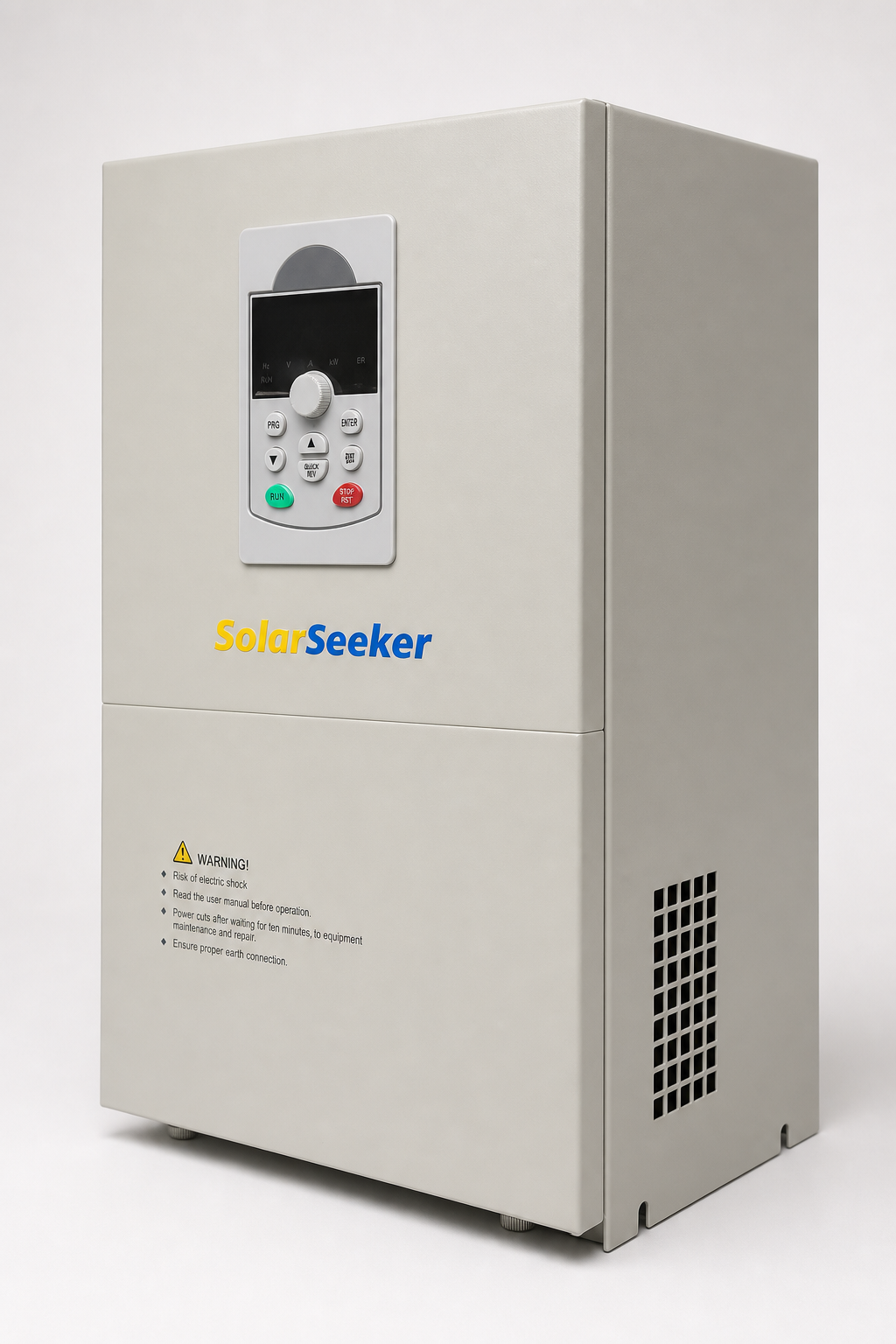
Selection should include commissioning support.
If the supplier only ships a box and leaves the installer to guess, the project risk increases. A good commissioning plan helps the installer confirm that the system is working before handover.
At site startup, record:
- Pump nameplate data.
- PV string design.
- DC input voltage.
- Output frequency.
- Motor current.
- Rotation direction.
- Dry-run setting.
- Sleep/wake setting.
- Fault code history.
- Final water flow check.
This record saves time later. When a farmer calls, the team has a baseline.
A Better Selection Workflow
Use a simple workflow before ordering:
| Step | What to confirm | Why it matters |
|---|---|---|
| 1 | Pump nameplate | Prevents wrong voltage or phase |
| 2 | Head and flow | Confirms real hydraulic load |
| 3 | PV array power | Prevents late start and weak output |
| 4 | DC voltage window | Prevents sleep mode or over-voltage |
| 5 | Cable distance | Controls voltage drop and heating |
| 6 | Protection settings | Reduces pump and inverter damage |
| 7 | Supplier support | Helps commissioning and service |
This workflow is simple, but it changes the result. It moves the project away from guessing and toward field reliability.
EPC Pre-Order Checklist
Before you confirm a solar pump inverter order, ask:
- Do I have a clear pump nameplate photo?
- Does inverter output match pump voltage and phase?
- Is the pump single-phase or three-phase?
- Does the PV array meet the correct power rule?
- Does the PV string match the DC input range?
- Have I checked cold Voc and hot Vmp?
- Is the cable distance known?
- Are head, flow, and daily water target confirmed?
- Does the inverter include solar MPPT?
- Are dry-run, overload, and sleep/wake settings available?
- Can the installer read fault codes?
- Will the supplier help check the model before shipment?
If any answer is missing, slow down. It is easier to fix the selection before shipment than after the pump is in the well.
FAQ
What is the most common mistake when selecting a solar water pump inverter?
The most common mistake is choosing by pump kW only. The inverter must also match voltage, phase, current, PV input, head, flow, and protection needs.
Can I use a normal grid VFD for a solar water pump?
You can in some engineered hybrid systems, but it is usually risky for direct PV pumping. A solar pump inverter is designed for MPPT, changing DC input, sleep/wake logic, and pump protection.
Why does PV string voltage matter?
PV string voltage decides whether the inverter can start and run properly. Too low can cause sleep mode or weak frequency. Too high can cause over-voltage alarms.
Should I always choose a bigger inverter?
No. A bigger inverter does not fix wrong voltage, weak PV input, poor pump matching, or bad protection settings. Match the full system instead.
What information should I send before choosing an inverter?
Send the pump nameplate, pump power, voltage, phase, rated current, head and flow target, cable distance, PV panel model, project location, and backup power needs.
How can EPC contractors reduce selection risk?
Use a nameplate-based selection process. Then check PV power, DC voltage window, cable distance, protection settings, and supplier support before shipment.
Send Pump Specs Before You Order
Before ordering a solar water pump inverter, send the pump nameplate, head and flow target, PV panel model, cable distance, and project location.
Solarseeker can help check the model match, PV array, voltage window, protection settings, and whether the project needs a different design.