
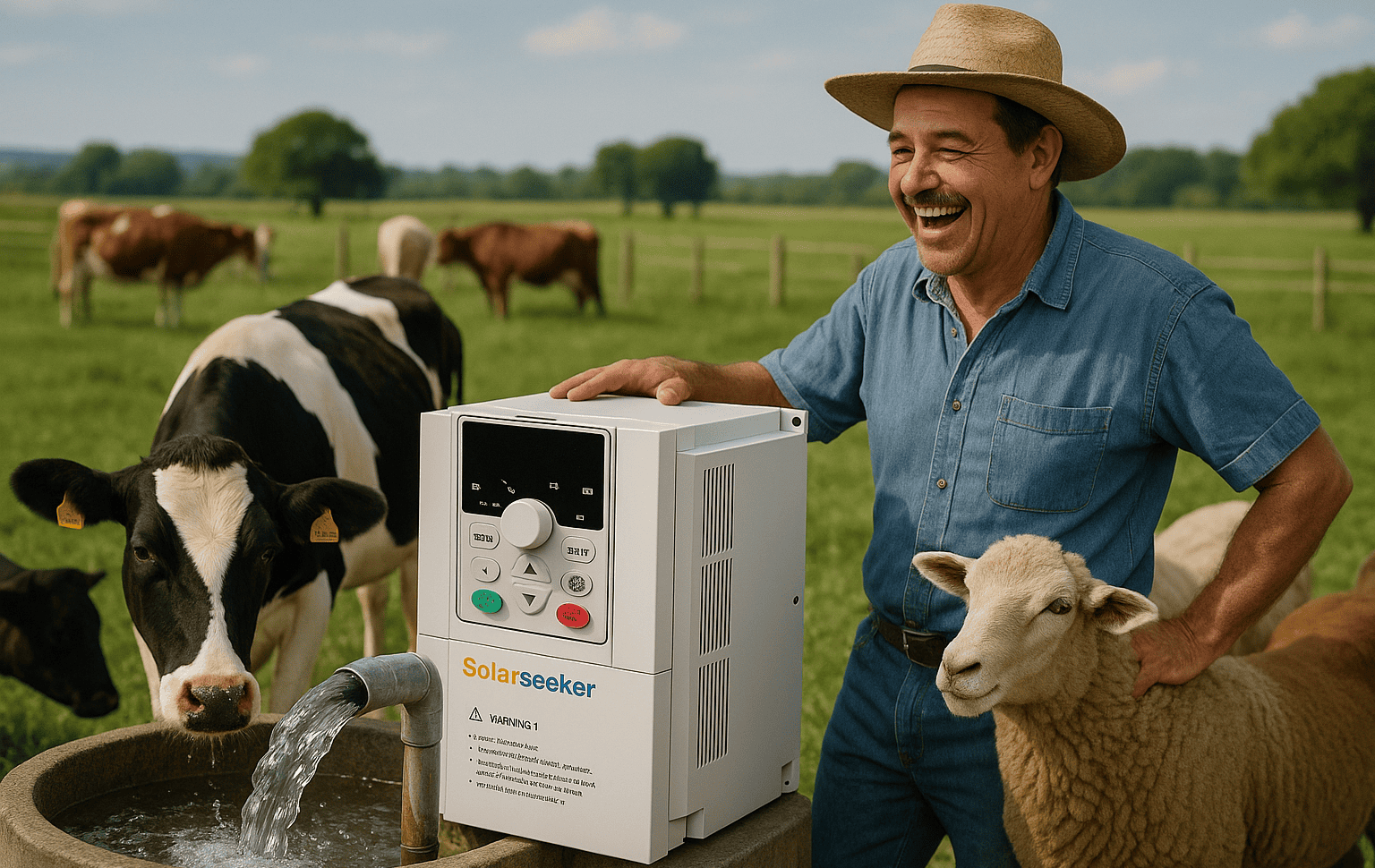
Above small-pump power, the project starts needing standard motors, three-phase options, stronger PV matching, and a clearer service path.
The 2.2kW line is not magic, but it is a useful warning. Above this range, many DC solar pump systems become harder to scale, harder to service, and less suitable for serious irrigation demand.
Large water projects need power headroom, standard motor choices, clear protection, and stable operation. AC solar pump inverters can drive larger standard AC pumps, including three-phase systems used in deep wells and commercial irrigation.
What Changes After Small Pump Power
Small pump systems forgive more mistakes. Large systems do not. Cable loss, weak PV design, poor motor matching, and bad protection settings become expensive quickly.
- Higher current needs better cable planning.
- Higher head needs a correct pump curve.
- Longer duty hours need thermal margin.
- Remote sites need a serviceable spare path.
Where DC Packages Hit Practical Limits
| Requirement | DC package pressure | AC VFD path |
|---|---|---|
| More than small farm power | Limited controller and motor range | Wider standard motor support |
| Deep well | Head and power ceiling appear quickly | Three-phase pump options |
| Distributor service | More proprietary variants | Inverter ranges by voltage and power |
| Retrofit project | Often replaces the whole pump | May keep the existing AC pump |
For a project-style reference, the Isabela Philippines irrigation pump case shows an SP401855 IP55 inverter used with a 15kW three-phase irrigation pump. That is the scale where standard AC pumping becomes a practical path.
PV Sizing Becomes Less Forgiving
For larger projects, select the pump first. Then match the inverter and PV array.
| Pump system | PV array power starting rule | Useful Vmp target |
|---|---|---|
| 220V single-phase pump | PV Array Power >= Pump Rated Power x 2.0 | Around 320V DC Vmp |
| 380V three-phase pump | PV Array Power >= Pump Rated Power x 1.3 to 1.5 | Around 540V DC Vmp |
The solar pump inverter must be matched with pump voltage, phase, current, and PV string voltage. For larger three-phase loads, start with the SP4 range and confirm the nameplate.
The Cost of Forcing DC Into a Large Job
The system may need more panels, more mounting hardware, longer pumping time, or earlier replacement. For EPC teams, that means rework after the customer already expected water.
Large Power Changes the Installation Risk
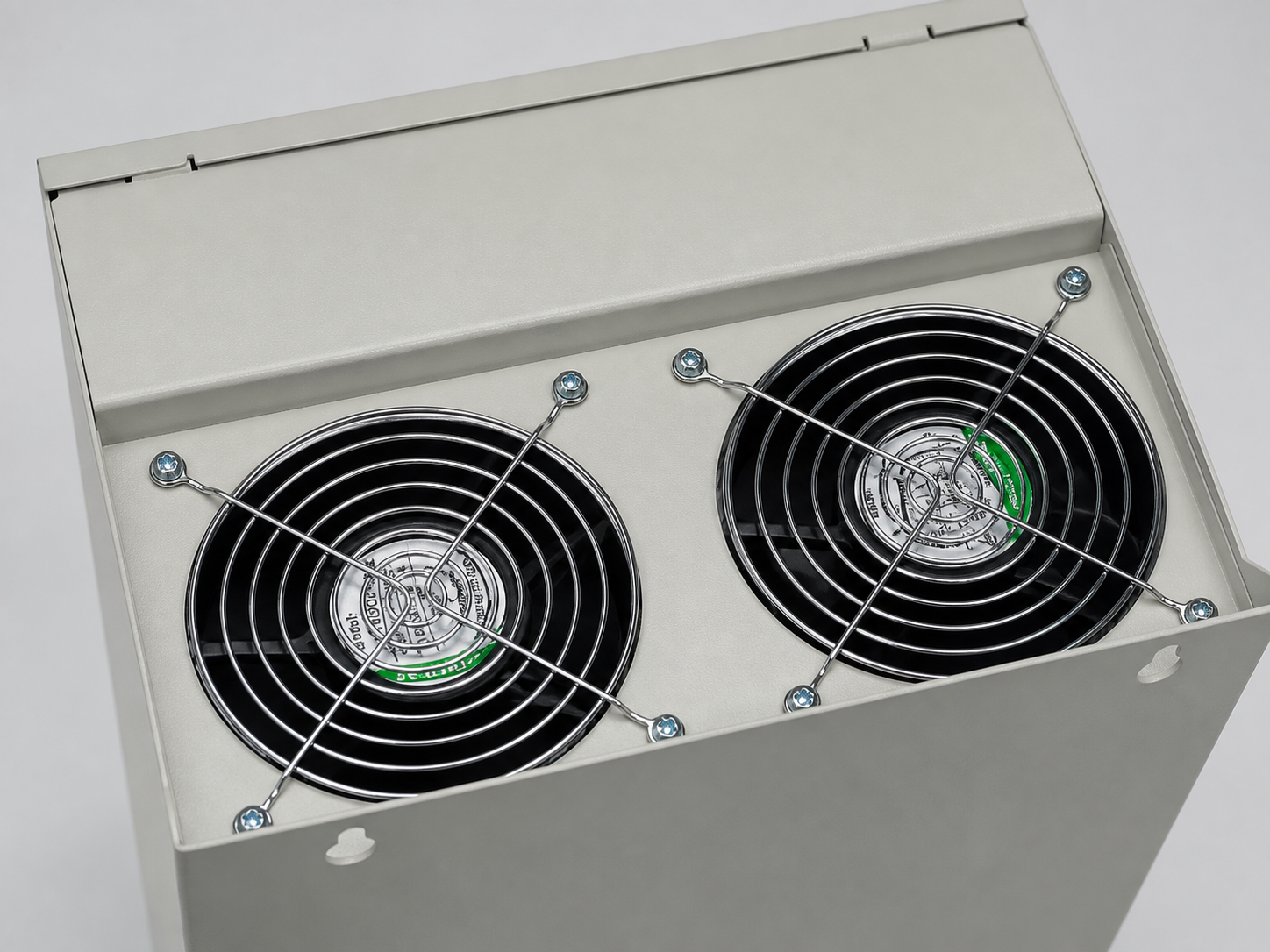
As pump power rises, small mistakes become expensive. Cable sizing matters more. Panel matching matters more. Motor current and thermal margin matter more. A controller that was acceptable for a small farm pump may not be the right tool for a commercial irrigation block.
Large systems also need better documentation. The installer should leave a record of pump nameplate data, PV string design, protection settings, and alarm history. Without that record, service teams start from zero when a fault appears.
Signs the Project Has Outgrown a DC Package
- The buyer needs a standard three-phase pump.
- The daily water target requires long runtime.
- The well or pipe route creates high head.
- The distributor needs local motor service.
- The project cannot tolerate long downtime for proprietary parts.
Why 2.2 kW (3 HP) Is the Natural Threshold for DC Pumping
Electrical physics creates a practical ceiling for DC solar pumping around 2.2 kW. At 2.2 kW on a typical 72V or 96V DC brushless system, operating currents exceed 25 to 30 Amperes. Handling currents of this magnitude over a 60-meter well depth requires prohibitively thick copper cables (10 mm² to 16 mm²) to prevent devastating $I^2R$ power dissipation.
By stepping up to a 380V AC three-phase system, a 2.2 kW pump draws a mere 5.1 Amps. Installers can use standard 2.5 mm² submersible cable, reducing wiring costs by 70% while improving electrical efficiency and motor thermal stability.
Current, Copper, and Cable Loss: The Math Above 2.2 kW
To understand why DC pumping struggles above 2.2 kW, examine the electrical current equation for a 4.0 kW (5.5 HP) solar pumping system:
P = V × I
At 72V DC, a 4.0 kW pump draws over 55 Amperes of continuous current. At 380V AC three-phase, a 4.0 kW motor draws only 8.8 Amperes per phase.
| System Topology | Operating Voltage | Full Load Current | Drop Cable Required (100m) | Cable Power Loss (I²R) |
|---|---|---|---|---|
| Low-Voltage DC System | 72V DC | 55.5 Amps | 25 mm² copper (extremely heavy & costly) | ~ 480 Watts wasted as pure heat |
| High-Voltage AC System | 380V AC (3-Phase) | 8.8 Amps | 4.0 mm² standard submersible cable | ~ 38 Watts (92% less energy wasted) |
Above 2.2 kW, the cost of thick copper cable required for a DC system exceeds the cost of the entire solar inverter, making AC systems economically superior.
When to Move Beyond the Small-Package Mindset
If the project is above small-pump size, stop quoting by controller price. Send pump kW, voltage, head, flow, pipe distance, and PV module datasheet to Solarseeker for a large-system selection check.