
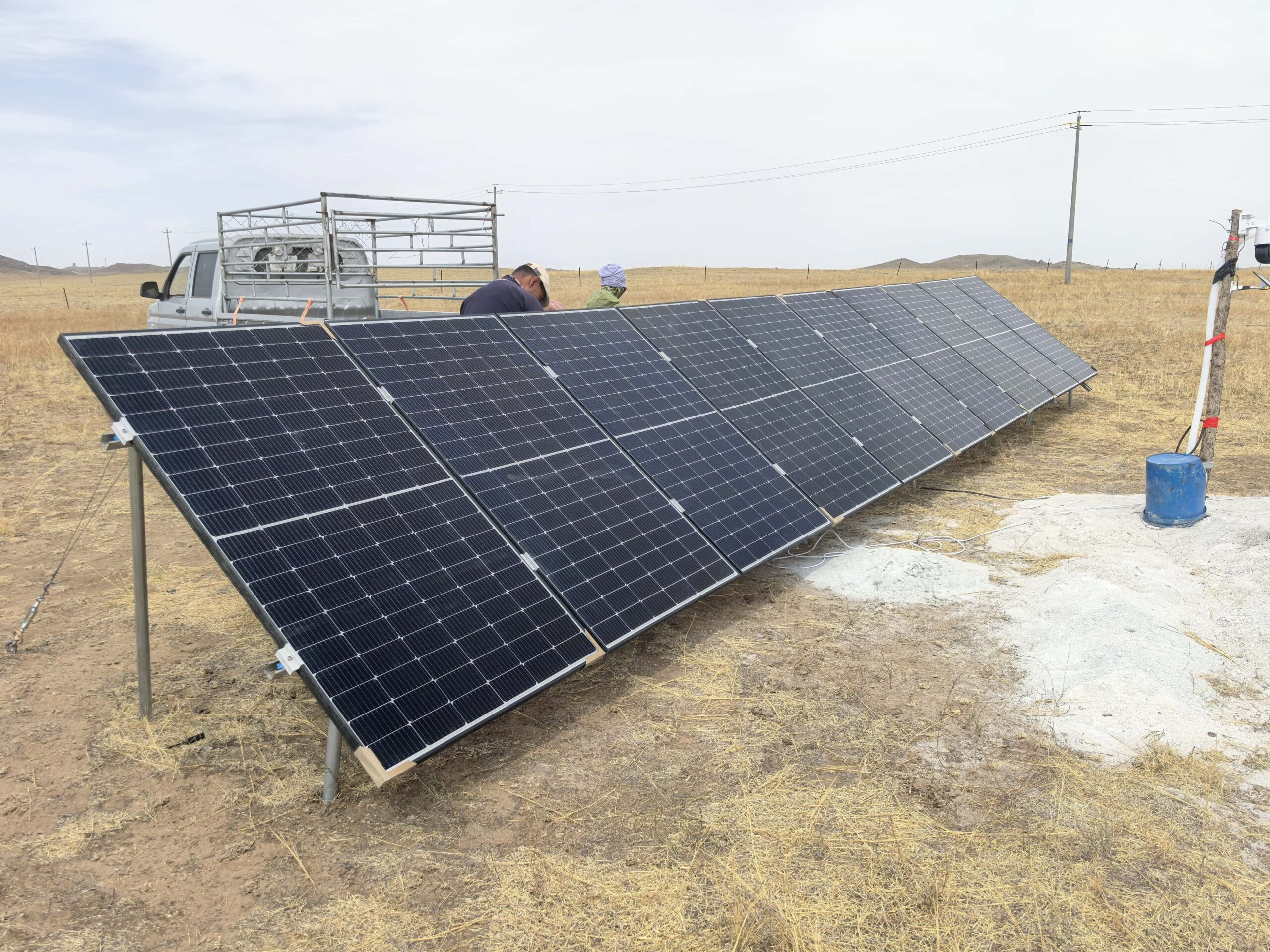
A field-focused explanation for buyers who need to match an AC pump, PV array, and inverter before ordering equipment.
A solar pump inverter is the drive that makes solar panel power usable for an AC water pump. It receives DC input from the PV array, tracks usable solar power through MPPT, then outputs controlled AC voltage and frequency. The pump still moves water, the inverter controls how the motor starts, runs, and protects itself.
The Common Mistake: Treating It Like a Normal VFD
The easy mistake is to treat a solar pump inverter as a normal VFD with a solar label.
That mistake shows up in quotations all the time. The buyer checks only pump power. The supplier quotes an inverter with the same kW rating. Nobody checks the pump voltage, phase, rated current, PV voltage window, cable distance, or site water demand.
Then the field problem appears.
The pump starts late. Water output is weak before noon. The inverter reports under-voltage or over-voltage. The installer changes panel strings on site. The buyer pays for extra clamps, cable work, combiner changes, and another service visit.
A solar pump inverter is built for changing solar input. It must manage PV DC power, MPPT tracking, AC motor output, and pump protection at the same time. That is the real difference.
What a Solar Pump Inverter Controls
The solar panels do not run the pump directly in an AC pumping system.
They send DC power to the inverter. The inverter then decides how much usable power is available and how to feed the motor without forcing a hard start or unsafe operating condition.
The pump does the hydraulic work. It lifts water through the pipe system. The inverter does the electrical control work. It starts the motor, adjusts frequency, watches current, and protects the pump when site conditions move outside the allowed range.
This is why the inverter is not a small accessory. It is the control center between the PV array and the pump motor.
Solar Pump Inverter Parts and Field Functions
| Part or function | What it does | What can go wrong if ignored |
|---|---|---|
| PV DC input | Receives DC power from the solar panel string | Wrong string voltage can cause sleep mode, weak output, or over-voltage alarms |
| MPPT control | Tracks the strongest usable power point from the PV array | Poor matching can waste sunlight and delay morning startup |
| Inverter power stage | Converts DC power into AC output for the pump motor | Wrong output path can make an AC pump impossible to drive correctly |
| Frequency control | Adjusts motor speed as sunlight changes | The pump may stop too often if the drive cannot reduce speed smoothly |
| Protection logic | Monitors overload, dry run, under-voltage, over-voltage, and related faults | Missing protection increases motor damage and callback risk |
| Parameter settings | Stores motor data, pump protection, and operating limits | Wrong settings can create nuisance trips or unsafe operation |
This table is also a useful buying checklist.
If a supplier cannot explain these points for your pump, the quotation is still incomplete. A cheap inverter becomes expensive when it creates truck rolls, rewiring, and replacement freight.
How It Turns Solar Power Into Pump Output
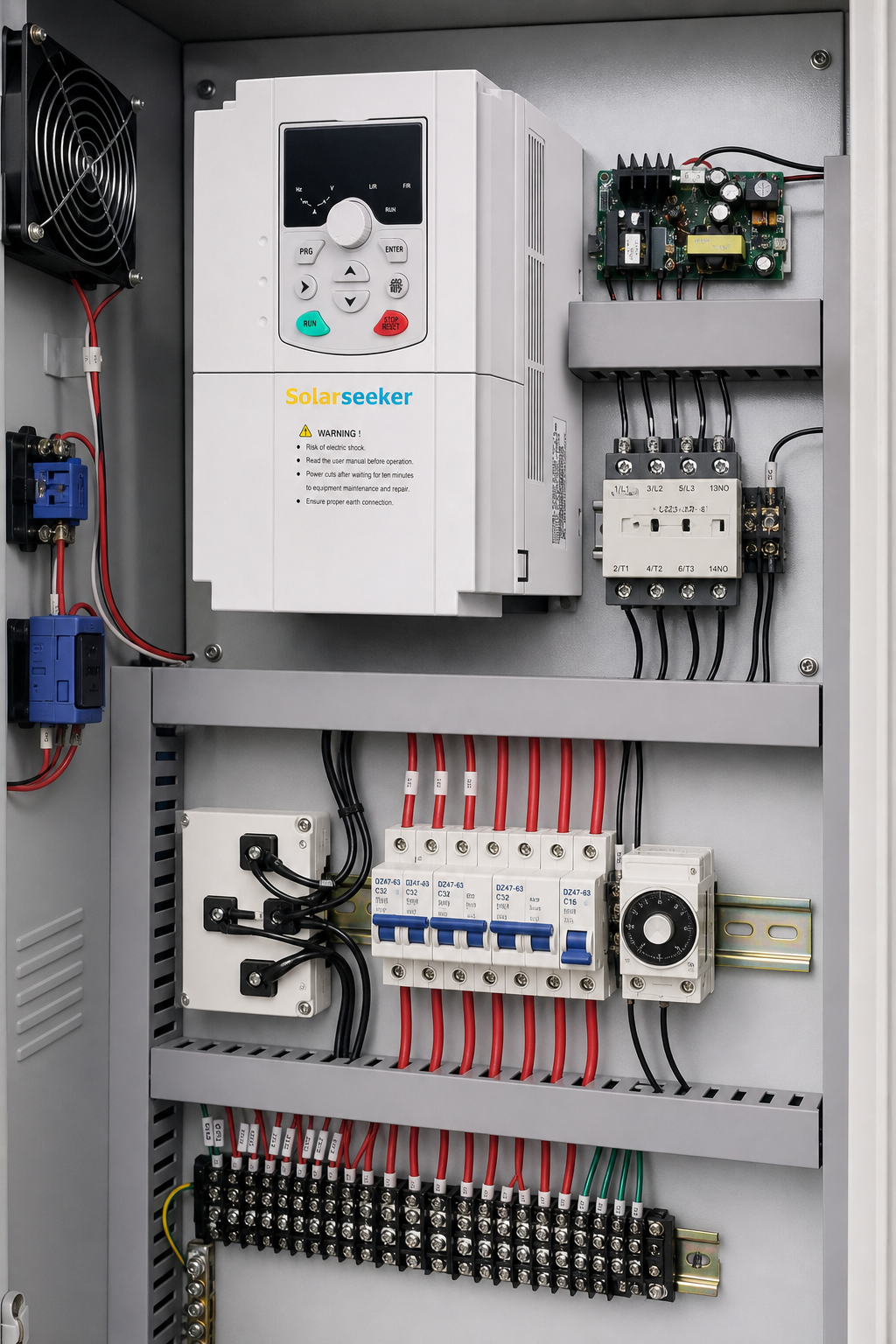
Solar panels change all day.
Voltage and current move with sunlight, temperature, dust, panel matching, and cable loss. A water pump motor cannot use that unstable DC power directly.
The inverter handles the gap in three stages.
First, it receives DC input from the PV array. The panel string must stay inside the inverter’s allowed DC input range. Too low, and the inverter may stay asleep or run the pump weakly. Too high, and the project risks over-voltage faults or damaged components.
Second, MPPT tracks the best usable power point from the panels. MPPT does not create extra sunlight. It helps the inverter use the available sunlight better.
Third, the inverter outputs controlled AC power to the motor. It manages voltage and frequency so the pump can start, accelerate, slow down, or stop based on available solar power and protection logic.
At strong midday sunlight, the pump may run close to rated speed. In weaker morning or afternoon light, the inverter may reduce speed instead of stopping the pump every few minutes. That smoother behavior matters for irrigation, storage tanks, and remote water supply.
Why Pump Type Changes the Product Path
The inverter cannot be selected only by pump power.
Voltage and phase often decide the correct product path before kW does. A small 220V single-phase pump, a 220V input conversion project, and a 380V three-phase deep-well pump are not the same selection problem.
For broad 380V three-phase irrigation and deep-well projects, Solarseeker’s SP4 solar pump inverter is a practical path to review. For smaller single-phase pumping, another SP series may fit better.
The pump nameplate should decide the first direction. The PV array should be designed after that. If the panel plan comes first, the project may look neat on paper but fail at the pump.
Solar Pump Inverter vs Solar Pump Controller
In supplier quotes, the wording can be messy.
You may see solar pump inverter, solar pump controller, PV pump controller, VFD, or pump drive. Some suppliers use these terms loosely. Buyers should look past the name and check the motor type.
For an AC pump, the equipment usually needs inverter output. It must convert solar DC input into controlled AC output for the motor.
For a DC solar pump package, the controller may be designed only for a matching DC pump motor. That can be a good package when the pump and controller are bought together. It is not the same situation as converting an existing AC pump to solar.
So the key question is simple: are you trying to run an AC pump motor from solar power, or are you buying a complete DC pump package?
Field Example: Existing AC Pump Converted to Solar
Here is a common field situation.
A farm already has an AC submersible pump. It runs when grid power is available, but daytime irrigation needs a solar power source. The buyer wants to keep the pump, pipe system, and well structure.
At first, the buyer sends only the pump power. That is not enough.
The supplier still needs the pump nameplate. Rated voltage, phase, current, frequency, and motor type must be checked. The project team also needs head, target flow, cable distance, water source, and daily operating demand.
If the pump motor matches the inverter range, a solar pump inverter can drive the existing AC pump from a PV array. The inverter handles solar input, MPPT control, AC motor output, and protection settings.
If the voltage or phase is wrong, the power rating will not save the project. The result may be late starts, weak flow, repeated alarms, or motor heating. In a remote irrigation site, that can mean a second installation trip under the sun.
This is why the model check should happen before panels, rails, cables, and combiner work are finalized.
What to Check Before Model Selection
Do not select by kW alone. It is one number, not a complete pump profile.
For a useful quotation, prepare these items:
- Pump nameplate photo
- Pump power, voltage, phase, rated current, and frequency
- Pump type, such as submersible, surface, centrifugal, or borehole pump
- Required head and flow
- Cable length from inverter to pump
- Water source and site conditions
- Daily working hours or irrigation schedule
- Planned PV module power, Voc, Vmp, and string layout if already available
Solarseeker’s solar pump selection guide is the next step when you already have pump data but are not sure which inverter path fits.
The more complete the data, the fewer assumptions the supplier needs to make. That usually means fewer mismatches after the equipment reaches the site.
Safety Note for Installation
A solar pump inverter works with PV DC input, AC motor output, grounding, protection settings, and field wiring.
Use qualified electricians or trained technicians for installation. Follow local electrical codes, product manuals, grounding rules, and protection requirements. This article explains selection logic. It is not a wiring manual.
FAQ
What does a solar pump inverter do?
A solar pump inverter converts solar panel DC power into controlled AC power for a pump motor. It also manages MPPT, motor speed, startup, and protection functions so the pump can run from available sunlight.
Does a solar pump inverter replace the pump?
No. It controls the power supplied to the pump motor. If the existing AC pump matches the inverter voltage, phase, current, and application range, the pump may be reused in a solar pumping system.
Is a solar pump inverter the same as a normal VFD?
Not exactly. A normal VFD is usually designed for stable grid input. A solar pump inverter must handle changing PV DC input, MPPT tracking, pump protection, and motor output in a solar pumping system.
Is a solar pump inverter the same as a DC solar pump controller?
Not always. A solar pump inverter commonly drives AC pump motors from solar DC input. A DC solar pump controller may be designed for a matched DC pump package. Buyers should confirm motor type before choosing.
What data should I send before model selection?
Send the pump nameplate, pump power, voltage, phase, rated current, head, flow, cable length, and site conditions. If you already have a panel plan, send PV module power, Voc, Vmp, and string layout.
Before You Quote the System
The safest first step is simple: send the pump nameplate before buying the inverter or panels.
For a Solarseeker model recommendation, share pump power, voltage, phase, rated current, head, flow, cable length, and site conditions through the contact page. This prevents the common mismatch: the kW looks right, but the voltage, phase, or PV input path is wrong.