
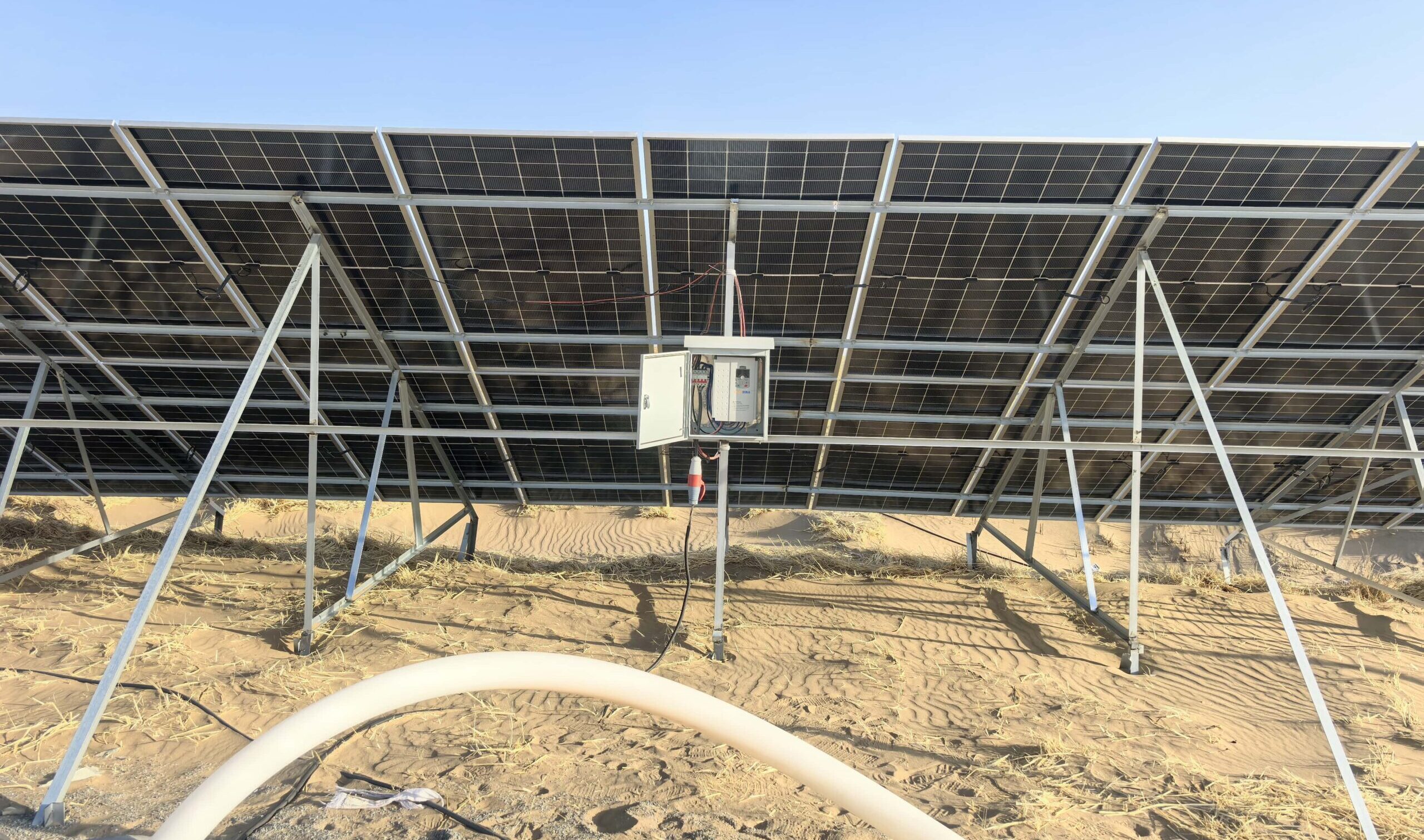
The cheapest inverter on a quotation is not always the cheapest irrigation project. A low unit price can disappear after extra panels, larger cables, weak starting, site callbacks, or a replacement unit sent across the country during peak season.
Solar water pump inverter price is affected by power rating, pump voltage and phase, PV input range, protection features, cabinet design, application load, technical support, and order quantity. For irrigation projects, buyers should compare total project cost, not only inverter price.
That is where many quotes go wrong.
Start With the Project, Not the Price List
A price list can help a distributor move fast. It cannot tell you whether the inverter fits the pump, panel plan, and site conditions.
Before comparing prices, confirm:
- Pump power
- Pump voltage and phase
- Rated current
- Required head and flow
- Irrigation season and daily runtime
- Panel wattage and planned quantity
- Cable distance
- Whether the site needs dry-run, tank level, or pressure control
The same inverter power rating can be used in very different projects. A light water-transfer job and a deep irrigation well do not carry the same risk.
Main Factors That Affect Solar Water Pump Inverter Price
The table below shows the cost drivers buyers should check before choosing a cheaper quote.
| Cost factor | Why it changes price | Field impact |
|---|---|---|
| Power rating | Higher kW needs larger components and heat design | Undersizing causes trips and poor pump output |
| Output voltage and phase | 220V and 380V systems need different designs | Wrong match can damage equipment or stop the pump |
| PV input range | Wider and stable DC range needs better design | Low voltage causes sleep mode or weak frequency |
| Protection functions | Dry-run, over-voltage, under-voltage, overload, and phase protection add value | Reduces site risk and callbacks |
| Cabinet and cooling | Better enclosure and thermal layout cost more | Important for hot, dusty irrigation sites |
| Documentation and support | Good manuals, diagrams, and model selection take real work | Helps EPC teams install faster |
| Order quantity | Batch orders reduce unit cost | Useful for distributors with repeat projects |
For a serious irrigation project, the price difference should be judged against lost water, labor time, and replacement cost.
Pump Type Changes the System Cost
Panel quantity often affects project cost more than the inverter itself.
For PV-related irrigation designs, a 220V single-phase pump and a 380V three-phase pump use different starting rules.
| Pump system | PV array power starting rule | Useful Vmp target |
|---|---|---|
| 220V single-phase pump | PV Array Power >= Pump Rated Power x 2.0 | Around 320V DC Vmp |
| 380V three-phase pump | PV Array Power >= Pump Rated Power x 1.3 to 1.5 | Around 540V DC Vmp |
This means a low inverter price can still lead to a higher system quote if the pump type forces more panels, more mounting rails, more clamps, more wiring points, and more installation time.
For larger irrigation and three-phase pump projects, Solarseeker SP4 is often the product path to review. For the full category, see the Solarseeker solar water pump inverter page.
Hidden Costs in Irrigation Projects
Irrigation sites are not clean lab benches. They are hot, dusty, wet, and often far from the distributor’s office.
These hidden costs matter:
- Extra truck rolls when the pump starts late every morning
- Replacement freight when the inverter is mismatched
- Larger cable because current is higher than expected
- More mounting hardware when old low-watt panels are used
- Technician time spent checking wrong wiring or weak PV voltage
- Water loss during the irrigation season
- Distributor reputation damage after repeated failures
A cheap quote that creates two callbacks is not cheap anymore.
Inverter Price vs Full Project BOM
For irrigation jobs, the inverter is one line in the bill of materials. The full BOM may include panels, mounting structure, DC protection, AC protection, cabinet, cable, pipe work, sensors, transport, and labor.
This is why a buyer can save money on the inverter and still pay more for the project.
For example, a quote with old low-watt panels may look attractive at first. Then the EPC team needs more panel pieces, more rails, more clamps, more wiring joints, and more installation time. The inverter price did not change, but the project cost did.
Another example is cable. If the pump current is higher than expected, the cable size may need to increase. Long cable runs in farms and deep wells are not cheap. A correct inverter and pump match helps reduce that risk.
When comparing two quotes, ask for the total equipment path:
- Inverter model
- Pump voltage and phase
- PV panel count and string design
- Protection devices
- Cable recommendation basis
- Cabinet and installation assumptions
- Technical support included before shipment
This makes price comparison cleaner.
Stock Planning for Distributors
Distributor pricing is different from one-project pricing. A distributor needs models that fit repeat local demand, not only one tender.
Before stocking solar water pump inverters, group your local demand:
| Local demand pattern | Stock planning note |
|---|---|
| Many small 220V pumps | Keep a clear 220V single-phase model path and panel matching guide. |
| Larger farm irrigation | Prepare 380V three-phase options and SP4-style project logic. |
| Deep well projects | Ask for head, flow, cable distance, and dry-run protection needs. |
| Mixed pump markets | Train sales staff to request nameplate photos before quoting. |
A lower purchase price is useful only when the model sells into real local pump demand. Slow-moving stock can become more expensive than a slightly higher unit price with better fit.
What EPC Teams Should Ask Before Comparing Quotes
Ask these questions before choosing by price:
| Question | Why it matters |
|---|---|
| Does the inverter match the pump voltage and phase? | Prevents basic model mismatch. |
| What PV voltage range does the model need? | Avoids sleep mode, weak output, or over-voltage alarms. |
| What protection functions are included? | Reduces dry-run and overload risk. |
| Is the manual clear for field technicians? | Saves installation time. |
| Can the supplier check the panel string plan? | Prevents wrong series/parallel design. |
| Is after-sales support available for EPC projects? | Matters when the site is remote. |
For distributors, the support behind the price is part of the product.
When a Higher Inverter Price Makes Sense
A higher unit price can be reasonable when it reduces site risk.
It makes sense when:
- The project is remote
- The pump is high power
- The well is deep
- The irrigation season is short and delays are expensive
- The distributor cannot send technicians often
- The system needs stable protection and clear commissioning support
It may not make sense to over-spec every small pump. A small seasonal pump and a large deep-well irrigation system should not be quoted with the same risk logic.
A Better Way to Build the Quote
Instead of asking only “What is the inverter price?”, build the irrigation quote in this order:
- Confirm pump nameplate.
- Confirm head, flow, and daily water demand.
- Choose the inverter model for voltage, phase, and current.
- Size the PV array power and voltage window.
- Check cable distance and protection.
- Add installation labor and mounting hardware.
- Compare supplier support and warranty handling.
This gives EPC teams a real project cost, not just a component price.
For project examples, see the Solarseeker solar pump project cases. They are useful when EPC teams need to compare site conditions and application types before model selection.
FAQ
Why do solar water pump inverter prices vary so much?
Prices vary because inverter power, output voltage, PV input design, protection functions, cabinet quality, support level, and order quantity are different.
Should I choose the lowest inverter price for irrigation?
Not automatically. Check whether the inverter fits the pump, PV voltage, protection needs, and site conditions. A wrong match can create higher project cost.
Does panel cost affect inverter selection?
Yes. Pump type and inverter voltage window affect panel quantity and string design. That changes mounting, wiring, and labor cost.
Distributor and EPC Quote Support
For irrigation projects, compare inverter price together with panel count, voltage window, installation labor, and support risk.
If your team is quoting several pump sizes, send the pump range, common voltage, phase, head, flow, and panel models. Solarseeker can help prepare a project shortlist and model recommendation for distributor or EPC quotation work.