
Philippines / Government Flood Prevention / SP4015
SP4015 Solar Pump Inverter for a Philippines Government Flood Prevention Pump Project
For a public flood-prevention pump, the buying risk is bigger than the inverter price. The system may be exposed to rainy-season operation, humidity, salt air, and response-time requirements written into the project terms.
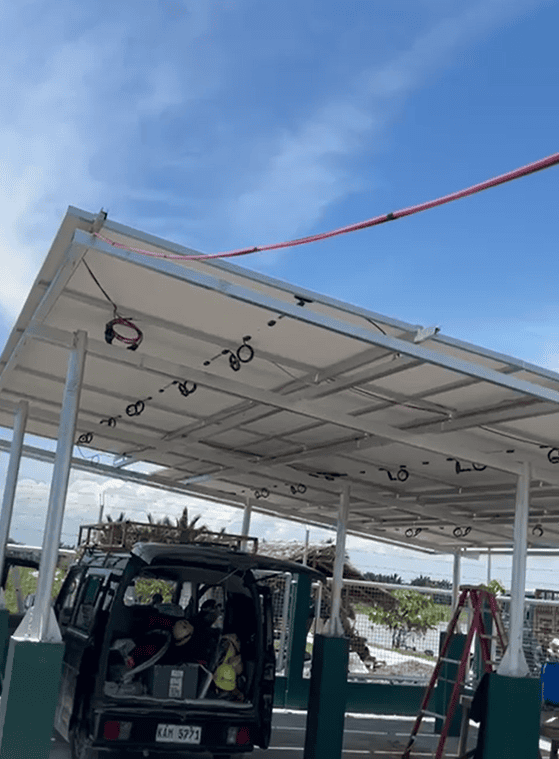
The installed setup used a SolarSeeker SP4015 15kW inverter, an 11kW pump, and 30 solar panels arranged as 15S x 2P. The same project route also needed design review, installer support, commissioning checks, and a service plan that would satisfy government and EPC expectations.
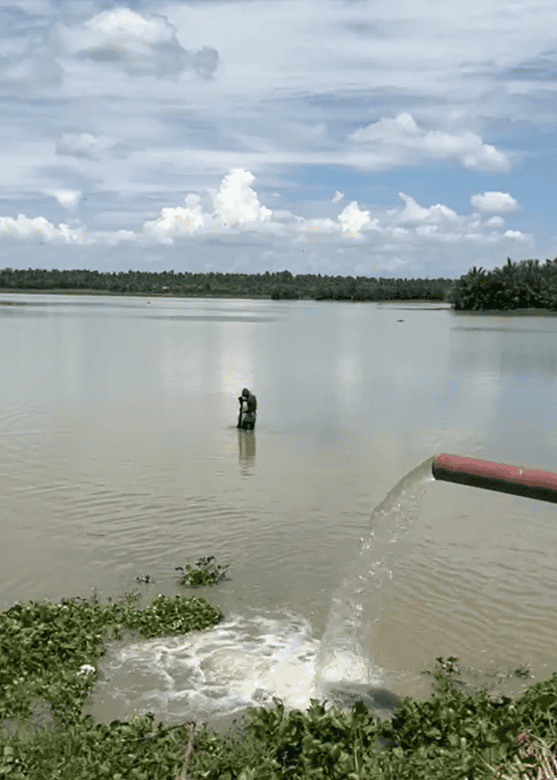
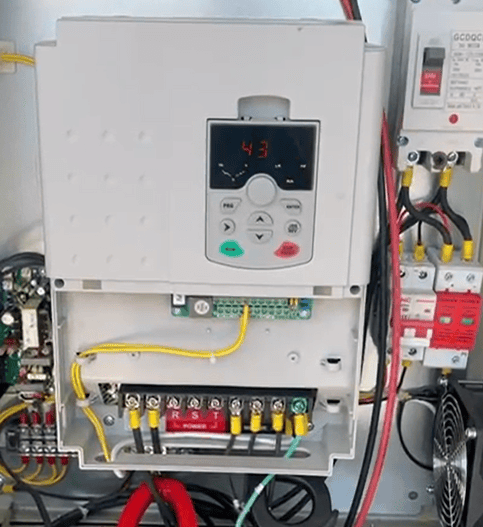
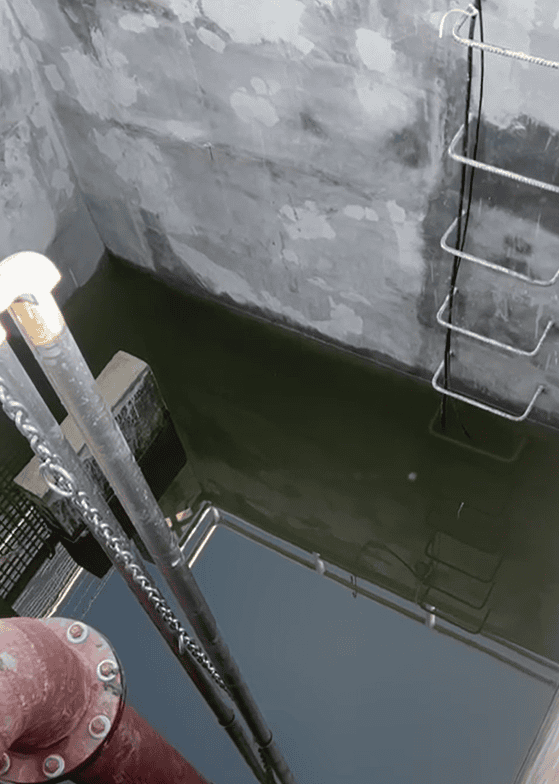
SP4015 field installation for an 11kW flood-prevention pump in the Philippines.
Model
SP4015
Inverter
380V / 15kW / 32A
Pump
11kW
PV array
30 panels
String plan
15S x 2P
Public Project Risk
A government pump project has to survive the service terms.
Warranty expectation
Four-year project terms
Some Philippines public pumping projects require warranty terms far longer than ordinary one-year market requests.
Local operating record
More than a lab specification
The supplier needed a local track record with solar pump inverters already running in the Philippines.
Weather and environment
Cloud, typhoon, heat, humidity, salt mist
Cabinet planning, inverter protection, and service access all matter when equipment works near harsh coastal or rainy-season conditions.
Response requirement
Fault response within 24 hours
For public service projects, the after-sales plan must be defined before shipment, not after a problem appears on site.
What SolarSeeker Had To Support
The inverter selection was only one part of the delivery scope.
Government and EPC buyers usually need a supplier that can check the design, guide installation, support commissioning, and keep a clear service path after handover. For this SP4015 project route, each step affected after-sales risk.
| Project stage | SolarSeeker support | Why it matters for public projects |
|---|---|---|
| Design check | Confirm pump voltage, phase, current, inverter model, PV string plan, and 15S x 2P array limits. | Wrong matching can create starting failures, unstable output, or field service disputes. |
| Protection plan | Review cabinet needs, cable distance, grounding, lightning protection, and humid-site placement. | Flood-prevention sites need maintainable equipment, especially during rainy-season work. |
| Special functions | Support hybrid input, remote control, and anti-backflow requirements when the project calls for them. | Tender requirements may include functions that ordinary farm pump projects do not ask for. |
| Installation assistance | Provide wiring guidance, parameter settings, commissioning checklist, and remote installer support. | A clear handover reduces mistakes between the EPC team, local installer, and end user. |
| After-sales response | Prepare fault diagnosis steps and a response route aligned with the project’s 24-hour service expectation. | Public pumps cannot wait for slow email loops when drainage work is urgent. |
Installed System
The same review has to cover panels, inverter, pump area, and outlet.
On a flood-prevention job, the visible equipment is not separate from service planning. PV placement affects cable routing. Inverter access affects commissioning. The well and outlet show whether the pumping route is practical for the site.
Philippines Operating Record
Why SolarSeeker could stay in the project discussion.
7+ years
SolarSeeker inverters have worked in Philippines applications across heat, humidity, salt mist, and changing weather.
100+ units
Local operating experience was part of the requirement for supplier confidence.
9+ projects
SolarSeeker has participated in multiple Philippines government pump projects.
400+ inverters
The supplied government-project record covers both 220V single-phase and 380V three-phase pump applications.
The Philippines project record also covers pump powers from 1.5kW to 55kW, MPPT efficiency requirements around 99.9%, a reported 0% fault rate in government projects, and longest government-project operation up to 5 years. These details are useful for EPC teams preparing public tenders, because they connect product selection with service responsibility.
Engineering Handover
Before shipment, the EPC team should not be left guessing.
Design package
Pump nameplate check, inverter model selection, PV string calculation, cabinet suggestion, and function confirmation before the quotation is finalized.
Installer guidance
Wiring reference, protection notes, parameter setup, startup sequence, and remote support for the team working at the pump site.
Service response
Fault-code review, operation photos, parameter checks, spare-part discussion when needed, and a clear response path for public-service operation.
For Government And EPC Buyers
Start from the tender duty, then lock the inverter and cabinet route.
Send the pump data and public-project terms together. A model match alone is not enough when warranty, weather exposure, and service response are part of the deal.
Confirm the pump and inverter range
Use voltage, phase, current, pump power, and operating target.
Use the SP4 route for SP4015 projects
SP4015 belongs to the 380V three-phase solar pump controller path.
Plan the system around protection and service
Flood-prevention sites often need cabinet, cable, grounding, and access review.
Prepare a 380V pump system review
Useful when the buyer needs pump, inverter, PV, and protection checked together.
Need SolarSeeker to check the tender?
Send tender terms, pump nameplate, panel model, site photos, and service requirements.
FAQ
Questions EPC teams ask before a public pump project
What equipment was installed for this Philippines flood-prevention project?
The system used a SolarSeeker SP4015 inverter rated 380V / 15kW / 32A, an 11kW pump, and 30 solar panels arranged as 15S x 2P.
Why does a government pump project need more review than a farm project?
Public projects may include warranty terms, local operating record, environmental exposure, MPPT requirements, documentation, and response-time obligations.
What can SolarSeeker check before shipment?
SolarSeeker can review the pump nameplate, PV string design, inverter model, cabinet requirement, protection needs, special functions, and installation handover details.
Which SolarSeeker pump ranges are relevant for Philippines public projects?
The Philippines project record includes 220V single-phase and 380V three-phase pump applications, with pump powers from 1.5kW to 55kW.
What should an EPC buyer send for a similar flood-prevention pump?
Send the tender terms, pump nameplate, required flow or drainage target, PV module data, installation photos, cabinet requirement, and service expectations.
Preparing a government drainage, flood-control, or public water project?
Share the tender terms, pump nameplate, PV plan, site photos, and required service response. SolarSeeker can check the SP4/SP4015 route, cabinet needs, installation steps, and after-sales plan before you quote.