
Colombia / Orchard Irrigation
SP4011 Solar Pump Inverter for a Colombian Orchard Water System
A 15-hectare orchard needs steady irrigation without keeping a diesel set running beside the well. In this Colombia project, the existing pump was connected to a solar pumping system built around an SP4011 inverter and a 12.8kW PV array.
The installation kept the farm’s original water job in place: a 7.5hp pump, 45m head, and 32 x 400W solar panels. The inverter handled solar power conversion, pump starting, MPPT tracking, and protection for low-light, low-frequency, dry-run, and overload conditions.
Location
Colombia
Application
Orchard irrigation
Inverter
SP4011 / 11kW
Pump
7.5hp / 45m head
PV array
32 x 400W
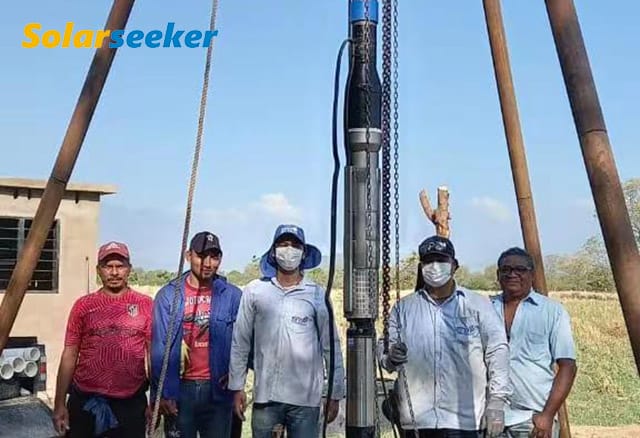
The Water Job
The farmer needed solar irrigation without a long pump changeover.
The site already had a pump motor that could be connected after small electrical changes. That avoided the time and cost of replacing the pump and kept the project focused on solar power matching, inverter setup, and protection logic.
For orchard irrigation, the practical risk is not only whether the pump can start. The system also has to keep working when light changes during the day and stop safely when the well or pump condition becomes abnormal.
Installer Notes
Cabinet location, quick commissioning, and pump protection mattered on site.
Professional Installation
The installation process began with careful positioning of the 32 solar panels. The electrical team checked grounding, mounting, and cable connections before the pump was handed over to solar operation.
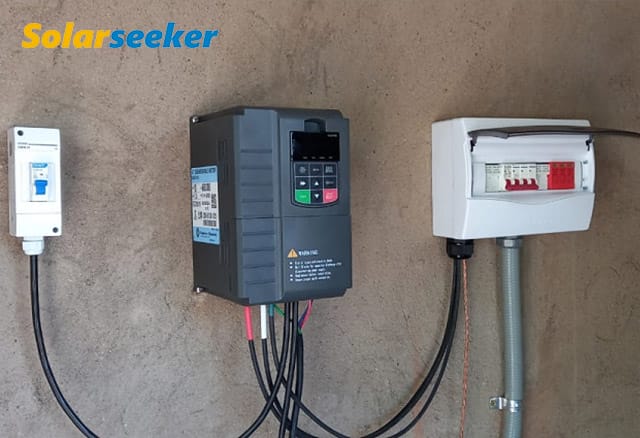
The SP4011 inverter was installed in a small house beside the well. This placement helped keep dust away from the inverter and allowed better heat dissipation, reducing the risk of high operating temperature. The pump motor on site only needed minor electrical modification before it could connect with the solar system, which reduced pump replacement time and cost.
The whole solar system installation took one day, and inverter installation and commissioning took about three minutes. This kept disruption to orchard irrigation as low as possible. To extend service life, the installers prepared protection in advance for low light, low frequency, dry-run, overload, and other special operating conditions.
Well-side placement
The inverter sat close to the water source, inside a small structure that helped with dust control and heat release.
Existing pump retained
Small electrical changes were enough to connect the pump motor to the solar pumping system.
Protection prepared early
Low-light, low-frequency, dry-run, and overload protection were considered before normal operation.
Technical Specifications
SP4011 inverter and PV string data for the orchard pump
The key correction on this project is the protection rating and PV string layout. The SP4011 unit used here is an IP20 inverter with a 250-800V DC input range.
SP4011 Inverter Features
- 11kW maximum power output
- 380V three-phase AC output
- Advanced MPPT algorithm
- IP20 protection rating
- DC input voltage range: 250-800V
- Efficiency: >99%
Solar Array Configuration
- 32 x 400W monocrystalline panels
- Total capacity: 12.8kW
- 2 strings x 16 panels configuration
- Array matched to the 250-800V DC input window
- PV sizing selected for a 7.5hp orchard irrigation pump
Field Result
The orchard gained a solar-driven water source with less installation interruption.
After commissioning, the pump could run from the PV array through the SP4011 inverter. The farmer did not need to wait for a full pump replacement, and the well-side inverter position kept the electrical work close to the water source.
For distributors and irrigation contractors, the practical lesson is clear: check the existing pump first, confirm voltage and phase, size the PV strings inside the inverter input range, and decide whether an IP20 inverter should sit inside a protected cabinet or small equipment room.
Plan A Similar System
What to check before quoting an orchard solar pump system
Confirm pump voltage, phase, power, head, and flow
Start with the pump nameplate and water requirement.
Decide cabinet or equipment-room protection
IP20 equipment should be installed where dust, rain, and heat can be controlled.
Send project photos before model selection
Well location, pump plate, PV mounting area, and cable distance help avoid sizing mistakes.
FAQ
Questions from orchard irrigation buyers
Can the existing pump be kept when converting to solar?
Often yes, if the pump voltage, phase, power, and motor condition match the inverter plan. In this Colombia project, only small electrical changes were needed before connection.
Why was an IP20 inverter installed near the well?
The inverter was placed inside a small well-side structure, not exposed outdoors. This helped reduce dust exposure and supported heat dissipation.
What PV string layout was used?
The array used 32 panels in total, arranged as two strings with 16 panels per string. This matched the SP4011 DC input voltage range of 250-800V.
What should be checked before ordering a similar system?
Send the pump nameplate, well or water source details, target irrigation area, daily runtime, cable distance, and site photos. SolarSeeker can then check inverter model, PV string count, and protection needs.
Need to solarize an existing orchard pump?
Send the pump nameplate, water source details, and planned irrigation area. SolarSeeker will check the inverter model, PV string layout, and cabinet protection plan before quoting.